


Lobed Porcelain Dish
A lobed porcelain dish brings scalloped edges and moulded curves to a table, offering centuries of ceramic artistry.

Lobed Porcelain Dish
When you search for a lobed porcelain dish, you enter a field spanning the sixteenth century to the early twentieth century, taking in both European factories and Asian export kilns. These pieces appear as decorative plates, serving dishes, bowls, and dessert plates shaped with characteristic indentations and curves along the rim.
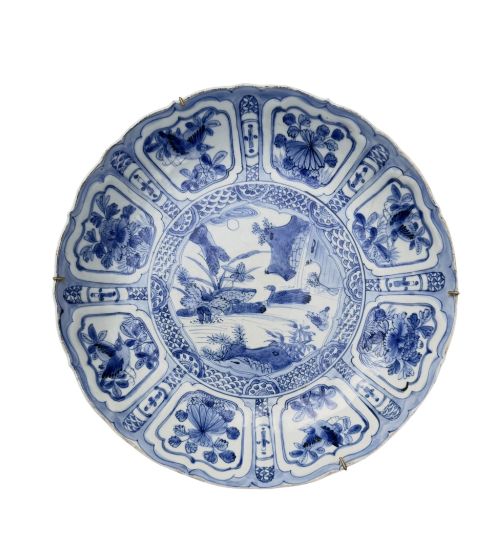
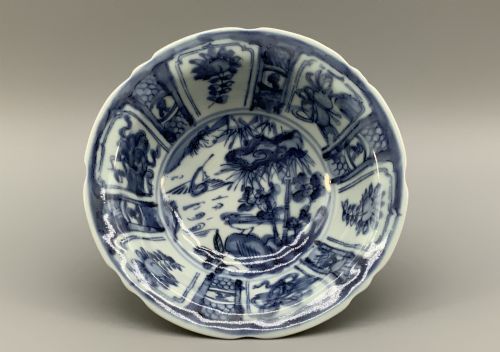
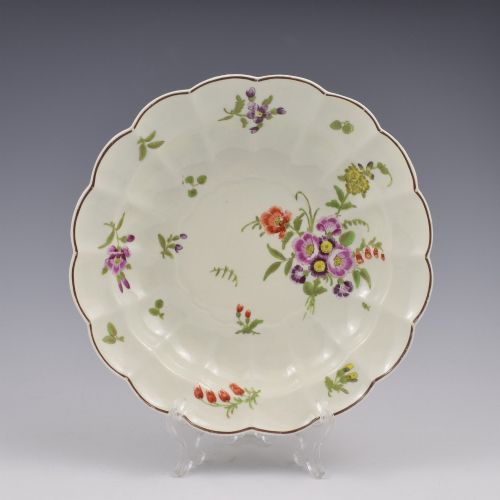
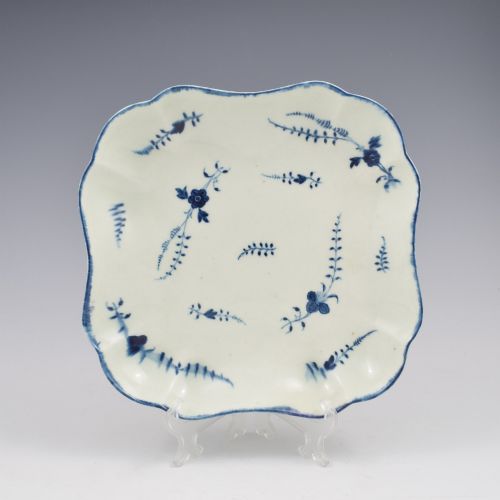
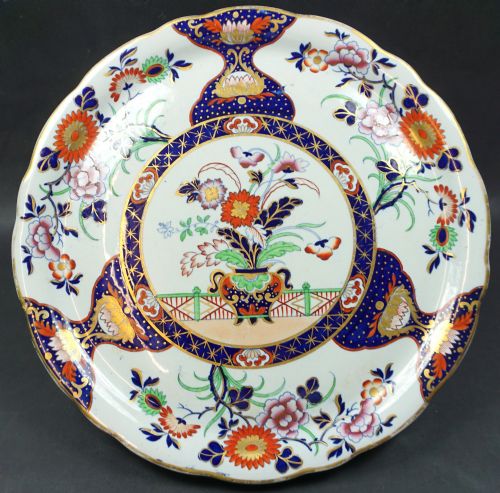
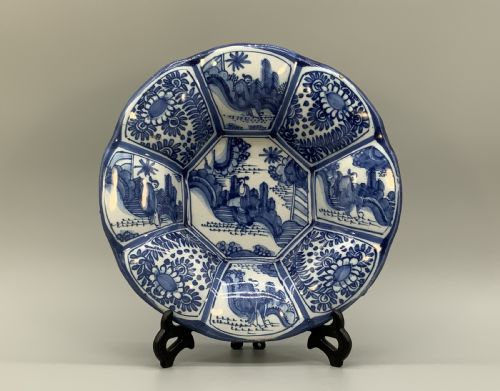
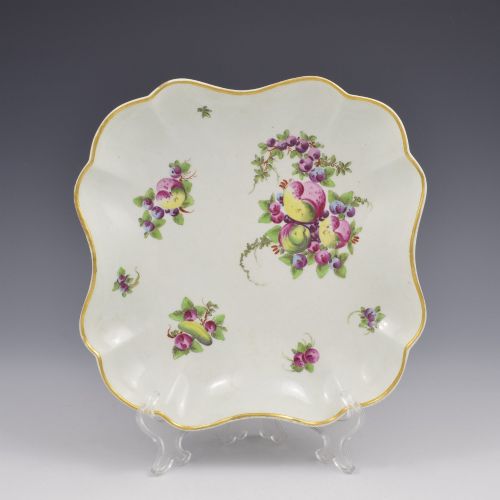
The selection here draws heavily from eighteenth-century English factories such as Worcester and Derby, alongside seventeenth-century Chinese blue and white wares and nineteenth-century Japanese Imari productions. Most examples you encounter combine traditional ceramic body fabrication with painted or gilded surface decoration tailored for display or formal dining.
Materials and techniques
Makers formed these pieces from hard-paste and soft-paste porcelain, applying cobalt underglaze pigments before firing to achieve deep blue tones beneath the glaze. Enamel colours and gold leaf or gilding were frequently added in subsequent overglaze stages, requiring additional low-temperature firings to fix the metallic and polychrome details.
Moulding and shaping techniques created the distinct scalloped or lobed profiles seen on plates and bowls, often mimicking natural forms such as flowers or expanding upon Kraak and Dutch Baroque design templates.
Listings span multiple centuries, incorporating Ming, Qing, Edo, and Victorian periods alongside eighteenth-century soft-paste porcelain.
Judging quality in shaped ceramics
Quality rests upon the crispness of the moulding along the scalloped edges and the precision of the hand-painted brushwork across the surface. Finer pieces demonstrate control in cobalt underglaze painting and delicate execution of enamel and gilt highlights without blurring or pooling.
The distinction between standard domestic wares and superior production lies in the fineness of the porcelain paste itself, the clarity of the glaze, and the confidence of the decorative motifs applied by the painter.
Hicks & Meigh·Barr, Flight & Barr·Rockingham
The Lobed Porcelain Dish Glossary
- Lobed
- Having the edge divided into rounded projections or indentations. This contour defines the characteristic profile of these plates and bowls.
- Cobalt Underglaze
- A blue pigment applied to the ceramic body before glazing and firing. It survives high temperatures to yield a permanent cobalt blue design.
- Imari
- A style of Japanese export porcelain characterised by underglaze blue, iron red, and gilt decoration. These pieces often feature complex floral and panel designs.
- Soft-paste Porcelain
- A ceramic composition made from clay, glass frit, and other materials rather than true kaolin and petuntse. It was widely utilised by eighteenth-century English factories like Worcester.
- Gilding
- The application of gold leaf or gold paint to the surface of porcelain. It highlights rims, handles, and decorative motifs.
Lobed Porcelain Dish: Frequently Asked Questions
How do I date an antique porcelain dish?
Dating relies on factory marks found on the underside, stylistic markers such as Imari palettes or Kraak borders, and the specific composition of the ceramic body. Examining the foot ring and glaze pooling also provides clear clues to the period of manufacture.
Factory records and known painter marks help narrow down production years, particularly for eighteenth-century English works and nineteenth-century Japanese exports.
Were these dishes used for food?
Many were made as dessert plates, soup plates, and serving dishes for formal dining tables, holding fruit, sweetmeats, or course portions. Others served primarily as display pieces in European interiors influenced by Asian trade.
Over time, handling shifted from daily dining service to cabinet display and collection, particularly for fragile soft-paste and gilt pieces.
How should I display a shaped dish?
Displaying these pieces involves plate stands that secure the scalloped base without obscuring the moulded rim or the painted interior scenes. Wall mounting requires specialised hangers designed for lobed edges.
Keeping them away from direct sunlight protects enamel colours and delicate gilding from fading over the years.
What is the difference between Imari and blue and white?
Blue and white porcelain relies exclusively on cobalt underglaze pigments applied directly to the white body before firing. Imari porcelain incorporates a tripartite palette of underglaze blue, iron red, and extensive gold leaf.
Imari pieces date predominantly from Japanese Edo and later nineteenth-century periods, whereas blue and white spans Chinese Kraak, Kangxi, and various European revivals.