


Hand Painted Landscape Dish
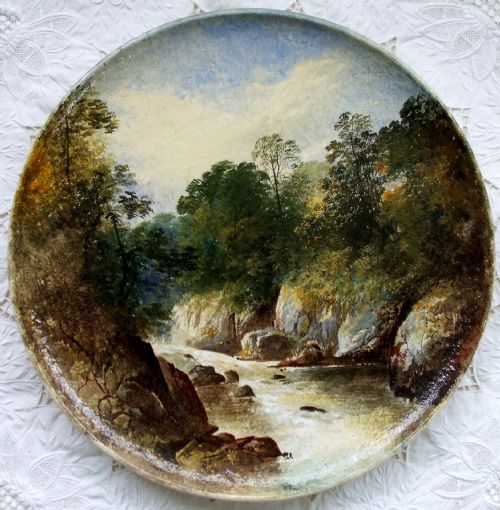
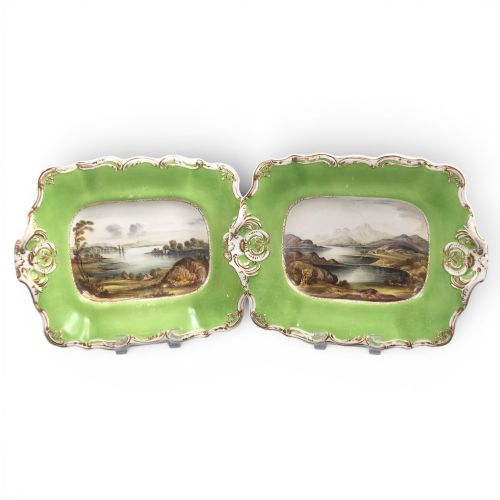
A hand painted landscape dish brings a framed view of river, lake or valley straight to the table or cabinet.
Hand Painted Landscape Dish
When you search for a hand painted landscape dish, you encounter serving vessels, cabinet plates and plaques bearing topographical scenes from the eighteenth, nineteenth and early twentieth centuries. English potteries like Copeland, Minton and Worcester dominate the selection, alongside continental and Chinese export porcelain.
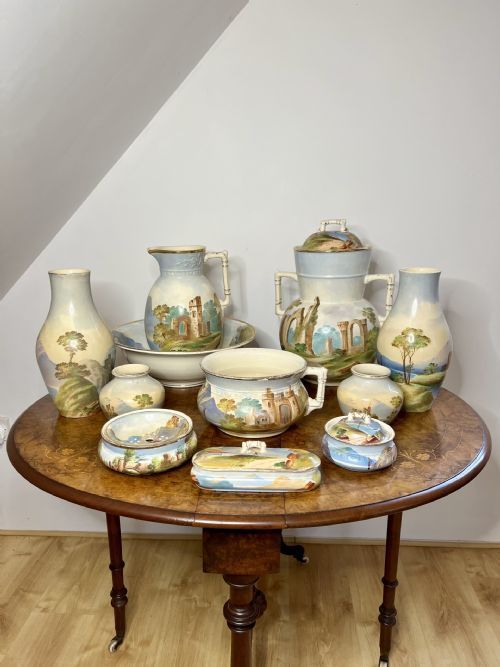
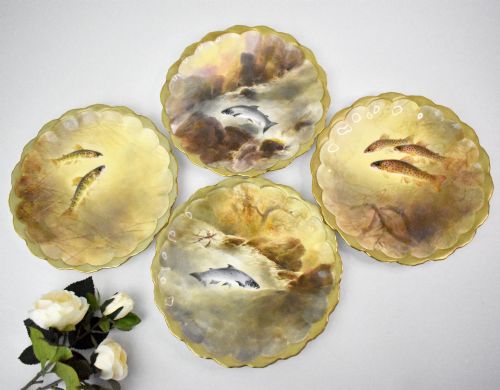
The forms vary from large dessert dishes and fish plates to wash sets and covered tureens, each serving as a canvas for natural scenery. Most examples date from the Victorian and Georgian eras, reflecting a period when painted views of British and European beauty spots were highly fashionable in domestic interiors.
How they were made
Potters shaped these pieces using porcelain, bone china and earthenware, finishing them with clear glaze and cobalt underglaze. Artisans applied polychrome paint by hand, capturing specific locations such as Welsh valleys and Scottish lochs directly onto the ceramic body.
Many items incorporate gold leaf gilding and raised enamel details, particularly the pearl jewelled decoration found on nineteenth century dessert services. Kiln firing fixed the pigments and metals permanently into the glaze, creating a glossy surface designed for display or careful service.
A nineteenth century flower encrusted basket captures the Isle of Wight Needles in miniature paint.
What varies in quality
The distinction between ordinary production and top tier pieces rests upon the skill of the brushwork and the specificity of the subject. Factory painted items with generic foliage sit below signed works by named artists who depicted recognisable topographical locations with fine detail.
The complexity of the surrounding ceramic body also determines the tier of the piece, with flower encrusted baskets and raised pearl gilding demanding greater technical mastery than plain circular plates.
William Yale·Copeland and Garrett·Royal Doulton·Mintons·Rockingham·Pucher Deroche·Coalport·Derby·Barr Flight Barr Worcester·Clarice Cliff·Aynsley·Royal Worcester·Stinton
The Hand Painted Landscape Dish Glossary
- Cabinet plate
- A decorative plate intended for display on a wall or within a cabinet rather than for practical dining use. These often feature elaborate painted scenes and gilded borders.
- Cobalt underglaze
- A blue pigment applied to ceramic wares before the final glaze and firing. This technique protects the deep blue colour beneath a glossy vitrified layer.
- Bone china
- A type of soft paste porcelain containing bone ash. It produces a strong, translucent body well suited to detailed painted landscapes.
- Enamel
- Opaque vitreous material fused to pottery or metal surfaces through firing. It adds raised colour and tactile dimension to painted designs.
- Dessert service
- A matching set of plates, dishes and sometimes tureens created for the final course of a formal meal. Surviving pieces often display individual landscape views across the set.
Hand Painted Landscape Dish: Frequently Asked Questions
How were landscape dishes used?
Many of these pieces served practical functions on the dining table, holding fruit, cream or fish during formal courses. Others served as decorative plaques or cabinet plates meant solely for visual display in reception rooms.
Over time, changing fashions moved elaborate serving dishes away from active dining use and into display cabinets where their painted views remained protected from wear.
How do I identify the maker?
Makers marked their porcelain using printed stamps, impressed ciphers or painted factory script on the underside of the base. These marks often include pattern numbers or registry dates that help narrow down the period of production.
Individual artists sometimes signed their landscape miniatures directly beneath the painted view or near the foot rim, allowing collectors to trace specific hands.
Can I use these dishes daily?
Historic ceramics with hand painted surfaces and gold leaf require gentle handling and hand washing to preserve the delicate pigments. Daily use risks wearing down the enamel and gilding built up over centuries in the kiln.
Most owners prefer to exhibit these items in cabinets or mount them securely on walls where the landscape scenes can be enjoyed safely.
How do I tell periods apart?
Georgian and Regency pieces often feature classic forms with hand painted British or Scottish views accompanied by simple gilded borders. Victorian and Edwardian examples tend toward heavier gilding, jewelled enamel effects and named Welsh or lake district vistas.
Earlier eighteenth century imports show Chinese export characteristics, while later nineteenth century items reflect industrial standardisation paired with skilled individual brushwork.