




Lion Mask Brass Planter
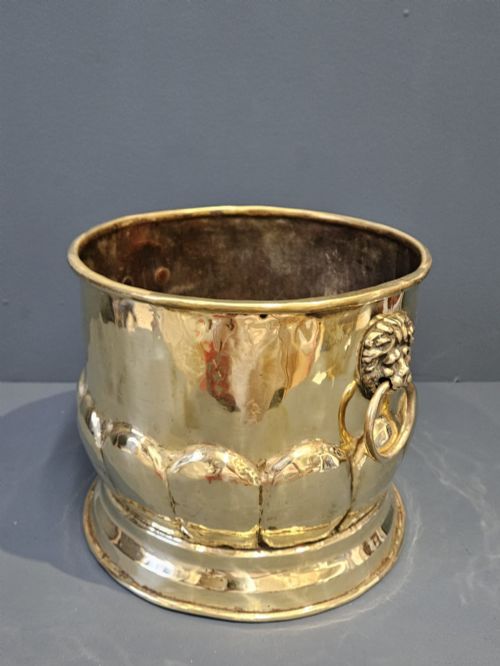
A lion mask brass planter brings weight and ancient imagery into a room, combining solid metal vessels with sculptural animal mounts.
Lion Mask Brass Planter
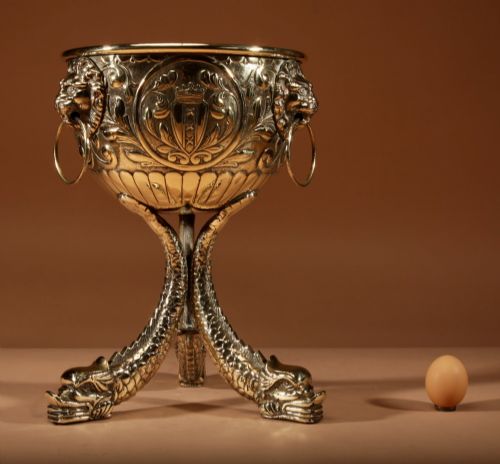
A lion mask brass planter is primarily encountered in Victorian and nineteenth-century forms, alongside earlier eighteenth-century Dutch and French examples. These pieces serve as jardinieres, log bins, wine coolers, and cauldrons, moving easily between floral displays and fireside storage.
Origins span British workshops, French foundries, and Dutch traditions, reflecting both formal revival styles and domestic utility. The listings demonstrate a clear preference for robust nineteenth-century interpretations featuring these distinct animal mounts.
Materials and Techniques
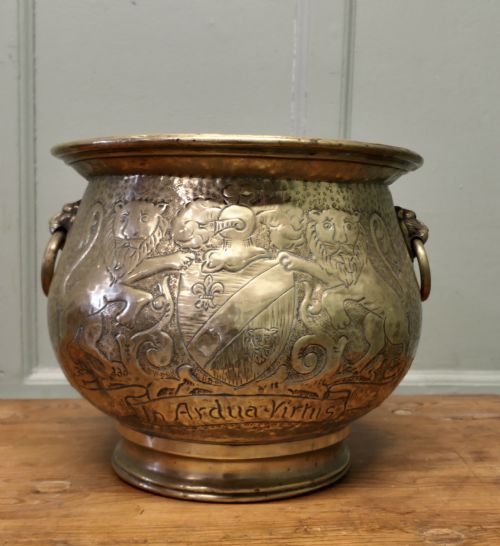
Construction relies heavily on sheet and cast brass, frequently paired with copper bands, zinc liners, and coopered mahogany bodies. Metalworkers utilised repoussé work, hammering designs from the reverse to create raised ornamentation on the vessel walls.
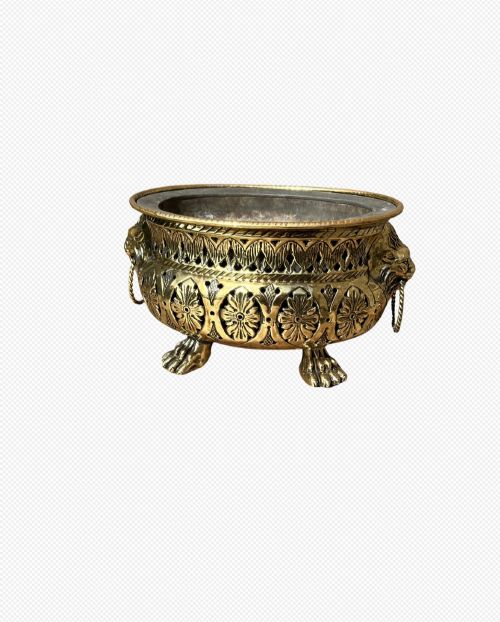
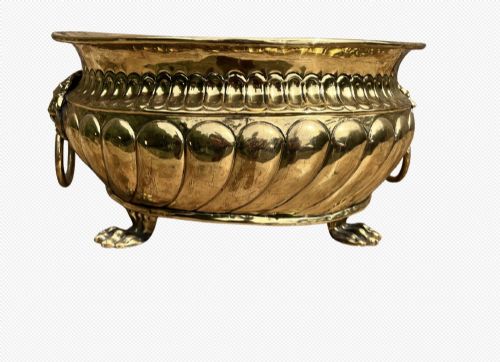
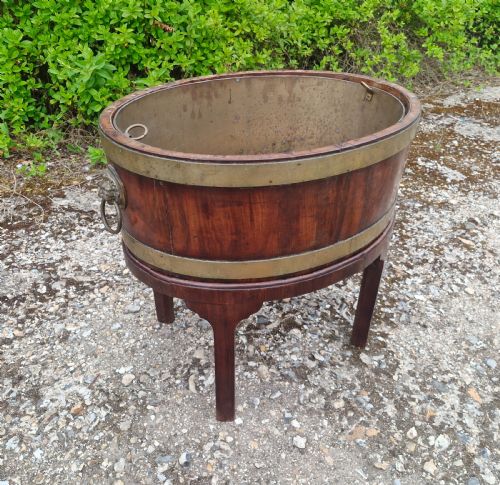
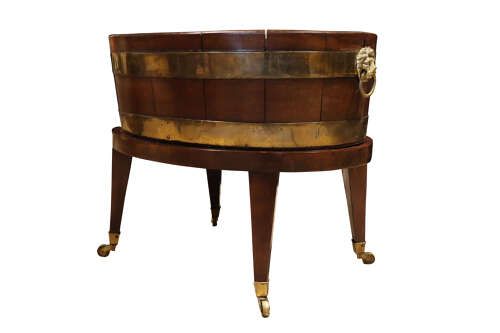
Casting provided the heavy lion mask handles and paw feet, which were then attached to the main body through soldering or riveting. Timber planters employ traditional coopering techniques with tight stave construction bound by heavy brass hoops.
Object forms span traditional jardinieres, wine coolers, cellarettes, log buckets, cauldrons, and cylindrical planters on stands.
Craftsmanship and Proportion
Quality rests in the crispness of the casting on the lion masks and the weight of the metal used for the body. Superior examples display deep relief work in repoussé decoration and secure, well-integrated handles rather than flimsy applied elements.
Proportion and structural integrity dictate the standing of a piece, particularly when mahogany stands or coopered staves are involved. The finest items maintain balanced forms where decorative mounts complement the utilitarian vessel without appearing cluttered.
The Lion Mask Brass Planter Glossary
- Repoussé
- A metalworking technique where the artisan hammers the design from the reverse side to form a raised pattern on the front. This method gives texture and depth to the brass body.
- Jardiniere
- An ornamental pot or stand designed to hold live plants or floral arrangements. They appear frequently in brass, copper, and ceramic across the nineteenth century.
- Coopered
- Built from vertical wooden staves fitted together and bound by metal hoops, much like a barrel. This technique forms the body of mahogany plant bins and wine coolers.
- Dinanderie
- A term for various objects made of brass, copper, or bronze, originating from the Belgian town of Dinant. It often describes medieval and revival brassware.
- Hearthware
- Metal objects designed for use around an open fire, including log bins and coal buckets. These vessels often double as planters in domestic settings.
Lion Mask Brass Planter: Frequently Asked Questions
How do I clean a brass planter?
Maintenance requires gentle washing with warm soapy water and a soft cloth to remove dust and dirt.
Avoid harsh commercial metal polishes that strip the aged patina and historic surface character.
Are these planters waterproof?
Many antique metal vessels lack modern sealants and may develop leaks over time if filled directly with water and soil.
Utilising a modern inner pot or plastic liner protects the historic metal from moisture damage and corrosion.
What is the difference between a jardiniere and a log bin?
Jardinieres generally feature decorative pierced galleries or lighter walls intended for holding potted plants on tables or stands.
Log bins are built with heavier gauge metals or wood staves designed to hold firewood near a fireplace.
How do I date a Victorian brass planter?
Dating relies on manufacturing marks, construction methods such as machine rolling versus hand hammering, and stylistic revival cues.
Victorian pieces frequently incorporate Gothic or Renaissance revival motifs alongside heavy embossed lion masks.