



Vintage Metal Jardiniere
A vintage metal jardiniere brings sculptural planting indoors, housing ferns and flowering pots within brass, copper, or iron vessels.
Vintage Metal Jardiniere
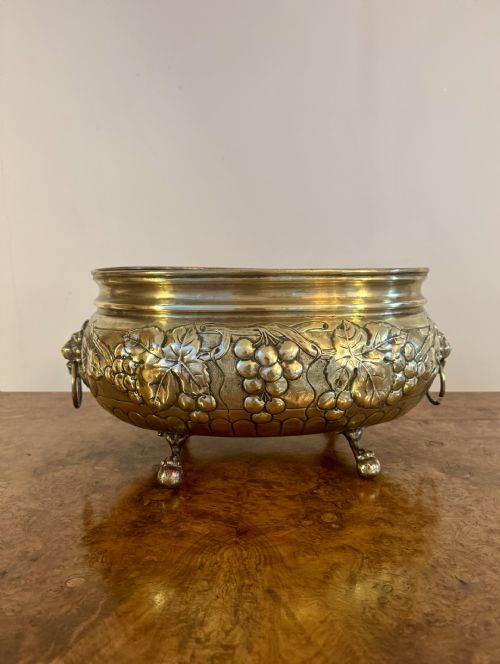
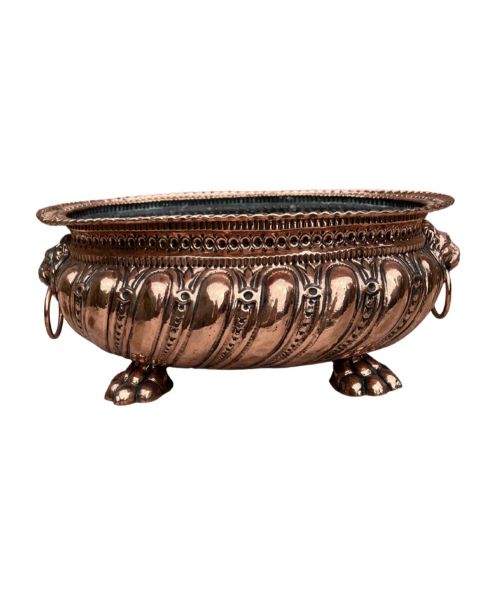
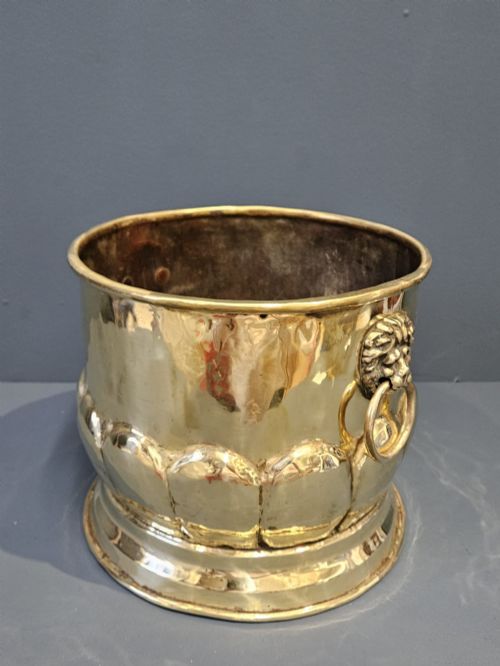
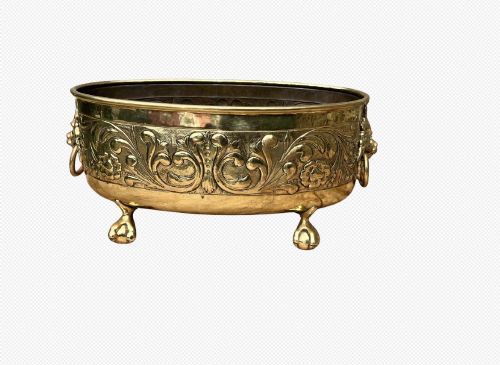
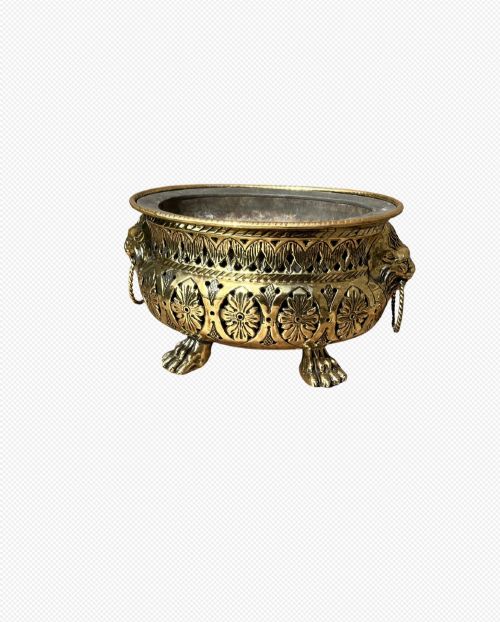
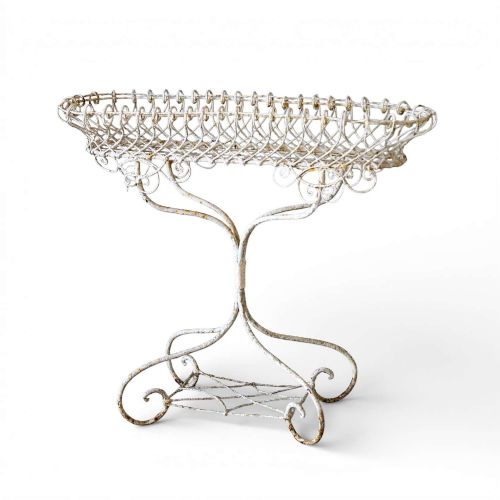
A vintage metal jardiniere serves as a decorative plant holder designed to display greenery within domestic interiors and conservatories. These vessels range from Victorian brass bowls and Edwardian copper planters to French cast iron garden urns and intricate wirework plant stands.
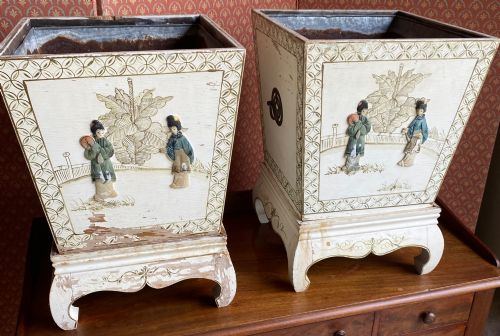
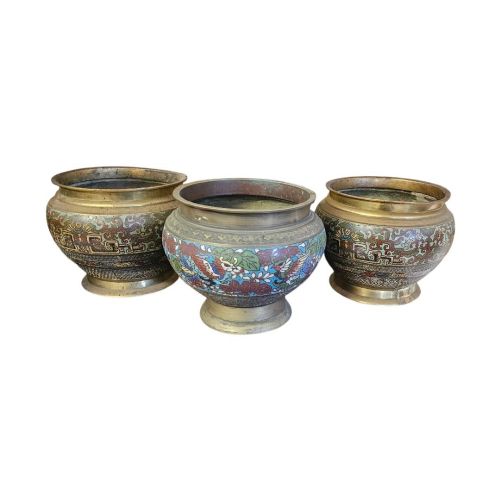
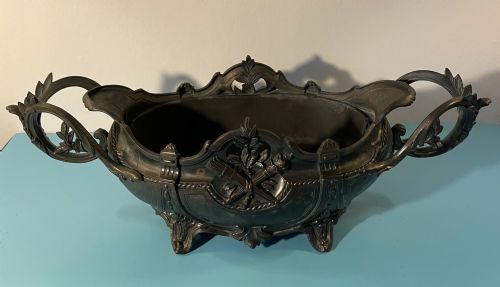
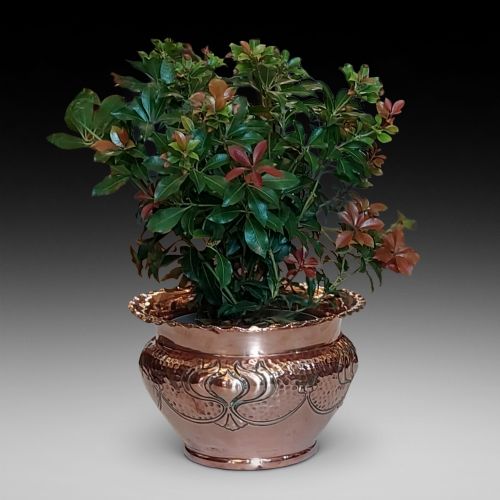
The selections span the nineteenth and early twentieth centuries, incorporating Arts and Crafts solidity alongside ornate Art Nouveau curves and Chinoiserie bronze enamelling. Buyers most frequently encounter nineteenth-century brass and copper iterations, often stamped or embossed with crests and motifs.
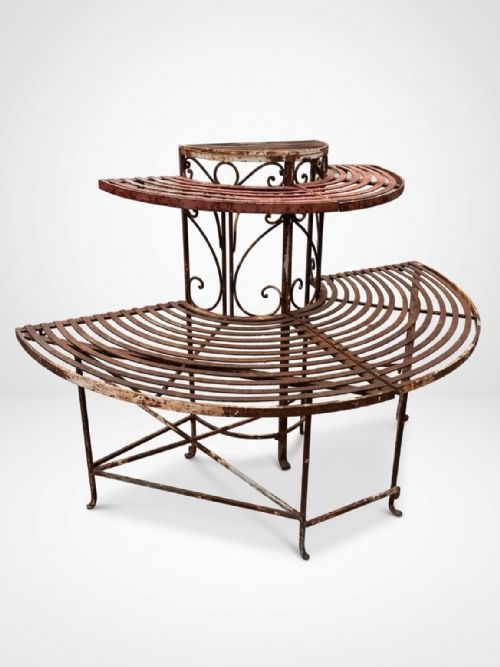
Beyond traditional planters, the forms extend to plant stands, cellarettes, and tiered wire structures created to elevate botanical displays. Origins traverse English, French, Dutch, and Belgian workshops, reflecting distinct regional tastes in domestic horticulture.
Materials and Technique
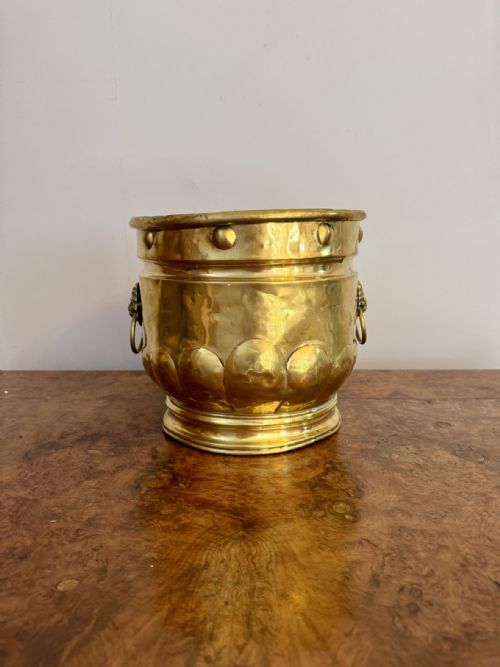
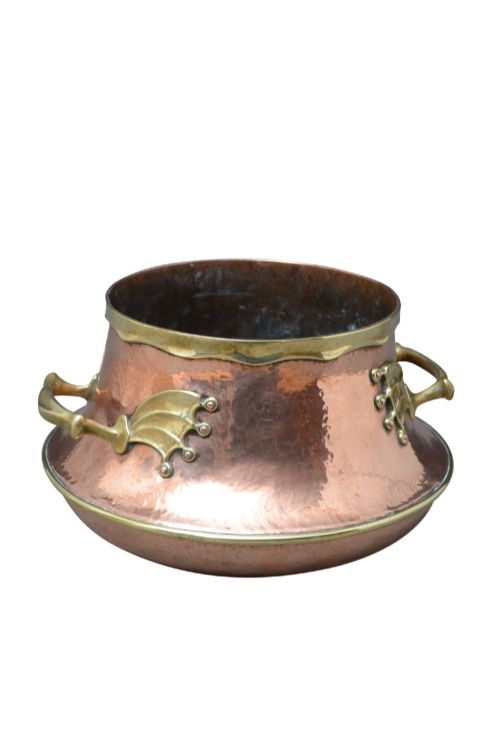
Metalworkers utilised heavy gauge brass and copper, shaping vessels through hammering, spinning, and casting techniques. Surface treatments include hand-embossing, piercing, and champlevé enamelling, creating textured panels and geometric patterns characteristic of Arts and Crafts production.
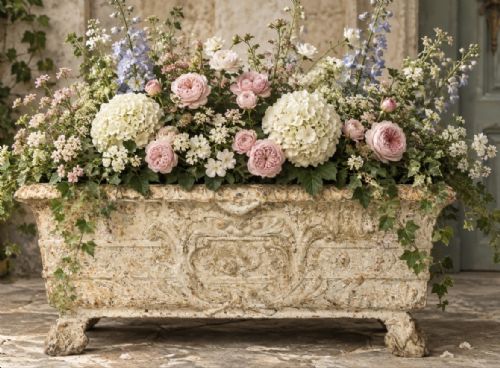
Iron appears in both cast and wrought forms, fashioning sturdy garden urns and scrollwork plant stands finished with dark paint. Ormolu mounts and fine wirework supplement these primary metals, demonstrating diverse assembly methods across different periods.
Vintage Metal Jardiniere Retail Price Guide 2026
Typical asking prices for vintage metal jardiniere among the pieces listed under this phrase on Sellingantiques today, from the lower quarter to the upper quarter. They describe what is for sale here now, not the wider market.
Cast iron planters shaped specifically like giant shrimp offer a surprisingly eccentric touch of nineteenth-century marine whimsy.
Assessing Craftsmanship
Quality reveals itself in the thickness of the metal gauge and the crispness of hand-hammered or embossed details. Superior examples exhibit robust construction, well-joined seams, and retained original stands rather than later replacements.
Artisanal execution distinguishes finer vessels, where chased decoration remains sharp and integrated handles or cast feet are securely fixed. Lesser pieces display thinner sheets, softened stamped patterns, or compromised structural integrity from heavy use.
The Vintage Metal Jardiniere Glossary
- Jardiniere
- A decorative pot or stand designed to hold growing plants or flowers. These vessels sit upon tables or floor stands within principal rooms.
- Champleé
- An enamelling technique where troughs are carved into a metal surface and filled with vitreous enamel before firing. This method produces vivid decorative motifs on bronze and brass vessels.
- Ormolu
- Gilded bronze mounts applied to furniture and decorative objects. French makers frequently utilised these polished metallic accents to embellish wooden and metal planters.
- Dinanderie
- Medieval and later European brass and copper hollowware produced in regional centres. The term describes hammered and cast alloy vessels with historical precedence.
- Wirework
- Botanical furniture constructed from woven or welded wire strands. These tiered stands and plant holders populated Victorian conservatories and gardens.
Vintage Metal Jardiniere: Frequently Asked Questions
What is a vintage metal jardiniere used for?
These decorative vessels hold potted plants, ferns, and floral arrangements inside homes and conservatories. They protect interior surfaces while elevating botanical displays.
Historically, they brought outdoor greenery into nineteenth-century drawing rooms. Today, they serve similar decorative functions or act as standalone sculptural objects.
How do I clean a brass or copper planter?
Gentle dusting and mild soapy water preserve the aged surface patina on vintage metal. Harsh chemical polishes strip away historical character and desirable oxidation.
Allowing the natural tarnishing process to continue maintains the authentic appearance of nineteenth-century brass and copper. Protective wax can stabilise vulnerable surfaces.
Can these planters be used outdoors?
Cast iron and wrought iron versions suit garden patios and conservatory environments. They withstand weather exposure better than delicate brass or wired structures.
Indoor copper and brass vessels lack weather resistance and suffer corrosion if left outside. Protecting them from moisture prevents structural degradation.
How do I date a metal jardiniere?
Stylistic markers such as Art Nouveau whiplash lines or Arts and Crafts hand-hammering indicate specific periods. Construction methods, including machine rolling versus hand-beating, offer further clues.
Maker marks, crests, and regional casting techniques help narrow down the decade of production. Comparative analysis with dated pieces confirms the era.