



Lidded Silver Vessel
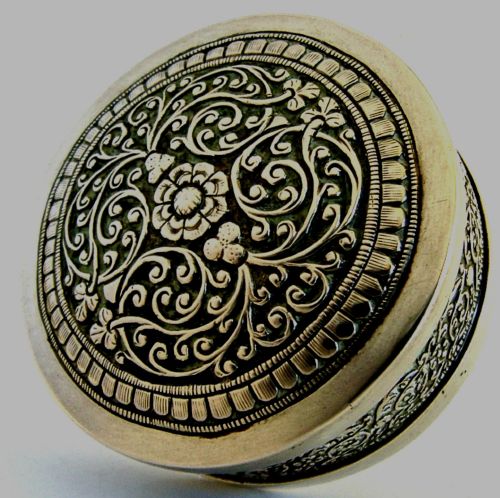
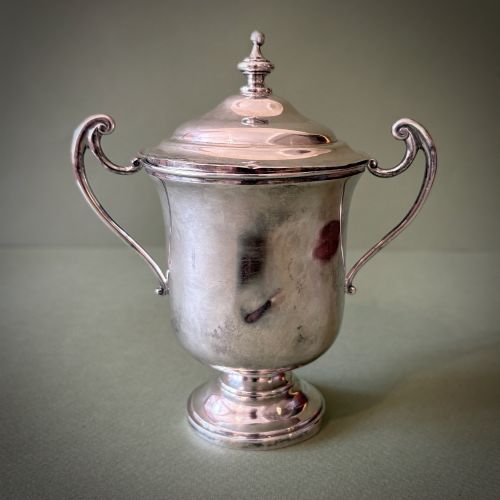
A lidded silver vessel brings substance to the table, taking forms from heavy eighteenth-century tankards to delicate mustard pots.
Lidded Silver Vessel
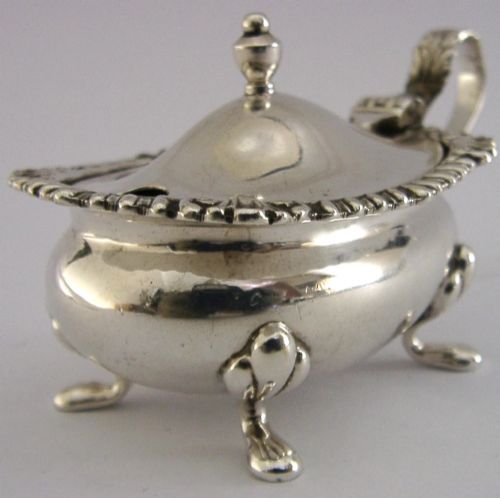
A lidded silver vessel covers a wide spectrum of functional domestic items, ranging from towering beer jugs and tankards to small mustard pots and sugar baskets. When searching for a lidded silver vessel, buyers encounter objects spanning several centuries, with Georgian and Victorian examples appearing frequently alongside pieces from the Edwardian era and around nineteen hundred.
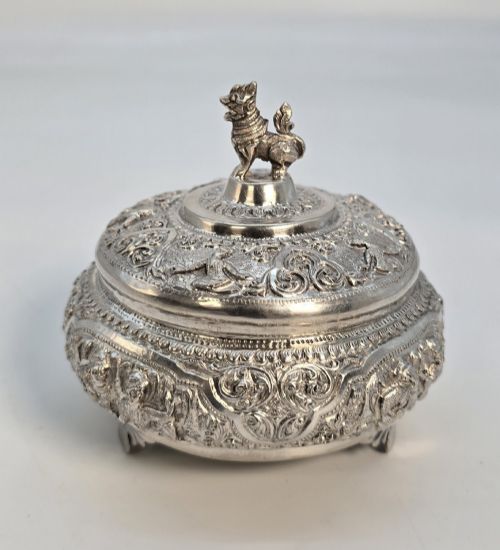
The selection includes British sterling silver, Old Sheffield plate, and continental pieces from Germany and France, alongside Anglo-Indian colonial work and Japanese bronze and silver items. Tankards, preserve jars with cut glass, trinket boxes, and condiment pots make up the primary domestic forms available on the market.
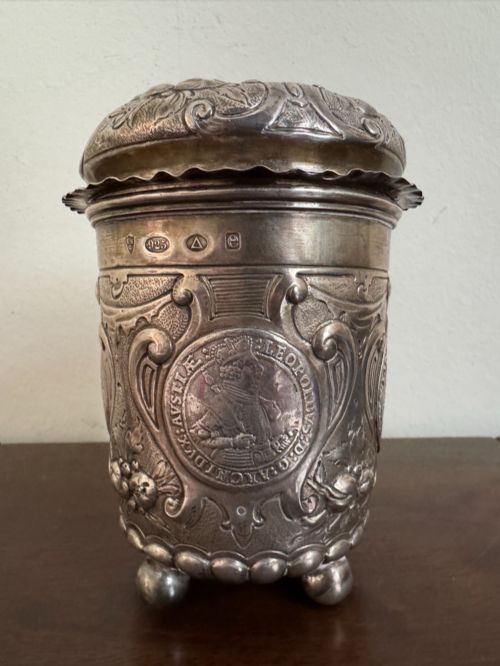
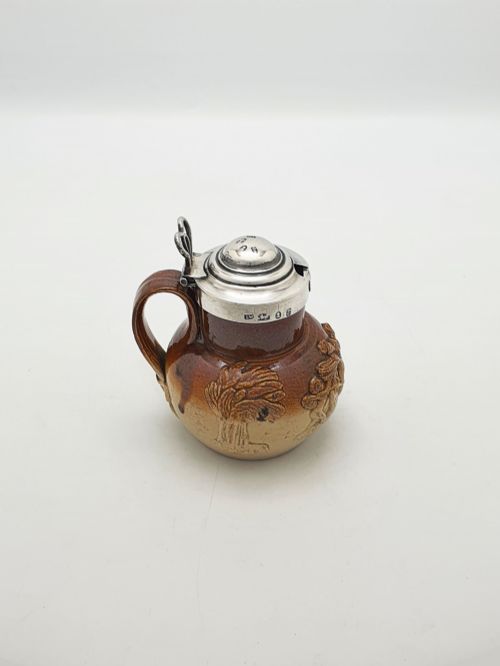
Regional variations introduce distinct character to these pieces, such as German coin beakers with covers, French vermeil covered bowls, and American cups with covers. Stoneware jugs fitted with sterling silver collars and hinged lids represent the crossover between ceramic bodies and metalwork.
Materials and construction methods
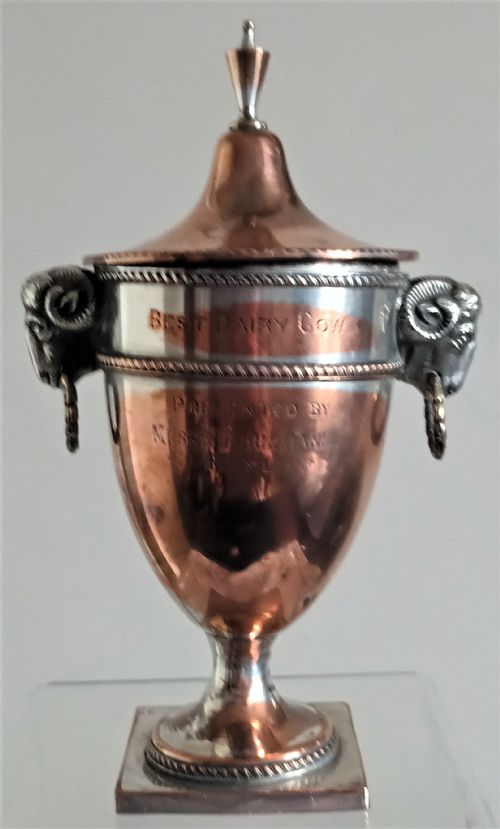
Makers shaped these vessels from sterling silver, silver plate, and Old Sheffield plate, often combining metal with cut glass, cranberry glass, stoneware, or bone liners. Copper provides the base for Old Sheffield plated items, while applied silver mounts secure glass bodies on preserve jars and trinket boxes.
Hinged lids require precise smithing to align with collars on tankards, mustard pots, and glue pots, ensuring a tight fit. Engraving, enamelling, and coin insertions decorate the surfaces of German coin beakers and English presentation cups.
Distinctions in craftsmanship and condition
Quality rests in the weight of the metal and the crispness of the chased or engraved detail on tankards, sugar urns, and presentation cups. Heavier gauge silver and substantial Old Sheffield plate retain structural integrity and sharp hallmarks over centuries of use.
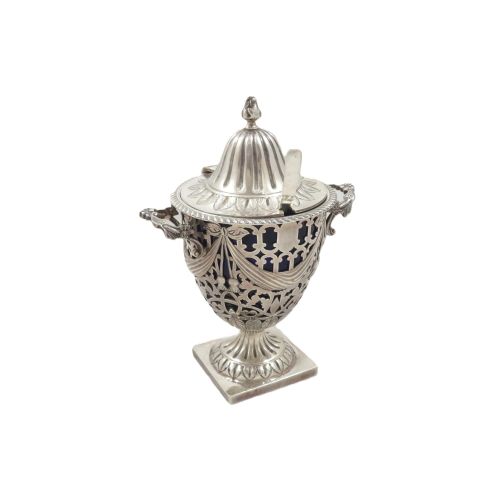
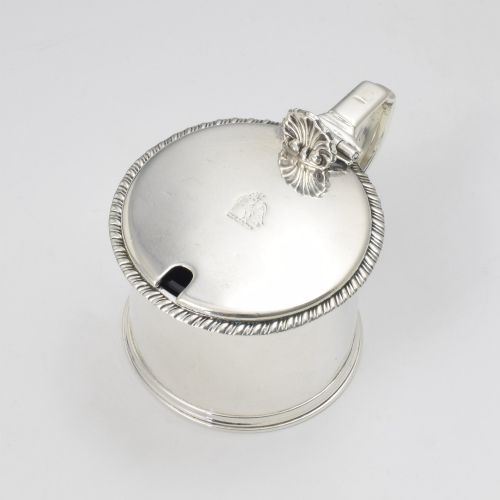
The integration of secondary materials defines the upper tier of pieces, seen in clear cut glass bodies, intact blue glass liners within mustard pots, and tightly fitted hinged covers that operate smoothly without play.
Charles Fox II·John Payne·Robert Hennell I·Thomas Bradbury·Heath and Middleton·Asprey
The Lidded Silver Vessel Glossary
- Tankard
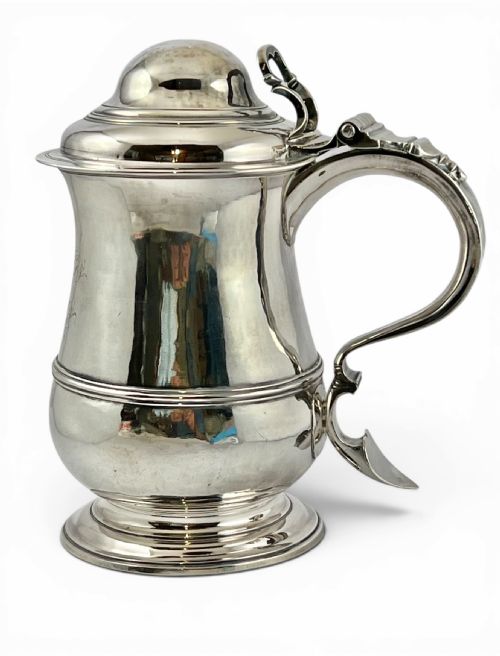
- A tall drinking vessel featuring a single handle and a hinged lid, typically produced in silver, silver plate, or stoneware with silver mounts for beer and cider.
- Old Sheffield Plate
- A composite material formed by fusing a sheet of silver to a thicker copper base, common in eighteenth- and nineteenth-century jugs and tankards.
- Mustard Pot
- A small tabletop container designed for condiment storage, frequently fitted with a pierced or solid body and a removable blue glass liner.
- Vermeil
- Sterling silver that has been gilded with a thin layer of gold, often found on French covered bowls and presentation pieces.
- Hallmark
- A series of stamped symbols indicating the purity of the metal, the maker, and the year of assay on British and European silver.
Lidded Silver Vessel: Frequently Asked Questions
How do I clean a lidded silver vessel?
Use a soft cloth and a specialised silver polish designed to remove tarnish without abrading the surface or damaging applied engraving.
Avoid abrasive pads and harsh chemical dips, particularly on plated items where excessive scrubbing wears through the silver layer down to the base metal.
What is the difference between sterling and silver plate?
Sterling silver contains a standardised proportion of pure silver alloyed with other metals for durability, making the entire object precious metal throughout.
Silver plate and Old Sheffield plate consist of a base metal core, such as copper, covered with a thin exterior layer of silver.
Can I use antique silver mustard pots daily?
Many mustard pots retain their original blue glass liners, which protect the silver from corrosive condiments during regular use.
Wash the glass and metal components separately in warm soapy water immediately after use to prevent vinegar and salt from pitting the interior.
How do I date an unmarked lidded silver vessel?
Examine the vessel for style indicators, such as the neoclassical proportions of a Georgian urn or the heavier decorative motifs of Victorian tankards.
Construction techniques, such as the copper seam lines visible on early Old Sheffield plate, also provide clues to the manufacturing period.