
Library Table Desk
When you search library table desk, you step into a world of heavy timbers and tailored writing surfaces designed for scholarly rooms and grand studies.
Library Table Desk
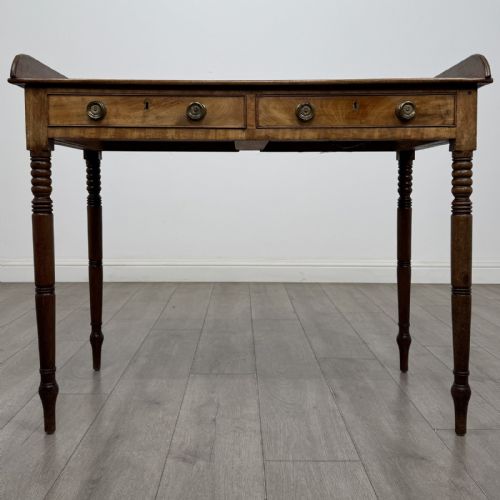
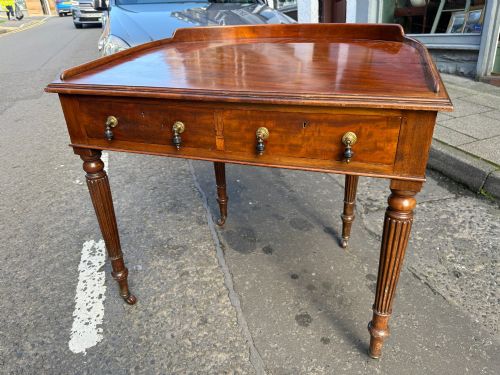
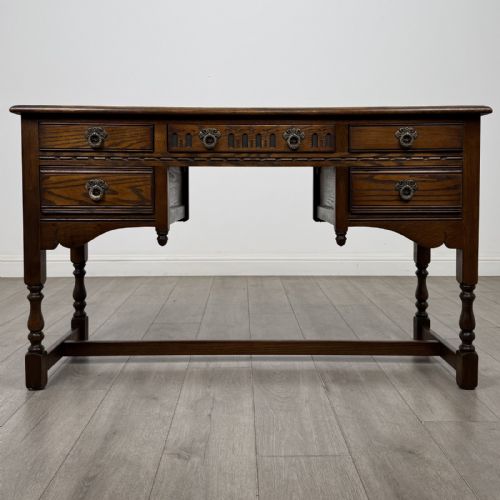
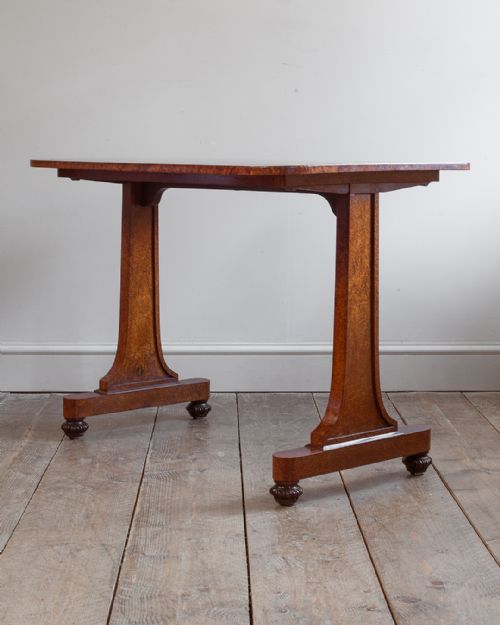
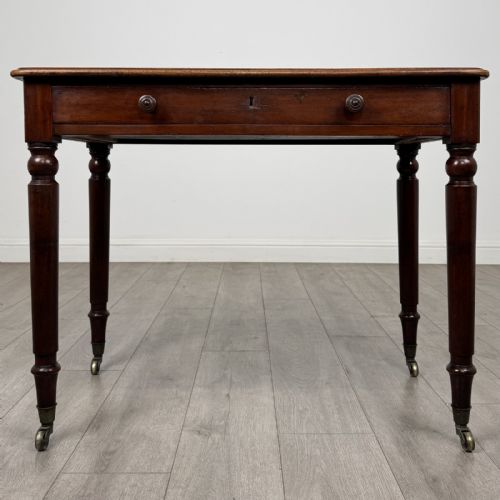
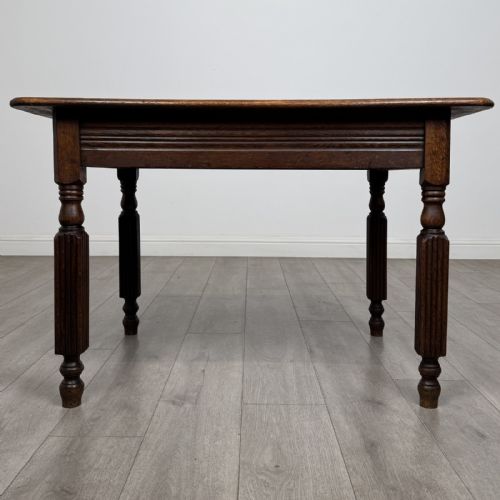
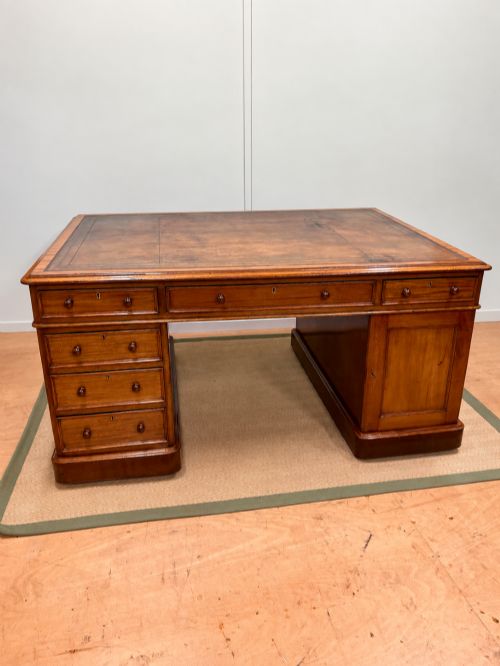
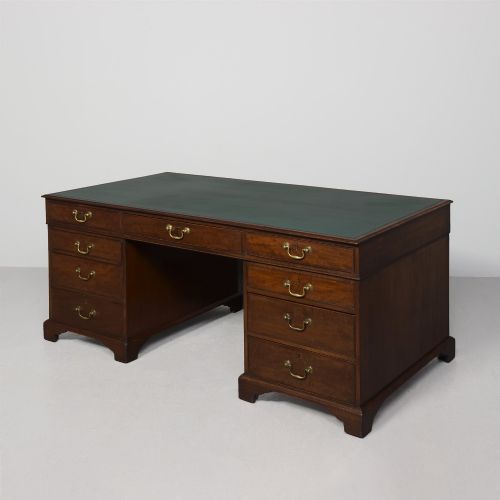
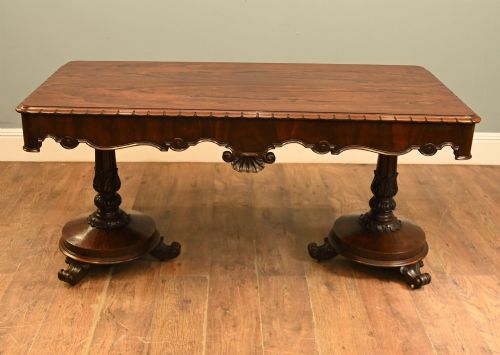
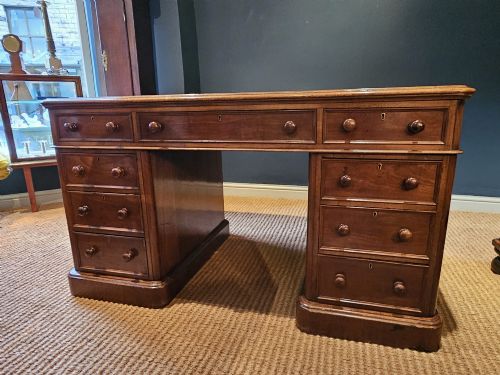
A library table desk brings together freestanding centre tables, twin-pedestal partners desks, and rotating drum forms designed for writing and study. These pieces originate primarily from the 19th century, spanning the Regency, William IV, and Victorian eras through to Edwardian interpretations.
The materials you encounter most frequently include dense hardwoods such as mahogany and rosewood, alongside oak, walnut, and satinwood. Many examples incorporate leather writing inserts framed by timber or brass detailing.
Forms range from simple four-legged writing tables to double-sided partners desks built for simultaneous use, often accompanied by specialist library clocks and revolving bookcases.
How they were made
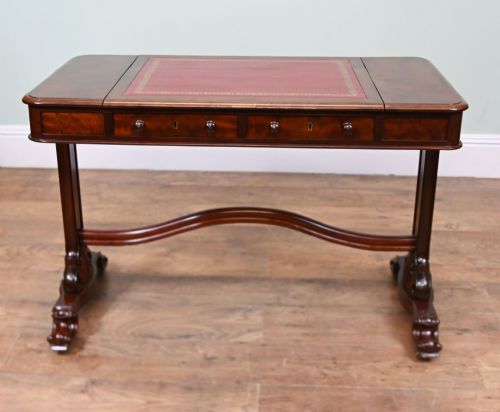
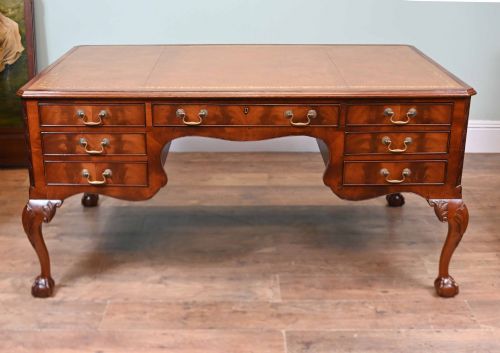
Cabinetmakers utilised solid timbers and figured veneers, selecting mahogany, rosewood, and oak for their structural strength and rich grain patterns. Surfaces frequently incorporate inset panels of tooled leather to provide a smooth writing plane.
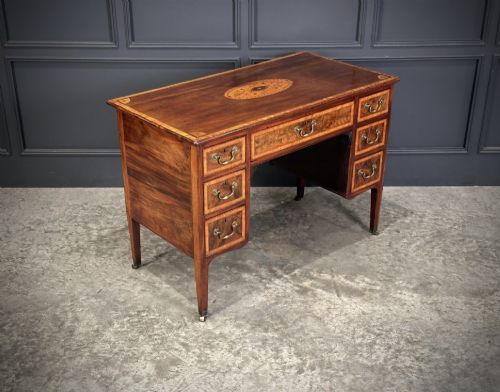
Decorative embellishments include cast brass mounts, ormolu, and fine inlay work executed in satinwood or marquetry. Drawers are constructed with traditional hand-cut dovetails and often retain their original brass handles.
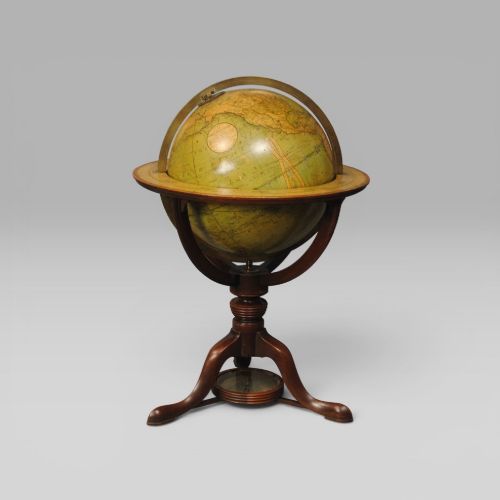
Among the heavy timbers and leather-bound ledgers, a cheerful 19th-century terrestrial globe on a walnut foot waits to spin.
What varies in quality
The distinction between standard workshop production and master cabinetmaking lies in the selection of timber figures, such as burr walnut or flame mahogany, and the crispness of carved details. Superior examples display seamless veneering and balanced proportions across all visible sides.
Original hardware, including locks, keys, and gilt-tooled leather inserts, elevates an object's integrity. Maker attribution through stamps or documented provenance also separates utilitarian furniture from elite commissions.
Trollope And Sons·Edwards And Roberts·Maple And Co·Francois Linke·Johnstone And Jeanes·Charles Andrea Nosotti·Gillows Of Lancaster·Lamb Of Manchester·Arthur Simpson Of Kendal
The Library Table Desk Glossary
- Partners desk
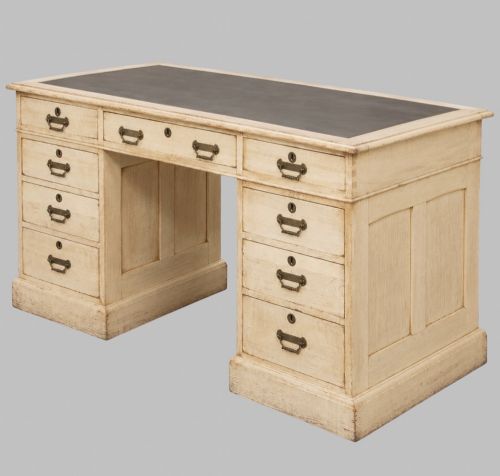
- A large double-sided desk designed for two people to work opposite one another, featuring drawers and cupboards accessible from both faces. These pieces were standard fixtures in boardrooms and estate studies.
- Drum table
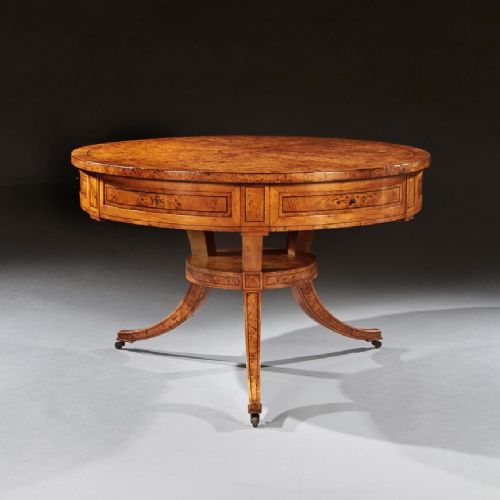
- A circular library table with a revolving or stationary top surrounded by a deep frieze containing alternating drawers and dummy drawers. They stand upon a central pillar supported by splayed legs.
- Bureau plat
- A freestanding French writing table featuring a rectangular top inset with leather and one or more drawers in the frieze. These tables are typically finished on all sides for placement in the centre of a room.
- Sofa table
- A slender table designed to stand in front of a sofa, fitted with drop leaves at either end and twin drawer banks below. They frequently date from the Regency period and utilise rosewood or mahogany.
- Frieze
- The horizontal band situated directly beneath the top surface of a table or desk, often housing drawers or serving as a canvas for decorative carving and inlay.
Library Table Desk: Frequently Asked Questions
What is the difference between a library table and a partners desk?
A library table is a freestanding table typically finished with a single bank of drawers or an open frieze, designed for reading and displaying books in the centre of a room.
In contrast, a partners desk provides workspace on both sides with opposing banks of drawers, built specifically for two people to work face-to-face.
How can I identify a Regency period desk?
Regency desks, dating from the early 19th century, often feature classical architectural lines, rosewood or mahogany timbers, and distinctive brass inlay or ormolu mounts.
They frequently display sabre legs or central pillar supports rather than heavy pedestal cupboards.
Are these desks suitable for modern computer use?
Many antique library tables and pedestal desks offer generous surface areas and sturdy construction that comfortably accommodate modern technology.
Deep drawers and double-sided configurations also provide ample storage for office equipment without disrupting the traditional aesthetic.
What woods were commonly used in Victorian writing furniture?
Victorian cabinetmakers relied heavily on mahogany as the primary structural timber, supplemented by rich rosewood, walnut, and golden oak.
More decorative pieces incorporated burr walnut, satinwood, and ebonised finishes to achieve contrasting tones.