
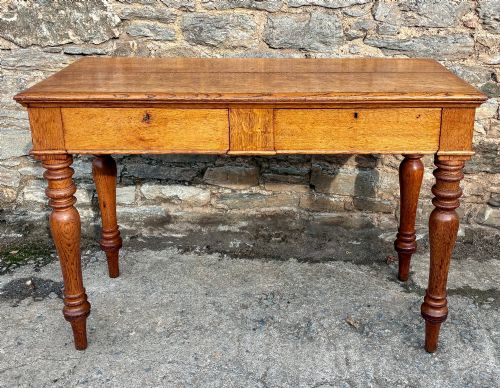
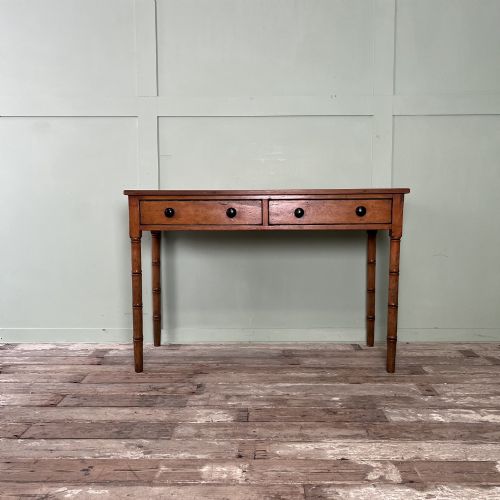
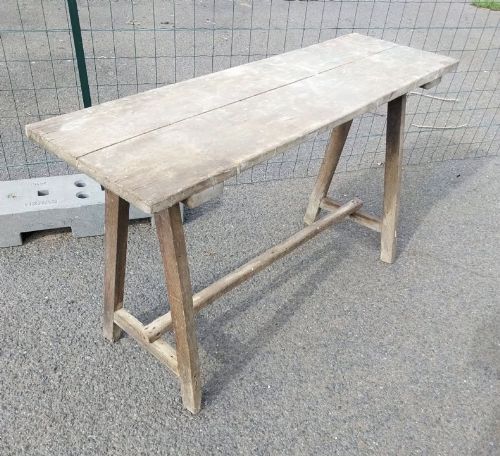
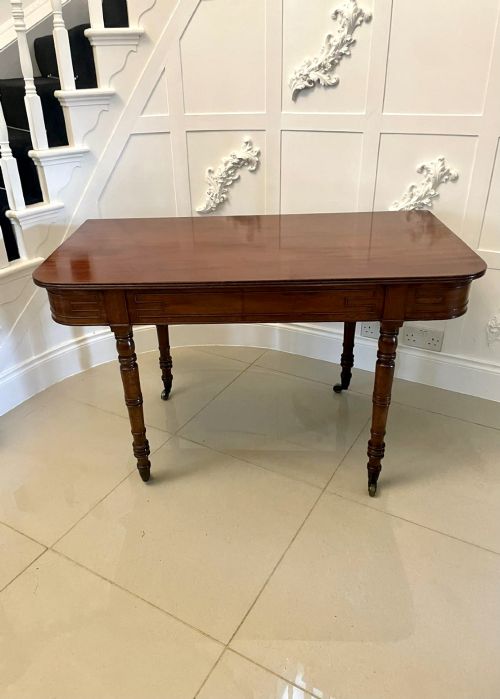
Hallway Console Desk
A hallway console desk provides a practical surface for compact spaces, drawing on Georgian, Victorian, and Edwardian designs.
Hallway Console Desk
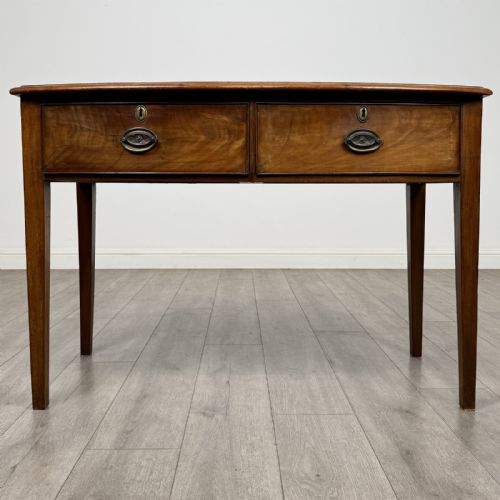
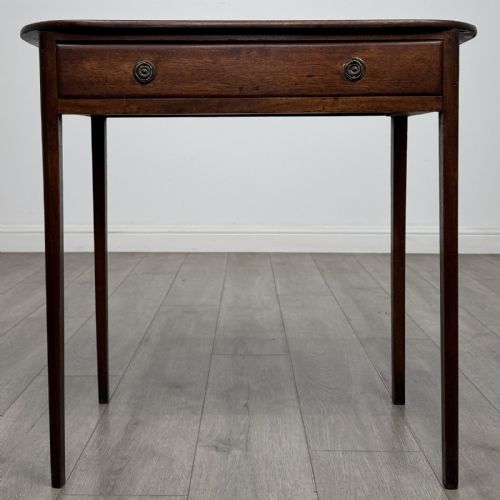
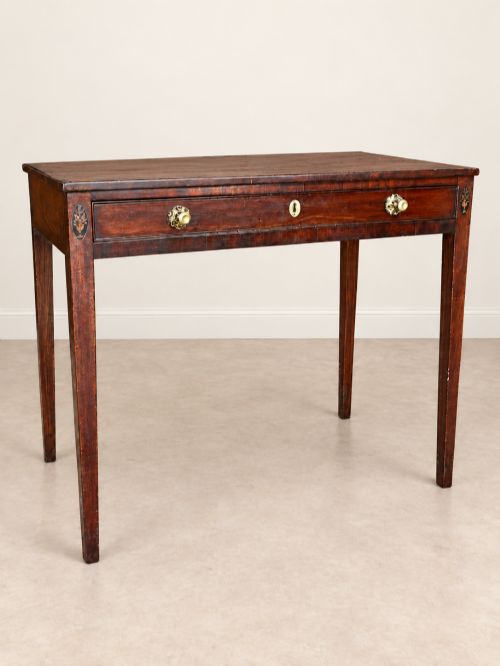
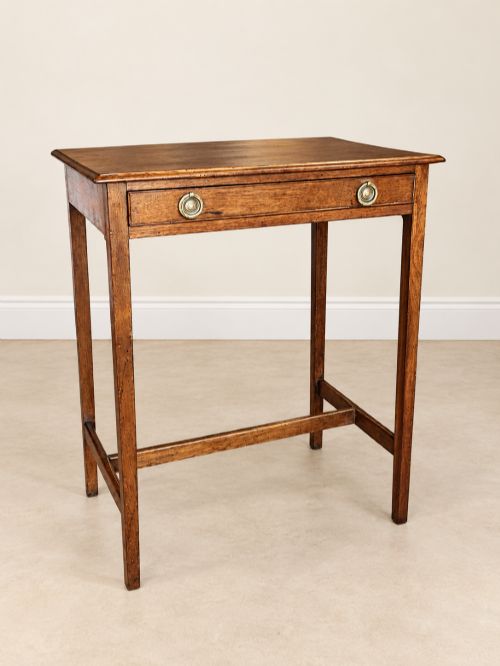
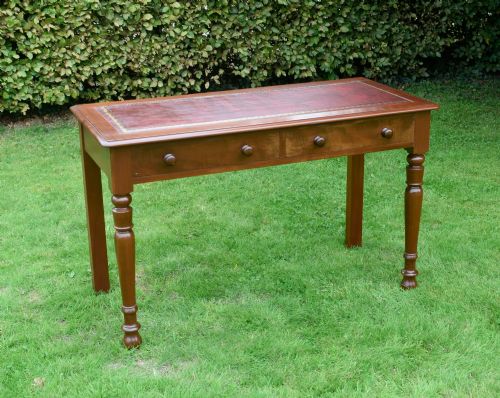
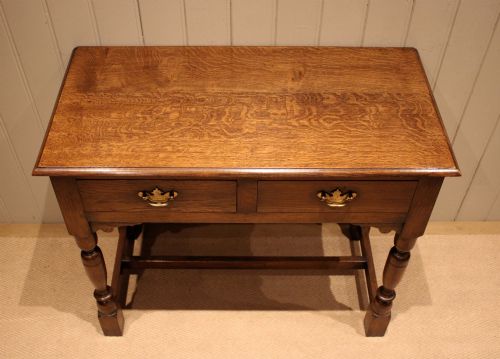
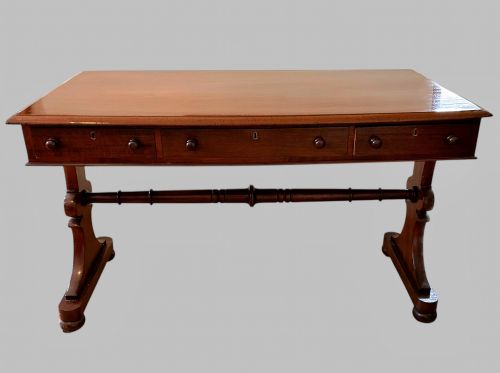
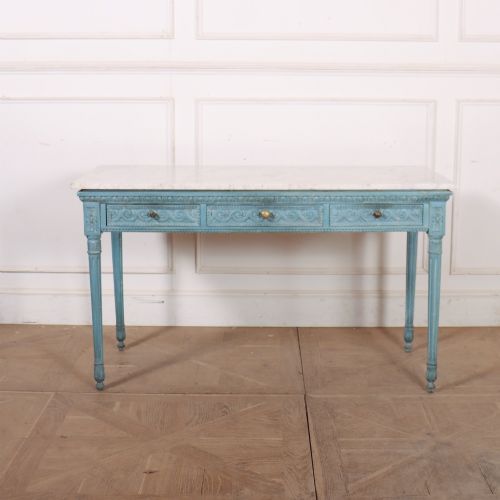
A hallway console desk encompasses a varied group of side tables, writing tables, and lowboys primarily originating from the Georgian, Victorian, and Edwardian periods. Buyers searching for a hallway console desk will encounter forms originally designated as library tables, serving tables, washstands, and writing desks adapted for narrow entranceways.
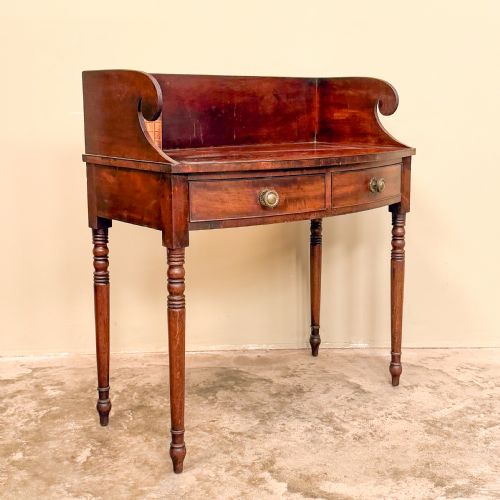
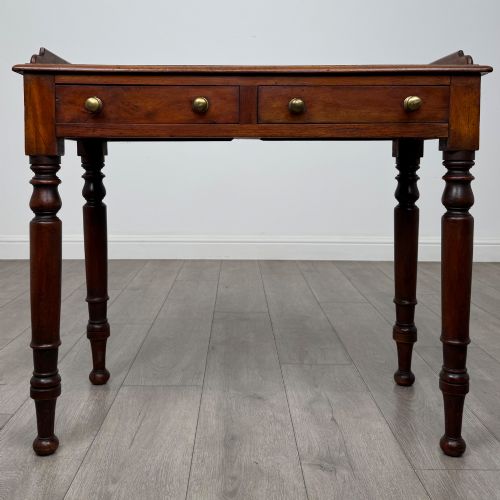
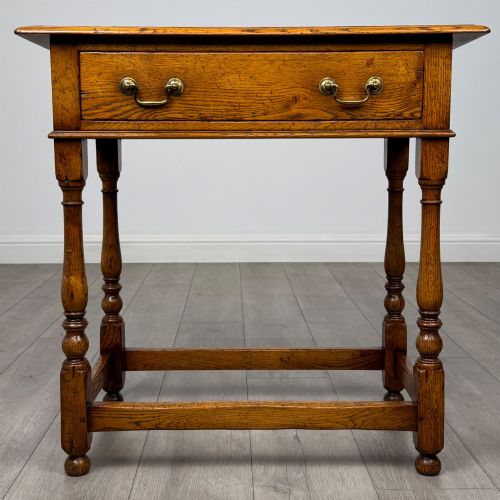
The pieces appearing on this page span solid oak, mahogany, walnut, and pine constructions, reflecting both refined domestic furniture and utilitarian designs. Many examples utilise compact proportions, featuring single drawers or bow fronts suited to restricted floor spaces.
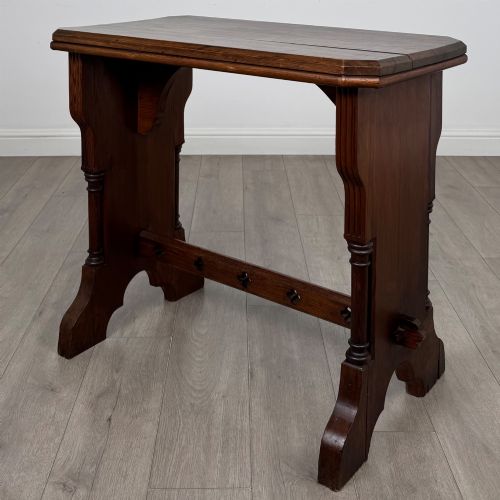
Stylistic influences range from Gothic Revival and Regency to industrial cast iron bases paired with reclaimed timber. The selection demonstrates how period furniture adapts to modern transitional spaces through slender depths and functional surfaces.
How they were made
Cabinet makers utilised dense hardwoods such as mahogany, oak, and walnut, frequently selecting burr walnut and figured veneers for decorative surfaces. Secondary timbers like pine appear in structural framing and drawer linings.
Construction techniques include traditional dovetailing for drawers and carved detailing applied to legs and friezes. Industrial variations incorporate cast iron machine bases supporting timber tops.
Periods represented span from the 18th century through the Georgian, Victorian, and Edwardian eras into the 1930s.
What varies in quality
Quality rests upon the selection of timber, evidenced by figured mahogany and burr walnut veneers, alongside the crispness of hand-carved details found in Gothic Revival and Victorian pieces. Structural integrity depends on the retention of original drawer linings and timber movement management.
Proportion and scale distinguish finer Georgian and Regency examples from later utilitarian pieces, where refined leg turnings and subtle bow fronts elevate the design.
Hubert Simpson of Kendal·Fortnum and Mason
The Hallway Console Desk Glossary
- Lowboy
- A small dressing table or side table with one or more tiers of drawers, popular during the Georgian period. These pieces typically stand on slender cabriole legs.
- Washstand
- A piece of furniture designed to hold a basin and pitcher for washing, often featuring a marble top or splashback. They frequently find secondary use as hallway tables.
- Sofa table
- A type of Pembroke table traditionally placed in front of a sofa, featuring drop leaves and usually two small drawers. They possess finished backs suitable for freestanding placement.
- Bow front
- A convex curved front on a cabinet, chest of drawers, or side table. This shaping softens the corners and adds visual depth to narrow furniture.
- Frieze
- The horizontal decorative band running beneath the top surface of a table or desk. This area often houses drawers and receives carved ornamentation.
Hallway Console Desk: Frequently Asked Questions
What is a hallway console desk used for?
These tables provide a narrow surface for drop zones in entrance halls, holding post, keys, and decorative lamps.
Their compact footprints allow them to fit tight passageways without obstructing movement.
How do I identify a Georgian console table?
Georgian pieces often feature straight or cabriole legs, hand-cut dovetail joints, and solid mahogany or oak construction.
They rely on proportion rather than heavy ornamentation for their aesthetic impact.
Are writing tables suitable for hallways?
Writing tables with shallow depths function effectively as console desks by offering surface area and drawer storage.
Their finished backs enable them to stand away from walls if required.
What distinguishes Victorian styles here?
Victorian examples encompass dark woods, turned legs, and occasional Gothic Revival carving inspired by medieval architecture.
Library and serving tables from this era offer robust construction and deeper proportions.