

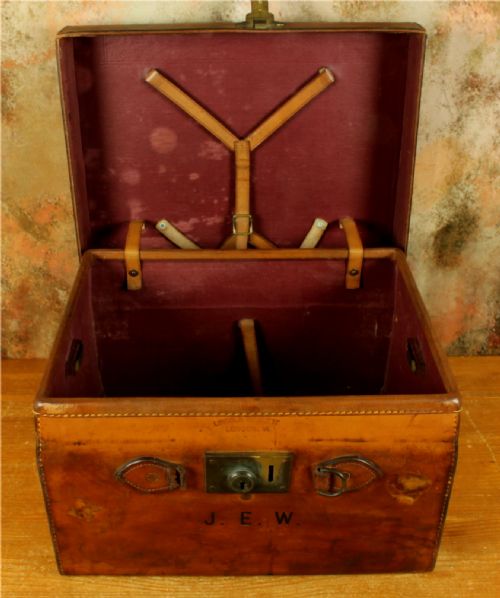
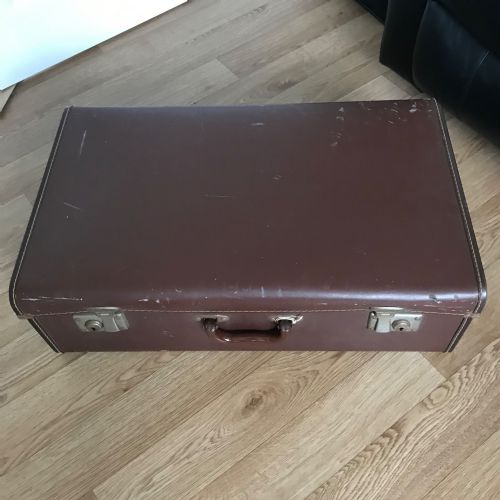

Leather Travel Trunk
When you select a leather travel trunk, you are choosing a robust piece of heritage luggage designed for movement, combining historical utility with enduring interior presence.
Leather Travel Trunk
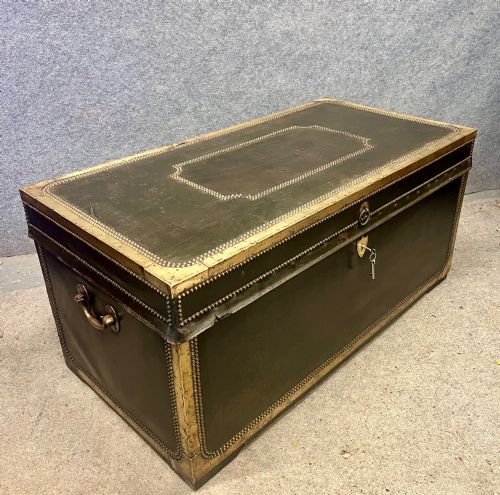
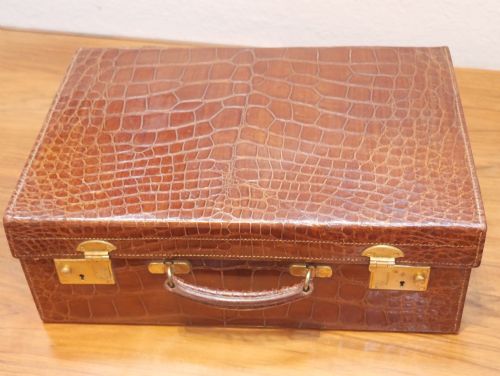
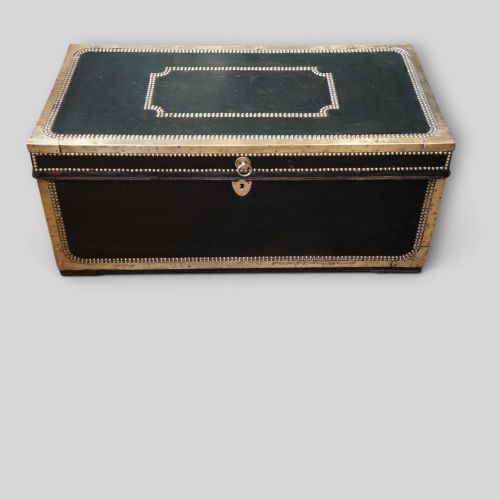
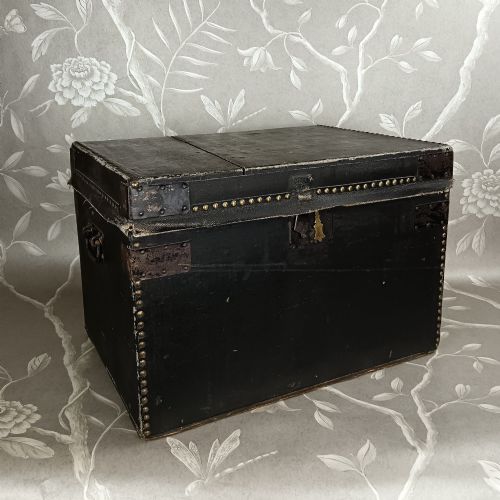
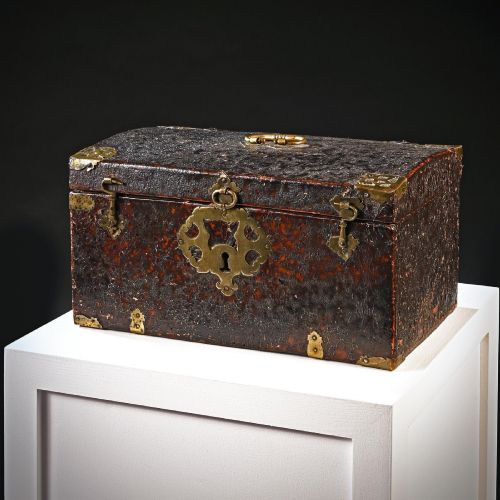
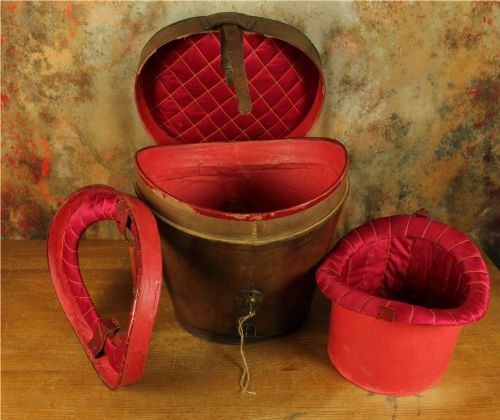
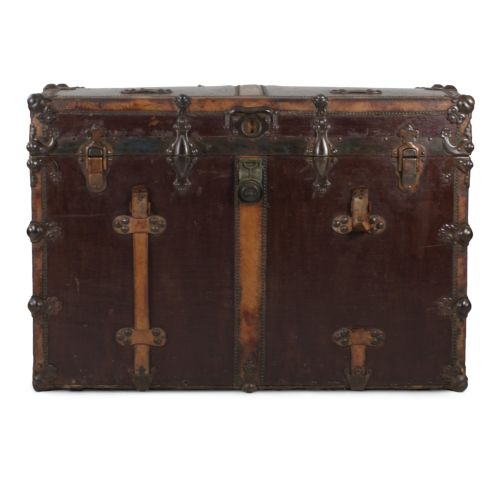
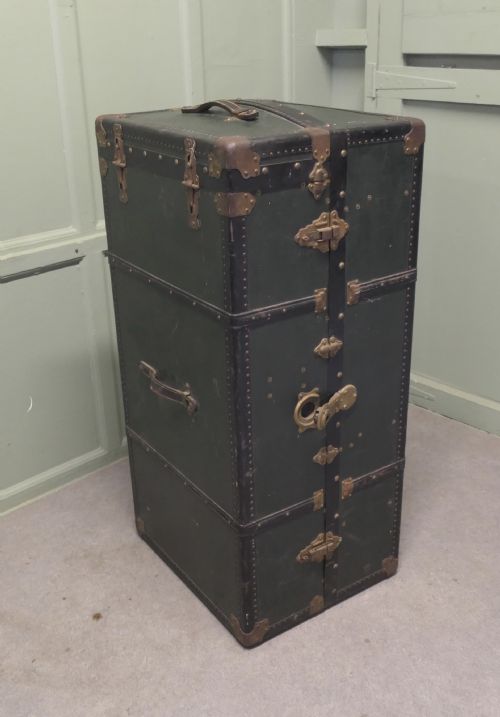
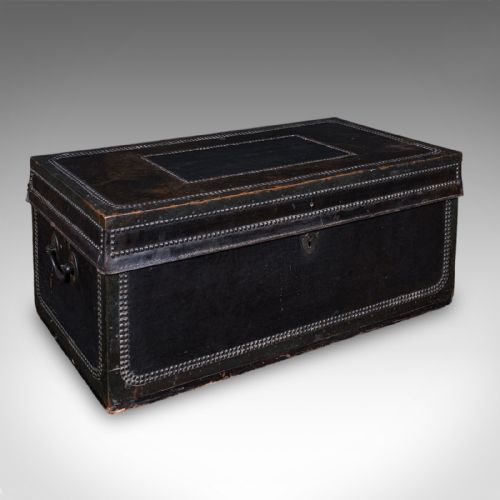
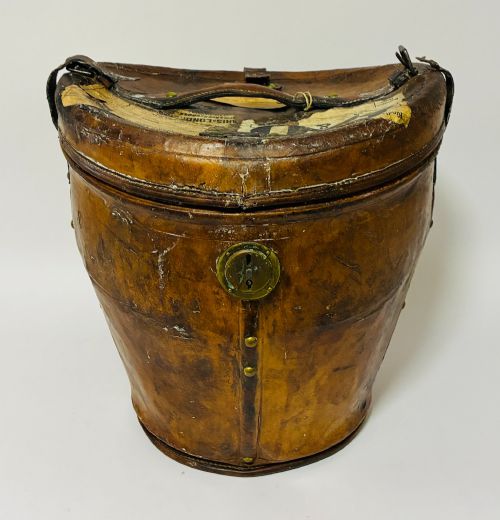
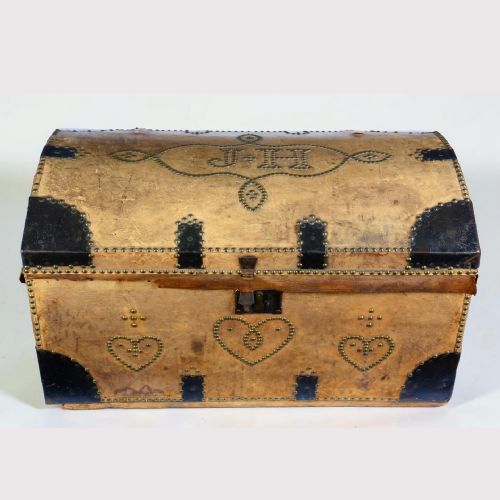
A leather travel trunk serves as a tangible link to past journeys, encompassing heavy-duty chests, domed coffers, cabin wardrobes and specialised hat cases. Buyers searching for a leather travel trunk encounter pieces ranging from early Regency China Trade camphor wood chests to Edwardian steamer trunks and 1920s weekend suitcases.
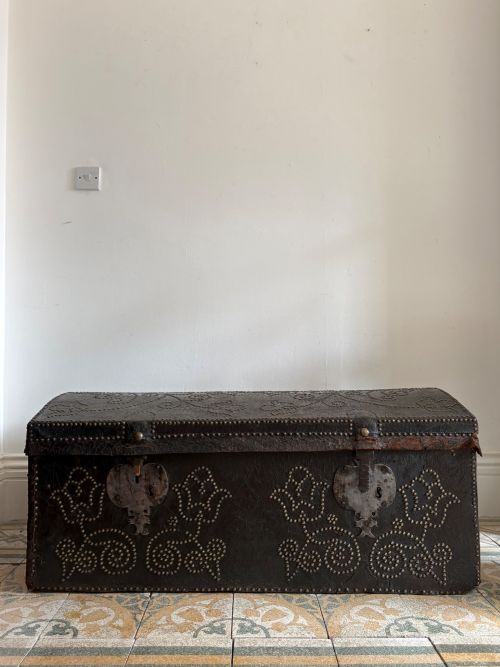
The most common formats on this page include Victorian brass-studded storage boxes, campaign trunks, and canvas-bound travel cases. These objects functioned as mobile wardrobes and secure cargo containers for officers, merchants and tourists before modern mass transit.
Origins span English workshops, French makers, Dutch houses, Spanish makers, and Anglo-Indian or Chinese export studios. Each region imparted local structural preferences, such as camphor wood for insect resistance in tropical transit or sturdy pine for domestic coaching.
How they were made
Makers built these pieces around internal wooden frames made of pine, oak, or camphor wood, cladding them in dense hides, leather, vellum, or canvas. Exterior surfaces received protection from heavy use through iron, brass, and metal bindings, alongside disciplined rows of brass studwork.
Construction relied on traditional joinery combined with reinforced corners, iron latches, and sturdy carry handles to withstand long voyages. Many compartments utilised internal cedar or camphor linings, fitted trays, and fabric interiors to safeguard garments during transit.
Listings feature items spanning the 17th Century, 18th Century, Georgian, Regency, Victorian, Edwardian, and 1920s periods.
What varies in quality
Quality rests in the integrity of the underlying structure, the thickness of the hide or leather cladding, and the grade of the metal mountings. Superior examples feature robust internal compartmentalisation, original brass locks, and maker signatures or archival labels that confirm their origin.
The degree of preservation in the original leather, stitching, and metal studwork distinguishes utilitarian containers from luxury voyage pieces. Finer specimens retain untouched patination on the hide and functional internal fittings without losing structural rigidity.
Samuel Pratt·Wm. Insall of Bristol·Arthur Wannop·Lincoln Bennett·Pioneer·Chapple & Sons·Seabrook of St.Pauls·Drew & Sons·Pretot Paris·Finnegans·Aux Etats Unis of Paris
The Leather Travel Trunk Glossary
- Camphor Wood
- A fragrant timber utilised for its natural insect-repellent properties, commonly found in export trunks destined for long sea voyages. It helps protect stored textiles from moths and dampness.
- Steamer Trunk
- A lower-profile luggage piece designed to fit beneath a passenger ship berth during the late nineteenth and early twentieth centuries. These cases often featured internal trays and vertical compartments.
- Campaign Trunk
- A modular piece of furniture or luggage built for military officers on active service. They often feature recessed brass drop handles and reinforced corners for rough transit.
- Portmanteau
- A large leather travelling case that opens into two distinct compartments for garments. The term originates from French words for carrying cloaks.
- Dome Top
- A curved lid construction on a chest or trunk designed to shed water during carriage transport. This shape also permitted extra headroom for packing bulky garments.
Leather Travel Trunk: Frequently Asked Questions
What is a steamer trunk?
A steamer trunk is a lower-profile piece of luggage designed to fit conveniently beneath a passenger ship berth during ocean voyages. These cases became essential as global travel expanded in the late nineteenth and early twentieth centuries.
They often include internal partitions, hat boxes, or sliding trays to keep clothing organised during transit. Their compact height differentiated them from the massive dome-top chests used in earlier coaching eras.
How do I date an antique trunk?
Dating relies on observing construction methods, materials, and hardware styles such as brass studwork, iron latches, and internal linings. Pieces from the Georgian and Regency periods frequently utilise camphor wood and heavy brass binding, while 1920s examples introduce vellum and specialised canvas finishes.
Maker stamps, paper travel labels, and railway transit stickers also provide concrete evidence for chronological placement. Comparing the internal carpentry against known regional workshop practices narrows down the decade of production.
How were campaign trunks used?
Campaign trunks served as portable storage for military officers and diplomats on active service across the British Empire and beyond. Their design prioritised robust wooden frames, reinforced metal corners, and recessed drop handles for ease of loading onto pack animals or carriages.
These pieces frequently dismantle or open into writing desks and washstands, reflecting the need for multifunctional furniture on the move. Their sturdy construction allowed them to endure arduous overland journeys.
Where should I place a trunk at home?
Trunks adapt well as coffee tables in living spaces, offering internal storage for blankets, books, and household items. Their flat or domed lids provide a strong visual surface that anchors a room's layout.
They also function effectively at the foot of a bed or as hallway storage for seasonal garments and accessories. Positioning them away from direct heat sources helps preserve the historic leather and wood.
What is China Trade furniture?
China Trade pieces were manufactured in ports such as Canton during the eighteenth and nineteenth centuries specifically for Western export markets. These items frequently combined resilient camphor wood with brass bindings and durable leather coverings.
They represent the cross-cultural exchange of craft techniques between Asian workshops and European merchants. Their robust build ensured they survived the long sea journey back to Western homes.