


Leather Dome Top Chest
A leather dome top chest is a historic trunk designed for travel or storage, built with a curved lid to shed water and finished in hide or leather.
Leather Dome Top Chest
A leather dome top chest is a piece of antique luggage and storage furniture designed to protect garments and valuables during transit. When you browse this selection, you encounter items intended for travel and domestic storage from past centuries.
The pieces appearing on this page span several distinct periods, most notably the eighteenth and nineteenth centuries, alongside earlier seventeenth-century examples. You will find items originating from British workshops as well as Dutch, French, Spanish, and Moroccan makers.
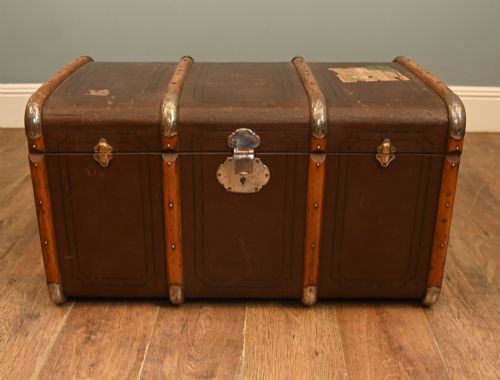
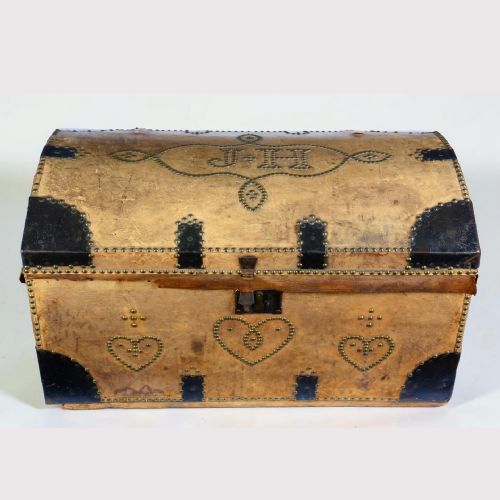
Forms range from large campaign cases and marriage chests to smaller coffers and trunks on stands. Many feature characteristic curves that define the dome top profile, constructed to prevent moisture accumulation on the lid.
How they were made
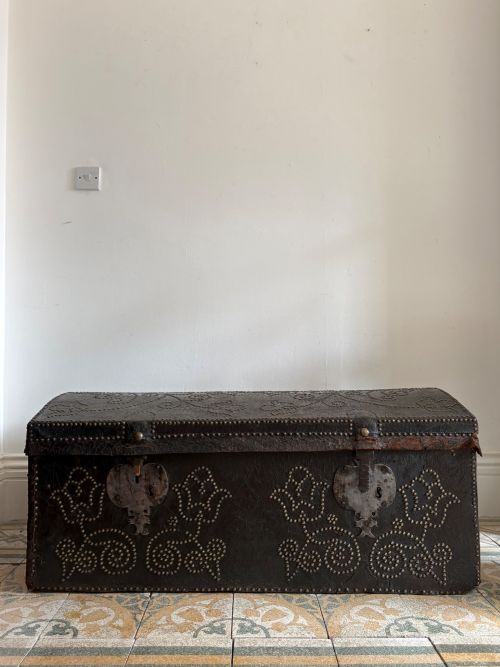
These pieces are constructed from foundational wooden carcases, often utilising oak, which are then clad in animal hide, canvas, or leather. Makers secured these coverings using iron or brass studs driven in decorative patterns across the exterior surfaces.
Metal hardware such as iron bands, brass mounts, and carrying handles provide structural reinforcement and facilitate transport. Tooling and embossing appear on selected leather and hide surfaces, particularly on Moroccan and continental examples.
Several trunks bear historic initials punched in brass studs, permanently marking luggage for travellers long forgotten.
What varies in quality
The distinction between standard storage trunks and finer examples rests in the execution of the studwork and the selection of materials. Elaborate brass stud patterns and substantial iron or brass hardware indicate a higher grade of manufacture.
Condition and originality dictate much of the character in these pieces, with surviving contemporary linings, working locks, and original carrying handles holding greater interest for collectors. The depth of patination on the leather and wood surfaces also reflects the quality of the materials selected by the original maker.
Arthur Wannop·Chapple & Sons
The Leather Dome Top Chest Glossary
- Dome top
- A curved lid profile engineered to shed water and increase internal storage capacity. This shape is characteristic of early travel trunks.
- Studwork
- The application of brass or iron nails in decorative or structural patterns across the leather exterior. It secures the hide to the wooden carcase.
- Campaign case
- A portable chest or trunk built for military officers or travellers on the move. These often feature robust hardware and carrying handles.
- Hide
- Untanned or heavy animal skin used as a durable outer covering for early storage chests. It offers resilience against heavy handling.
- Cofer
- A traditional heavy storage chest, often domed, used for valuables and documents before the widespread adoption of fitted wardrobes.
Leather Dome Top Chest: Frequently Asked Questions
What were leather dome top chests used for?
These chests served primarily as robust luggage for travel on coaches, ships, and pack animals. Their curved lids allowed rainwater to run off easily while providing extra vertical space for garments.
Inside the home, they functioned as secure storage for valuable linens, documents, and clothing before fitted closets became common. Their portability made them practical for households that moved frequently between residences.
How do I date a leather dome top chest?
Dating relies on examining the construction methods of the wooden carcase, the style of the iron or brass hardware, and the tanning of the leather. Earlier seventeenth- and eighteenth-century examples often feature heavier oak framing and hand-forged iron elements.
Later Victorian and nineteenth-century pieces display machine-made components and standardised brass studwork. Maker signatures, when present, also provide a firm point of reference for the period of manufacture.
How do I care for antique leather trunks?
Antique leather requires a stable environment away from direct sunlight and extreme humidity swings to prevent the hide from drying and cracking. Gentle dusting with a dry cloth is usually sufficient for routine maintenance.
Avoid modern chemical cleaners and consult a professional conservator before applying any oils or waxes to historic hide. Keeping the metal hardware clean and dry helps preserve the surrounding leather.
Where were these trunks made?
The pieces seen here originate from various European centres, including British, Dutch, French, and Spanish workshops. Continental makers often employed distinct tooling on leather and hide coverings.
Specialised items such as Moroccan treasure chests brought specific decorative traditions involving intricate leatherwork. Each region utilised local timber and hardware styles suited to its domestic and export markets.