

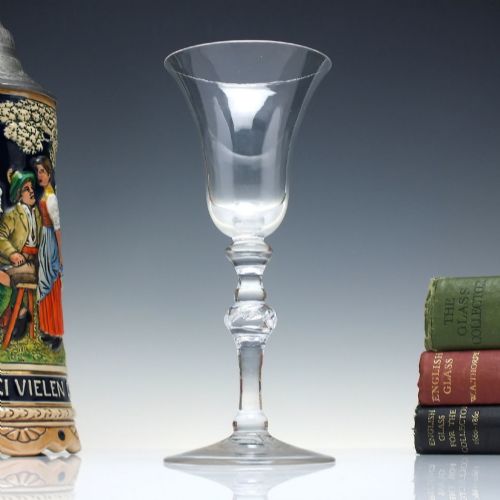
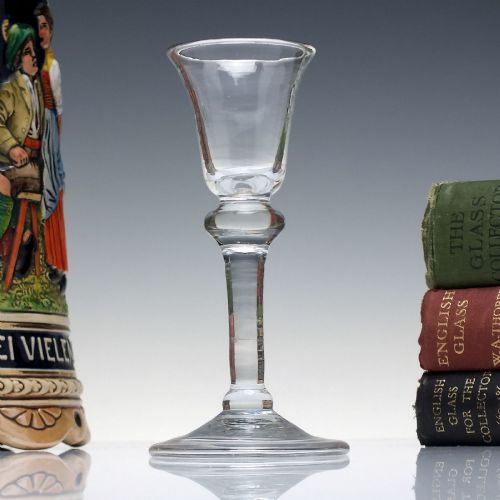
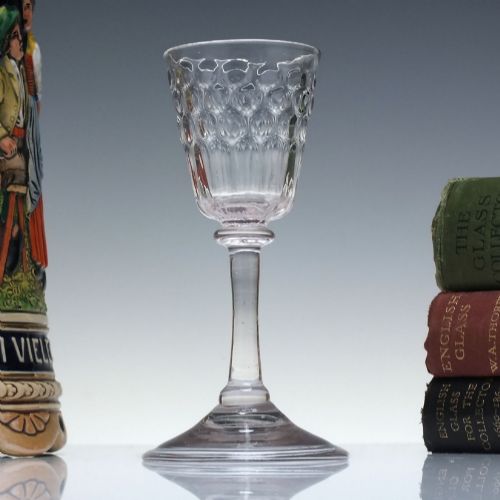
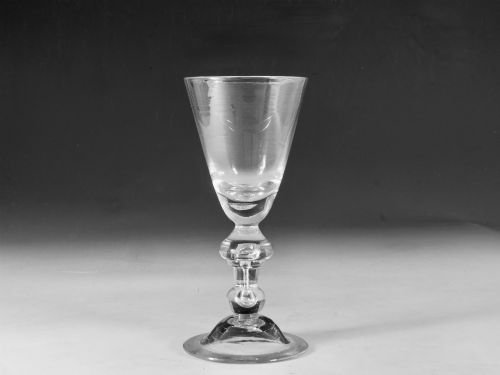
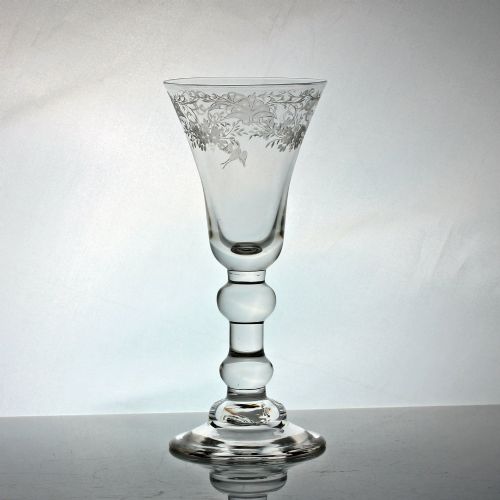

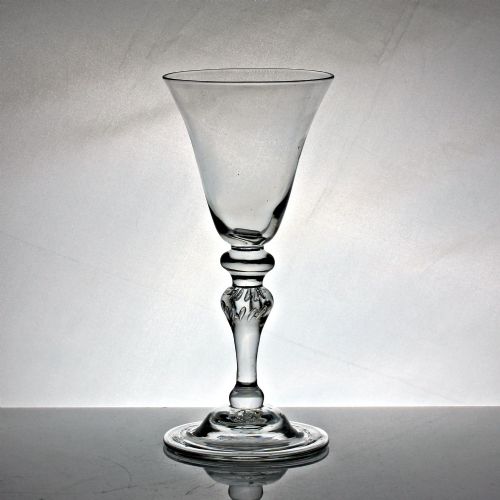
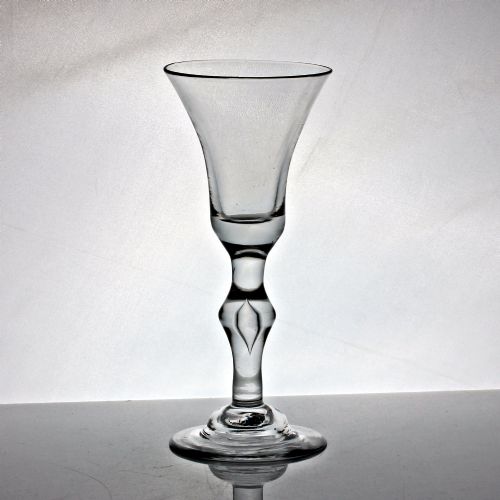
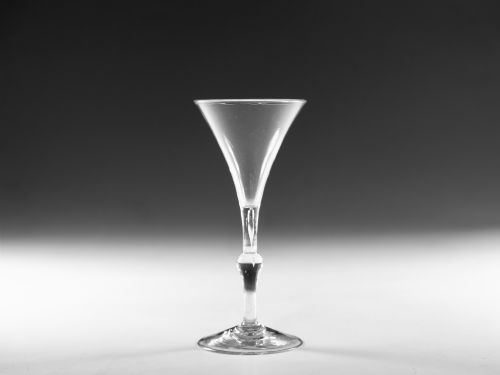
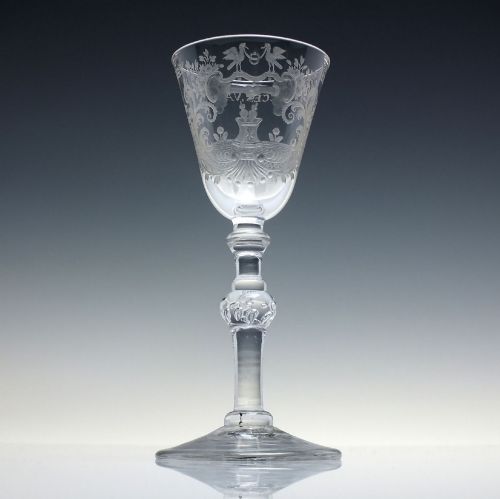


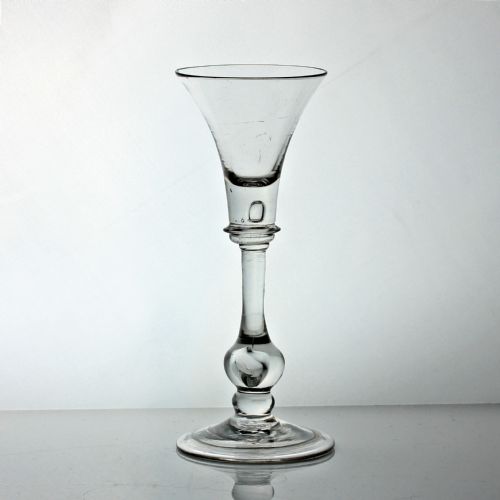


Lead Glass Baluster Goblet
A lead glass baluster goblet brings substantial weight to the hand, offering eighteenth-century drinking vessels defined by sturdy stems and clear metal.
Lead Glass Baluster Goblet
The heavy baluster form dominates the earliest examples from the opening decades of the century, whilst slender balustroid variations appear towards mid-century. Collectors encounter bell bowls, folded feet, and domed feet paired with air tears inside the knops.
How they were made
Master glassmakers formed these items using hand-blown lead glass, flint glass, and clear crystal, exploiting the heavy material properties introduced in the late seventeenth century. The dense composition allowed makers to draw thick stems and shape robust bell bowls without losing clarity.
Hot-tool manipulation created the signature baluster nodes, knops, and folded feet by gathering molten metal and shaping it on the punty iron. Air tears were deliberately trapped inside the stems during assembly to catch the light within the clear lead glass.
Lead Glass Baluster Goblet Retail Price Guide 2026
Typical asking prices for lead glass baluster goblet among the pieces listed under this phrase on Sellingantiques today, from the lower quarter to the upper quarter. They describe what is for sale here now, not the wider market.
Georgian drinkers favoured deceptive dram glasses that looked full of liquor while holding only a modest sip at the bottom.
What varies in quality
The quality of a lead glass baluster goblet rests in the balance of the metal and the proportion of the stem. Superior examples display deep resonance, brilliant clarity in the lead crystal, and substantial heft in the foot and bowl.
Artistry in the forming of the knops and the symmetry of the domed or folded foot distinguish finer pieces from simpler forms. Secondary elements like hop and barley engraving show distinct skill through clean wheel-cutting across the bowl surface.
The Lead Glass Baluster Goblet Glossary
- Baluster
- A heavy, swelling stem form derived from architectural pillars, featuring prominent decorative knops.
- Balustroid
- A lighter, more slender version of the traditional baluster stem, common in mid-eighteenth-century glassware.
- Air tear
- An intentional elongated bubble trapped within the glass stem or knop during the blowing process.
- Folded foot
- A base edge turned under and flattened whilst hot to add stability and strength to the rim.
- Domed foot
- A base raised into a central mound, offering increased height and balance to heavy goblets.
- Deceptive bowl
- A deep solid base beneath a shallow bowl designed to hold minimal liquid whilst appearing full.
Lead Glass Baluster Goblet: Frequently Asked Questions
What is a baluster goblet?
A baluster goblet is an eighteenth-century drinking vessel characterised by a thick, knopped stem and heavy lead glass construction. These forms evolved from continental styles into distinctive English glassware.
They were primarily used for wine, ale, and spirits during formal dining and social gatherings throughout the Georgian era.
How do I date an 18th-century glass?
Dating relies on observing the stem formation, bowl shape, and foot style, noting how heavy balusters transition to slender balustroids over decades. Tool marks and metal composition also provide clues to the manufacturing period.
Earlier pieces from the Queen Anne era feature heavier metal and prominent knops, whilst mid-century examples often incorporate lighter stems and engraved decoration.
What is a folded foot on a glass?
A folded foot is a glass base where the outer rim is turned underneath and pressed flat against the underside while hot. This technique doubled the thickness of the edge.
Makers used this method to prevent chipping during regular tavern or dining use and to provide extra weight at the base for balance.
Why are there bubbles in old glass?
Tiny bubbles, known as air tears, frequently occur in early lead glass due to the raw materials and rudimentary melting techniques of the period. Makers often placed them intentionally inside stems as a decorative feature.
These trapped pockets of air refract light through the heavy metal, adding visual depth to the knops and stems of Georgian drinkware.