



Lead Crystal Stemware
Lead crystal stemware brings together drinking glasses from the eighteenth century through the twentieth, valued for clarity and weight by collectors of fine British drinkware.
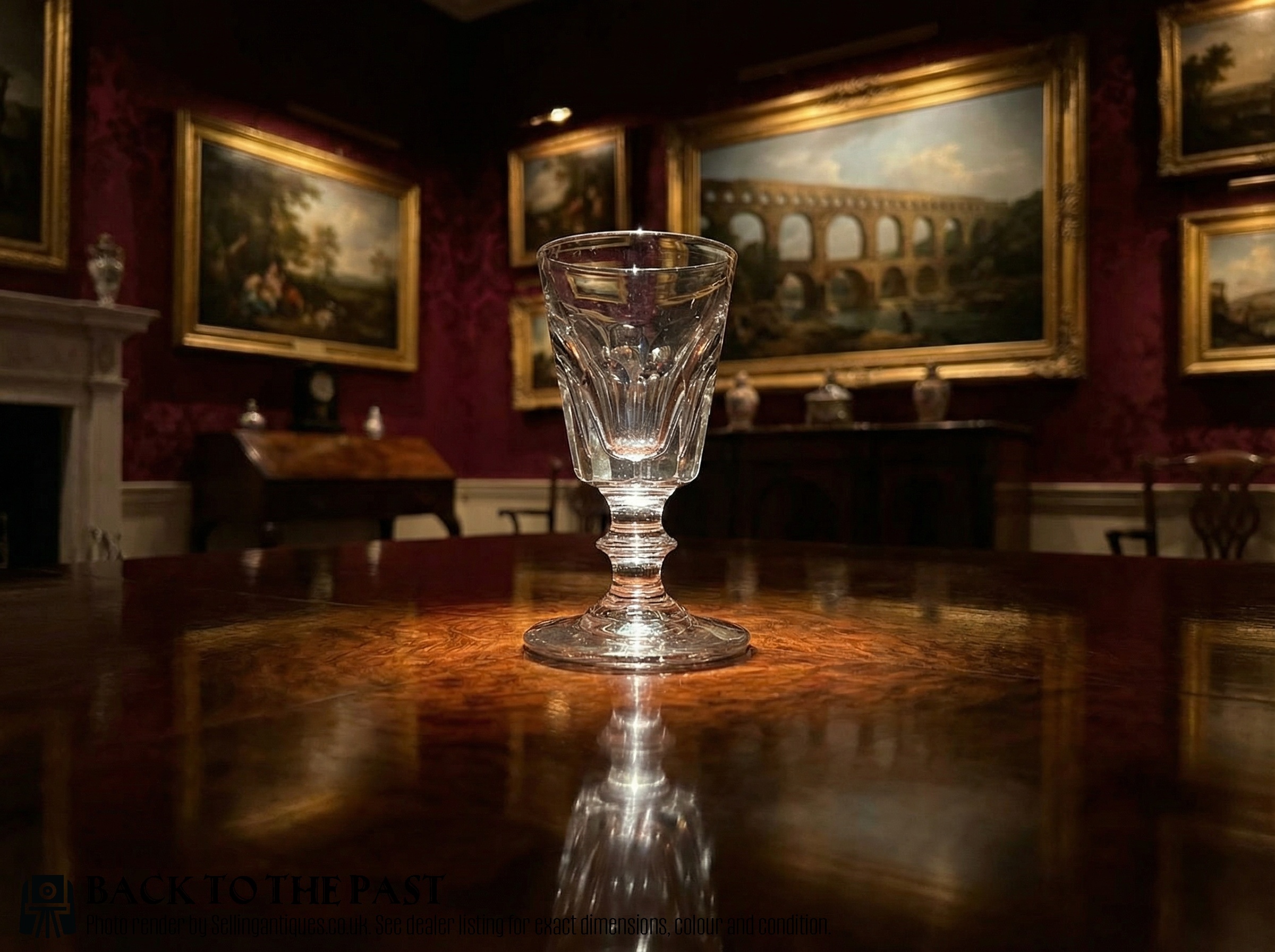
Lead Crystal Stemware
Lead crystal stemware encompasses drinking glasses designed for wine, ale, champagne, and spirits, spanning periods from the seventeen-fifties through the nineteen-thirties. The selection on this page centres heavily on Georgian and eighteenth-century examples, alongside nineteenth-century rummers and twentieth-century flutes.
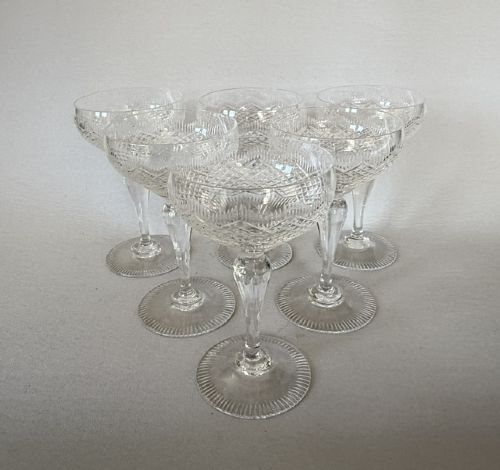
Forms range from small dram glasses and port glasses to tall wine flutes, rummers, and champagne coupes. English origin dominates the items listed, featuring styles such as Georgian, Regency, Victorian, Edwardian, and Art Deco.
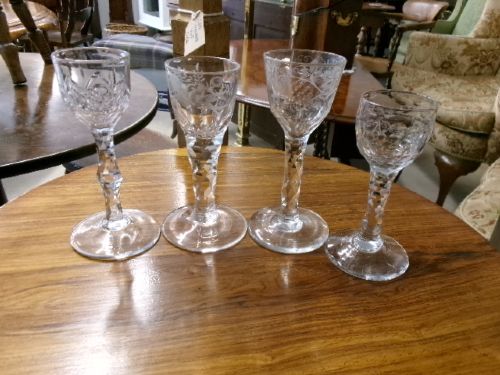
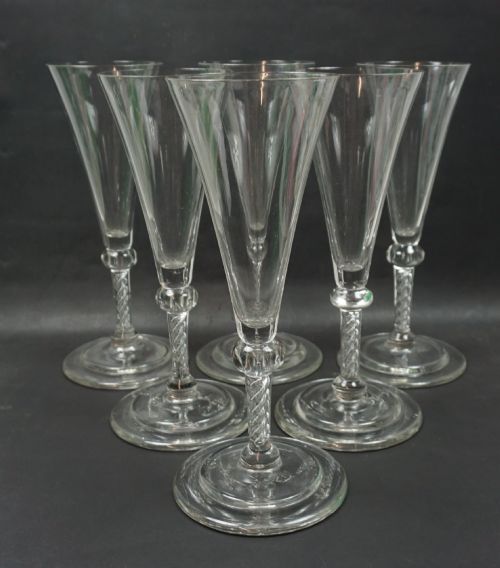
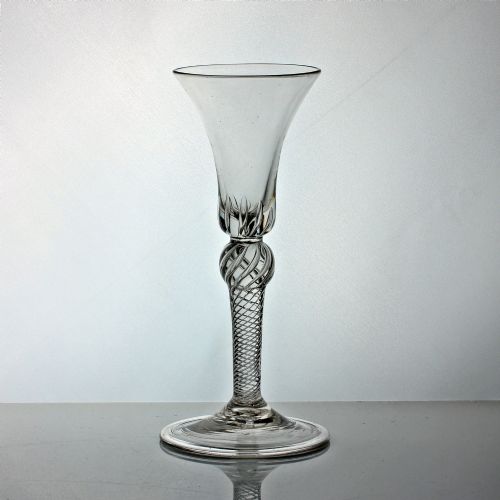
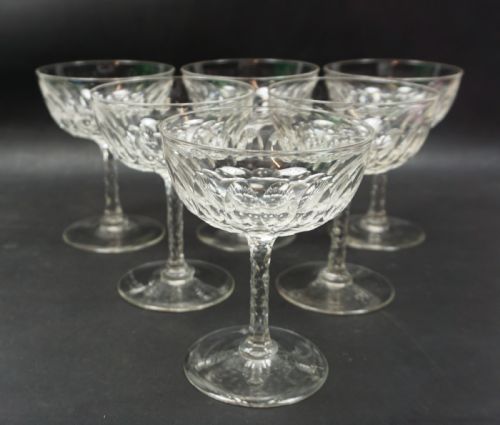
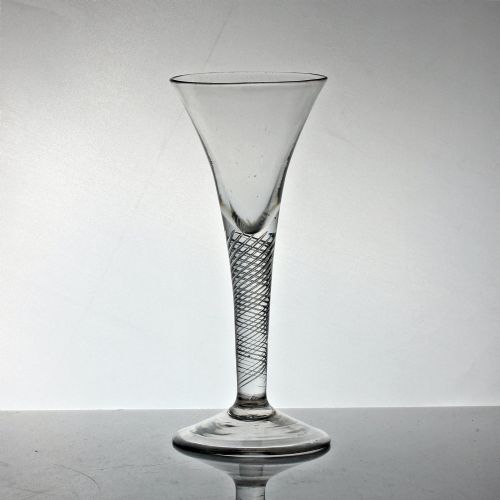
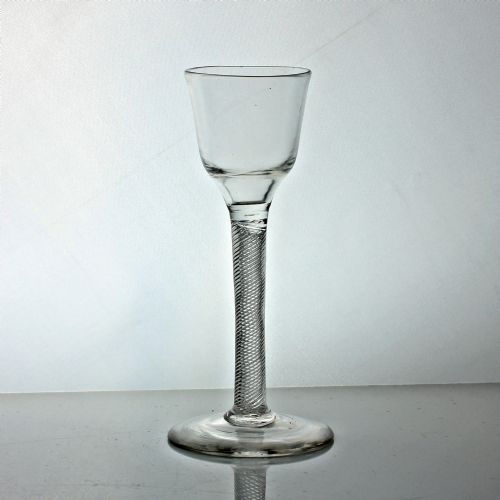
Buyers will encounter plain stem, baluster, air twist, and opaque twist stems on eighteenth-century glasses, alongside cut glass bowls and faceted stems on later nineteenth and twentieth-century tableware.
What varies in quality
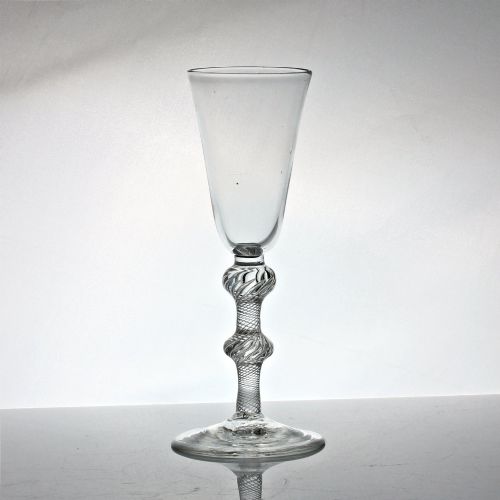
Quality rests upon the clarity and weight of the lead crystal, alongside the precision of the stem formation. Multi-spiral air twists and double series opaque twists require high technical skill from the glassblower compared to plain stems.
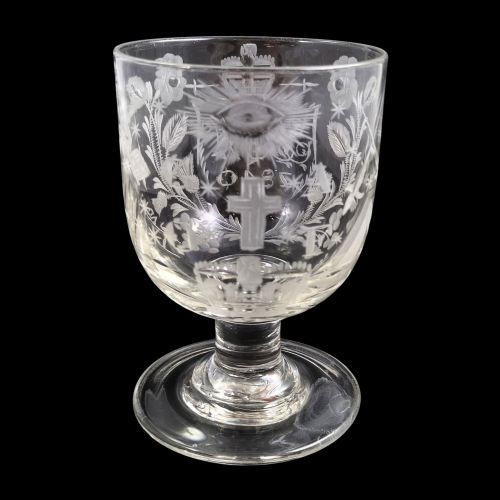
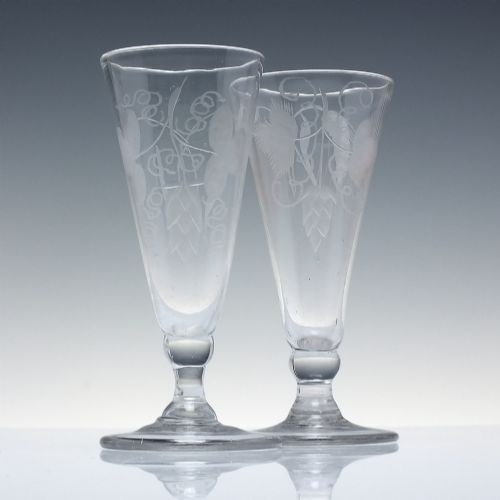
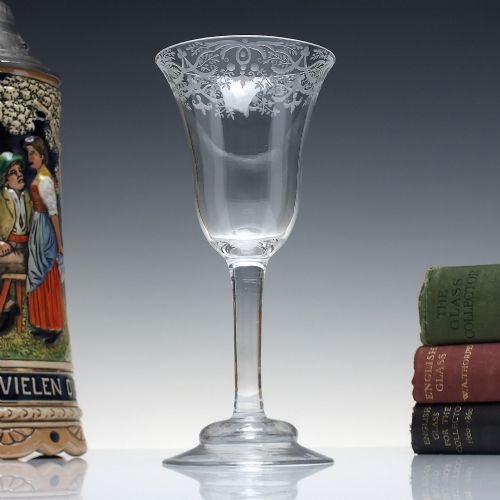
The crispness of wheel-cut facets and engraved motifs on bowls dictates the standard of later glassware. Condition of the rim and foot base also influences the integrity of each drinking glass.
Listings span from seventeen-fifty to nineteen-thirty, uniting Georgian air twists with Art Deco champagne coupes in lead crystal and flint glass.
The Lead Crystal Stemware Glossary
- Air twist
- A stem containing spiral threads of trapped air formed during manufacture. These delicate channels catch the light inside eighteenth-century wine glasses.
- Opaque twist
- A stem enclosing fine white enamel threads twisted within the clear glass. This method produced striking decorative patterns in Georgian drinking vessels.
- Rummer
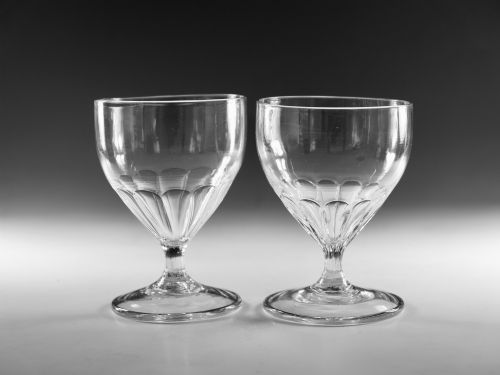
- A large heavy drinking glass designed for rum, ale, or beer during the Georgian and Regency periods. They frequently feature bucket bowls and cut glass details.
- Baluster
- A thick, swelling stem shape resembling architectural pillars, typical of early eighteenth-century glassware. They give a heavy, grounded feel in the hand.
- Pontil mark
- A rough scar on the base of a glass where the holding rod was snapped off after blowing. Ground and polished bases often conceal this historical trace.
Lead Crystal Stemware: Frequently Asked Questions
How do I clean antique lead crystal?
Wash pieces by hand in warm water using mild detergent. Avoid sudden temperature changes to protect the old glass.
Dry them immediately with a soft lint-free cloth to maintain the clarity and shine of the crystal.
Can I use these glasses for daily dining?
Many buyers enjoy using eighteenth and nineteenth-century stemware for special occasions. Hand-washing is essential for preservation.
Their sturdy lead composition makes them robust, though care is needed around modern dishwashers and hard surfaces.
How do I identify an air twist stem?
Hold the glass up to the light to inspect the interior of the stem. You will see fine helical threads of air running through the clear metal.
Single and multi-spiral variations exist, created by twisting the glass rod while hot before drawing it out.
What is the difference between flint glass and lead crystal?
Flint glass historically referred to heavy, clear glass containing lead oxide used by English glassmakers. It offered superior weight and refractive brilliance compared to standard soda glass.
Over time, the terms became largely interchangeable within British trade and antique definitions.