







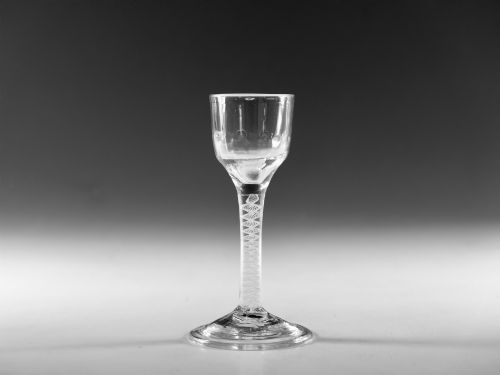


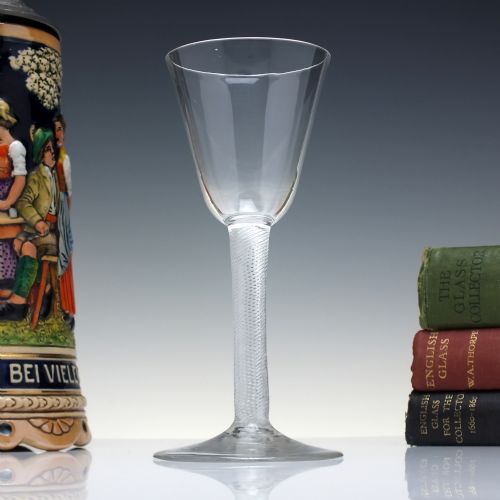
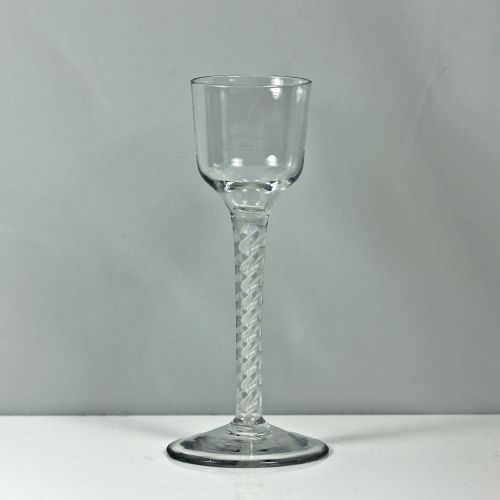
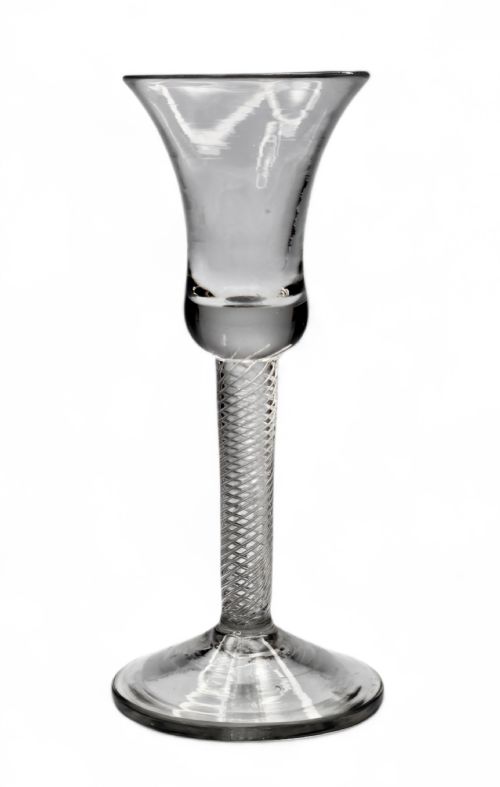
Georgian Period Glass Goblet
A georgian period glass goblet brings weight and clarity to the table, formed by decades of hand-blowing and precise stemwork.
Georgian Period Glass Goblet
A georgian period glass goblet encompasses drinking vessels spanning the eighteenth century and the Regency era, featuring shapes designed for wine, ale, port, and rum. The selections here centre on English and continental pieces, stretching from early baluster forms to later cut rummers and engraved vessels.
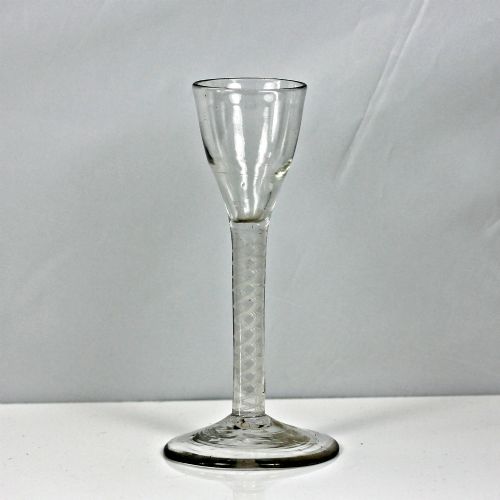
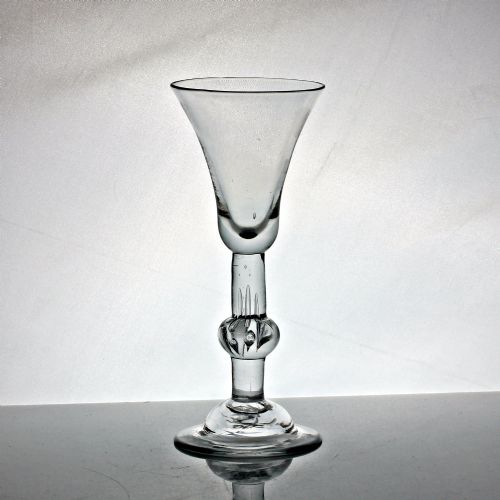
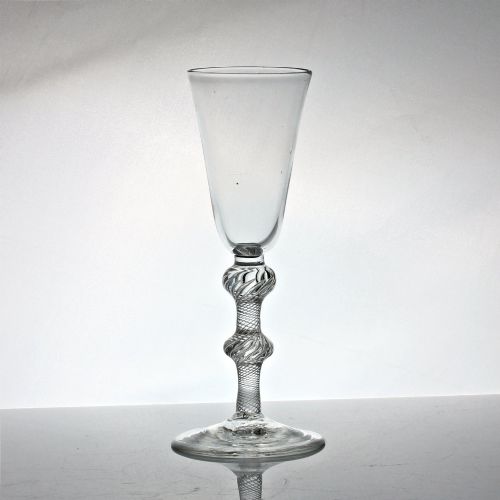
Buyers encounter distinct stem configurations and bowl forms, including air twists, opaque twists, plain stems, and heavy facet cuts. Most examples date from the mid-eighteenth century onward, representing domestic dining and tavern use across the Georgian period.
Quality and Distinction
Quality rests in the precision of the stem twist and the purity of the metal, distinguishing standard production from pieces with exceptional clarity and complex multi-spiral structures. Heavy lead crystal with deep bell bowls and stable, well-proportioned feet commands attention.
Georgian Period Glass Goblet Retail Price Guide 2026
Typical asking prices for georgian period glass goblet among the pieces listed under this phrase on Sellingantiques today, from the lower quarter to the upper quarter. They describe what is for sale here now, not the wider market.
Listings span the eighteenth century and the Regency period, recording lead glass, clear glass, enamel, and coloured variants in green, amber, and peacock blue.
The Georgian Period Glass Goblet Glossary
- Air twist
- A stem containing spiral channels of trapped air formed by drawing and twisting heated glass. This technique produces delicate internal patterns that catch the light.
- Opaque twist
- A stem featuring white or coloured enamel rods twisted within clear glass. These threads create solid, milky ribbons running through the centre of the stem.
- Baluster
- A heavy, swelling stem shape derived from architectural pillars popular in the early eighteenth century. It provides substantial weight and a low centre of gravity.
- Folded foot
- A rim folded underneath to strengthen the base of the vessel against chips. This method adds a thick, tactile edge to the bottom of the glass.
- Rummer
- A large, sturdy drinking glass introduced in the late eighteenth century for heavier wines or spirits. They often sit on square lemon squeezer bases with cut decoration.
- Roemer
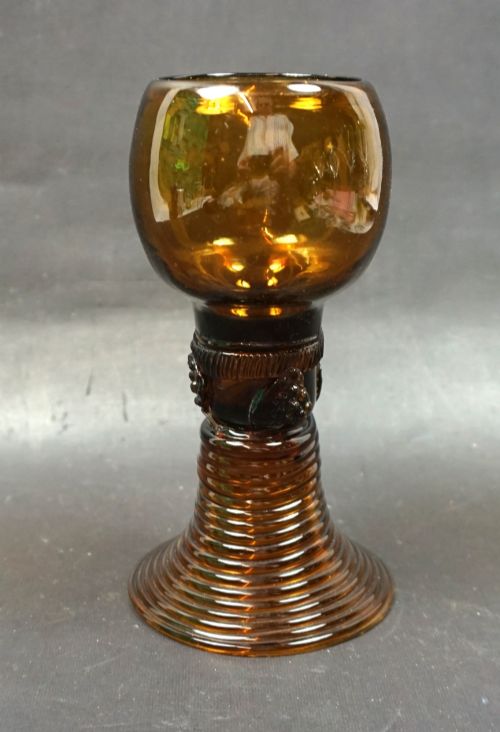
- A continental type of green or amber glass featuring a wide bowl and a coiled raspberry prunt stem. Originating in Germany, these pieces served Rhine wines.
Georgian Period Glass Goblet: Frequently Asked Questions
How do I identify a Georgian glass?
Examine the metal for dark flecks, surface wear, and a greyish or bright refractive tone typical of early lead formulations. Pontil marks on the underside indicate hand-blown production.
Check the form against known eighteenth and early nineteenth-century styles, noting stem construction and bowl proportions. Heavy metal weight often points towards the Georgian era.
What is an air twist stem?
An air twist stem contains elongated bubbles pulled and twisted into a spiral during manufacture. Craftsmen manipulated the molten metal to trap air inside the stem.
Single, double, and multi-spiral variations appear depending on how many air channels were spun together.
How were these glasses used?
These vessels served alcoholic drinks at the dining table, tavern, or club, with specific forms tailored for wine, ale, port, or rum. Heavier rummers and goblets handled robust spirits and ales.
Smaller wine glasses suited fortified wines and toasts during formal meals.
Can I use antique glassware today?
Many collectors display these pieces rather than use them, owing to their age and fragility. Hand-washing in lukewarm water is essential if utilised.
Avoid sudden temperature changes to protect the historic lead glass from cracking.