

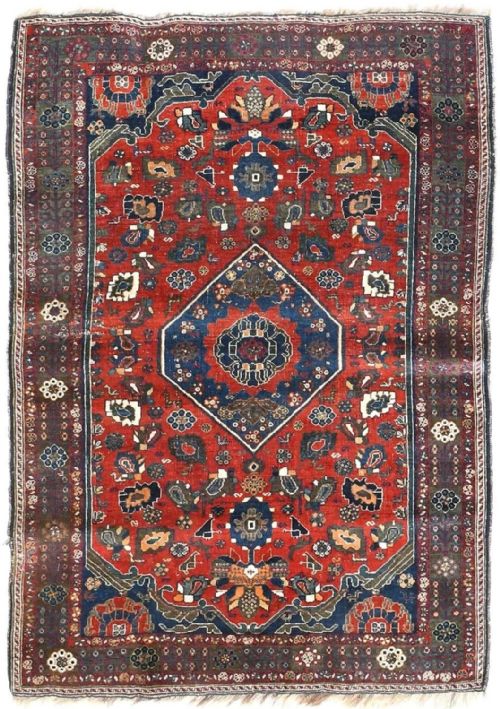
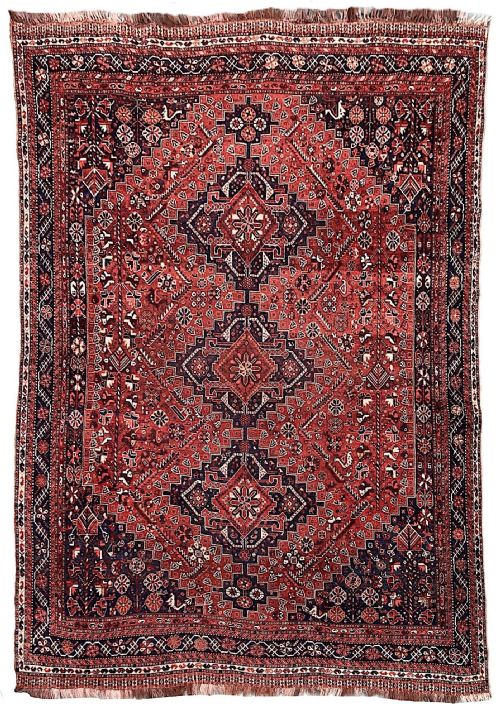

Large Tribal Carpet
A large tribal carpet brings the bold geometric motifs and rich vegetable dyes of nomadic weavers directly into a substantial room.
Large Tribal Carpet
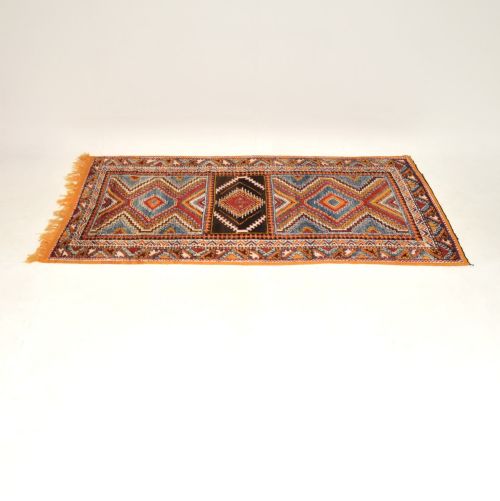
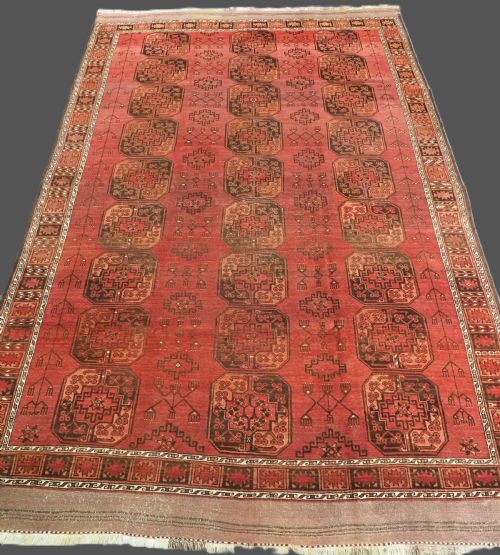
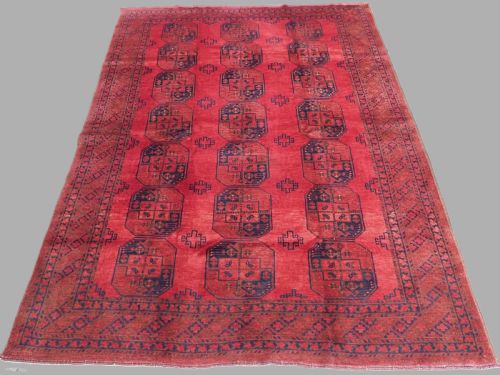
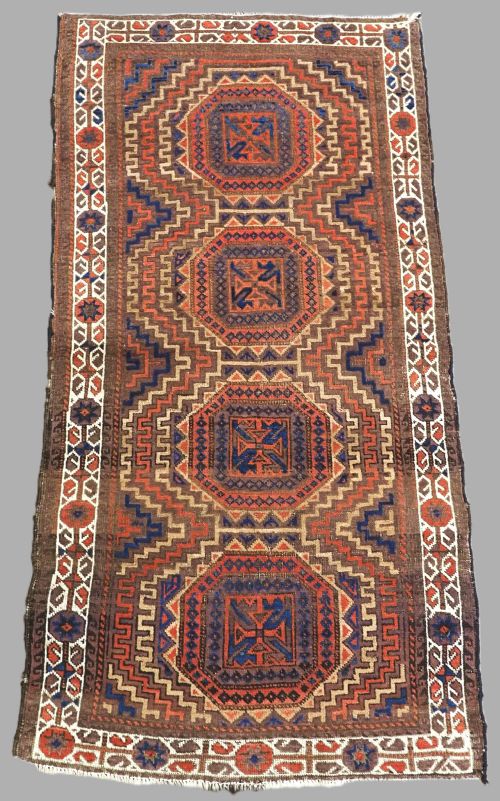
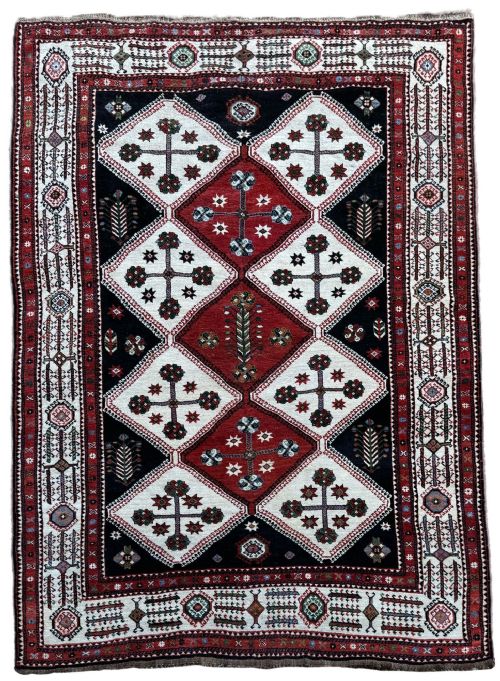
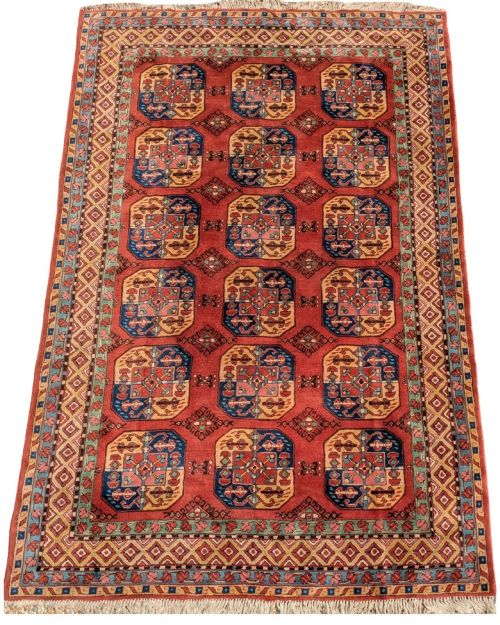
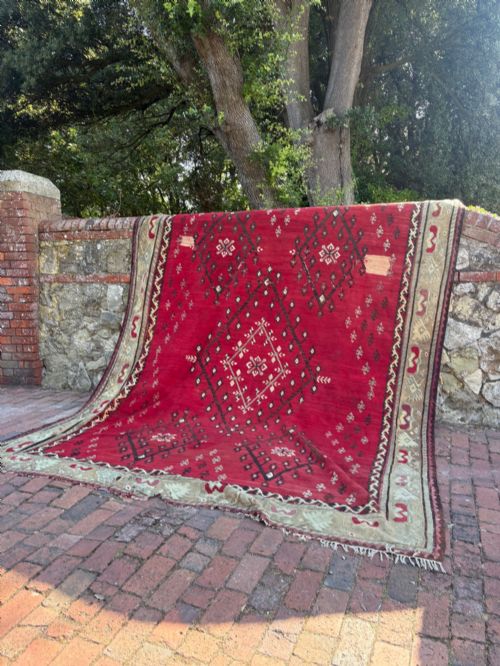
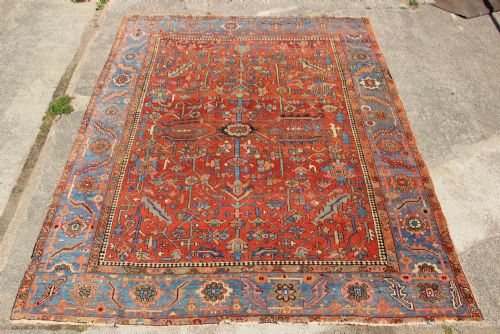
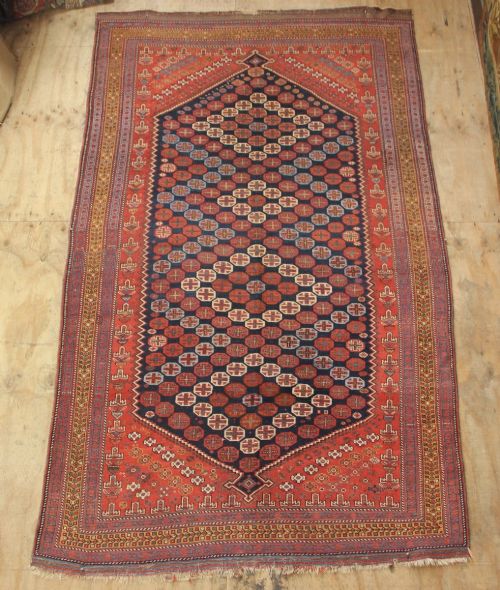
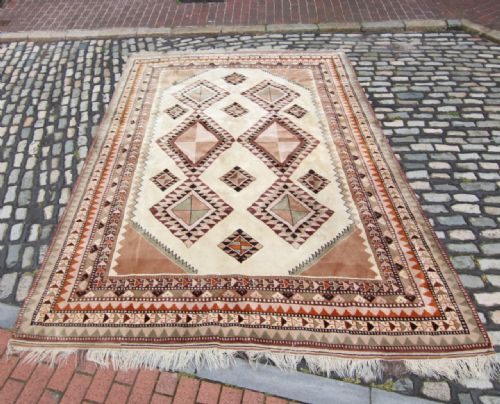
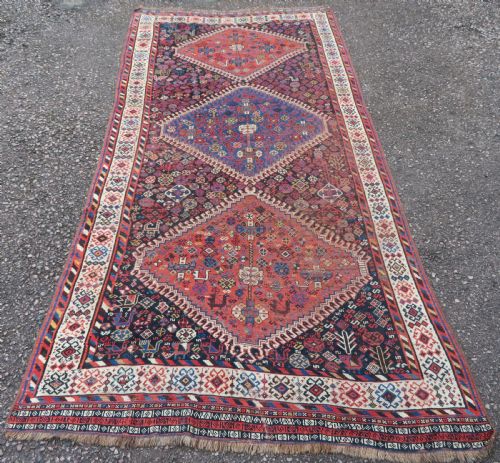
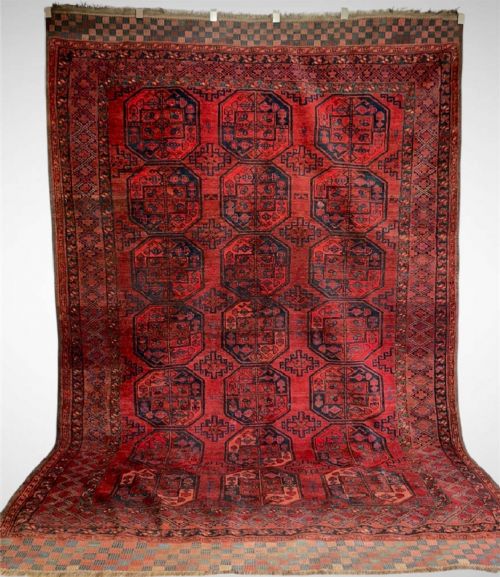
A large tribal carpet represents the woven heritage of nomadic and village communities from Persia, Central Asia, Anatolia, and the Caucasus, produced for practical floor use rather than court display. When searching for a large tribal carpet, buyers encounter substantial room-sized floor coverings bearing the distinctive tribal guls, medallions, and geometric repeats of traditions such as the Ersari Turkmen, Heriz, Bakshaish, and Afshar.
These floor coverings span the nineteenth and early twentieth centuries, with examples appearing from the 1850s through to the 1930s. The common thread among them is scale combined with tribal iconography, shifting from village kilims and flatweaves to heavy pile carpets designed to anchor a major interior space.
How they were made
The foundation and pile rely on hand-spun wool and cotton, worked entirely by hand on vertical or horizontal looms set up in nomadic camps and village houses. Weavers utilised natural dyes to achieve deep reds, indigos, and earth tones, often building colour through traditional plant-based extractions that mellow gracefully over decades of use.
The construction varies between thick wool pile knotted onto wool or cotton warps and flatwoven kilim structures. Nomadic groups such as the Kurds, Qashqai, and Turkmen integrated sturdy knotting techniques to ensure these large formats withstood nomadic relocation and daily household wear.
Materials recorded across the archive include hand-spun wool, cotton foundations, and natural dye palettes.
What varies in quality
The distinction between tiers rests upon the density of the weave, the clarity of the drawing, and the integrity of the wool. Finer knotting permits sharper rendering of complex guls and geometric borders, whereas looser village weaving yields a softer, more rustic handle.
The purity and saturation of the dye work also govern worth, with evenly matched natural dye lots holding greater visual depth than uneven or hastily prepared colours. Original side cordings and minimal structural interventions preserve the integrity of the piece against those heavily altered by later restoration.
The Large Tribal Carpet Glossary
- Gul
- A medallion motif repeated across Turkmen and Central Asian carpets. It often denotes specific tribal lineages and clan affiliations.
- Kilim
- A flatwoven textile produced without a pile. These pieces rely on interlocking weft techniques to create crisp, geometric patterns.
- Kelleh
- A long, rectangular format of carpet traditionally suited to narrow reception rooms or long spaces. It offers distinct proportions compared to square room-sized rugs.
- Warps
- The vertical threads stretched tightly on the loom that carry the structural load of the carpet. The knots are tied around these foundational cords.
- Flatweave
- A textile constructed by interweaving warp and weft threads without forming a raised pile surface. This technique produces lighter, reversible coverings.
Large Tribal Carpet: Frequently Asked Questions
Where should I place a large tribal carpet?
These room-sized pieces anchor living rooms, dining spaces, or large hallways by providing a strong focal point beneath furniture.
Keep them away from direct, harsh sunlight to protect the natural dyes from fading unevenly over the years.
How do I clean a heavy wool carpet?
Regular gentle vacuuming without a beater bar removes surface grit that settles deep within the wool pile.
Professional specialist cleaning is advised for deeper maintenance to prevent water damage or dye migration in the natural pigments.
How can I tell the age of a tribal rug?
Age is indicated by the softness of the hand-spun wool, the specific palette of natural dyes, and structural wear patterns.
Examining the selvedges and the regularity of the weave helps date the piece to the nineteenth or early twentieth century.