


Ersari Turkmen Rug
An ersari turkmen rug brings rich tribal history and deep red tones directly into a room.
Ersari Turkmen Rug
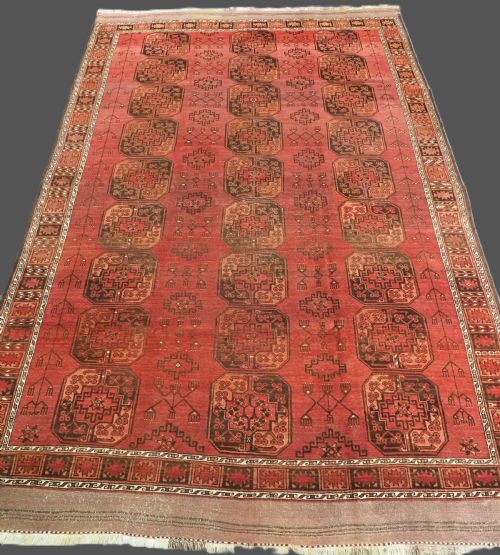
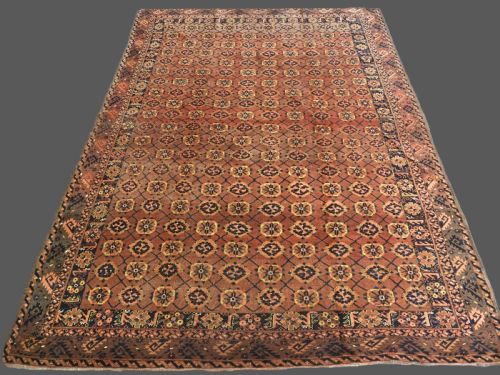
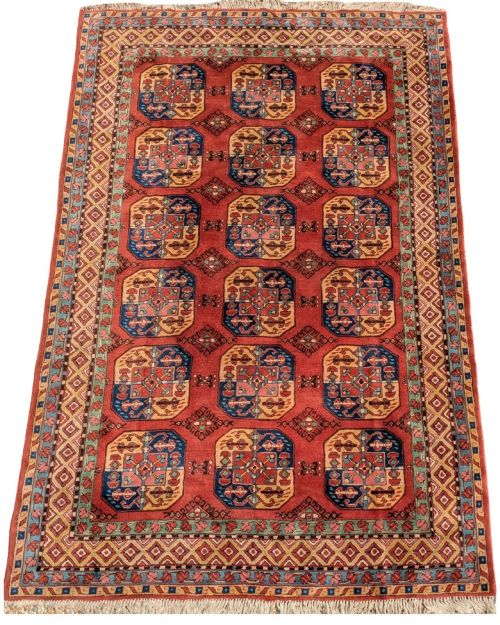
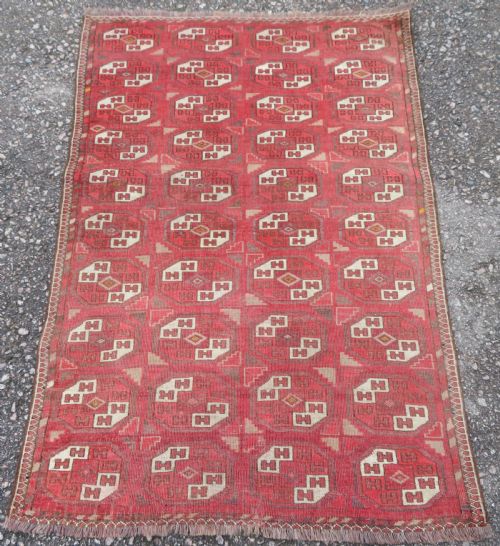
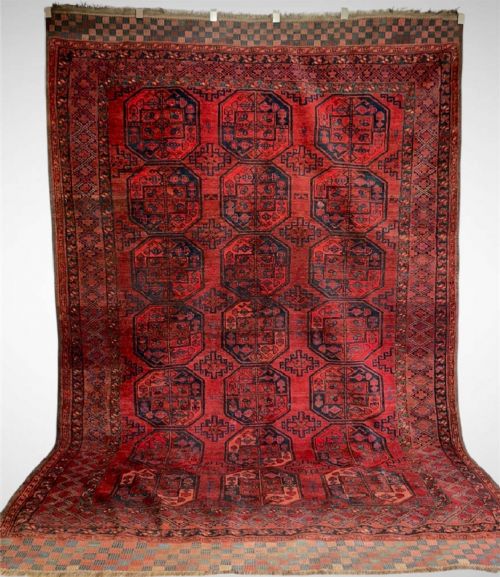
Collectors seeking an ersari turkmen rug encounter various formats ranging from large main carpets to smaller domestic items. Floor coverings include expansive country house carpets and long runners alongside village pieces originating from northern Afghanistan.
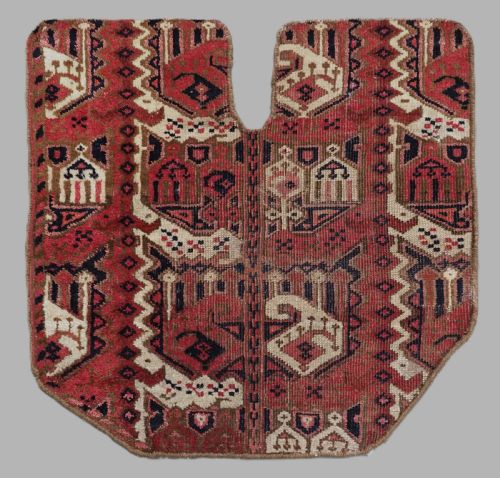
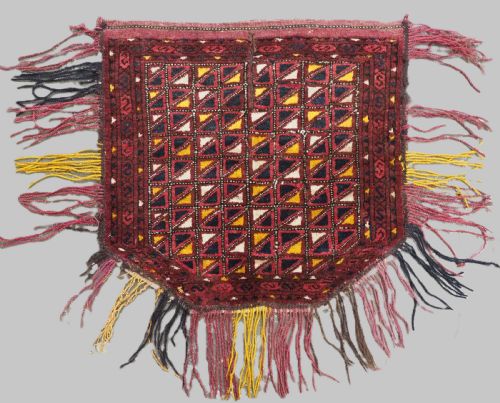
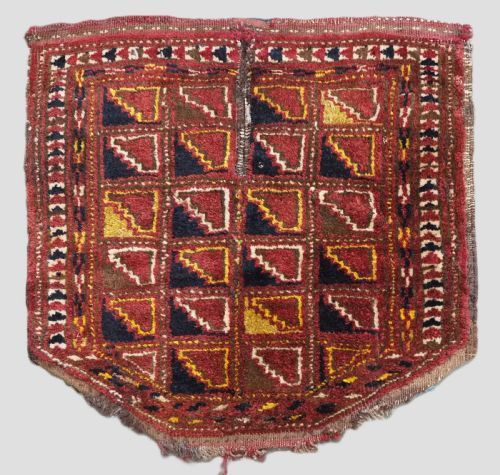
Smaller formats comprise functional tribal weavings such as saddle covers, tent door rugs, and storage bags. Examples like torbas, chuvals, and kapunuks frequently appear alongside prayer rugs and dowry pieces.
The aesthetic relies on traditional tribal motifs, including turreted guls, chodule ertum patterns, and schemle designs. Many pieces display classic Central Asian structures originating from the Amu Darya region.
How They Were Made
Weavers utilised hand-spun wool for the pile, often paired with cotton foundations or structural elements incorporating goat hair. Natural dyes supplied the characteristic warm red grounds, ivory accents, and earthy colour palettes.
Specialised items occasionally integrated supplementary materials such as silk highlights and decorative glass beads. Flat weave techniques and pile knotting formed durable structures designed for nomadic and village life.
Ersari Turkmen Rug Retail Price Guide 2026
Typical asking prices for ersari turkmen rug among the pieces listed under this phrase on Sellingantiques today, from the lower quarter to the upper quarter. They describe what is for sale here now, not the wider market.
Several surviving saddle covers retain their original tassels, having spent their early years bouncing along Central Asian tracks.
What Varies in Quality
The finesse of a piece depends on the tightness of the knotting and the clarity of the tribal motifs. Superior examples maintain balanced proportions and precise execution across traditional gul arrangements.
Material selection significantly influences the overall standard, particularly the purity of the hand-spun wool and the depth of the natural dyes. Preservation of original elements such as tassels, side cords, and complete borders elevates the standing of individual items.
The Ersari Turkmen Rug Glossary
- Gul
- A primary octagonal medallion motif repeated across Turkmen carpets. These secondary crests often identify the specific tribal group that wove the textile.
- Torba
- A small storage bag or wall hanging produced by tribal weavers. They generally feature intricately patterned faces finished with flat-woven backs.
- Chuval
- A large tent storage bag used for household possessions. These pieces display multiple guls arranged in grid formations.
- Kapunuk
- A decorative tent door hanging placed around the frame of a yurt entrance. Their characteristic shape frames the threshold with specific tribal symbols.
- Beshir
- A sub-group of weavers known for alternative patterns including ikat designs and shrub motifs. Their palette often diverges from standard Turkmen red tones.
- Ensi
- A cross-panelled rug traditionally hung over the entrance of a nomadic tent. The design layout separates the field into distinct quarters.
Ersari Turkmen Rug: Frequently Asked Questions
What is an ersari turkmen rug?
These textiles are traditional floor coverings and household furnishings made by Turkmen tribes in Central Asia. They are recognised by deep red wool grounds and geometric tribal patterns.
Weavers produced them in various sizes, ranging from large main carpets down to small storage bags and yurt door hangings.
How were these rugs used originally?
Nomadic and village communities utilised large carpets for domestic flooring inside traditional dwellings. Smaller formats served practical functions for transporting goods and storing household items.
Specialised pieces like kapunuks and ensis acted as structural decorations for yurt entrances, while saddle rugs accompanied horses.
How do I style an ersari rug at home?
The rich red tones and geometric patterns suit both traditional interiors and modern living spaces as focal floor coverings. Smaller bags and torbas work well displayed on walls or used as accent mats.
Placing them away from direct sunlight preserves the natural dyes and hand-spun wool fibres over time.
How can I tell different tribal designs apart?
Identification relies on examining the primary medallions, known as guls, alongside the border arrangements and secondary motifs. Specific structures like the chodule ertum or schemle patterns point toward particular tribal sub-groups.
Colour palettes also provide clues, with certain workshops favouring ivory grounds, green highlights, or unusual ikat-inspired layouts.