
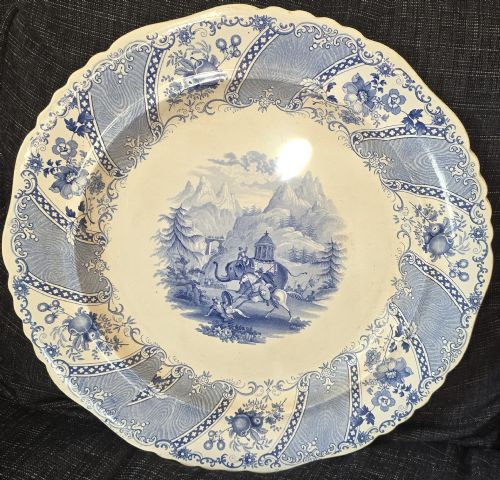
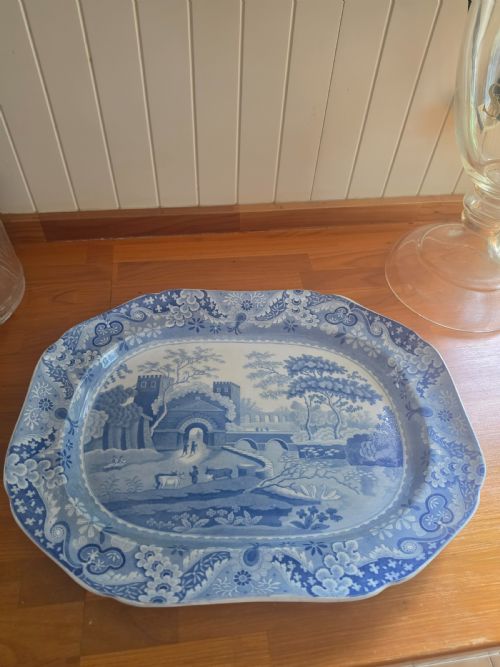



Large Transferware Charger
A large transferware charger is a wide ceramic serving dish printed with blue designs, offering generous scale and rich historical scenes for your table.
Large Transferware Charger
When you search for a large transferware charger, you encounter wide serving dishes and platters created during the Georgian, Regency, and Victorian periods. These pieces serve as both functional vessels and decorative wall or table displays.
The version you are most likely to meet on this page is an earthenware or pearlware charger or meat plate decorated in blue and white. Makers produced these in varied shapes including circular chargers and elongated platters.
Origins stretch across English potteries from the late eighteenth century through the nineteenth century. Common formats include pictorial scenes such as views, architectural landmarks, and Chinoiserie motifs.
How they were made
Potters shaped earthenware, pearlware, and stone china bodies before applying a printed paper transfer from an engraved copper plate. This transfer method allowed intricate designs like Willow Pattern and narrative landscapes to be reproduced onto the ceramic surface.
After the blue ink transfer was applied, workers coated the dish in glaze and fired it in a kiln to vitrify the ceramic and seal the decoration. The resulting glazed ceramic surface provided durability for daily dining and serving.
Listings feature earthenware, pearlware, and stone china bodies decorated in blue and white across Georgian, Regency, and Victorian periods.
What varies in quality
Quality in a large transferware charger depends on the clarity of the printed transfer and the crispness of the engraved copper plate details. Finer pieces show sharp architectural lines and deep, even blue tones without blurring.
The refinement of the ceramic body also distinguishes pieces, with pearlware and stone china offering smoother surfaces than standard earthenware. Additionally, the artistic complexity of the named series or pictorial subject influences the standing of the piece.
Spode·Caughley·Copeland and Garrett·Minton
The Large Transferware Charger Glossary
- Transferware
- Ceramic pottery decorated by printing a design from an engraved copper plate onto paper and transferring it to the unglazed or biscuit-fired ware before glazing. This technique revolutionised mass production of patterned ceramics in Britain.
- Pearlware
- A refined earthenware developed in the late eighteenth century featuring a bluish glaze that pooled in crevices to mask the natural cream body. It served as a direct precursor to later Victorian white earthenware.
- Stone China
- A dense, durable ceramic body introduced in the nineteenth century that bridged the gap between earthenware and porcelain. It resisted chipping better than standard soft earthenware.
- Charger
- A large decorative or serving plate, typically exceeding standard dinner plate dimensions, used historically for ceremonial service or display on a sideboard.
- Chinoiserie
- A European artistic style reflecting Chinese motifs and imaginary landscapes, frequently utilised in blue and white ceramic printing during the Georgian and Regency eras.
Large Transferware Charger: Frequently Asked Questions
What is a large transferware charger used for?
These large ceramic dishes were originally produced as meat plates, serving platters, or chargers for grand dining tables. Today they function equally well as table centerpieces or wall-hung decorative plates.
Their generous dimensions provide a wide canvas for detailed blue and white printed scenes depicting landscapes and architectural views.
How do I date a transferware charger?
Dating relies on identifying the ceramic body material, such as pearlware versus later stone china, alongside stylistic clues in the printed border and subject matter. Georgian and Regency pieces often feature lighter pearlware bodies and hand-engraved Chinoiserie or topographical scenes.
Victorian pieces frequently utilise heavier earthenware bodies and bear specific series titles or maker marks on the reverse. Comparing the named view to known pottery production dates narrows the timeline further.
Can I use these antique platters for serving food?
Most of these chargers are durable earthenware or stone china originally designed for dining and serving roasts or large meals. Modern usage for serving dry foods is generally acceptable provided the glaze is intact.
Hand washing is essential to preserve the historic glaze and prevent degradation of the nineteenth-century ceramic body in a modern dishwasher.
What does blue and white transfer printing mean?
The technique involves engraving a copper plate with a detailed landscape or pattern, applying cobalt blue ink, and pressing tissue paper onto the plate. This inked paper is then rubbed onto the ceramic piece to transfer the design before glazing and firing.
This innovation allowed potteries to produce consistent, intricate pictorial designs rapidly across large quantities of tableware.