



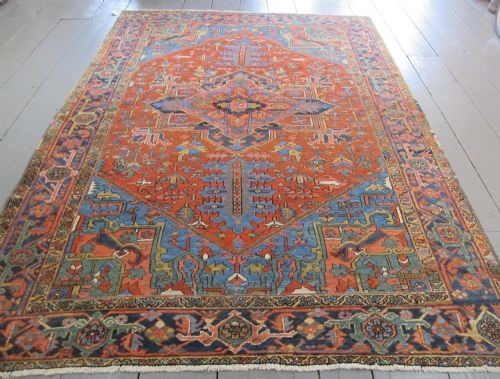
Large Red Floor Rug
A large red floor rug anchors a room with warmth, bringing centuries of Persian and tribal hand-knotted craftsmanship directly beneath your feet.
Large Red Floor Rug
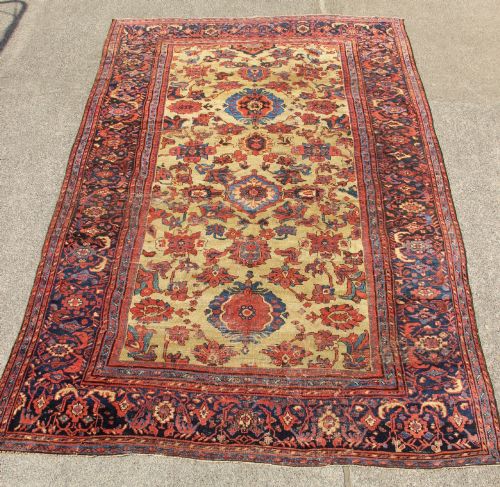
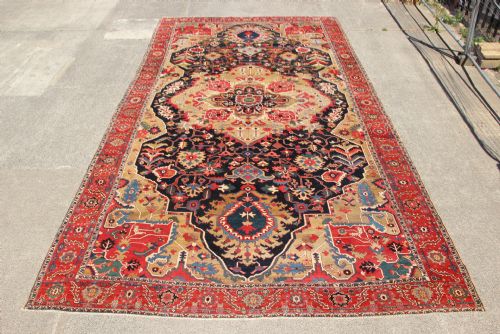
A large red floor rug encompasses substantial hand-knotted carpets originating primarily from Persian and tribal weaving traditions spanning the nineteenth and early twentieth centuries. These floor coverings arrive in room-size formats, large area rugs, and hallway runners designed for grand spaces.
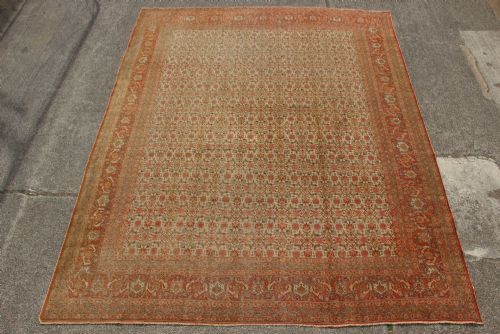
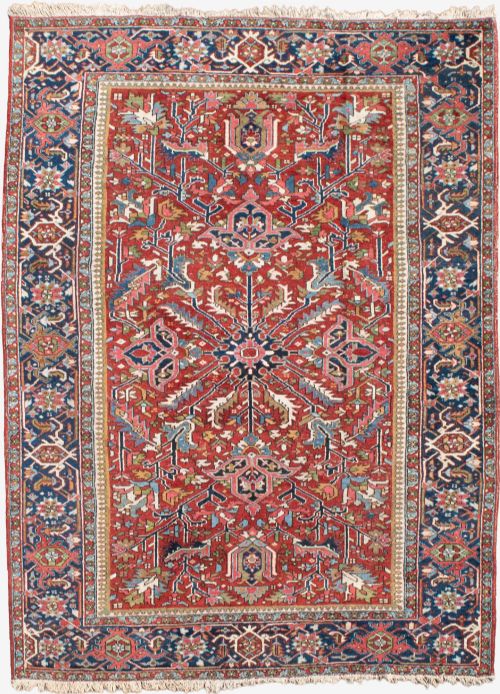
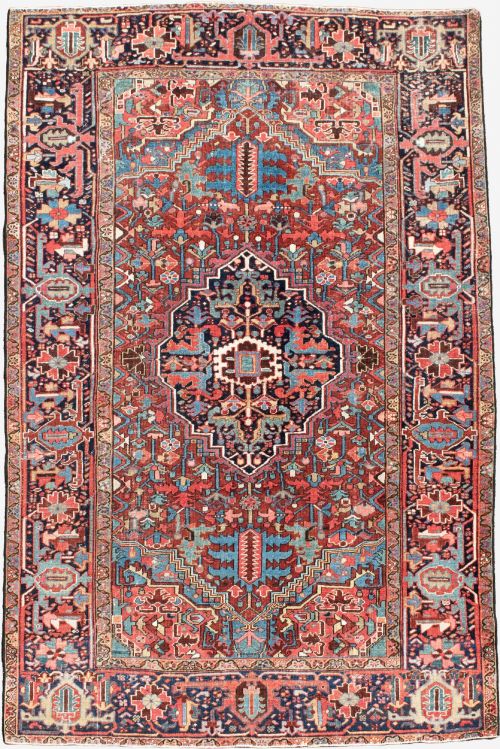
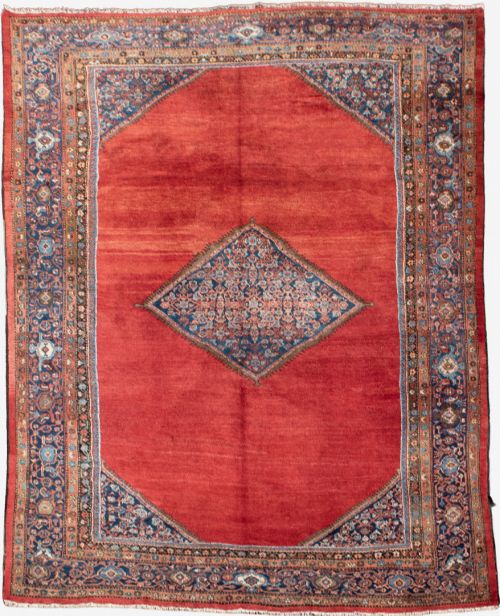
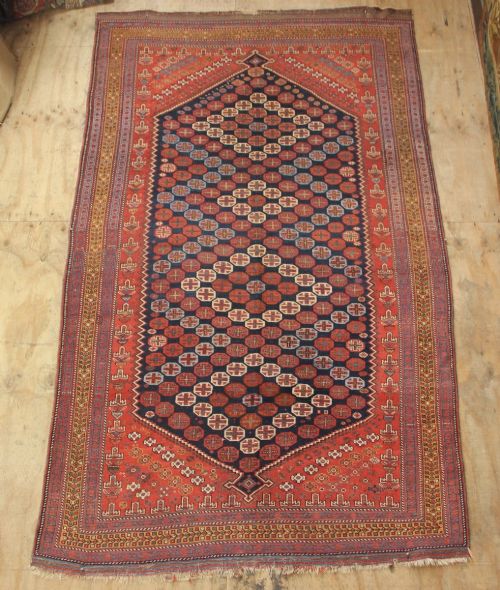
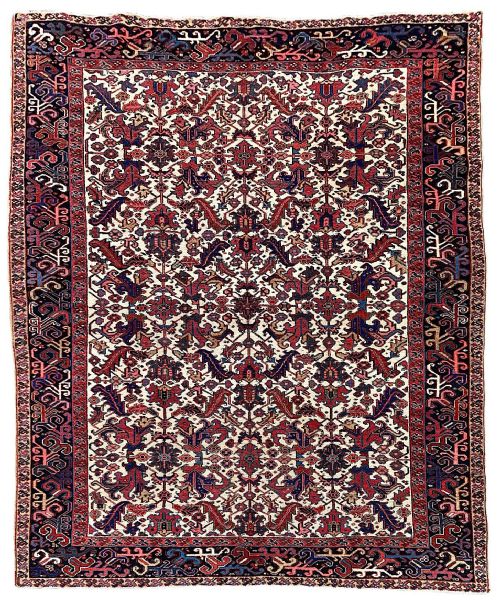
The version most commonly met on this page is the Heriz or general Persian carpet dating from the late nineteenth century to the early twentieth century. These pieces display dominant red colourways combined with traditional geometric or all-over medallion designs.
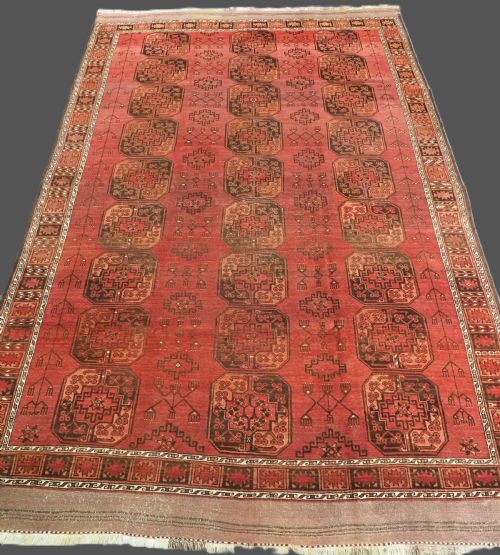
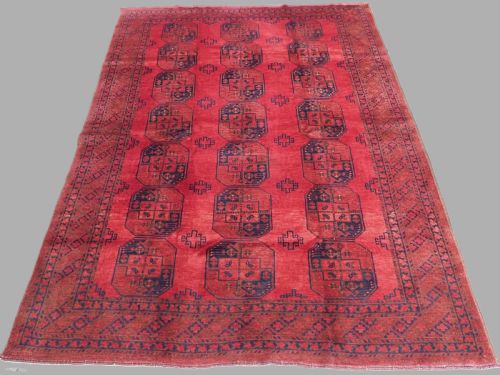
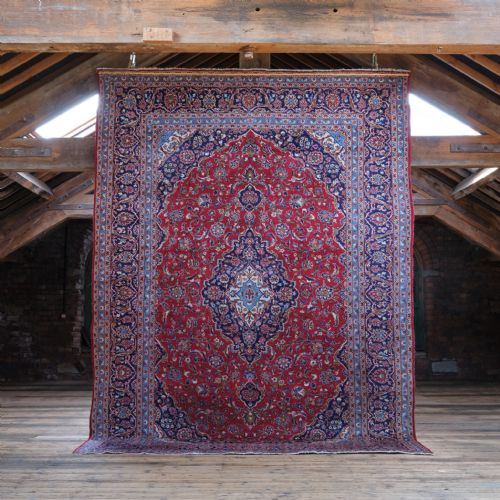
Makers and weavers across regions such as Ferahan, Kashan, Tabriz, and Ushak produced these textiles using durable materials suited for daily domestic use. Each rug reflects the distinct cultural motifs of its origin, ranging from Afghan and Turkmen tribal patterns to structured Persian styles.
How they were made
These carpets are constructed using traditional hand-knotted techniques executed on vertical looms. Artisans tied individual knots onto warp and weft foundations to build dense, resilient floor coverings.
Wool and cotton form the primary materials recorded in the construction of these rugs. Wool provides the soft, durable pile dyed in rich red tones, while cotton frequently serves for the structural foundations and fringe.
Some carpets carry the quiet footprints of nomadic weavers who worked entirely from memory by the warmth of a hearth.
What varies in quality
Knot density and structural tightness dictate the foundational integrity of each carpet. Finer knotting allows for crisper pattern definition and greater durability under foot traffic.
The depth and saturation of the red dyes determine the visual impact of the piece. Natural dye variations and wool quality create subtle tonal shifts that elevate the character of the weave.
The Large Red Floor Rug Glossary
- Heriz
- A style of carpet originating from the north-west of Persia known for bold geometric medallions and robust wool construction.
- Pile
- The raised surface of a carpet formed by the ends of the knotted yarn. This layer absorbs wear and displays the primary design.
- Warp
- The vertical threads stretched tightly on the loom that carry the weight of the carpet. Cotton is frequently utilised for this structural element.
- Weft
- The horizontal threads passed between the warp threads to lock the knots in place. This technique secures the rows of hand-tied wool.
- Runner
- A long, narrow carpet format specifically proportioned for hallways and corridors. These pieces guide movement through domestic spaces.
Large Red Floor Rug: Frequently Asked Questions
Where should I place a large red floor rug?
These substantial carpets suit principal reception rooms, dining areas, and long hallways where their scale and colour can anchor the interior scheme.
Position the rug so that furniture sits either fully upon it or with front legs resting on the border to unify the seating arrangement.
How do I care for an antique wool carpet?
Regular gentle vacuuming without a rotating brush prevents dust accumulation within the wool pile. Professional cleaning preserves the integrity of natural dyes and fibres.
Protect the textile from direct sunlight to maintain the rich red colouration over decades of domestic use.
How do I identify a Heriz carpet?
Heriz carpets typically feature large, distinct geometric medallions set against warm red fields with bold, angular corner spandrels. The wool is notably thick and durable, reflecting the harsh mountain climate of north-west Persia.
Subtle colour variations within the red tones often indicate the use of traditional natural dyeing methods.
What is the difference between tribal and city carpets?
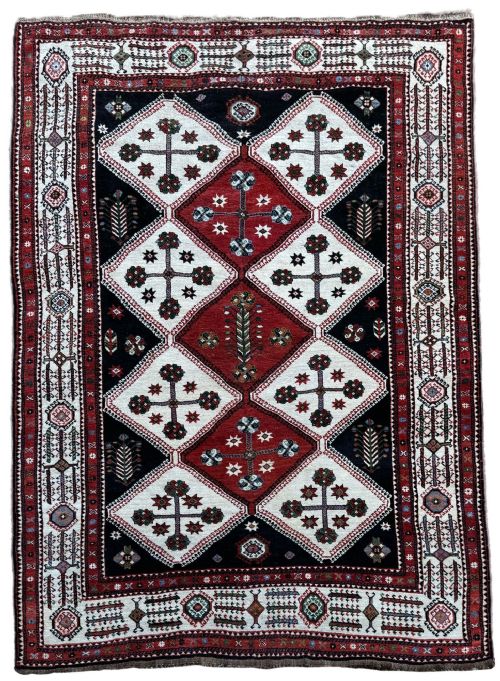
Tribal rugs, such as those from Afshar or Turkmen weavers, display spontaneous geometric motifs and symbolic designs passed down through generations. City carpets from centres like Kashan or Tabriz exhibit refined floral curves and intricate medallion layouts.
Both traditions utilise hand-knotted wool, but city pieces often demonstrate higher knot densities and more formal artistic planning.