
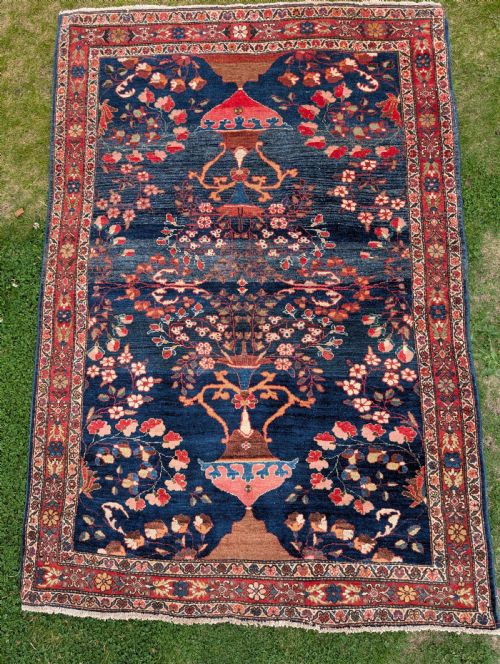
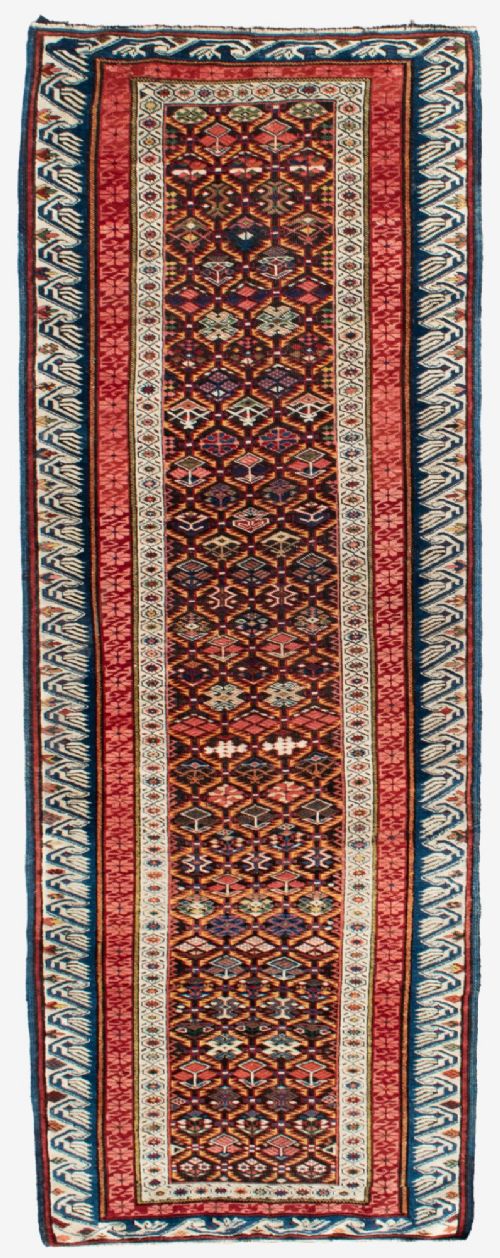


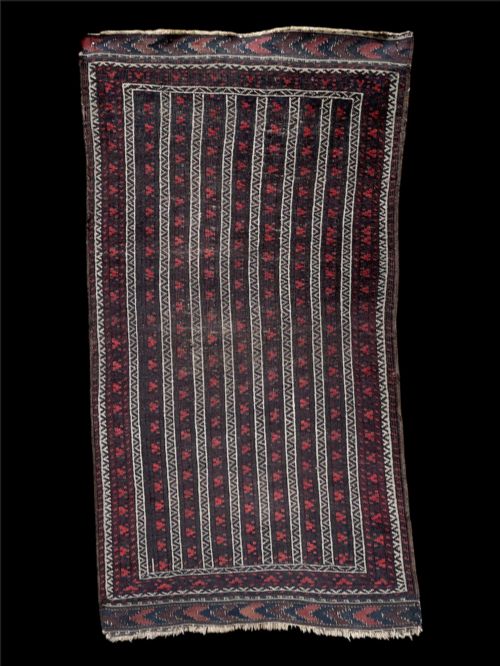

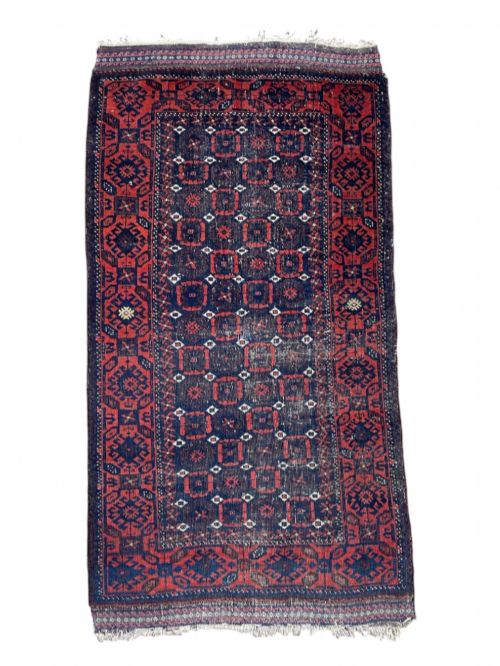


Dark Blue Red Carpet
These dark blue red carpet selections span tribal Persian, Anatolian, and Caucasian traditions from the nineteenth and early twentieth centuries, offering rich ground colours and enduring regional designs.
Dark Blue Red Carpet
A dark blue red carpet brings together antique woven textiles, runners, and room-sized floor coverings originating from nomadic tribes and village workshops. When exploring a dark blue red carpet, buyers encounter hand-knotted pieces featuring deep indigo grounds contrasted with madder red tones and intricate geometric or floral motifs.
The selection leans heavily toward Persian tribal weaves, Baluch pieces, and traditional Turkish village rugs dating from the late nineteenth century up to the 1930s. These pieces reflect the distinct regional aesthetics and weaving practices of makers across Western Asia and the Caucasus.
From narrow runners intended for hallways to compact area rugs and larger carpets, the forms vary according to their original domestic or nomadic uses. Each specimen displays the characteristic palette and structural conventions of its specific provenance and period.
Materials and construction methods
Weavers utilised natural materials such as hand-spun wool, cotton, and occasional goat hair to build the durable foundations and plush pile of these textiles. The reliance on natural dyes yielded the characteristic deep reds and dark blues that define the visual impact of the rugs.
The construction relies on traditional hand-knotting techniques executed on vertical or horizontal looms, creating dense structures designed to withstand decades of daily use. Knot counts and foundation materials vary by region, reflecting the distinct habits of nomadic tribes and settled village workshops alike.
Nomadic weavers frequently embedded small protective amulets or intentional minor colour errors into their carpets to ward off the evil eye.
Distinctions in quality and execution
The calibre of a piece rests upon the precision of the knotting, the handling of the wool, and the depth achieved in the natural dye palette. Superior examples demonstrate remarkable clarity in complex motifs and tight, even foundations that ensure structural integrity.
The harmony of colour transitions and the balance of secondary tones against the dominant red and blue grounds separate standard village output from masterwork tribal pieces. Finer specimens retain intact original borders and selvedges, reflecting careful preservation over generations.
The Dark Blue Red Carpet Glossary
- Madder
- A natural dye derived from the root of the Rubia plant, responsible for the rich red hues seen across these carpets.
- Indigo
- A natural vat dye extracted from plants, providing the deep dark blue backgrounds characteristic of many regional weaves.
- Gul
- A medallion or repeating octagonal design motif frequently utilised in Turkmen and Baluch tribal carpets.
- Mina Khani
- An all-over repeating pattern composed of daisy-like flowers linked by curved vines, common in Persian rugs.
- Selvedge
- The reinforced finishing edges running along the sides of a rug to prevent the lateral unravelling of the weave.
Dark Blue Red Carpet: Frequently Asked Questions
How do I identify a Baluch rug?
Baluch rugs typically feature darker indigo and madder palettes combined with geometric box medallions or prayer mihrabs. They often incorporate goat hair in the outer cordings and display sturdy, pliable wool foundations.
These nomadic pieces were traditionally woven in the borderlands of Persia and Afghanistan, carrying distinct tribal iconography that sets them apart from urban workshop productions.
Where were these carpets originally made?
The pieces originate across Persia, the Caucasus, and Anatolia, encompassing nomadic tribal territories and established village workshops. Regions such as Khorasan, Shiraz, and various districts of Afghanistan account for many of the traditional designs.
Each geographical area developed its own specific knotting density, wool preparation, and symbolic vocabulary passed down through generations of makers.
How should I care for an antique rug?
Regular gentle vacuuming without a rotating power brush helps remove grit from the wool pile without damaging the hand-knotted foundation. Keeping the rug out of direct, harsh sunlight preserves the natural indigo and madder dyes over time.
Professional cleaning tailored to antique textiles should be utilised periodically to wash the fibres safely without stripping the natural lanolin from the wool.