

Large Pier Glass Mirror
A large pier glass mirror brings architectural presence and reflected light to a room, historically designed to hang between windows.
Large Pier Glass Mirror
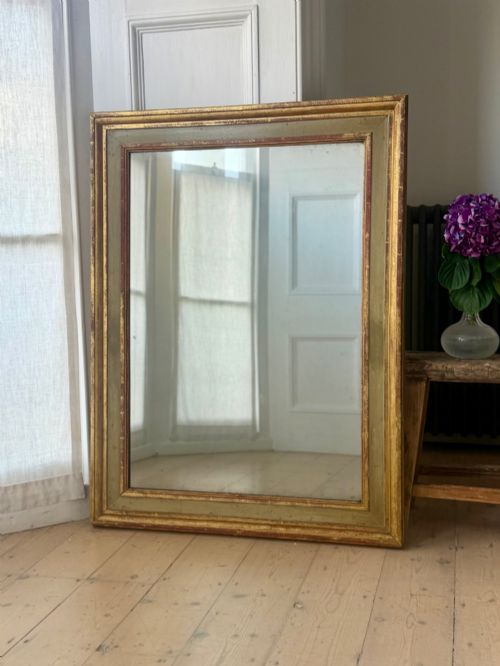
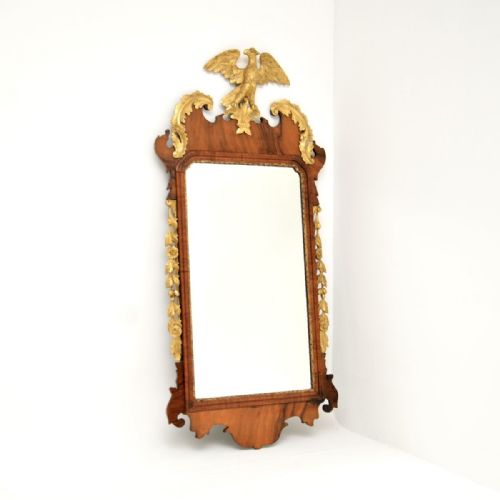
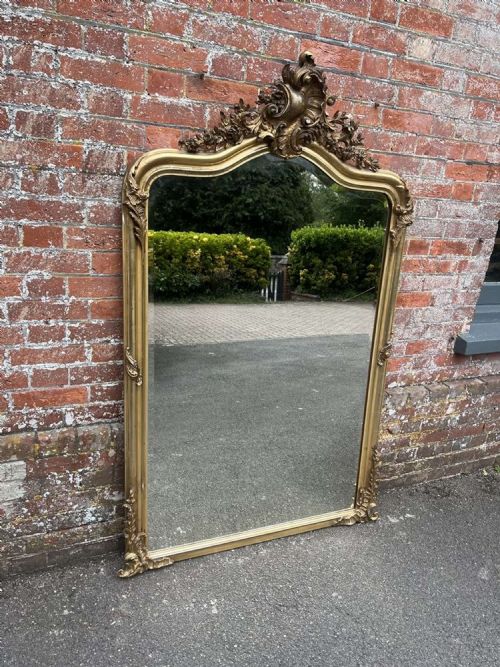
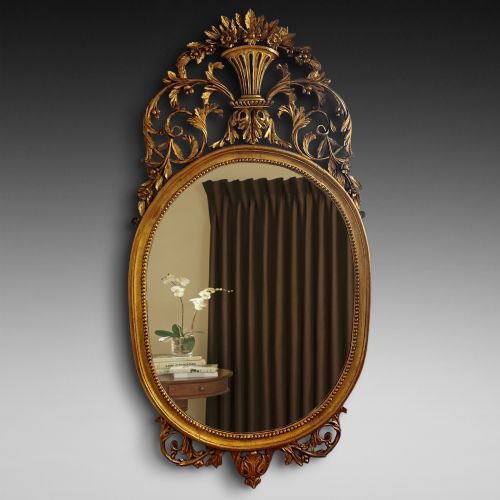
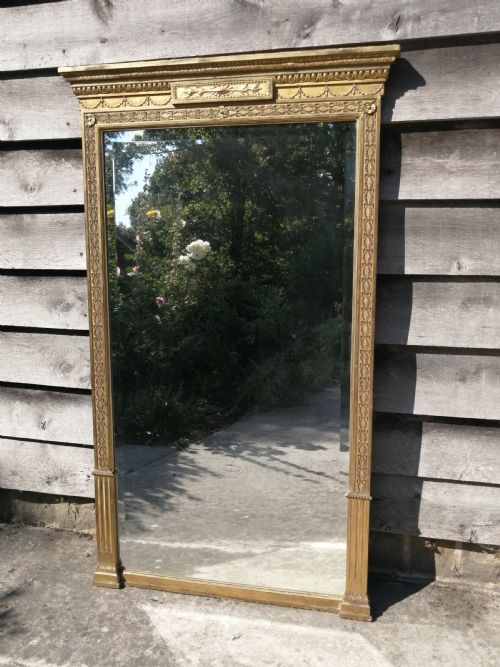
A large pier glass mirror serves as a commanding wall hanging, originally proportioned to fit the narrow wall space between two windows. These pieces span periods from the eighteenth century through the nineteenth century, including Georgian, Regency, and Victorian iterations.
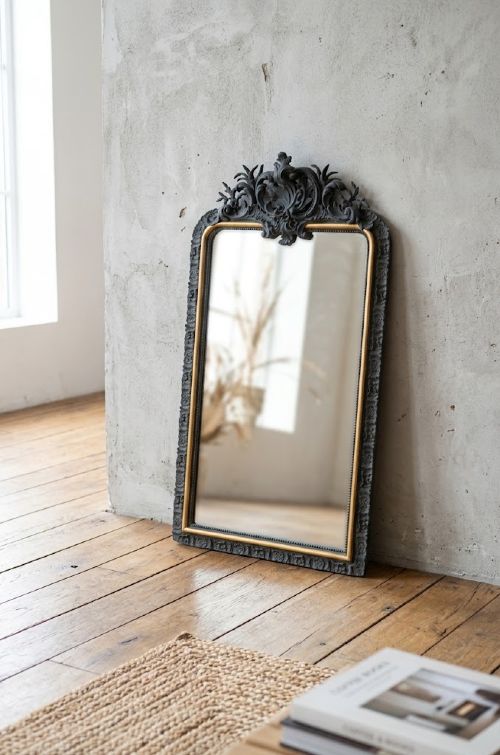
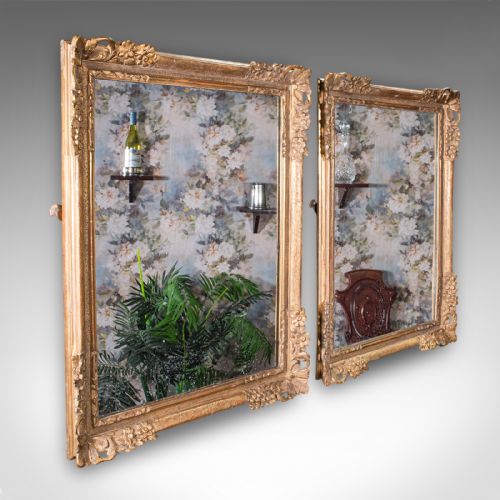
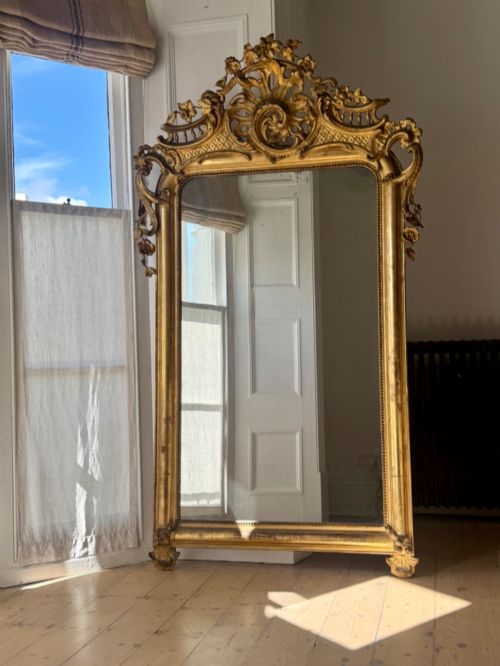
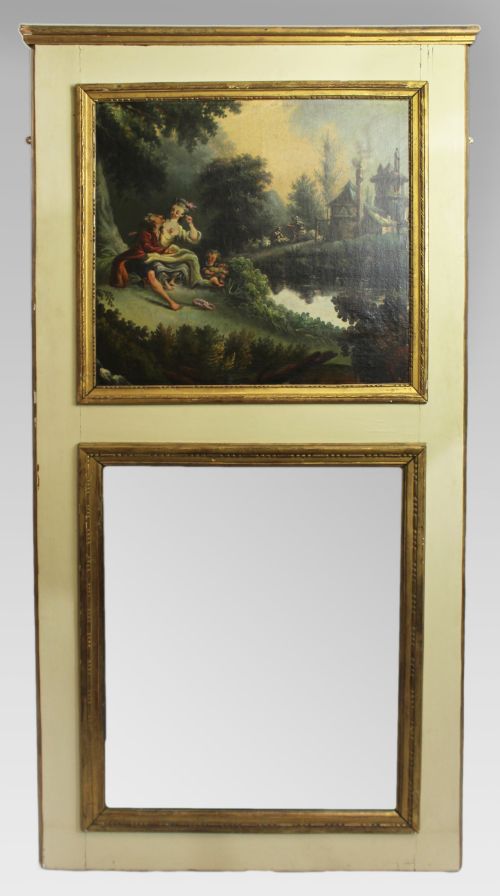
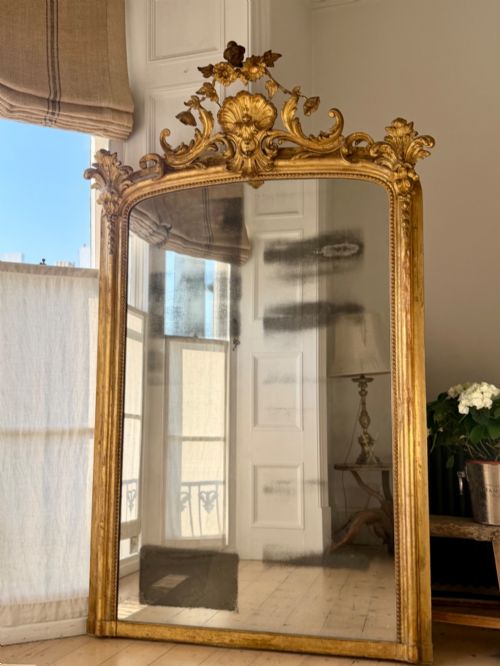
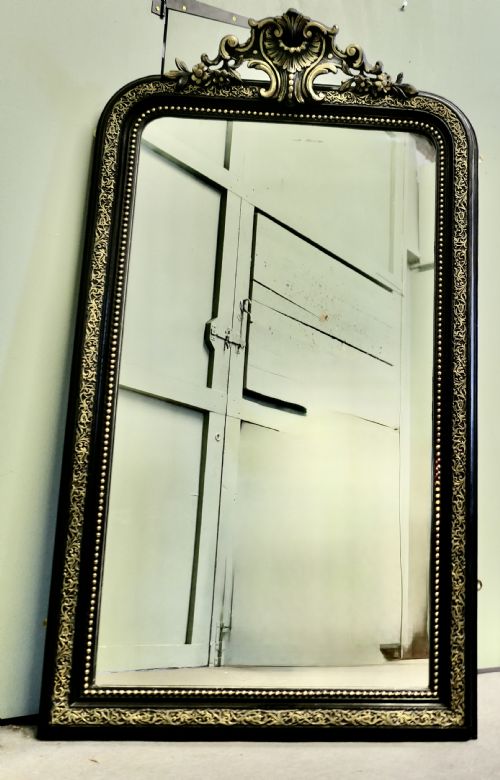
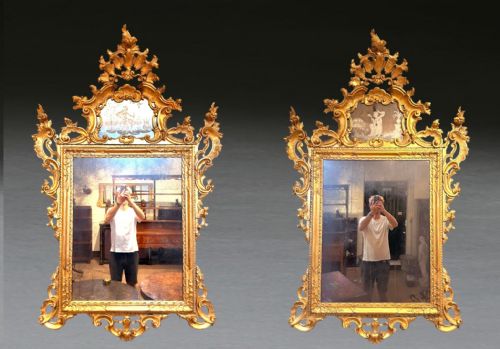
The selections on this page encompass various regional interpretations, featuring English mahogany and parcel-gilt examples alongside heavily ornamented French and Italian giltwood designs. Forms range from tall rectangular trumeau mirrors incorporating pastoral oil paintings to arched and shaped top variants.
What varies in quality
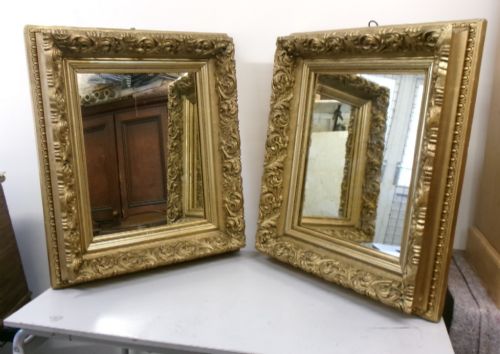
The crispness and depth of the carved wood and gesso ornamentation dictate the calibre of the frame, where sharp hand-carved relief surpasses moulded composition decoration. Originality of the surface finish and the retention of primary gilding or paint layers significantly influence the integrity of the piece.
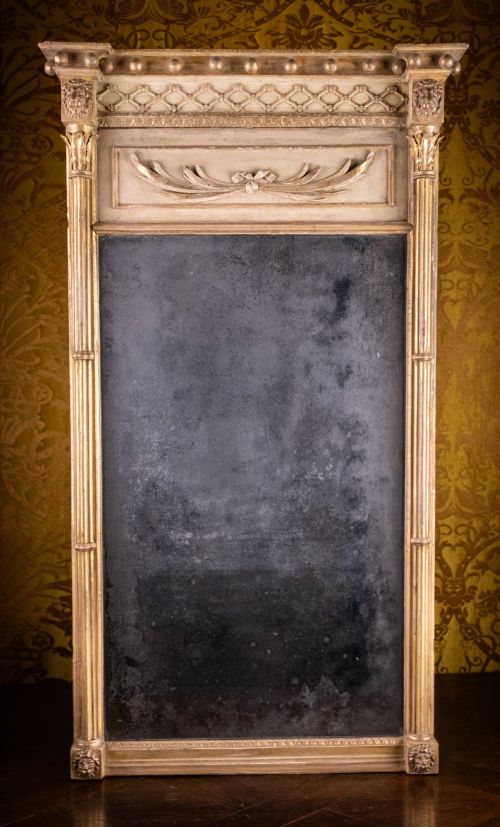
The mirror plate itself remains a major factor, with surviving original mercury glass plates or early silvered glass commanding greater historic interest than later replacements. Structural joinery and the survival of secondary elements, such as original backing boards or decorative panels, separate standard examples from finer works.
Several Regency examples incorporate fierce carved lion masks glaring down from the top corners to keep unruly visitors in check.
Gillows
The Large Pier Glass Mirror Glossary
- Pier glass
- A tall mirror specifically designed to hang on the pier, which is the wall space between two windows. It often sat above a pier table.
- Trumeau
- A decorative wall panel incorporating a mirror plate and frequently an oil painting or carved motif within the wooden frame. This French style gained popularity in interior decoration during the eighteenth and nineteenth centuries.
- Mercury glass
- An early type of mirror plate produced by pouring a tin-and-mercury amalgam behind glass. It develops characteristic dark spots and foxing over time.
- Verre eglomise
- A cold decoration technique involving painting and gilding on the reverse side of glass panels. It appears frequently in friezes above mirror plates on Regency pieces.
- Parcel-gilt
- A finish where portions of a wooden or painted frame receive a thin application of gold leaf while other areas remain exposed wood or paint. This technique highlights specific carved details.
Large Pier Glass Mirror: Frequently Asked Questions
Where should I hang a large pier glass mirror?
These mirrors suit spaces between tall windows, above mantelpieces, or as focal points in hallways and principal reception rooms.
Their substantial height and reflective surface amplify natural light and create an illusion of increased architectural scale.
How do I identify a Regency pier glass mirror?
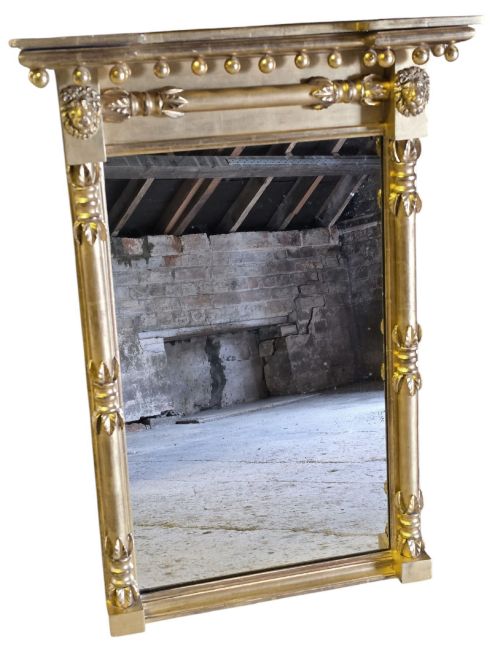
Regency examples often feature architectural lines, classical motifs, and decorative upper panels incorporating verre eglomise or painted details.
Frames frequently display elements like ball-stud moulding, reeding, or giltwood carvings influenced by French Empire and neoclassical tastes.
What is mercury glass?
Mercury glass refers to historic mirror plates backed with a reflective metal amalgam rather than modern chemical silvering.
Over decades, this material develops natural foxing, speckling, and dark patches that confirm the age of the plate.
Are these mirrors heavy?
The combination of dense timber frames, gesso, and thick glass plates results in substantial overall weight.
Proper wall anchoring into structural studs or masonry is essential to support the load safely.