
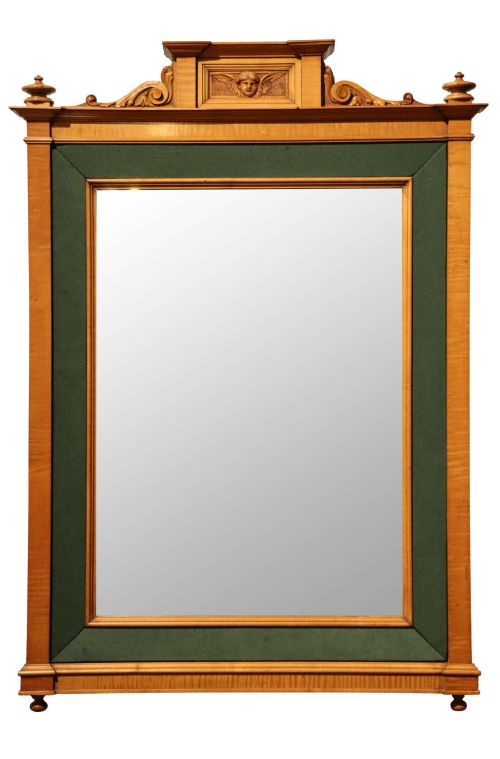


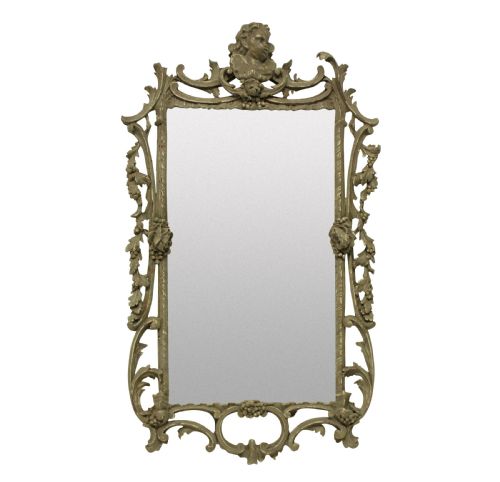
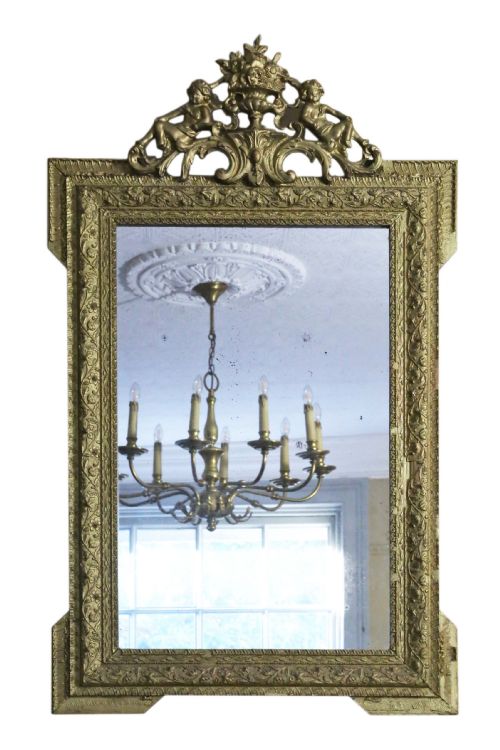


Cherub Cresting Mirror
A cherub cresting mirror brings dramatic figurative carving to a room, dominated by the winged infant figure perched above the glass.
Cherub Cresting Mirror
Most examples found here date from the nineteenth century, encompassing periods such as 1860, 1870, and 1900, alongside revivals of earlier aesthetics like Louis XVI and Carolean styles. These pieces function equally well as grand focal points above mantelpieces or as statement wall hangings in reception rooms.
The form ranges from rectangular overmantle formats to arched top designs and oval formats framed in oak or gilded surfaces. The presence of the putto or cherub at the crest defines the character of each piece, drawing the eye upward and adding classical or romantic movement.
How they were made
Makers constructed the primary frames using carved wood, oak, or composition materials built up over a wooden base. Carvers applied gesso and plaster layers to build up intricate relief details before adding gilding or paint finishes.
Surface treatments rely on giltwood, silver leaf, or parcel-gilt applications, often accompanied by painted highlights. The combination of carved wood and gesso allowed craftsmen to achieve crisp detail in the cherub crestings and surrounding foliage.
Putti peer down from the tops of these frames, silently judging every table arrangement placed beneath them.
What varies in quality
The integrity of the original surface finish heavily influences the character of the mirror, with untouched giltwood or original painted and gilded schemes holding greater visual harmony. Heavier overmantle proportions and substantial timber frames indicate ambitious construction intended for prominent interior spaces.
The Cherub Cresting Mirror Glossary
- Putto
- A plump, often winged infant figure used in classical art and architectural decoration. This term appears interchangeably with cherub in nineteenth-century mirror descriptions.
- Cresting
- The ornamental top or crown of a mirror frame. This architectural element houses the primary sculptural focus, such as a putto figure.
- Gesso
- A plaster-like mixture applied to wood frames to create a smooth surface for gilding. Craftspeople modelled intricate relief patterns directly into this material.
- Giltwood
- Timber coated with gold leaf or metal leaf applied over a prepared ground. This technique provides a luminous finish that reflects candlelight and daylight.
- Overmantle mirror
- A large horizontal mirror designed specifically to hang above a fireplace mantel. These pieces anchor the room proportions and reflect interior light.
Cherub Cresting Mirror: Frequently Asked Questions
Where should I hang a cherub cresting mirror?
These mirrors suit prominent vertical spaces, most traditionally positioned above a drawing room fireplace as an overmantle piece. Their decorative cresting requires adequate wall height to display the carved figures properly.
Alternatively, placing one on a primary wall opposite a window maximises light reflection while ensuring the frame acts as a visual centrepiece in the room.
How do I identify the period of these mirrors?
Dating relies on examining the construction materials, backing boards, and the specific revival style employed by the maker. Nineteenth-century examples often combine carved wood and gesso with characteristic proportions seen in French Rococo and Louis XVI revivals.
Stating a precise year requires checking construction markers, fastener types, and the composition of the gesso layer underneath the gilt surface.
Are these mirrors heavy to hang?
Most large overmantle and wall mirrors carry substantial weight due to the combination of thick timber frames, heavy glass plates, and dense gesso ornamentation. Secure installation requires fixing directly into masonry or locating firm wall studs.
Professional hanging hardware rated for heavy loads ensures the mirror remains stable against the wall without straining the frame joints.
What is the difference between giltwood and painted finishes?
Giltwood surfaces feature metallic leaf applied over a prepared gesso base, offering a reflective and traditional appearance that catches interior light. Painted and parcel-gilt finishes incorporate solid paint colours alongside partial gilding to highlight specific carved details like the cherub cresting.
Both finishes were utilised across nineteenth-century French and English workshops to achieve distinct decorative effects depending on the interior scheme.