
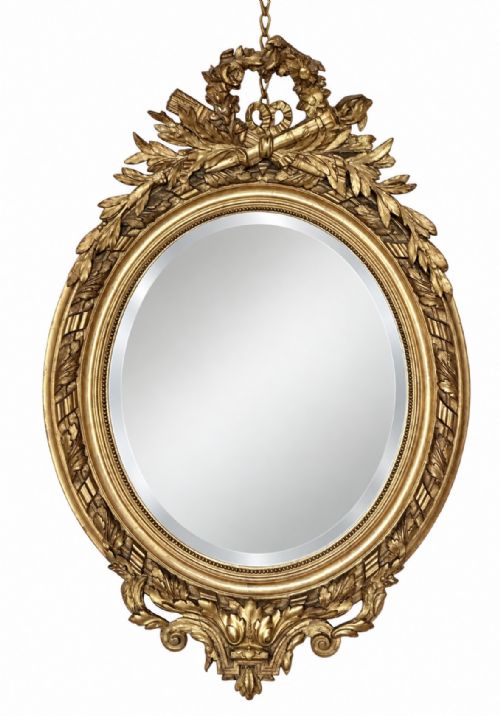
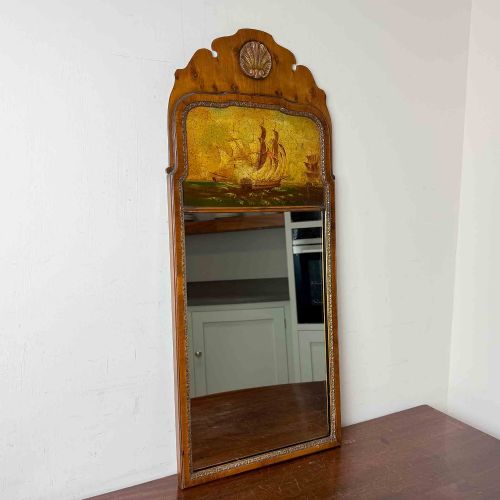

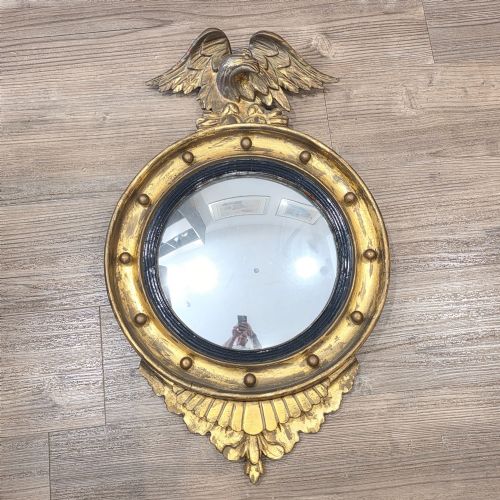
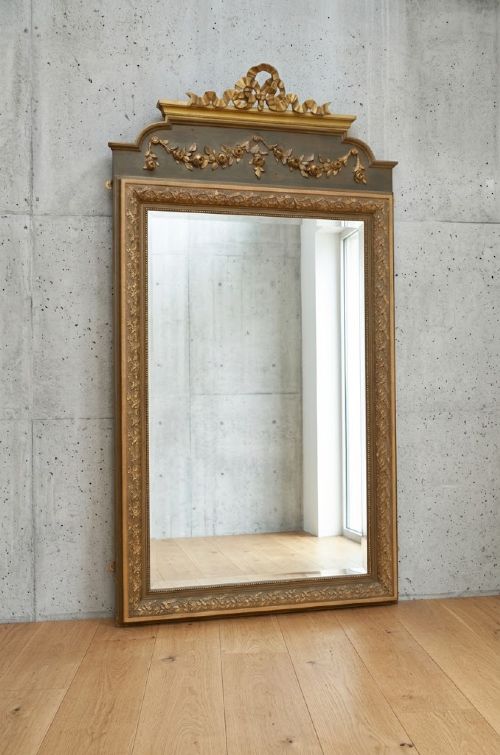

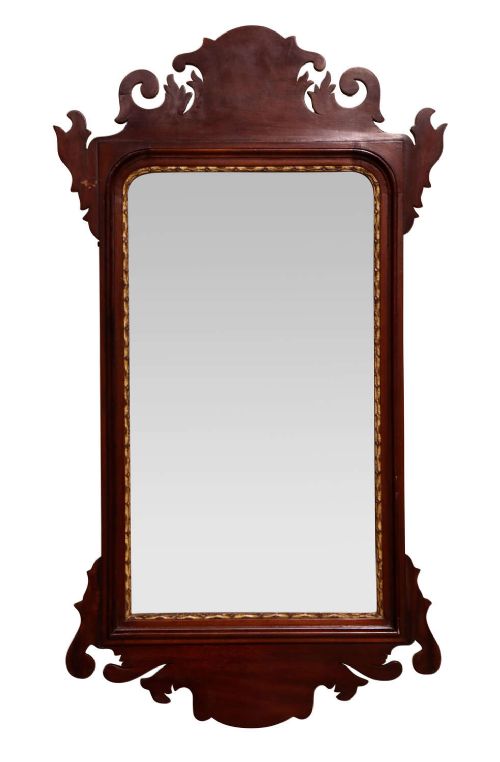
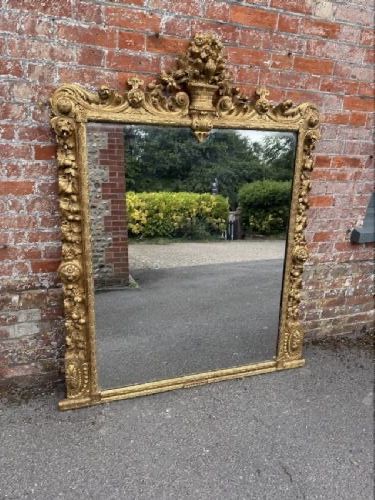
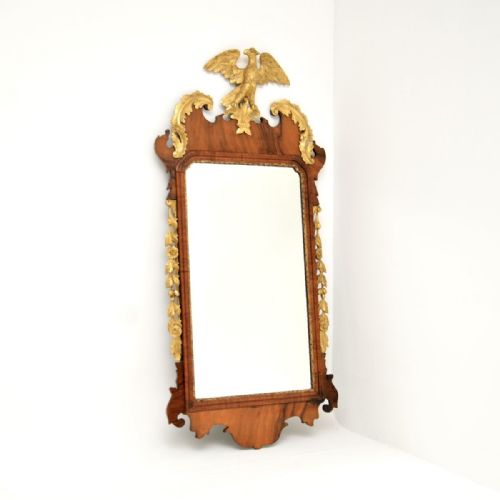
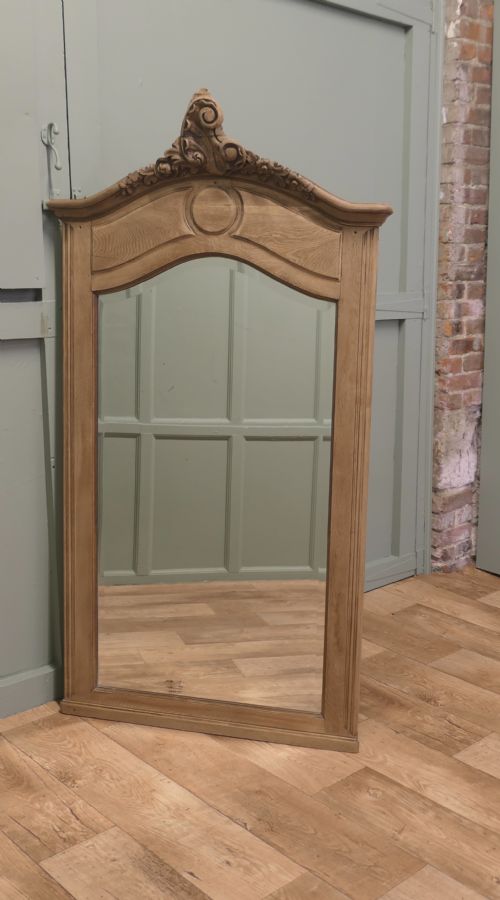

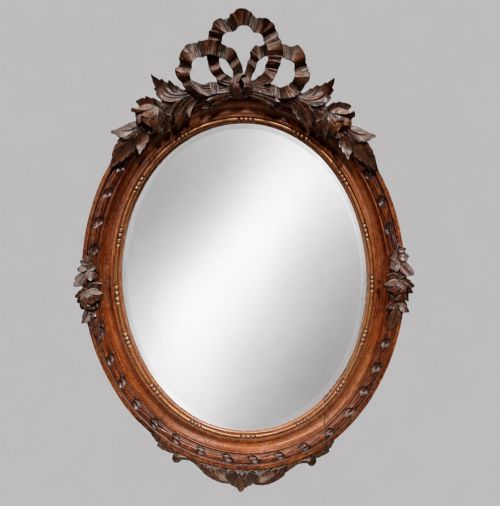
Carved Wood Crest Mirror
A carved wood crest mirror brings nineteenth-century French and English wall presence into a room through elaborate upper decoration.
What a carved wood crest mirror is
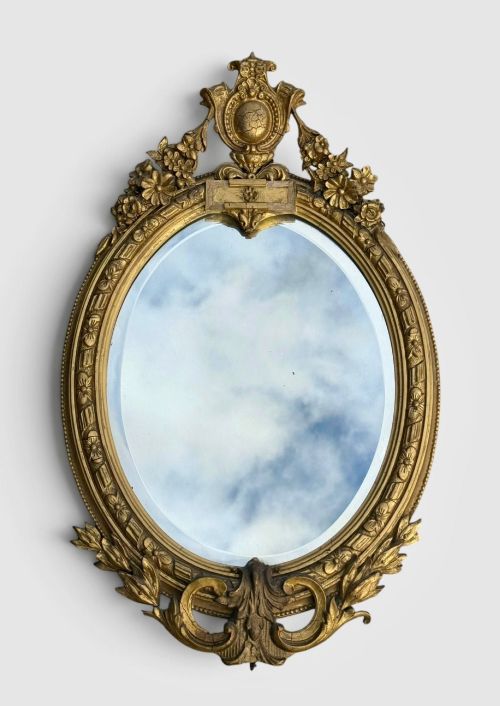
A carved wood crest mirror combines a substantial glass plate with an ornate upper framework of carved timber and gesso. These pieces emerge from the nineteenth century, spanning Victorian Britain and continental European workshops.
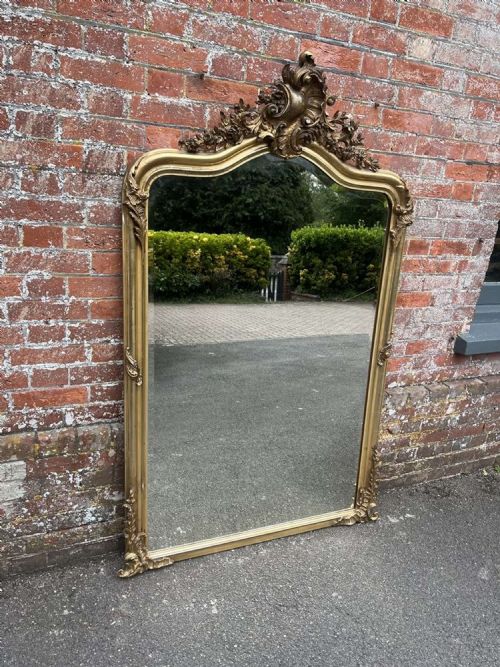
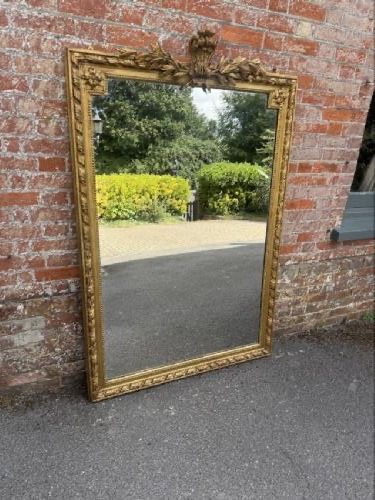
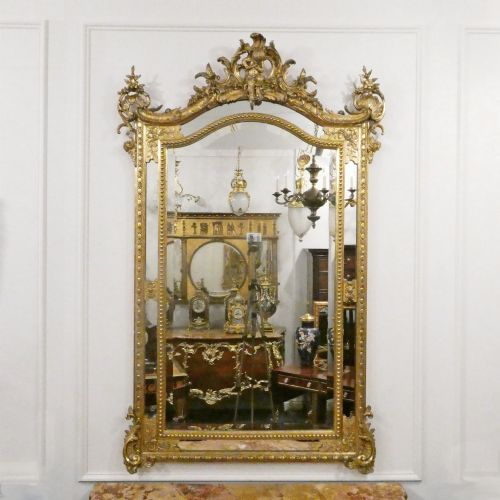
The buyer encounters wall mirrors featuring prominent crests, often styled around Rococo Revival curves or Louis Philippe proportions. Formats range from cushion profiles to arched tops and shaped frames.
Origins divide principally between English pieces, such as Masonic giltwood examples, and French Chateau designs finished in giltwood, silver leaf or painted surfaces. The decorative focus centres entirely on the elaborate woodwork rising above the main glass.
How they were made
Craftsmen built these frames using carved wood and composition applied over a wooden base, then coated the surfaces in gesso. This preparation allowed intricate scrolls and crests to be moulded or hand-chiselled with precision.
Finishing techniques involved the application of gold leaf, silver leaf or traditional paint layers directly over the gesso ground. Many surviving examples retain original distressed gilding or painted patination developed over decades.
Retail Price Guide 2026
Typical UK retail prices for carved wood crest mirror, calculated from the Sellingantiques database of over a million retail prices indexed since 2003. This retail price guide relies exclusively on Sellingantiques data; no external sources or auction records are used, so the figures do not describe the wider market.
The inventory records wall mirrors with arched tops, cushion profiles and shaped crests spanning the decades from eighteen-sixty to eighteen-ninety.
What varies in quality
Depth and sharpness in the carved wood crest separate standard production from finer examples, as does the complexity of the scrollwork. The integration between the main frame and the upper crest reveals the joiner's hand.
The quality of the original gilding or painted surface alters the visual weight of the mirror, alongside the clarity and depth of the glass plate itself.
The Carved Wood Crest Mirror Glossary
- Crest
- The decorative wooden ornament mounted at the top of the mirror frame. It provides the primary sculptural focus for the piece.
- Gesso
- A plaster-like mixture applied to wood frames to create a smooth surface for gilding or painting. It accepts fine detail work during manufacture.
- Giltwood
- Timber coated with gold leaf or metal leaf. This finish defines many nineteenth-century wall mirrors.
- Cushion mirror
- A frame profile where the outer edge slopes gently inward toward the glass plate. This form appears frequently in French nineteenth-century pieces.
- Rococo Revival
- A nineteenth-century design style reviving eighteenth-century asymmetrical curves, scrolls and natural motifs. It heavily influences the crests on these mirrors.
Frequently Asked Questions
Where should I hang a crest mirror?
These wall mirrors suit principal reception rooms or hallways where the upper crest has adequate vertical clearance to be seen properly. Placing them above a fireplace or console table allows the carved woodwork to anchor the surrounding wall space.
Because nineteenth-century frames carry substantial weight from timber, gesso and glass, secure wall fixings into masonry or structural studs are essential for safe hanging.
How do I identify a French nineteenth-century mirror?
French pieces from this era often feature arched tops, cushion frames or ornate crests finished in painted surfaces or original silvered gilt. The proportion tends toward decorative wall presence with fluid scrollwork.
Comparing the construction methods behind the gesso and carved wood helps distinguish continental workshops from domestic English production of the same period.
What is the difference between giltwood and painted finishes?
Giltwood surfaces use gold leaf applied over gesso to create a reflective, metallic sheen that catches ambient light. Painted finishes rely on pigment layers, which often show original distressing over the timber.
Both finishes were widely used across nineteenth-century Victorian and French Chateau styles, changing the overall tone of the carved crest.
How do I care for original gesso and leaf surfaces?
Maintenance requires dry dusting with a soft brush to protect the delicate carved wood and gesso crest without disturbing historical finishes. Moisture and chemical cleaning agents must be kept away from nineteenth-century giltwood and paint.
Stable indoor humidity prevents timber movement behind the gesso, preserving the bond between the wood frame and its decorative surface.