

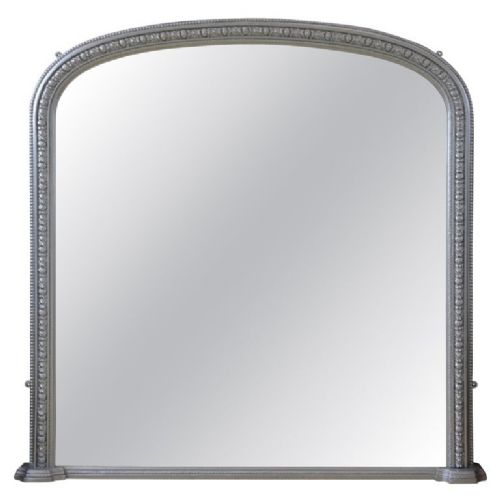


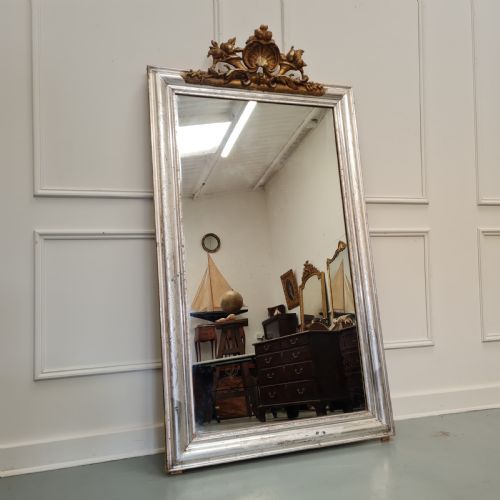


French Silver Gilt Mirror
A french silver gilt mirror brings depth and light to a room through centuries-old craftsmanship.
French Silver Gilt Mirror
When searching for a french silver gilt mirror, collectors encounter wall-hanging and overmantel forms originating mostly in the nineteenth century. These pieces encompass styles such as Louis Philippe, Rococo, and Baroque Revival, reflecting distinct periods of European design.
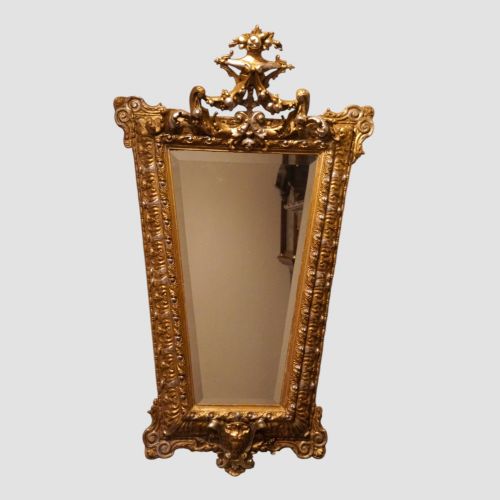
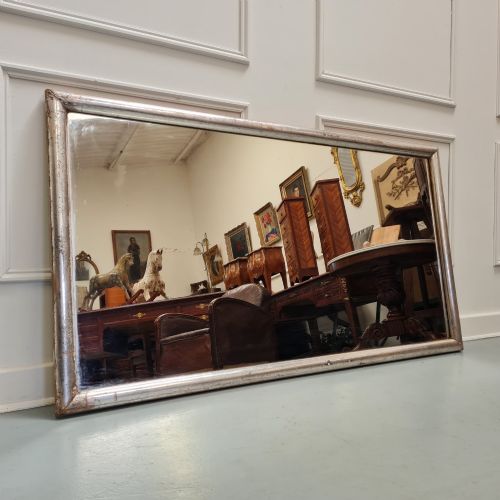
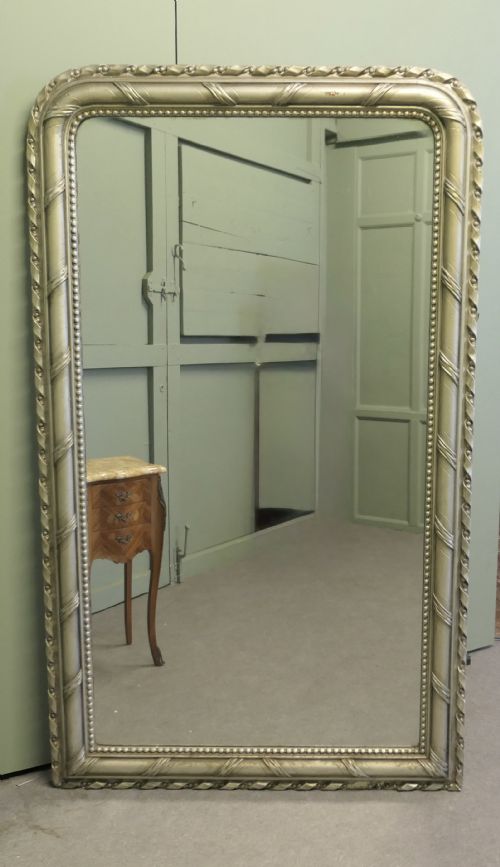
The dominant version on this page is the large nineteenth-century wall or overmantel mirror, often featuring an arched, shaped, or trapezoidal top. Many of these examples display carved wooden structures covered in gesso and finished in silver leaf or silver gilt.
Earlier examples stretch back to the eighteenth century, while later interpretations reach into the twentieth century. These domestic furnishings served both a practical reflective purpose and a decorative role within period interiors.
Materials and construction
Makers built the foundational framework of these mirrors using carved wood, applying layers of gesso to smooth the surface before adding metal leaf. Artisans utilised silver leaf, gold leaf, and silver gilt to achieve the characteristic reflective metallic finish.
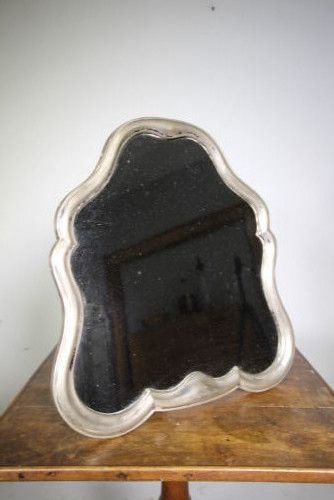
Mirror glass, including mercury glass variants in older pieces, was fitted into rebates behind wooden and gesso mouldings. Frames frequently combine carved wood and gesso with structural elements of ebonised wood or rope twist designs.
Listings feature items spanning from the eighteenth century through to the 1930s, constructed from carved wood, gesso, and mirror glass.
Aspects of quality
The sophistication of the carved wood and gesso ornamentation dictates much of the distinction between standard and finer examples. Crisp detail in the carving and the preservation of the original silver gilt surface elevate the standing of a piece.
The integrity of the mirror glass itself, alongside the survival of original backing materials and mounting hardware, plays a major role in establishing the grade of an individual item.
The French Silver Gilt Mirror Glossary
- Silver gilt
- Silver that has been coated with a thin layer of gold or similar metallic leaf. This technique combines the cool tone of silver with the warmth of gold.
- Gesso
- A plaster mixture applied to wood frames to create a smooth surface for gilding. It allows for intricate relief carving beneath the metallic leaf.
- Overmantel mirror
- A large mirror designed to hang specifically above a fireplace mantelpiece. These pieces often feature horizontal proportions or arched tops.
- Louis Philippe
- A nineteenth-century French architectural and decorative style characterised by restrained classical curves and simple elegance. These frames typically feature softened upper corners or gentle arches.
- Mercury glass
- A double-walled glass blown type popular in older mirrors before modern silvering processes. It often displays characteristic speckling and depth within the reflective surface.
French Silver Gilt Mirror: Frequently Asked Questions
Where should I hang a large overmantel mirror?
These mirrors work best positioned directly above a fireplace mantel, where their scale reflects light across the entire room. They also function effectively as floor-standing or wall-hung pieces in high-ceilinged reception rooms.
Ensure the wall structure and fixings can support the substantial weight of carved wood, gesso, and thick glass.
What is the difference between silver gilt and silver leaf?
Silver leaf consists of fine sheets of beaten silver applied directly to the prepared gesso frame. Silver gilt involves a combination where the silver base receives an additional superficial treatment of gold or tinted size.
Both materials create a shimmering metallic appearance, though the underlying alloy tone alters the visual warmth of the finished surface.
How do I care for an antique mirror frame?
Dust the carved wood and gesso gently with a dry, soft brush to prevent accumulation in the recesses of the ornament. Avoid using liquid cleaners or harsh chemicals near the gilt surface, as moisture damages traditional water-gilded finishes.
Keep the mirror away from direct sources of extreme heat or dampness to protect the wooden substrate and the stability of the gesso.