

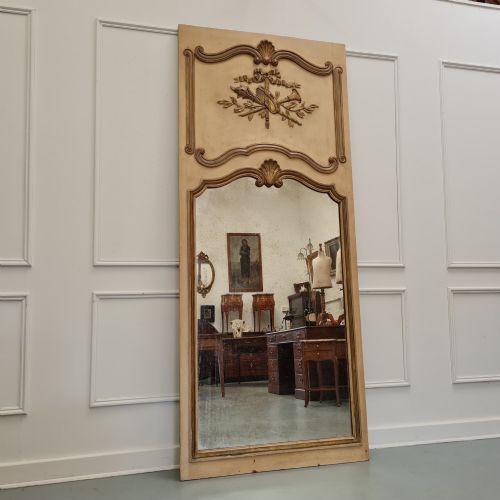
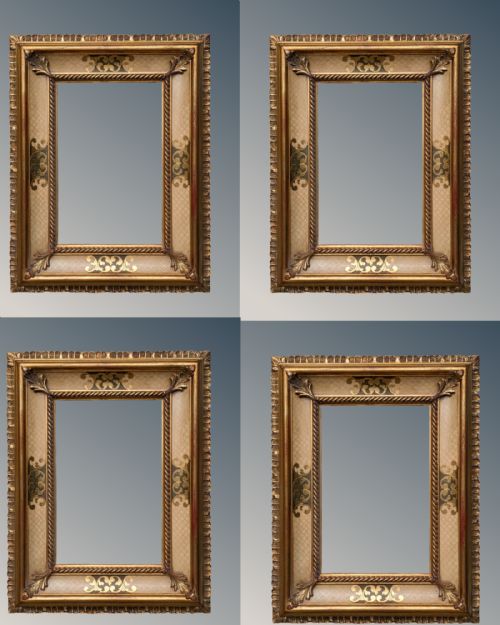


Painted Wooden Wall Mirror
A painted wooden wall mirror brings texture and light to a room, offering the charm of nineteenth-century French and Edwardian craftsmanship.
What They Are
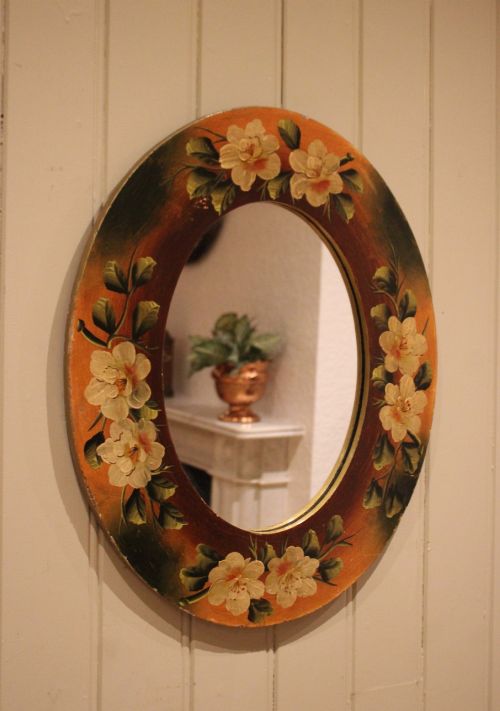
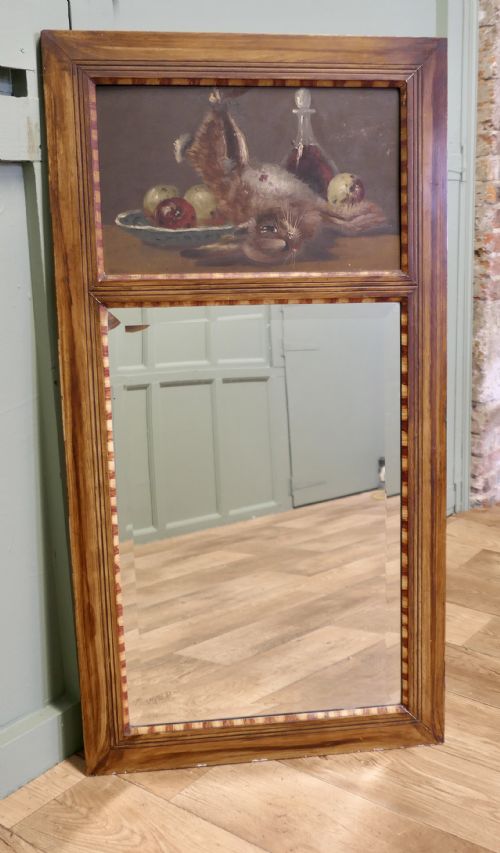
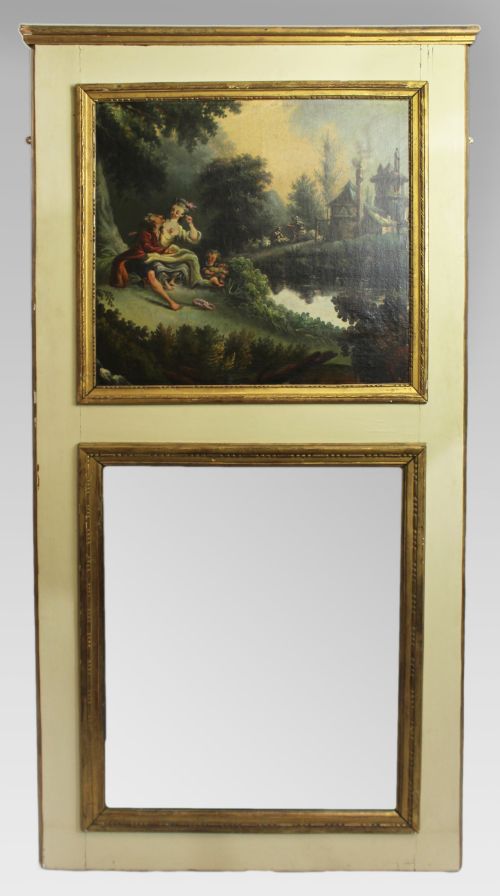
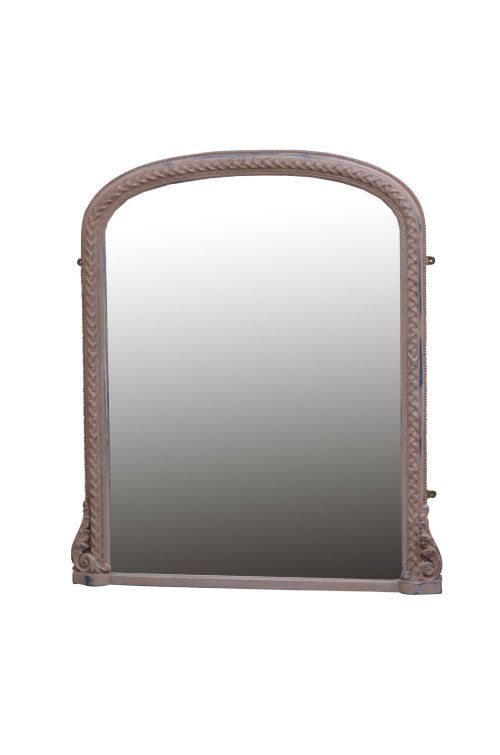
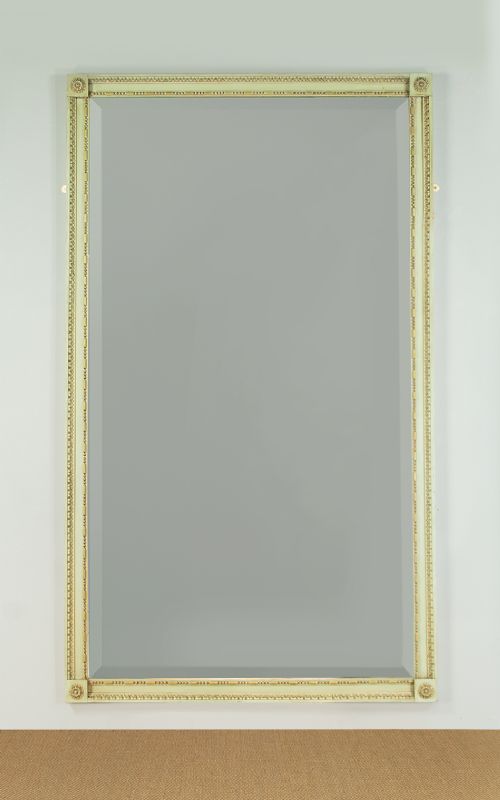
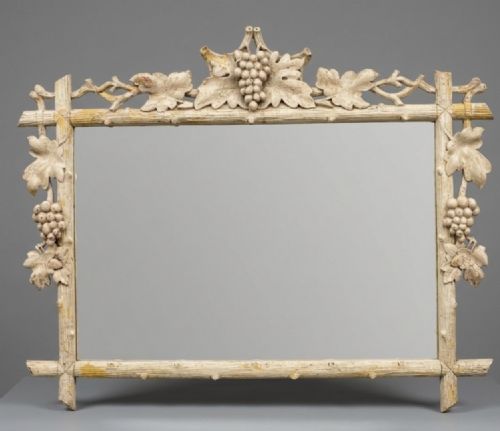
A painted wooden wall mirror is a decorative looking glass framed in timber that carries a painted, overpainted, or gilt finish. These pieces serve both practical and aesthetic purposes in domestic interiors, reflecting light while adding a distinct historical presence to a wall.
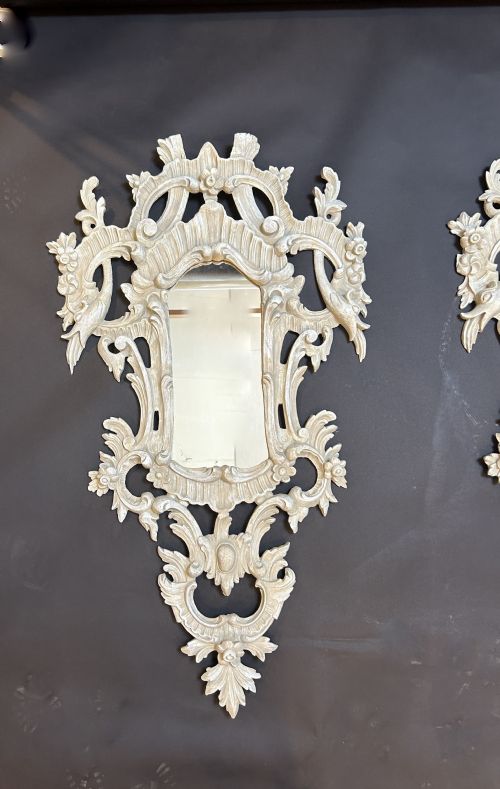
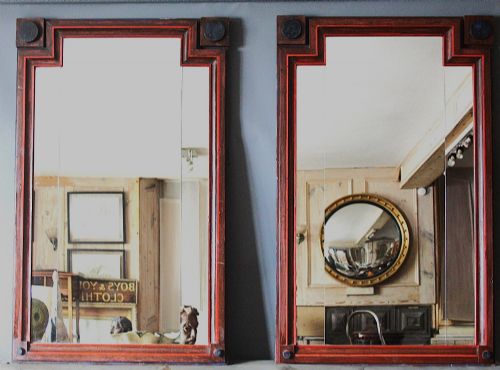
The pieces on this page span the nineteenth and early twentieth centuries, featuring examples from around eighteen-sixty up to nineteen-ten. Visitors will encounter large overmantel mirrors, shop mirrors, and continental wall mirrors shaped in Rococo Revival and French chateau styles.
Forms vary from cushion mirrors with shaped tops to large overpainted hall mirrors and haberdashery fixtures. Most examples originate from France or Britain, showcasing the decorative ambitions of nineteenth-century cabinet makers and interior decorators.
How They Were Made
Construction relies on solid wood frames, often enhanced with applied gesso to build up intricate decorative mouldings and relief carvings. Artisans carved the timber bases by hand before applying layers of paint, gesso, and sometimes gold leaf.
Glazing typically involves heavy mirror glass, occasionally bevelled at the edges to catch the light at oblique angles. The painted finishes range from flat decorative coats to complex overpainted surfaces that have aged over decades of use.
Retail Price Guide 2026
Typical UK retail prices for painted wooden wall mirror, calculated from the Sellingantiques database of over a million retail prices indexed since 2003. This retail price guide relies exclusively on Sellingantiques data; no external sources or auction records are used, so the figures do not describe the wider market.
Current listings feature nineteenth-century and early twentieth-century pieces, including Edwardian and eighteen-sixty to nineteen-ten examples.
What Varies in Quality
Quality in a painted wooden wall mirror rests upon the depth of the hand-carved woodwork and the crispness of the gesso detailing beneath the paint. Finer examples display harmonious proportions and sculptural relief that integrate seamlessly with the overall frame.
The handling of the painted finish dictates visual success, distinguishing artful distressing and layered overpainting from crude later decoration. Original mirror glass with authentic foxing and heavy bevelled edges adds considerable character compared to modern replacements.
The Painted Wooden Wall Mirror Glossary
- Gesso
- A plaster-like mixture applied to wood frames to create a smooth surface for painting or to build up raised decorative carvings. This traditional ground layer provides the crisp relief seen on period frames.
- Overmantel Mirror
- A large mirror designed specifically to hang on the wall directly above a fireplace mantelpiece. These grand pieces often anchor the decorative scheme of a nineteenth-century reception room.
- Cushion Mirror
- A looking glass featuring a convex frame profile that slopes outwards towards the outer edge, creating a pillowed effect. This distinct seventeenth-century revival form remained popular throughout the nineteenth century.
- Bevelled Glass
- Mirror glass with edges cut and polished at an angled slope to catch and refract light. This refined technique adds depth and a decorative border to the reflection.
Frequently Asked Questions
Where should I hang a large overmantel mirror?
These large mirrors work best mounted securely above a fireplace or anchoring a main wall in a principal reception room. Their scale allows them to dominate a room and reflect maximum natural light.
Ensure the wall construction and fixings can support the substantial weight of timber, gesso, and thick glass before installation.
How do I identify a nineteenth-century French mirror?
Look for characteristic design elements such as Rococo Revival curves, carved wood and gesso frames, and distressed painted surfaces. French mirrors from this era often feature shaped tops and sophisticated proportions.
Continental hardware and construction techniques on the reverse further confirm their origin.
What is the difference between a shop mirror and a hall mirror?
Shop mirrors, such as haberdashery pieces, were built for commercial utility and often possess exceptionally large dimensions and robust frames. Hall mirrors are scaled for domestic entryways, balancing decorative presence with practical daily use.
Both types utilise painted wooden frames typical of the late nineteenth and early twentieth centuries.
How should I care for an antique painted mirror?
Dust the carved wooden frame gently with a dry, soft brush to protect the delicate gesso and paint layers from moisture. Avoid using modern chemical cleaning sprays on the painted surfaces or the vintage glass.
Clean the mirror glass sparingly with a soft cloth and a minimal amount of neutral glass cleaner applied to the cloth rather than the glass directly.