
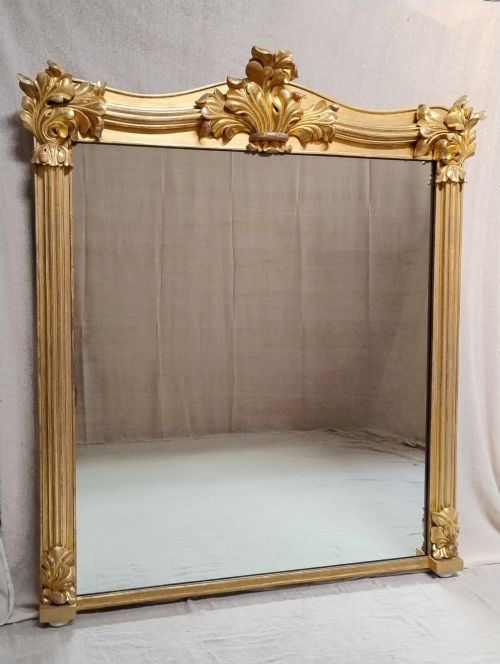
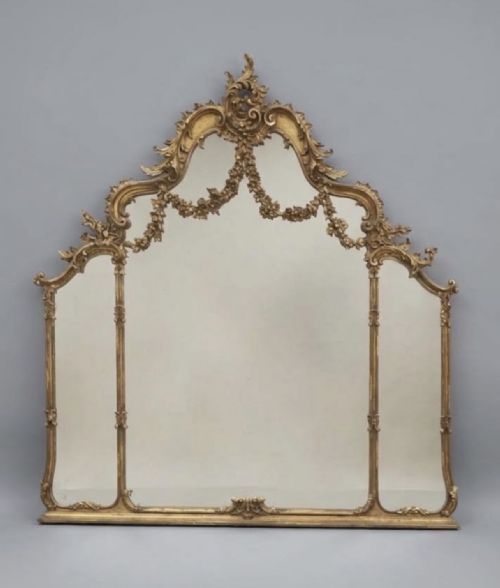
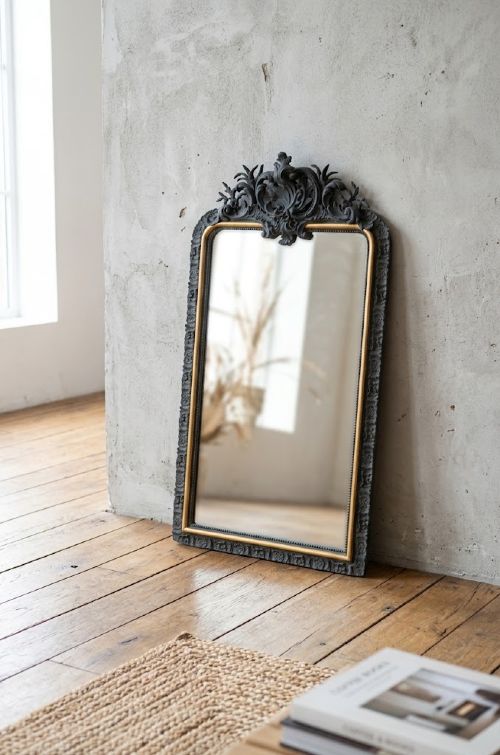

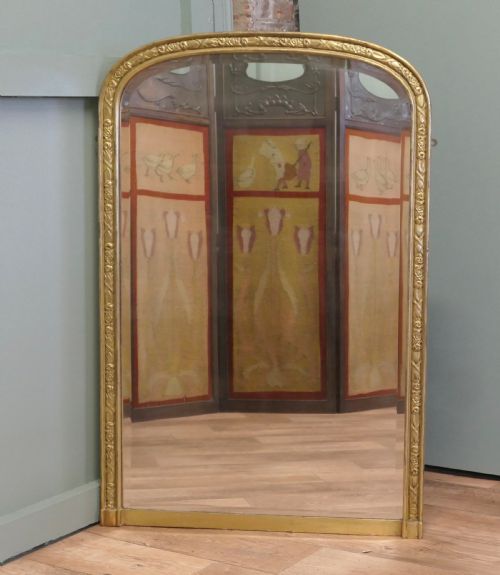
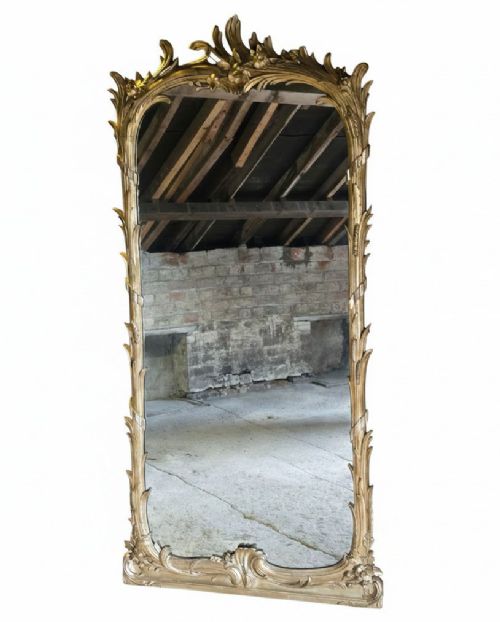
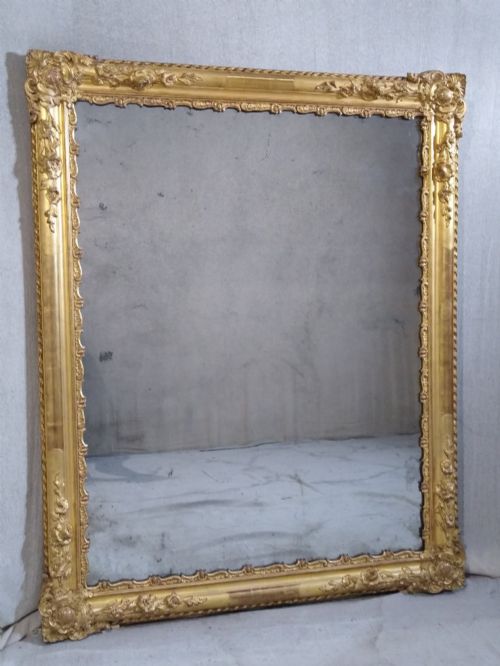
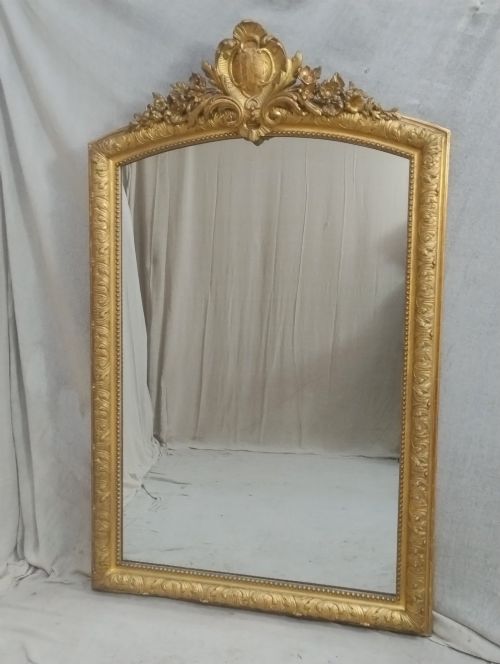
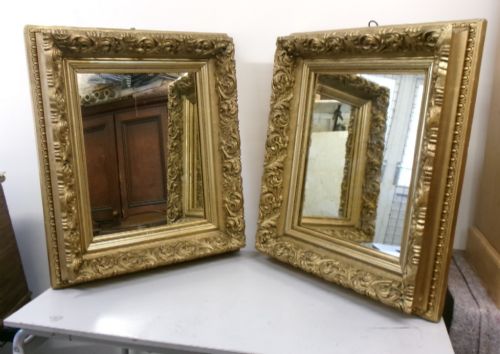


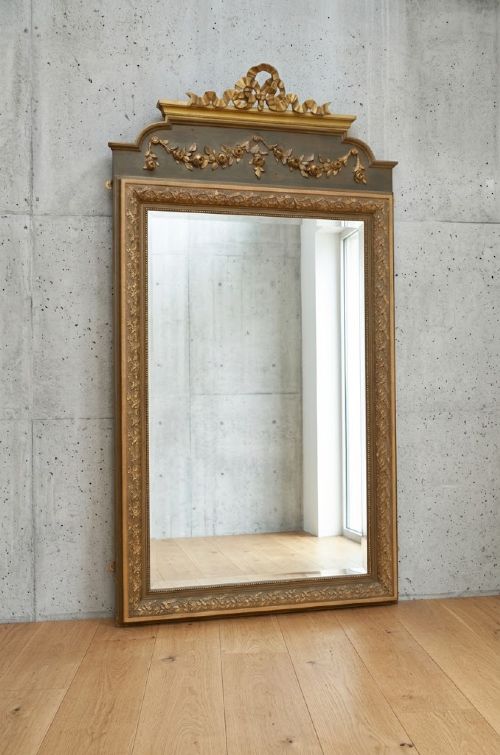
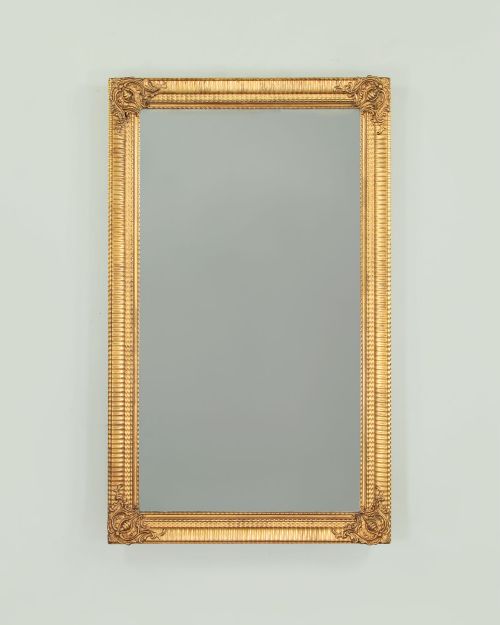
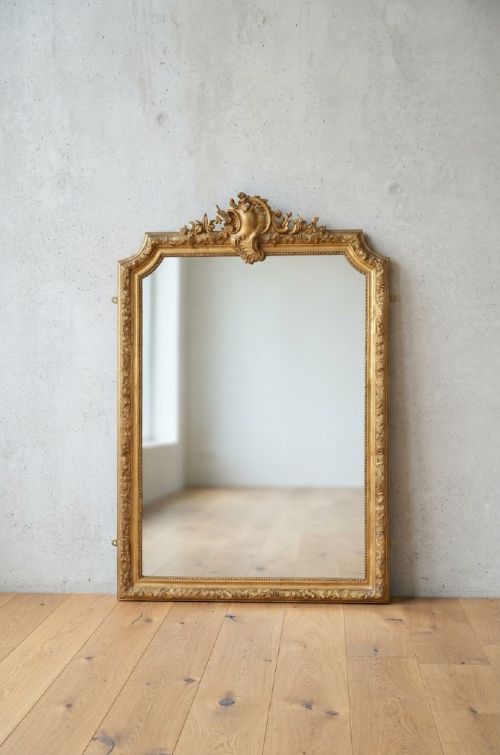
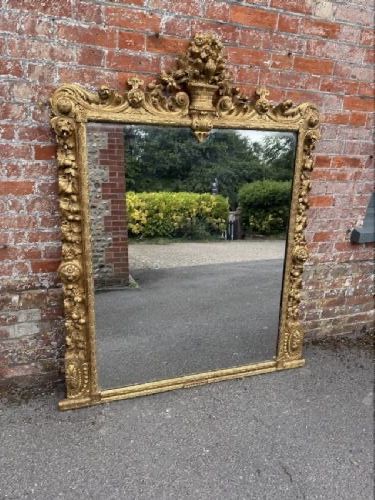
Large French Overmantel Mirror
A large french overmantel mirror brings architectural height and reflected light to a principal room, anchored in nineteenth-century decorative traditions.
Large French Overmantel Mirror
A large french overmantel mirror is designed specifically to sit above a fireplace mantel, filling the vertical space with glass and ornate framing. The search for a large french overmantel mirror centres on substantial wall-hanging pieces originating from nineteenth-century France, though eighteenth-century examples and Victorian English interpretations also appear.
Most pieces encountered on this page belong to the nineteenth century, spanning periods from the Louis Philippe era through to the Rococo Revival and Napoleon III chateau styles. These mirrors typically display arched, shaped, or rectangular tops, often framed by carved wood and gesso ornamentation.
Makers and artisans of the period constructed these heavy wall pieces to dominate drawing rooms and parlours, frequently combining giltwood surfaces with painted wood finishes. Examples range from simple crested gilt frames to monumental triple plate configurations and trumeau mirrors incorporating pastoral oil paintings.
How They Were Made
Traditional construction relies on a sturdy timber base of carved wood, often layered with gesso to build up intricate relief mouldings and scrollwork. Artisans applied gold leaf or liquid gilding over the gesso ground, sometimes combining the gold with painted wood, olive green pigments, or ebonised details.
The glazing involves heavy mirror glass secured within the frame, frequently utilising original mercury glass that exhibits characteristic foxed spots and dark oxidation over time. Rope twist carvings, ribbon crests, and classical motifs were shaped by hand before gilding and assembly.
Large French Overmantel Mirror Retail Price Guide 2026
Typical asking prices for large french overmantel mirror among the pieces listed under this phrase on Sellingantiques today, from the lower quarter to the upper quarter. They describe what is for sale here now, not the wider market.
Listings feature nineteenth-century French and Victorian pieces utilising glass, gesso, giltwood, and painted wood.
What Varies In Quality
Quality rests upon the depth and crispness of the hand-carved wood and gesso ornamentation, where deep relief and sharp detail distinguish superior workshops from simpler production pieces. The integrity of the original gilding and the preservation of the underlying carved elements determine the visual weight of the frame.
The character of the glass plate itself dictates distinction, particularly the presence of authentic, undisturbed foxed mercury glass rather than modern replacement panes. Structural soundness in the heavy wooden backing and the original joinery also separate standard domestic mirrors from monumental chateau pieces.
The Large French Overmantel Mirror Glossary
- Overmantel mirror
- A large wall mirror specifically proportioned to hang on the wall directly above a fireplace mantelpiece. These pieces often feature horizontal or arched formats designed to mirror the opening below.
- Gesso
- A plaster-like mixture applied to carved wooden frames to create a smooth surface for gilding and low-relief moulding. Artisans could carve and stamp intricate decorative details directly into the dried gesso layer.
- Mercury glass
- A type of silvered glass produced by pouring a liquid mercury amalgam between double-walled blown glass or coating flat glass plates. Over centuries, this material develops characteristic dark patches and foxing.
- Trumeau mirror
- A decorative wall mirror combined with an oil painting or carved wooden panel set into the upper section of the frame. These architectural elements frequently adorned nineteenth-century French interiors.
- Pier glass
- A tall wall mirror designed to hang on the narrow section of wall between two windows. They share similar decorative framing techniques with overmantel mirrors of the same period.
Large French Overmantel Mirror: Frequently Asked Questions
Where should an overmantel mirror be hung?
These large mirrors traditionally hang directly above a fireplace mantel, resting securely on wall fixings designed to bear substantial weight. Positioning them at this height allows the glass to reflect light across the room and balance the proportions of the hearth below.
They also function effectively as leaner mirrors placed directly on the floor against a wall in larger reception rooms or hallways. The scale requires robust wall anchors regardless of whether the piece sits above a mantel or stands independently.
How do I identify a Louis Philippe mirror?
Louis Philippe mirrors typically feature a distinctive arched top with rounded upper corners combined with a clean, rectangular lower section. The framing tends to be more restrained than heavy Rococo Revival pieces, often displaying simple bead mouldings or subtle leaf carvings.
Created during the mid-nineteenth century, these pieces balance classical restraint with domestic utility, making them adaptable to various interior schemes. The glass is frequently held by simple rebates within the carved wooden frame.
What is foxed glass?
Foxing refers to the natural ageing process of antique mirror glass where the reflective silver backing deteriorates, causing dark spots, speckling, and cloudy patches. This chemical breakdown occurs over decades as air reacts with the backing materials.
Collectors prize genuine foxing because it proves the antiquity of the glass plate and creates a soft, diffused reflection. It differs fundamentally from modern damage, offering a characteristic mottled appearance across the surface.
Are these mirrors heavy?
Nineteenth-century overmantel mirrors possess considerable physical weight due to the dense carved wood frames, thick gesso layers, and heavy glass plates. The combination of timber construction and large mirror dimensions requires professional installation using secure wall studs.
When handling or moving these pieces, support the base entirely rather than relying on the decorative crest or frame edges. Proper weight distribution prevents stress on the antique joinery and original gessowork.