

Nineteenth Century Overmantel Mirror
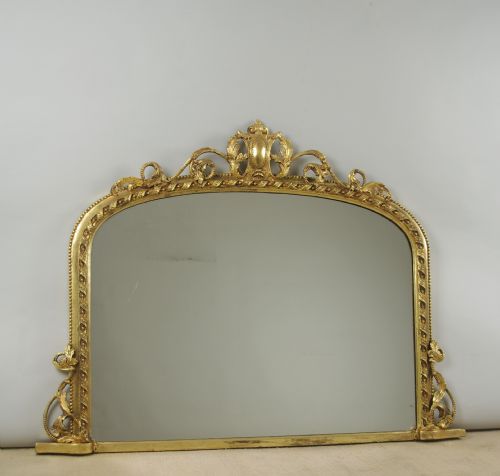
A nineteenth century overmantel mirror anchors a chimney breast with heavy gilt frames and reflective expanses designed to throw light across a period reception room.
Nineteenth Century Overmantel Mirror
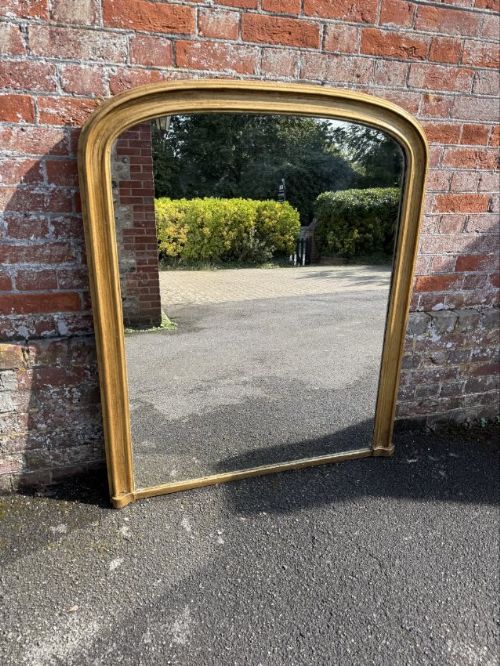
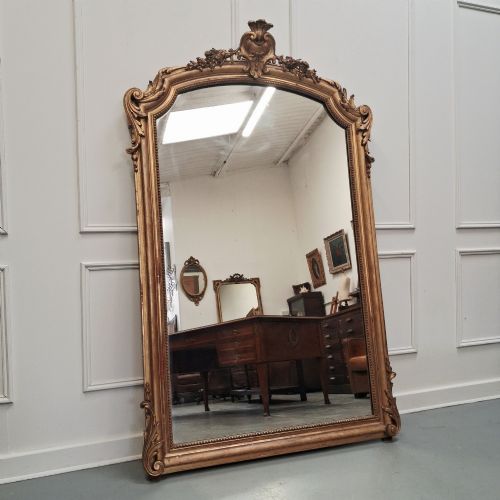
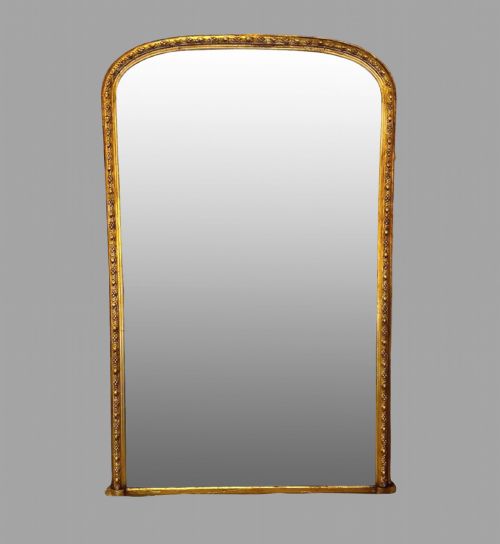
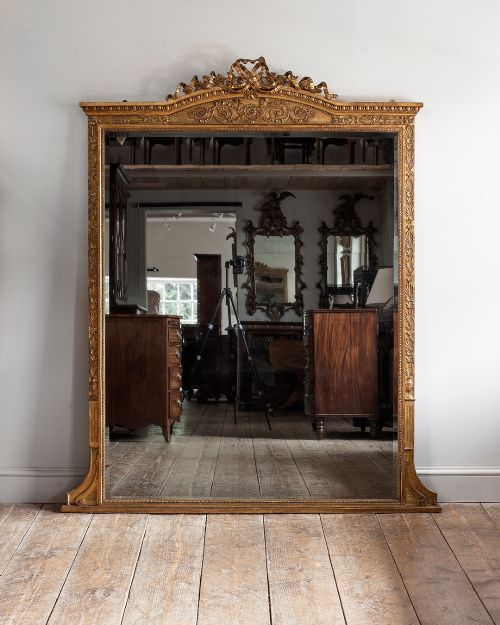
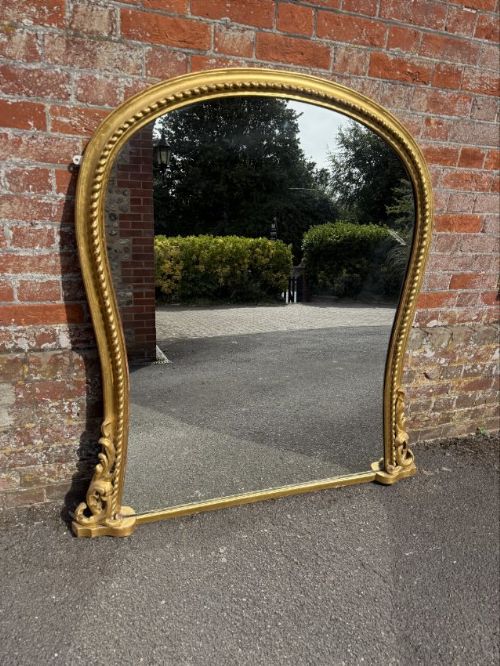
A nineteenth century overmantel mirror is a substantial wall glass designed specifically to sit above a fireplace mantelpiece, dominating the chimney breast. These architectural pieces often feature arched tops, rectangular formats, or distinct architectural frames intended to bounce firelight and daylight around a drawing room.
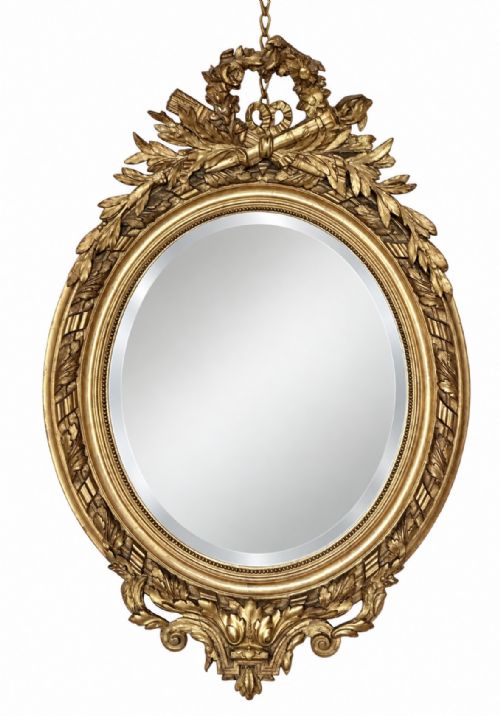
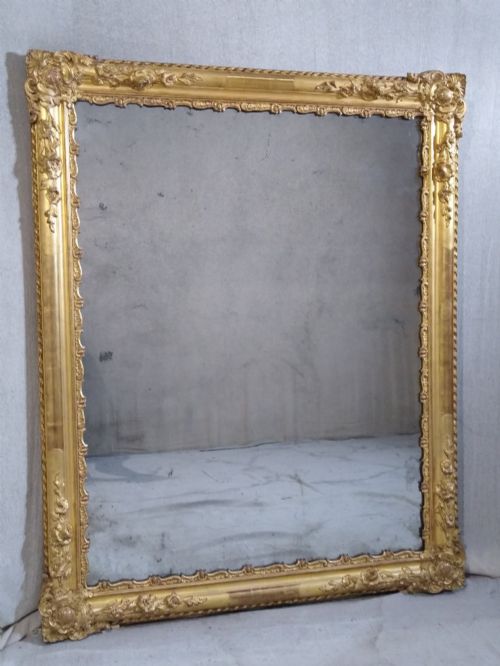
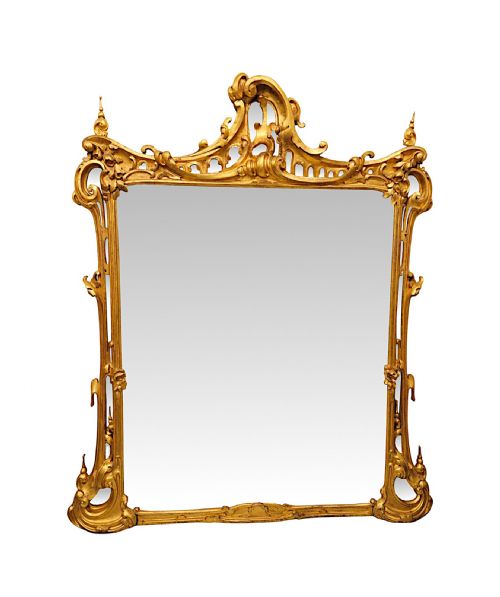
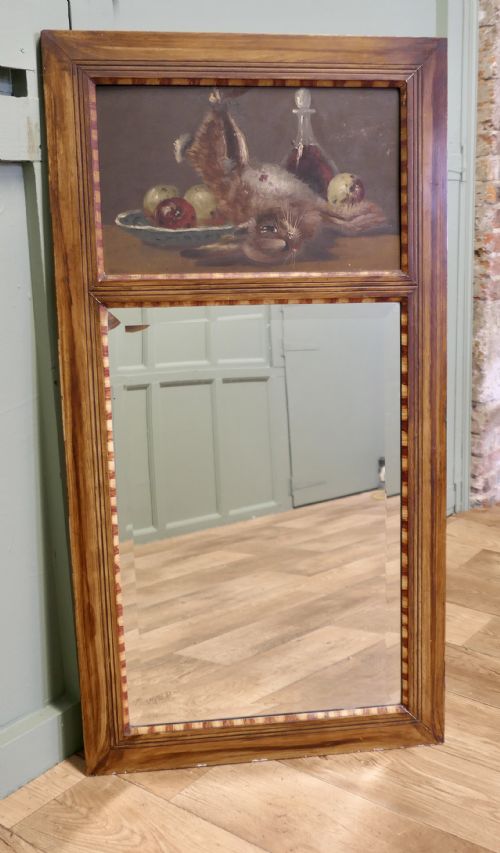
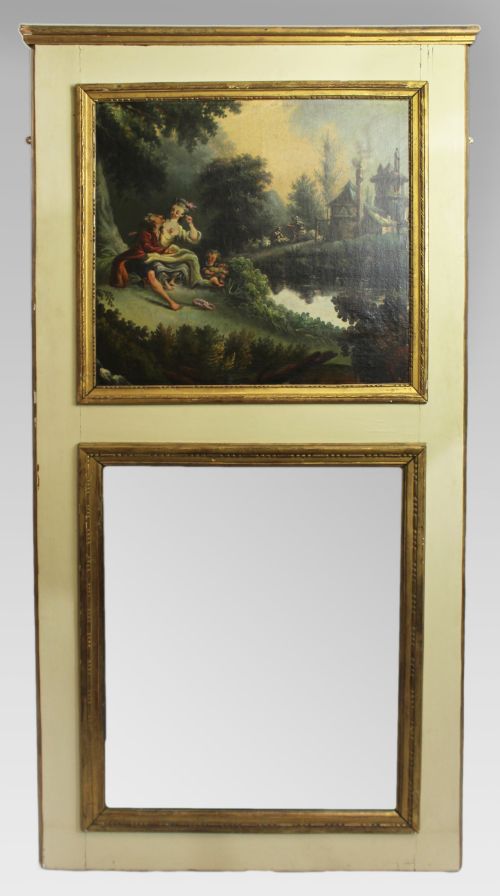
The most common examples on this page hail from Victorian England or nineteenth century France, manifesting in styles ranging from restrained Louis Philippe frames to heavily ornamented French Rococo Revival and Chinese Chippendale designs. English makers frequently utilised carved wood and gesso with gilt finishes, while French pieces often incorporate pastoral oil paintings or trumeau panels.
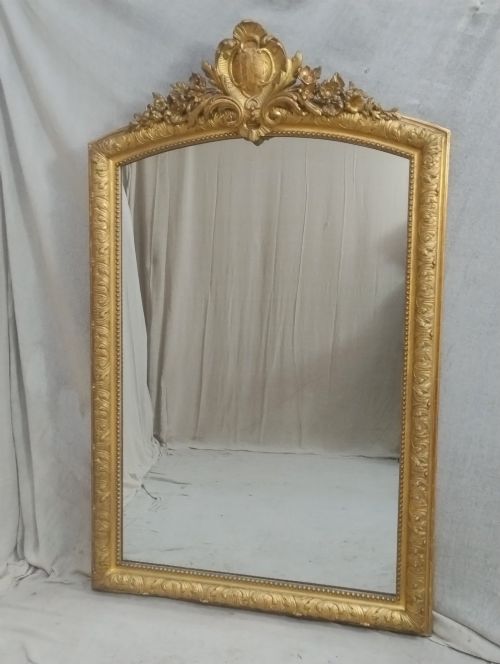
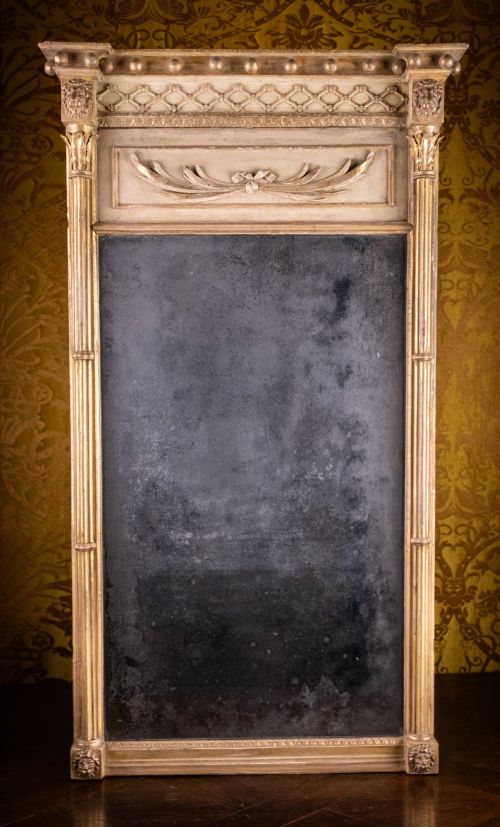
Surviving examples span the decades from Regency and 1850s output through to 1890s production, taking the form of overmantel mirrors, pier mirrors, and wall mirrors. Whether rectilinear or featuring a waisted silhouette with a carved pediment, each piece reflects the decorative priorities of its period.
How they were made
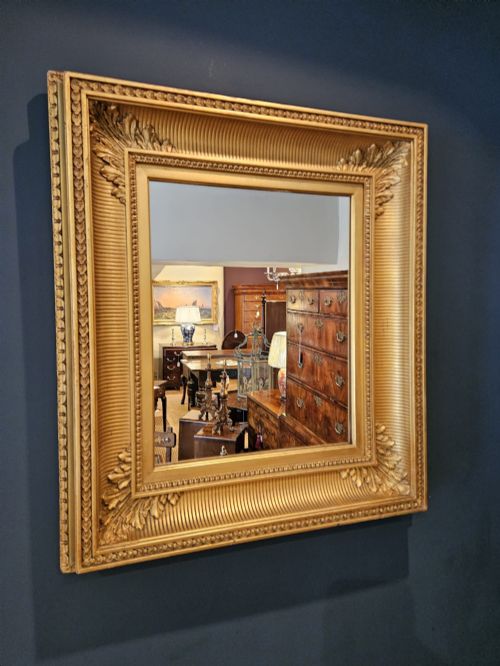
Makers constructed the foundational framework of a nineteenth century overmantel mirror from timber such as oak, mahogany, or walnut, sometimes applying composition ornament over carved wood. Artisans then built up the decorative surface using gesso before applying gold leaf, parcel gilt, or paint to achieve a lustrous finish.
Reflective surfaces relied on traditional mirror glass, occasionally incorporating mercury glass in earlier examples or verre eglomise panels. Frames were assembled with structural joinery to support the immense weight of the glass plate, often secured by heavy backboards.
What varies in quality
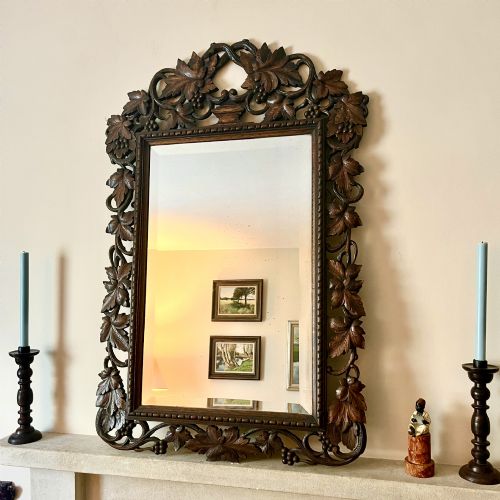
The sophistication of the carved wood and gesso ornamentation dictates much of the visual hierarchy, distinguishing deeply undercut, hand-carved foliage and lion masks from repetitive moulded composition work. Crispness in the gilding and the depth of the gold leaf application separate standard production from exceptional workshop pieces.
Proportion and scale also define the upper tier, where large plates maintain structural integrity without warping the reflection. The integration of original decorative elements, such as top paintings or distinct pediments, preserves the historical design integrity valued by collectors.
The Nineteenth Century Overmantel Mirror Glossary
- Giltwood
- Timber that has been coated with thin sheets of gold leaf over a prepared gesso ground. This technique provides the characteristic metallic brilliance seen on period frames.
- Gesso
- A plaster-like mixture applied to wooden frame foundations to create a smooth surface for carving or gilding. It allows intricate relief decoration to be modelled before the gold leaf is laid.
- Trumeau
- A decorative wall mirror that incorporates an oil painting, panel, or carving above the glass plate. These architectural pieces originated in France.
- Verre eglomise
- A cold decoration technique where designs are painted and gilded on the reverse side of glass panels. It frequently appears in decorative borders or friezes on Regency mirrors.
- Composition
- A mouldable mixture of whiting, resin, oil, and glue pressed into decorative shapes for frames. It served as a cost-effective alternative to hand carving during the nineteenth century.
Nineteenth Century Overmantel Mirror: Frequently Asked Questions
Where should an overmantel mirror be hung?
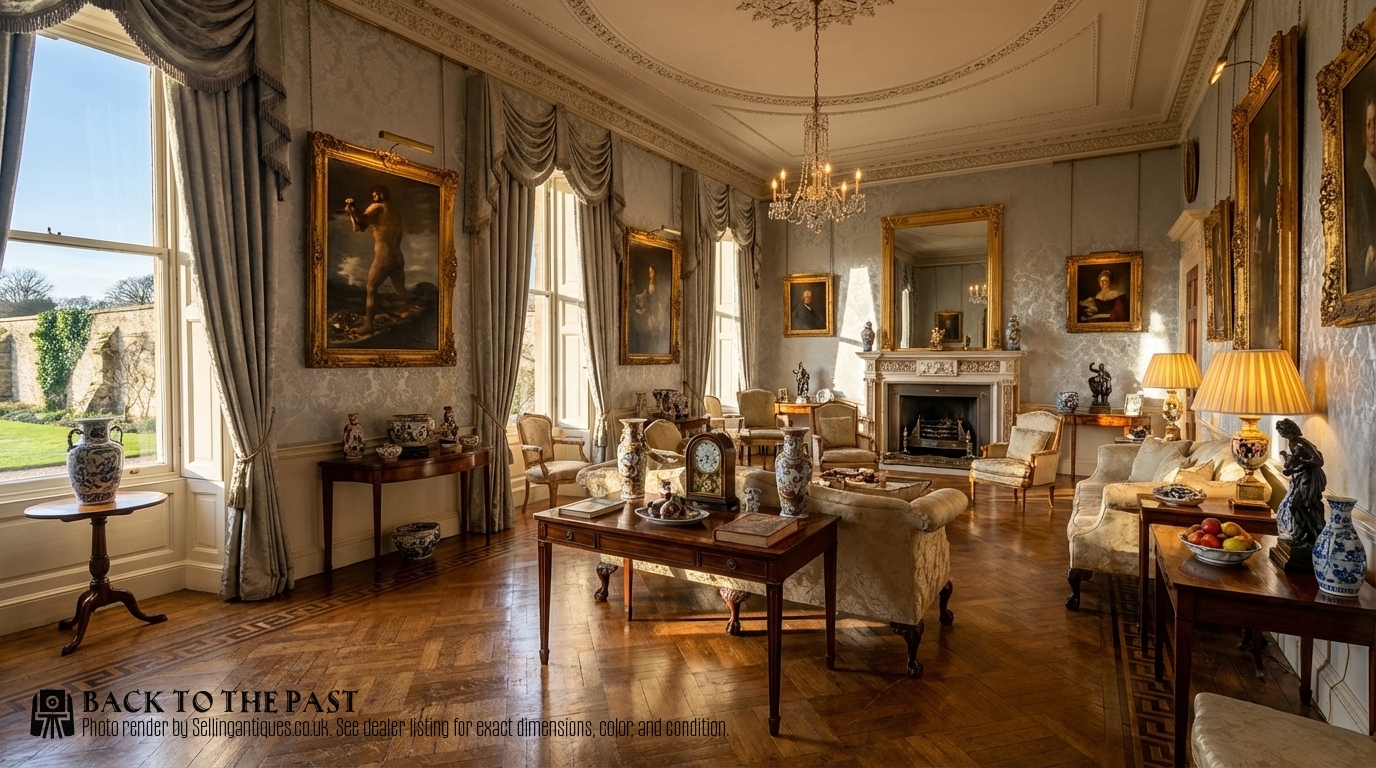
An overmantel mirror traditionally rests directly above a fireplace mantelpiece, anchored securely to the wall to support its substantial weight. It serves as the primary focal point of a reception room chimney breast.
Positioning the base just above the mantel shelf allows the glass to reflect light across the room at eye level. This placement balances the architectural proportions of the fireplace surround.
How do I identify a French nineteenth century mirror?
French nineteenth century mirrors often display specific regional characteristics such as Louis Philippe rounded top corners, giltwood frames with floral motifs, or trumeau panels featuring pastoral oil paintings. The joinery and backboards typically reflect continental workshop practices of the period.
Stylistic cues also point toward French Second Empire or Rococo Revival influences, distinguishing them from simpler English architectural formats. Mercury glass plates further indicate earlier continental production dates.
What is a pier mirror?
A pier mirror is a tall, narrow glass designed to fit the wall space, or pier, between two windows. Their vertical proportions maximised light reflection in nineteenth century drawing rooms.
These pieces frequently share decorative vocabularies with overmantel mirrors, including giltwood frames and carved pediments. They can also take the form of trumeau pier mirrors incorporating painted scenes.
Can I lean an overmantel mirror instead of hanging it?
Leaning an overmantel mirror directly on the mantel shelf is a traditional method of display utilised in historic interiors. The weight of large giltwood and gesso frames helps secure them against the wall.
Additional wall fixings remain essential for safety, even when the base rests firmly on the wood or stone shelf. This prevents accidental tipping while maintaining the relaxed aesthetic of period placement.