






French Floor Leaning Mirror
These french floor leaning mirror examples bring grand scale and light into a room, offering striking vertical presence.
French Floor Leaning Mirror
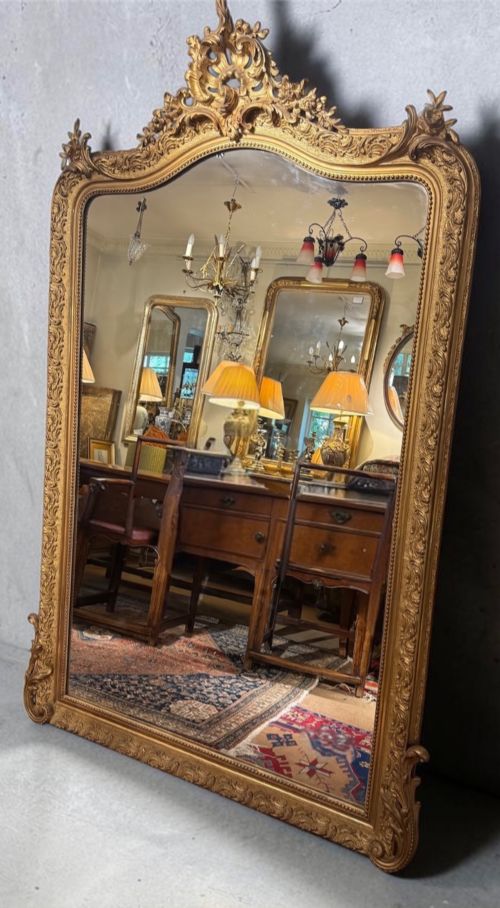
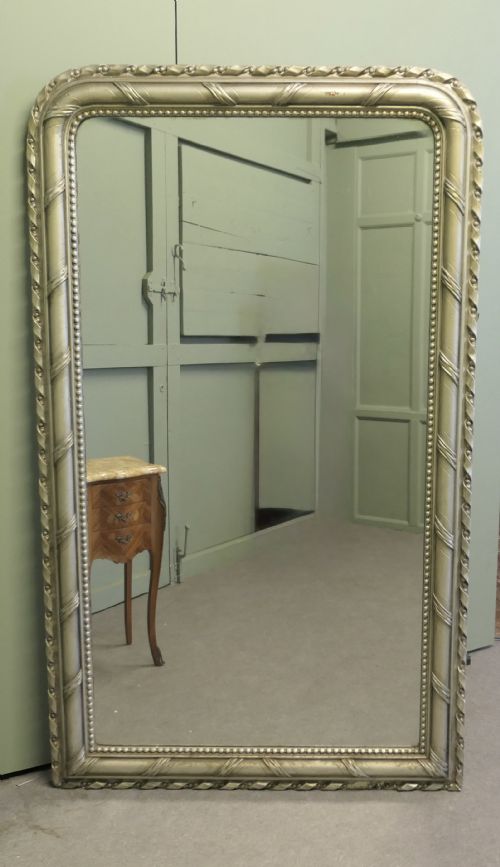
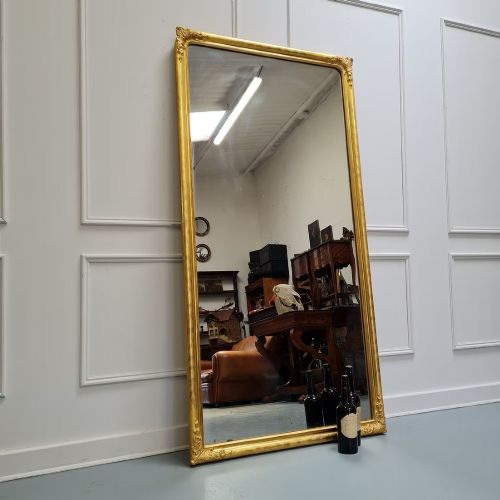
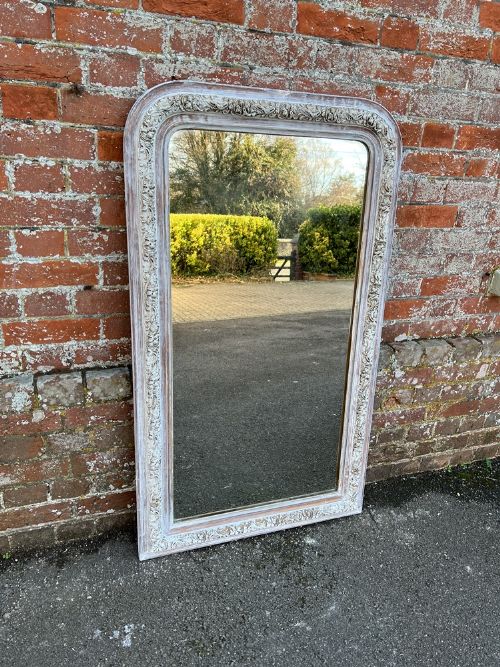
A french floor leaning mirror delivers substantial height and width designed to rest directly against a wall rather than hang from brackets. Buyers encountering this selection will find tall rectangular, arched top, and shaped top formats suited to grand proportions.
Originating across the nineteenth and early twentieth centuries, these pieces draw on periods including Louis Philippe, French Rococo Revival, and French Provincial designs. The form functions primarily as a dressing or full-length looking glass within domestic spaces.
The selection ranges from simple painted bistro mirrors to heavily ornamented architectural plates. Most examples combine considerable vertical span with substantial wooden frames built to support heavy glass sheets.
Quality and Craftsmanship
The depth and precision of the carved wood ornamentation dictate the refinement of the piece. Crisp foliate motifs and well-defined mouldings separate superior frames from simpler, flatter profiles.
The integrity of the original surface finish, whether giltwood or painted, heavily influences the character of the object. Intact original gilding and honest surface patination reflect superior preservation over time.
Every tall mirror secretly hopes it makes your ceiling look twice as high as it actually is.
The French Floor Leaning Mirror Glossary
- Gesso
- A plaster-like mixture applied to wood frames to create a smooth surface for gilding or painting. This compound allows carvers to achieve sharp relief details.
- Giltwood
- Timber coated with gold leaf or metallic powder to produce a brilliant golden finish. This material is characteristic of formal nineteenth-century interior decoration.
- Louis Philippe
- A mid-nineteenth-century French style known for clean architectural lines and subtle curves. Pieces from this era often feature gentle rounded upper corners.
- Overmantel
- A large mirror designed to hang or stand above a fireplace mantelpiece. These horizontal or arched formats frequently share proportions with tall floor glasses.
- Cheval mirror
- A freestanding looking glass mounted in a frame that allows the plate to tilt. Some tall dressing mirrors incorporate this versatile format.
French Floor Leaning Mirror: Frequently Asked Questions
How do I secure a leaning mirror safely?
Heavy tall mirrors require secure wall attachment using hidden brackets or straps near the top of the frame. This prevents the piece from tipping forward while maintaining the intended casual leaning stance.
Ensuring the floor surface is level and placing anti-slip material beneath the base provides additional stability for large heavy frames.
What defines a Louis Philippe mirror?
Louis Philippe mirrors are characterised by understated elegance, typically featuring a softly rounded upper arch and minimal ornamentation. The frames rely on simple classical proportions rather than heavy baroque carving.
This style emerged in France during the mid-nineteenth century and adapts easily to both traditional and modern interior schemes.
Are these mirrors heavy to move?
Due to solid wood construction, thick gesso layers, and large glass plates, these tall mirrors are exceptionally heavy. Moving them usually requires at least two people to lift and transport safely.
Care must be taken to protect the protruding decorative crests and corners during relocation.
How do I distinguish original gilding?
Original nineteenth-century gilding shows subtle wear patterns, micro-craquelure in the underlying gesso, and a warm metallic tone accumulated over decades. The gold leaf adheres directly to the gesso ground without modern synthetic binders.
Close inspection under natural light reveals the hand-applied nature of the metal leaf.