


Large Painted Credenza
A large painted credenza brings substantial storage and surface space to a room, uniting functional utility with decorative painted finishes.
Large Painted Credenza
When you search for a large painted credenza, you are looking at substantial storage furniture including dresser bases, enfilades, sideboards, and cupboards. These pieces provide wide surfaces and deep internal storage compartments suited to domestic organisation.
The versions you are most likely to meet on this page span the eighteenth, nineteenth, and early twentieth centuries. They originate primarily from English country houses, Victorian institutions, and European workshops, featuring painted wooden surfaces.
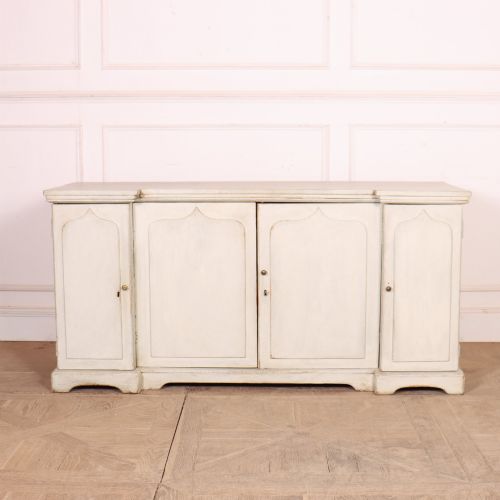
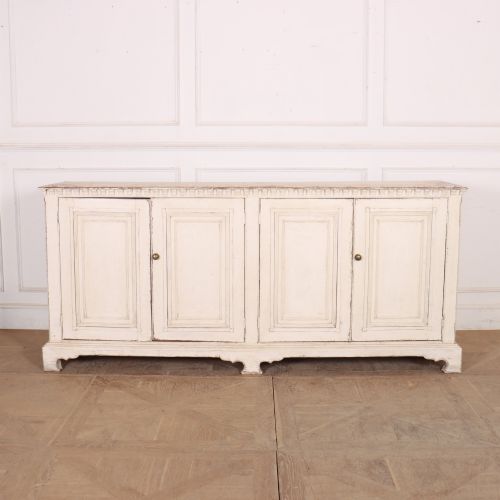
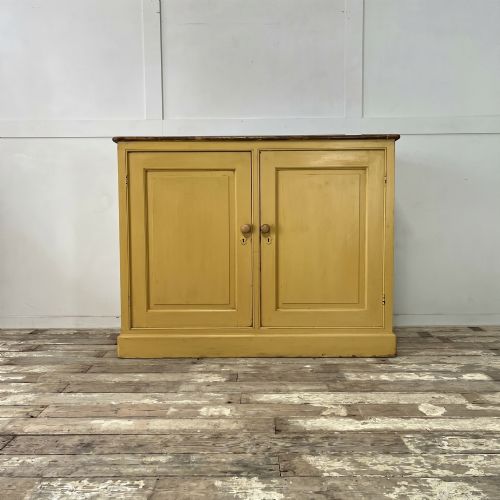
Forms range from breakfront dresser bases and school cupboards to Italian enfilades and French Empire style cabinets. Each piece reflects the utilitarian or formal requirements of its original setting.
Materials and construction
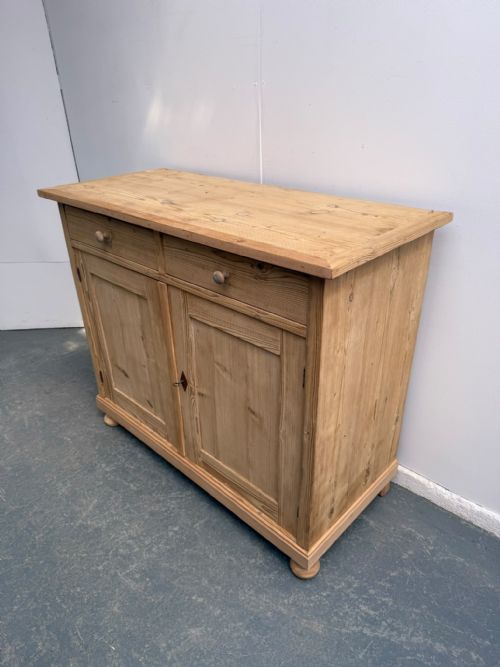
These items are constructed predominantly from solid timbers such as pine and oak, providing robust structural carcases. Iron and brass hardware, including hinges and handles, furnish the doors and drawers.
Surfaces are finished with paint, often applied over pine or mixed woods, alongside occasional marble tops that provide durable working or display surfaces. Joinery relies on traditional methods appropriate to nineteenth-century and earlier workshop production.
Object types span dresser bases, enfilades, sideboards, buffets, linen cupboards, and school cupboards influenced by English country house and continental styles.
Assessing quality
Quality in these large painted pieces rests upon the integrity of the timber carcase and the character of the painted surface. Original or well-patinated paint layers carry greater merit than later, modern repainting.
Proportion and scale distinguish finer examples, where cornices, panels, and brass or iron mounts relate harmoniously to the overall mass of the sideboard or dresser base.
The Large Painted Credenza Glossary
- Dresser base
- A long, low cabinet featuring drawers and cupboards, traditionally used for food preparation and storage in large kitchens.
- Enfilade
- A suite of rooms or, in furniture terms, a long sideboard or cabinet with a sequence of doors along the front elevation.
- Breakfront
- A piece of furniture where the central section projects forward from the flanking outer sections.
- Bread slide
- A pull-out wooden board integrated into a dresser base, originally utilised for cooling baked goods.
Large Painted Credenza: Frequently Asked Questions
Where should I place a large painted credenza?
These substantial pieces anchor dining rooms, hallways, or large living spaces where generous surface area and enclosed storage are required. Their scale suits rooms with high ceilings and wide wall spaces.
Ensure adequate clearance for opening doors and pulling out drawers or bread slides before positioning the cabinet against a main wall.
How do I care for painted wooden surfaces?
Dust regularly with a soft, dry cloth to prevent dirt accumulation on the painted finish. Avoid harsh chemical cleaners that can degrade historic paint layers.
Maintain stable room humidity to protect the underlying pine or oak carcase from warping or splitting over time.
How can I tell a nineteenth-century piece from an eighteenth-century one?
Eighteenth-century examples often display hand-cut joinery details and timbers selected for domestic utility in earlier country houses. Construction methods reflect the manual tools of the period.
Nineteenth-century items, including Victorian school cupboards and English country house pieces, introduce standardised iron hardware and specific regional painted finishes.