
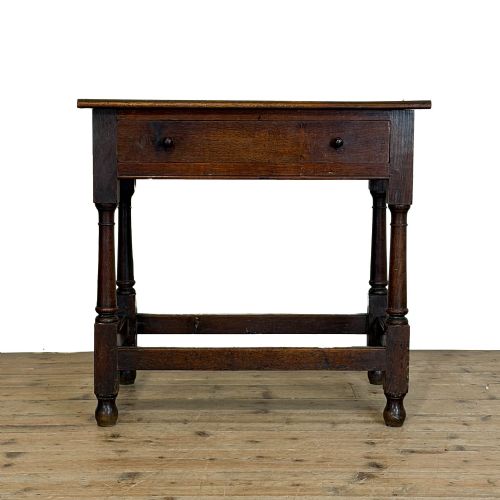
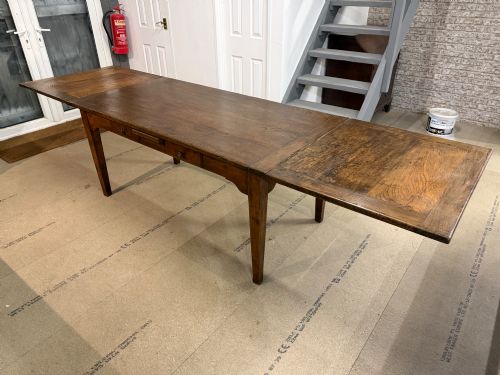
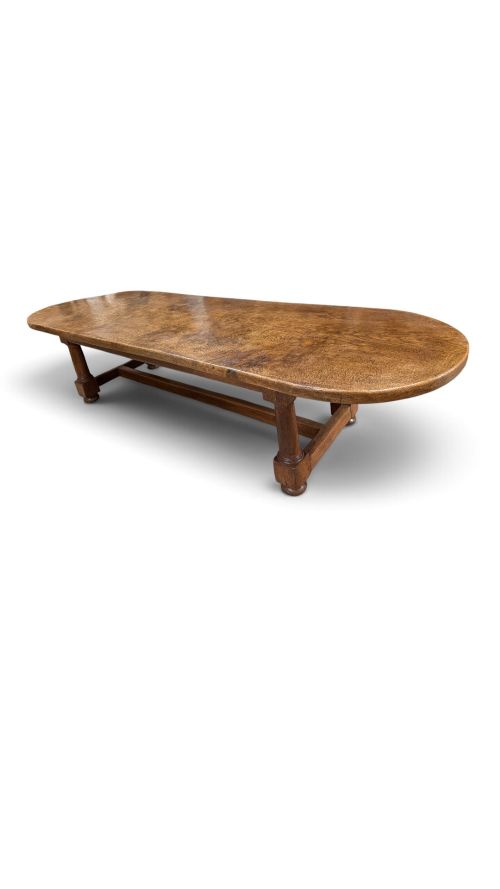
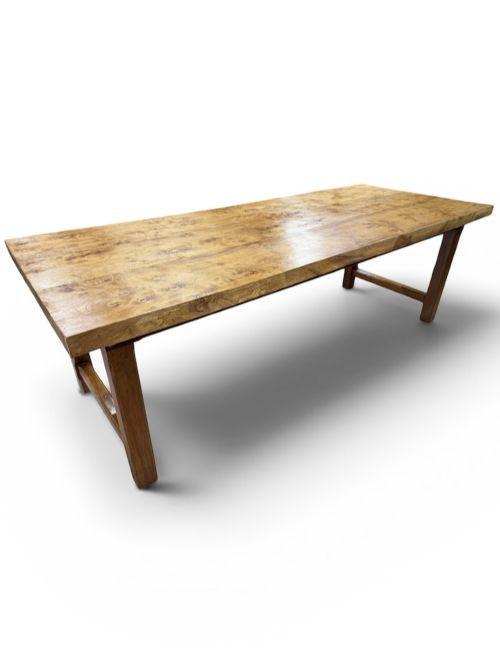
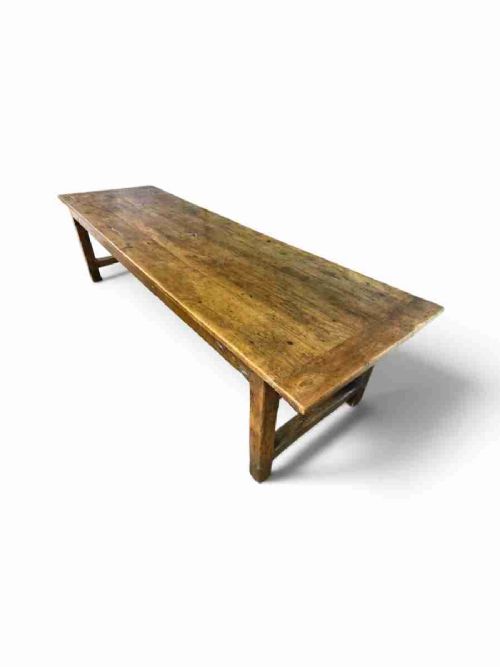
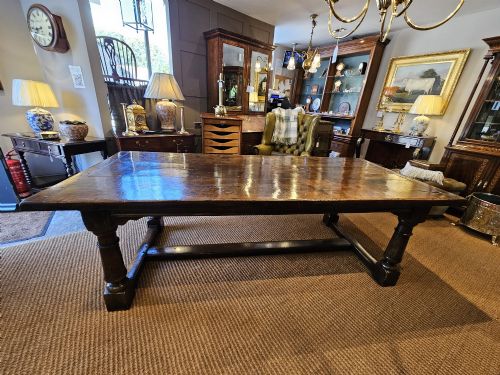
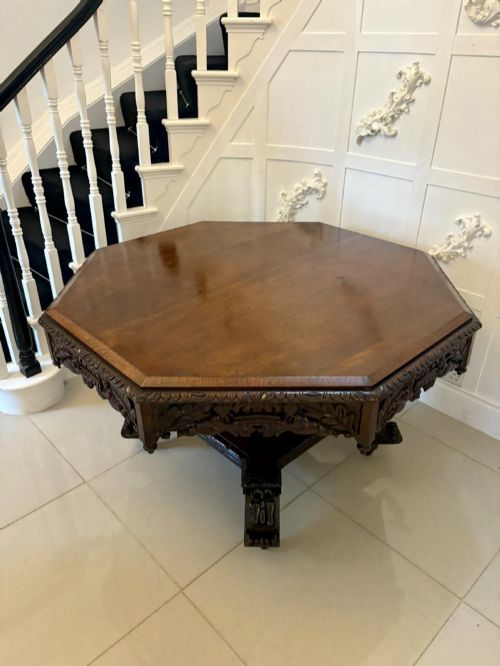
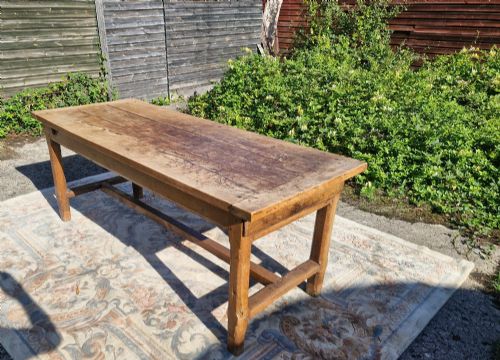
Large Oak Table
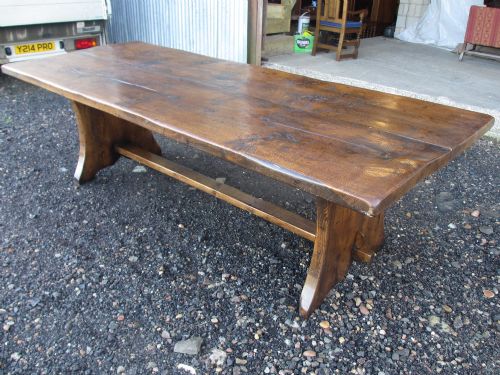
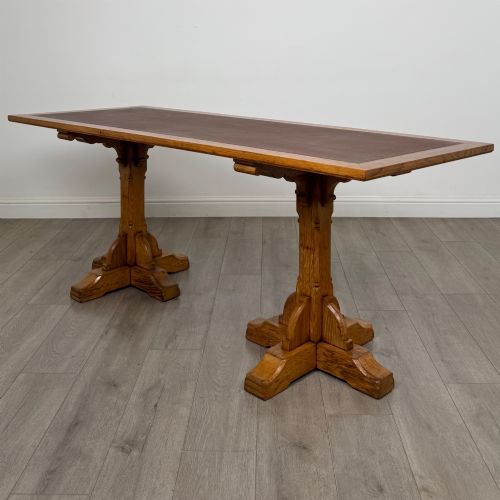
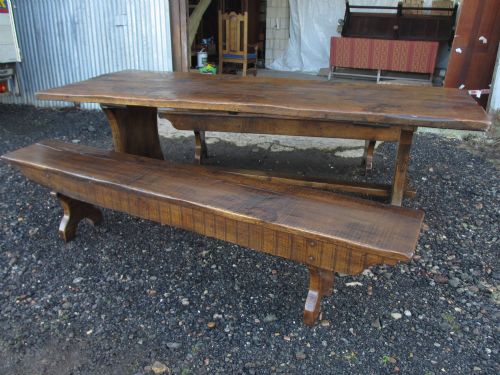
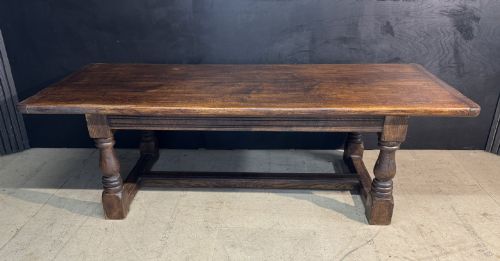
A large oak table anchors a room through sheer presence, offering substantial timber surfaces designed for gathering, dining, and daily work.
Large Oak Table
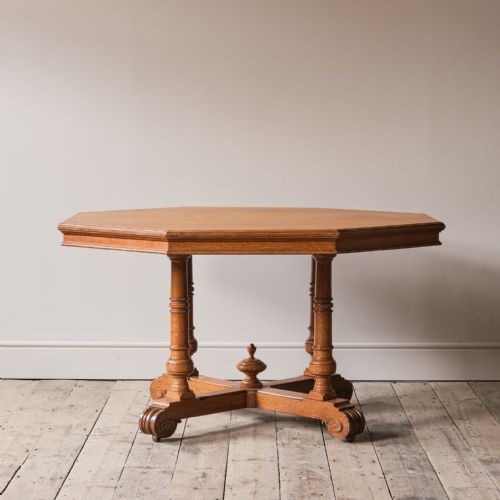
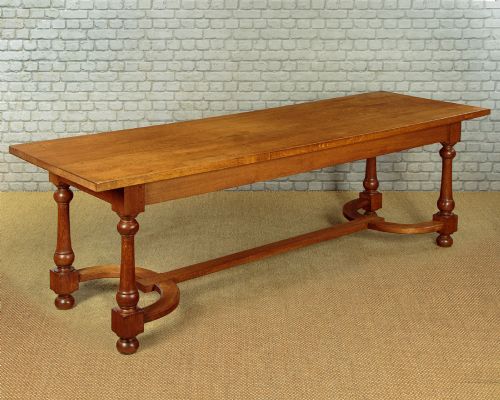
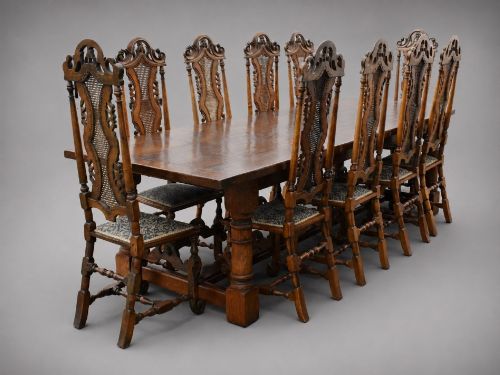
A large oak table encompasses robust furniture built for utility, ranging from early country refectory boards to formal Victorian library and dining pieces. When searching for a large oak table, buyers encounter heavy timber structures designed to accommodate many diners or serve central workspace functions.
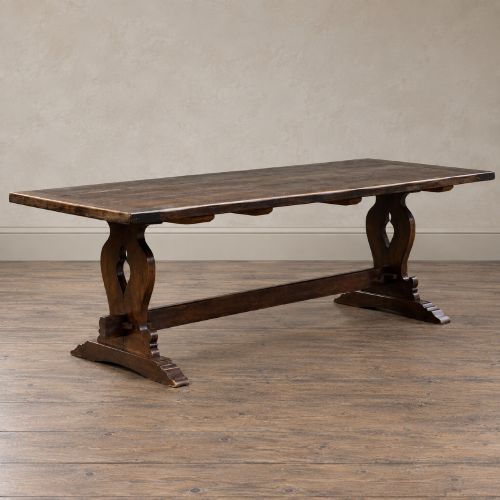
The selections span centuries of woodworking traditions, featuring sturdy farmhouse designs alongside revival styles like Jacobean and Elizabethan. Solid timber construction dominates these listings, frequently utilising supporting trestles, gatelegs, or extending mechanisms to manage generous proportions.
Origin variations introduce distinct regional characteristics, contrasting English country refectories with French farmhouse tables often paired with bleached finishes or elm secondary woods. These forms consistently prioritise floor-standing stability and large surface areas over delicate ornamentation.
How They Were Made
Construction relies heavily on solid oak timber, sometimes partnered with secondary woods like elm, beech, or pine for internal frames and stretchers. Joinery typically employs traditional pegged mortise and tenon joints to secure heavy tops to robust legs and trestle ends.
Surfaces receive various traditional finishes, including wax polish, applied paint, or bleached treatments that alter the natural tone of the grain. Draw-leaf and double extending mechanisms rely on smooth internal sliding runners hidden beneath the main surface planks.
Large Oak Table Retail Price Guide 2026
Typical asking prices for large oak table among the pieces listed under this phrase on Sellingantiques today, from the lower quarter to the upper quarter. They describe what is for sale here now, not the wider market.
What Varies in Quality
Timber selection dictates the baseline character of the piece, distinguishing plain utility boards from richly figured burr oak or single-plank surfaces. The integrity of the structural joinery and the original weight of the timber determine how well the table resists movement over decades of heavy use.
The refinement of carved details on friezes, legs, and trestle ends separates standard workshop output from exceptional cabinet-making. Original surface patination, achieved through generations of polishing and wear, carries greater desirability than stripped or heavily restored timber.
Mouseman·Heals·E Gomme
The Large Oak Table Glossary
- Refectory table
- A long, narrow dining table traditionally used in monastic refectories and later adopted for domestic halls. These pieces feature long side rails and substantial legs or trestle ends.
- Gateleg table
- A table with hinged drop leaves supported by swing-out legs that resemble a opening gate. This design allows the surface area to expand or contract efficiently.
- Draw-leaf table
- An extending table containing sliding leaves stored beneath the main top that pull out to lengthen the surface. The mechanism extends the seating capacity without removing the central top.
- Trestle ends
- Supporting vertical frameworks joined by a horizontal beam, commonly found on refectory tables. This base construction maximises legroom along the length of the board.
- Patina
- The deep surface sheen and colour developed on wood through age, handling, and repeated waxing. It indicates long-term use and natural ageing rather than artificial distressing.
Large Oak Table: Frequently Asked Questions
How do I choose the right size for my room?
Measure your dining space carefully to ensure adequate clearance around all sides of the table for chairs and movement. Allow a generous perimeter so that diners can sit comfortably without crowding adjacent walls or furniture.
Consider the daily footprint versus extended gatherings when reviewing dimensions. Tables with extending leaves or drop-leaf actions offer flexibility for rooms that require variable seating capacities.
How were these large tables originally used?
Large oak tables served as the communal heart of domestic, institutional, or monastic spaces for dining, writing, and food preparation. Refectory and farmhouse boards accommodated large households and working communities for daily meals.
Library and centre tables provided sturdy, expansive surfaces for reading, sorting documents, and administrative tasks. Their heavy timber build ensured they remained stable under continuous daily handling.
How do I care for a antique oak surface?
Maintain the timber by applying traditional beeswax periodically to nourish the grain and preserve the protective barrier. Avoid placing wooden surfaces near direct heat sources or in extreme humidity fluctuations to prevent splitting.
Use coasters and placemats to guard against moisture rings and heat marks from hot dishes. Dust regularly with a soft, dry cloth rather than using harsh chemical cleaning products.
How can I tell different periods apart?
Examine the construction methods, tool marks, and timber preparation visible on the underside and frame of the table. Earlier pieces from the seventeenth and eighteenth centuries often display hand-sawn boards and pegged joinery.
Revival pieces from the Victorian and Edwardian eras typically combine historical stylistic motifs with more uniform machinery-prepared timber. Hardware, such as hinges on gateleg actions, also offers clues regarding manufacturing dates.