




Large Oak Storage Box
A large oak storage box offers substantial domestic capacity, bringing together heavy timber, iron hardware and centuries of utility in one piece.
Large Oak Storage Box
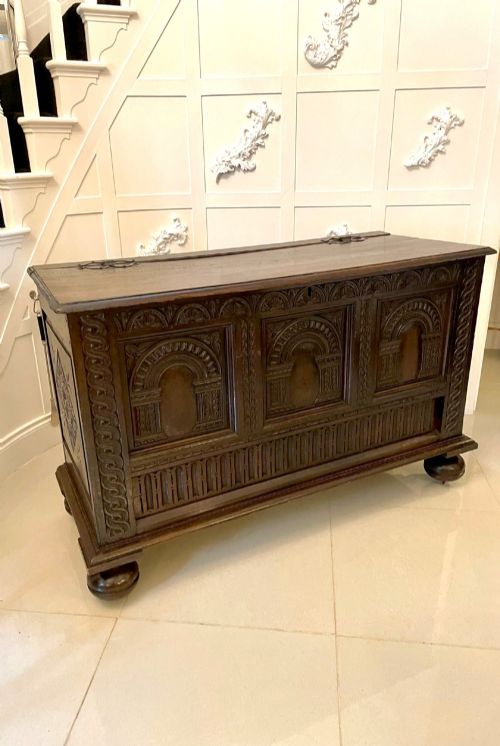
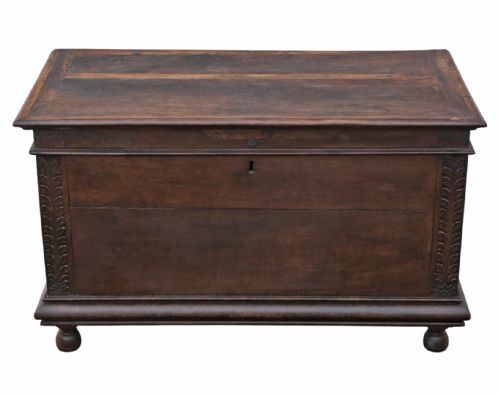
A large oak storage box encompasses coffers, mule chests and travelling trunks spanning the seventeenth, eighteenth and nineteenth centuries. These pieces originate from country houses, Welsh districts and European workshops, built to hold linens, silver or personal possessions.
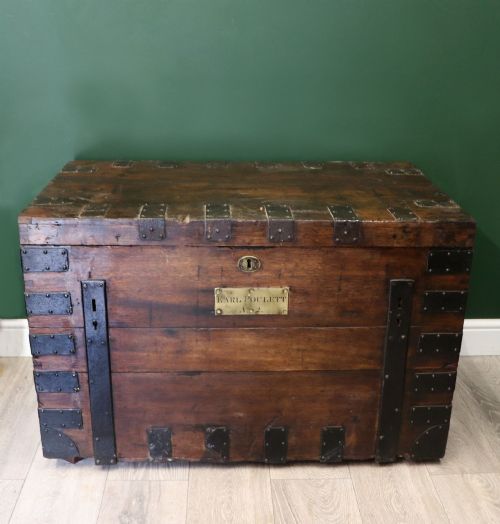
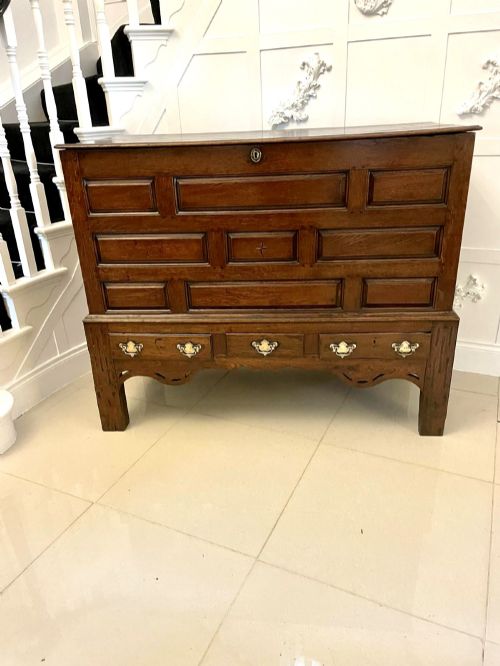
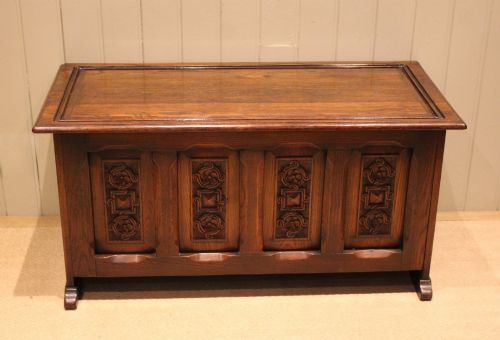
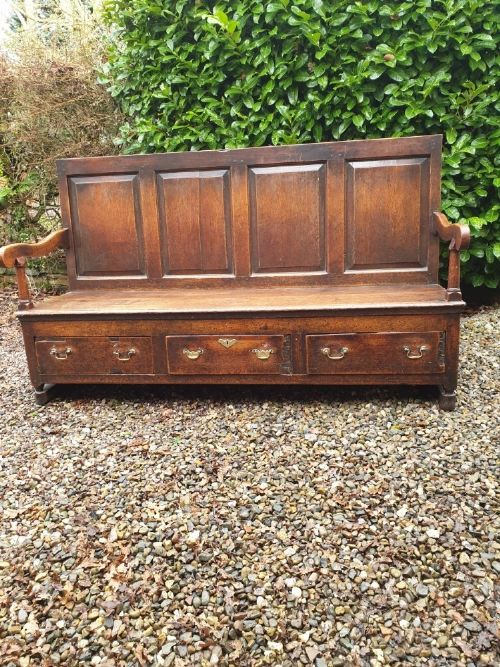
Mule chests appear frequently, combining a deep lidded coffer with one, two or three lower drawers for organised storage. Plain panelled coffers and heavy iron-bound travel trunks represent the heavier domestic and transport forms seen in this selection.
Materials and construction
Makers utilised solid oak alongside secondary timbers like mahogany for crossbanding, shaping panels and framing robust joints. Iron straps, hinges and brass bindings reinforce the heavy carcasses against the strains of travel and long-term domestic service.
Carving, wood inlay and panelled construction define the decorative approach on seventeenth and eighteenth-century examples. Internal fittings often include small candle boxes or textile linings to protect stored items.
Large Oak Storage Box Retail Price Guide 2026
Typical asking prices for large oak storage box among the pieces listed under this phrase on Sellingantiques today, from the lower quarter to the upper quarter. They describe what is for sale here now, not the wider market.
The listings span from 1700 through the Georgian and Victorian eras, utilising oak, iron, brass and mahogany.
Judging the work
Quality rests in the crispness of the timber carving, the integrity of the original panel joints and the survival of secondary woods like mahogany crossbanding. Heavy iron or brass hardware that remains entirely original elevates a piece significantly above examples with later replacements.
Proportion and the handling of the timber grain distinguish standard utilitarian storage from pieces commissioned for country houses. Finer examples retain interior candle boxes, working locks and untouched surface patination built up over centuries.
The Large Oak Storage Box Glossary
- Coffer
- A large wooden chest traditionally used for storing valuables, textiles or documents. These pieces typically feature hinged lids and sturdy panelled construction.
- Mule chest
- A storage chest that incorporates one or more drawers beneath the main lidded compartment. This form emerged to provide easier access to contents without opening the primary top lid.
- Crossbanding
- A decorative border technique where thin strips of veneer, often mahogany, are laid so the grain runs perpendicular to the surrounding oak. This adds visual contrast to drawer fronts and top panels.
- Candle box
- A small internal compartment fitted inside a chest or coffer. It served to keep small items separated from the main storage well.
- Iron-bound
- Describing a wooden chest reinforced with structural iron straps and braces. These bands provided extra strength for travel and secure transport.
Large Oak Storage Box: Frequently Asked Questions
What were large oak storage boxes originally used for?
These pieces held household textiles, garments, valuable silver and legal documents securely within domestic and travelling environments.
Heavier trunks transported possessions across distances, whilst stationary coffers safeguarded domestic wealth in country houses.
How do I tell an 17th-century coffer from a later revival piece?
Seventeenth-century examples display distinct tool marks, pegged mortise and tenon joints, and timber shrinkage consistent with age. Revival pieces often show machine-cut uniformity and lack the natural patination.
Construction methods inside the panels and drawer linings offer clear evidence of the true period.
Can I use a mule chest as a coffee table?
The flat top of a large chest lends itself well to alternative domestic functions, including use as a window seat or low surface.
Care should be taken to protect the historic timber top from heavy use or moisture damage.
What is the difference between a coffer and a mule chest?
A traditional coffer consists of a single deep compartment accessed solely through a hinged lid on top. A mule chest adds functional storage beneath via one or more exterior drawers.
This development made frequently needed items accessible without disturbing the contents of the main upper well.