





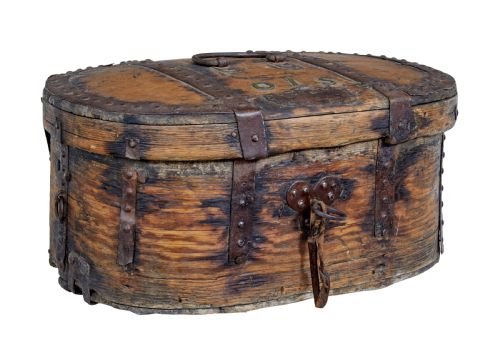

Domed Lid Chest
These domed lid chest pieces offer sturdy storage andfolk character, built in pine, oak, and mahogany across the eighteenth and nineteenth centuries.
Domed Lid Chest
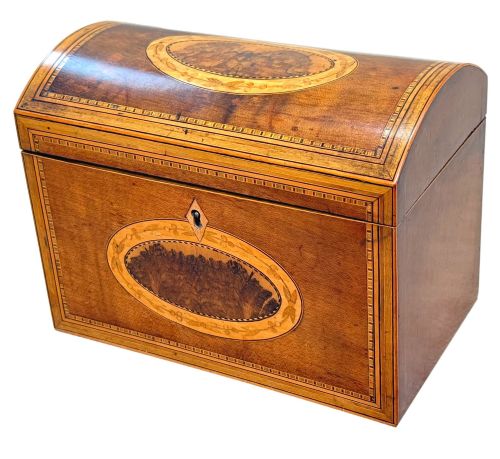
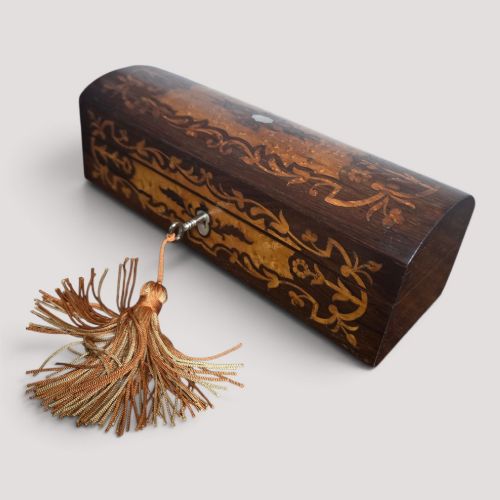
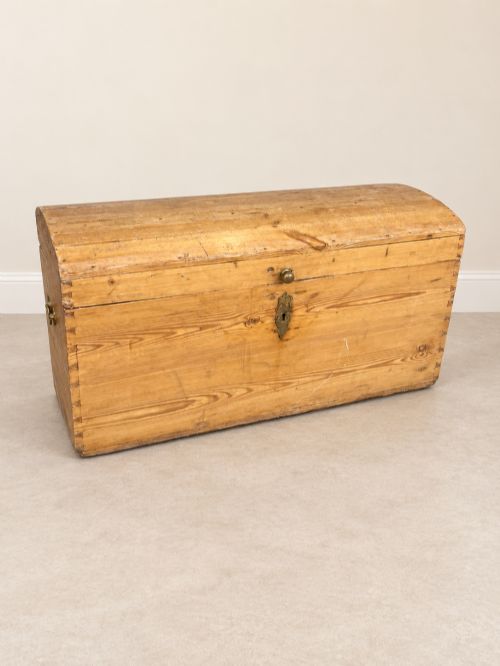
A domed lid chest brings practical storage together with distinct architectural profile, appearing in forms ranging from heavy shipping trunks to small painted boxes. When exploring a domed lid chest on this page, buyers encounter domestic trunks, marriage chests, and travelling cases alongside smaller tea caddies and cellarets. These pieces span the Georgian and Victorian eras, alongside Scandinavian folk art and Baroque traditions.
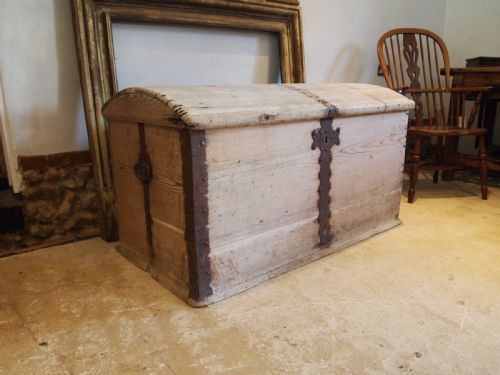
Larger examples include iron-bound oak carriage trunks and pine blanket chests designed for heavy utility, while smaller caddies and caskets serve more delicate household functions. Scandinavian painted boxes and woven pine trunks introduce bright colour and regional folk motifs to the form. Oak, mahogany, and pine dominate the structural bodies, often complemented by canvas, brass, and wrought iron hardware.
Materials and construction methods
Makers constructed these pieces using solid domestic timbers like oak, pine, and mahogany, frequently reinforcing structural corners with wrought iron bands for transport durability. Burr walnut and rosewood veneer appear on refined tea caddies, while pine serves as the primary ground for painted Scandinavian folk surfaces. Canvas coverings occasionally wrap sturdy timber carcasses to withstand the rigours of carriage travel.
The characteristic curved top requires specialised joinery, utilising steam-bent wood or curved internal framing to support the arched lid. Metal elements such as brass mounts, iron straps, and secure locking mechanisms provide both structural reinforcement and decorative contrast against the timber and paint.
Domed Lid Chest Retail Price Guide 2026
Typical asking prices for domed lid chest among the pieces listed under this phrase on Sellingantiques today, from the lower quarter to the upper quarter. They describe what is for sale here now, not the wider market.
Some nineteenth-century Scandinavian trunks feature hidden compartments beneath the domed lid, perfect for secreting love letters or stolen sugar.
Factors that define quality in these pieces
Quality rests in the integrity of the original surfaces, whether that involves the survival of early paintwork on folk boxes or the rich patina developed on polished oak and mahogany. Pieces retaining their original wrought iron mounts, brass hinges, and functional locking mechanisms command greater interest than those with replaced hardware.
Proportion and execution distinguish standard utility trunks from finer decorative examples, such as Baroque carved oak boxes or George III cellarets. The crispness of the joinery around the curved lid and the balance of the overall form separate competent vernacular carpentry from exceptional regional craftsmanship.
The Domed Lid Chest Glossary
- Cellaret
- A lockable container designed for holding bottles of wine or spirits. These vessels often sit on floor stands or feature fitted internal compartments.
- Marriage chest
- A celebratory storage trunk commissioned to mark a wedding, frequently inscribed with dates and initials. Folk art examples often display vibrant painted decoration.
- Gothic Revival
- A nineteenth-century design movement drawing inspiration from medieval architecture. Pieces show pointed arches, tracery, and dark timber finishes.
- Baroque
- An elaborate artistic style characterised by dramatic ornamentation and heavy proportions. Early examples utilise solid oak and robust iron mounts.
- Tea caddy
- A small lidded box created to store dry tea leaves securely under lock and key. Finer versions incorporate internal compartments and burr walnut or rosewood veneers.
Domed Lid Chest: Frequently Asked Questions
What were domed lid chests used for?
These pieces served multiple domestic and travel functions, from storing household blankets and marital linens to safeguarding valuable provisions like tea and wine.
Larger trunk forms protected belongings during carriage journeys and shipping voyages, while smaller caddies kept expensive commodities secure within the home.
How do I date a domed lid chest?
Dating relies on observing the combination of timber species, construction techniques, and decorative styles visible across the piece. Georgian and Victorian examples show distinct joinery methods, whereas Scandinavian folk pieces often incorporate painted dates or specific regional motifs.
Hardware details like wrought iron strapwork or brass hinges also provide clear indicators of the period of manufacture.
Where were painted chests made?
Painted examples originate primarily from Scandinavian workshops, including Swedish and regional folk traditions dating from the eighteenth and nineteenth centuries.
These pieces utilise native softwoods like pine as a base for vibrant hand-applied pigments and decorative motifs specific to their geographic origin.
How do I care for a wooden trunk?
Maintain the timber by keeping the piece away from direct heat sources and drastic humidity fluctuations that can cause wood to split or warp. Regular dusting with a soft, dry cloth preserves the natural polish and protects painted or waxed surfaces from degradation.
Avoid applying modern chemical polishes that might damage historic finishes.