




Large Japanese Porcelain Vases
These large japanese porcelain vases bring height, intricate hand-painted palettes, and strong decorative presence into a room.
Large Japanese Porcelain Vases
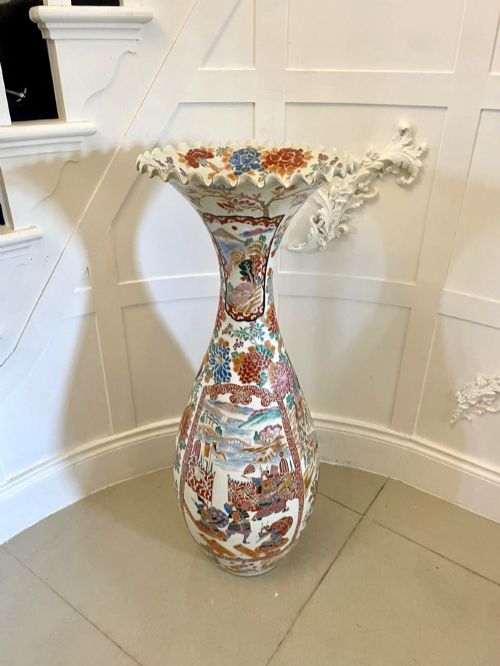
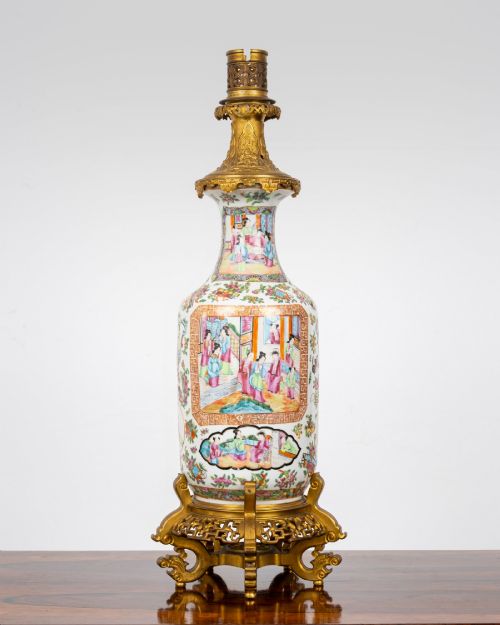
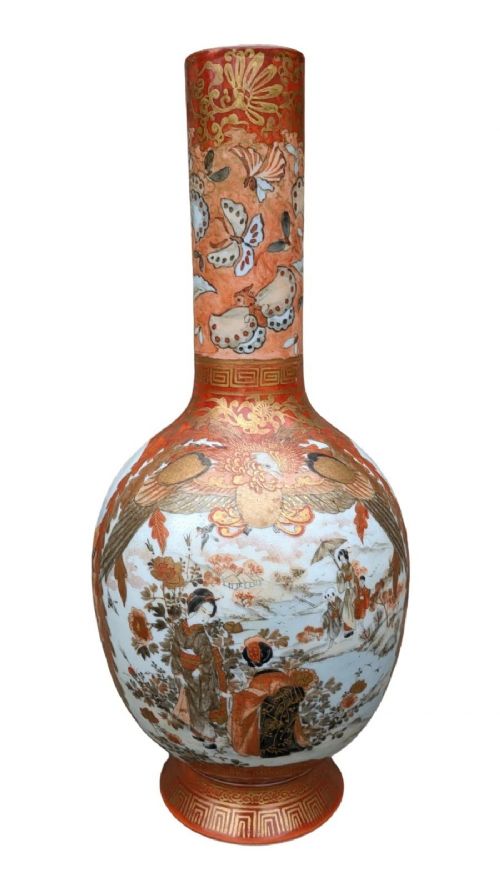
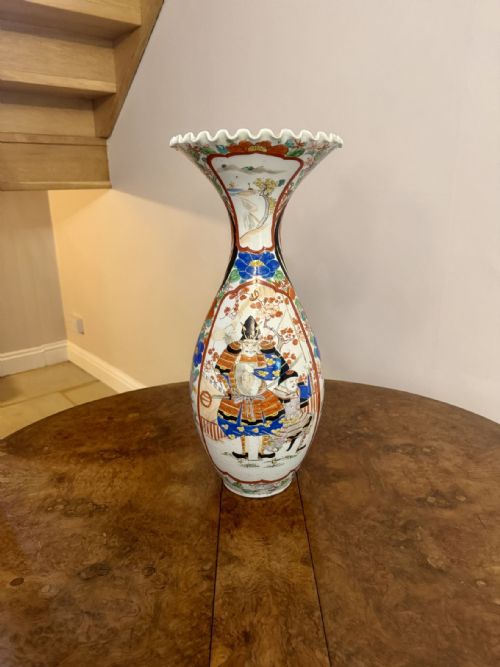
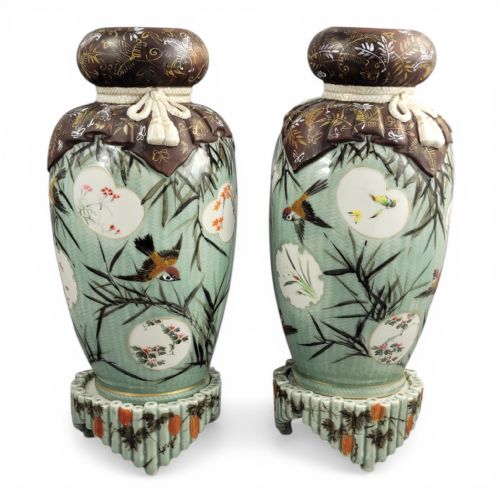
Large japanese porcelain vases encompass substantial floor-standing vessels, lidded jars, and table lamps originating primarily from the nineteenth and early twentieth centuries. These pieces reflect distinct ceramic traditions including Imari, Satsuma, Kutani, and blue and white wares.
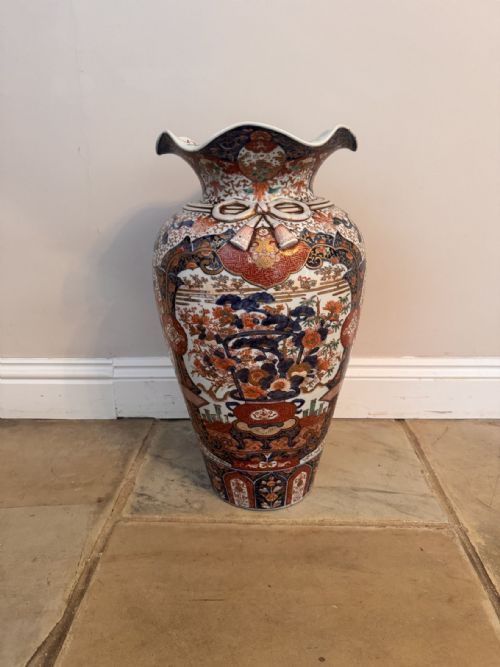
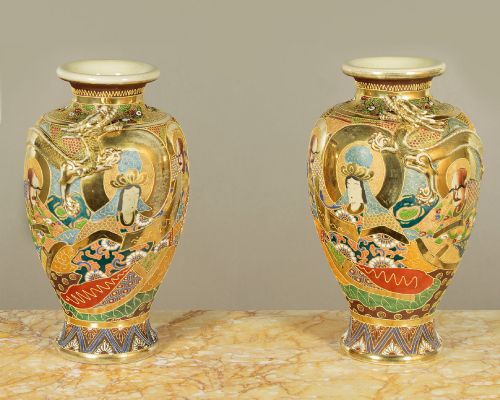
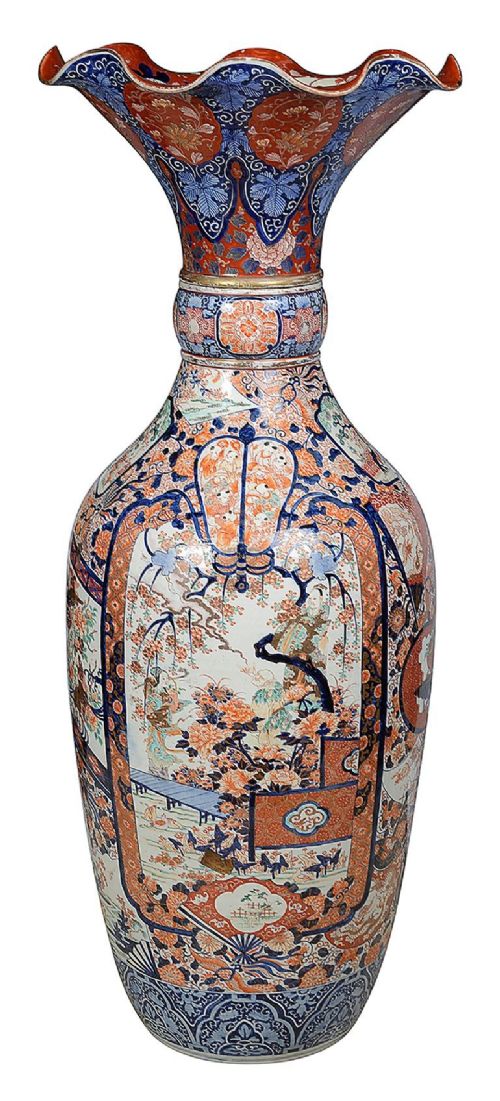
Imari examples dominate the selection, identifiable by their iron red, underglaze blue, and gilt highlights on porcelain bodies. Satsuma pieces, often earthenware rather than hard-paste porcelain, display detailed figural scenes and dense cracking in the glaze.
Forms range from conventional baluster shapes to monumental floor vases exceeding one metre in height, alongside pairs adapted later as electric table lamps with bronze mounts.
Materials and construction methods
Potters shaped these vessels from local clays and porcelain stone, firing them at high temperatures to achieve durable bodies suitable for substantial scales. Artisans then applied underglaze blue cobalt before secondary firings for polychrome enamels and gold leaf highlights.
Techniques such as moriage built up thick dots of slip relief to create textured surfaces on Satsuma and Kutani pieces, while some later vessels incorporated lacquer panels and carved wood stands.
Some oversized vessels disguise their immense weight by balancing entirely on original matching porcelain stands.
Assessing quality in the collection
Quality rests in the precision of the brushwork and the complexity of the palette, where controlled enamelling and generous application of gold leaf separate ambitious studio work from standard commercial output. The crispness of the porcelain throwing and stability at large scale also dictate the standing of a piece.
Signed works by documented makers command greater attention, showing disciplined execution in dense figural scenes or balanced floral compositions without crowding the ceramic form.
Hotoda·Makuzu Kozan·Kato Sanhei·Seiko-en Chokei·Hattori
The Large Japanese Porcelain Vases Glossary
- Imari
- A style of Japanese export porcelain characterised by a palette of underglaze blue, iron red, and gilt. Named after the port from which these wares were shipped to Europe.
- Satsuma
- A type of earthenware with a yellowish, ivory-coloured crackle glaze, typically decorated with polychrome enamels and gilding. Originating in Kagoshima province, production later spread to Kyoto and Tokyo.
- Kutani
- Japanese porcelain known for bold, pictorial designs using strong greens, blues, yellows, purples, and reds. Kutani wares often feature intricate geometric borders framing nature scenes.
- Moriage
- A decorative ceramic technique using piped clay slip to create raised, textured dots and patterns on the surface of the vase. This adds a tactile dimension beneath the glaze and enamels.
- Baluster
- A vertical architectural form resembling a vase shape with a rounded lower body and a narrower neck, commonly used for the silhouette of large ceramic vessels.
Large Japanese Porcelain Vases: Frequently Asked Questions
How do I distinguish Imari from Satsuma?
Imari wares use a hard porcelain body with underglaze blue, iron red, and gold, presenting a resonant ring when tapped. Satsuma pieces utilise a softer earthenware body covered in a fine network of crackled ivory glaze.
Satsuma decoration relies heavily on dense figural enamel work and raised moriage details, whereas Imari favours patterned panels, florals, and landscapes.
Were these vases made for export?
Most large examples from the nineteenth century onwards were produced specifically for Western export markets responding to a strong European appetite for Japanese design.
International exhibitions in Paris and London drove demand for monumental floor vases and decorative items tailored to Victorian interiors.
How should I display a large floor vase?
Position these substantial vessels directly on stable flooring in corners or entrance halls where they can command the space without obstructing movement. Ensure the supporting surface is level.
Keep them away from direct sunlight to protect enamel pigments and avoid placing them near heat sources that might stress the ceramic body.
What does a signature on the base indicate?
Signatures typically denote the studio, artist, or kiln responsible for the painting or production, rather than just a factory brand. Reading these marks helps place the piece within periods like the Meiji era.
Many high-quality export pieces bear painted or impressed stamps corresponding to specific workshops or named decorators.