


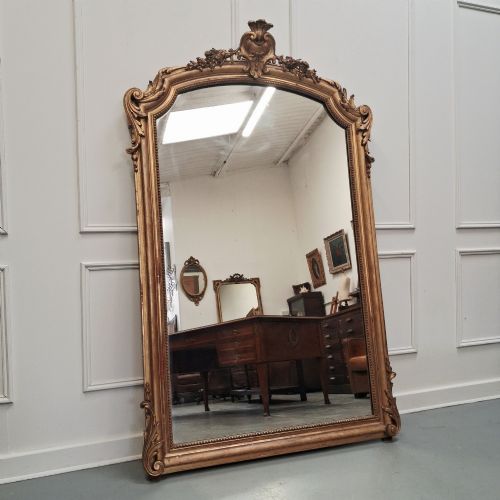
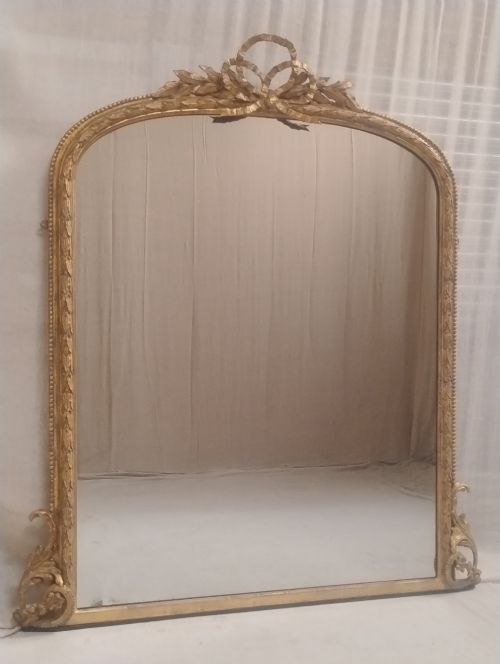
Large Gold Mantel Mirror
A large gold mantel mirror commands the room above a fireplace, reflecting light and proportion with nineteenth-century scale.
Large Gold Mantel Mirror
A large gold mantel mirror functions primarily as an overmantel or pier mirror designed to sit directly above a fireplace or upon a substantial wall pier. These pieces originate predominantly from the nineteenth century, encompassing Victorian, Regency, and Georgian periods alongside French Second Empire, Napoleon III, and Rococo Revival styles.
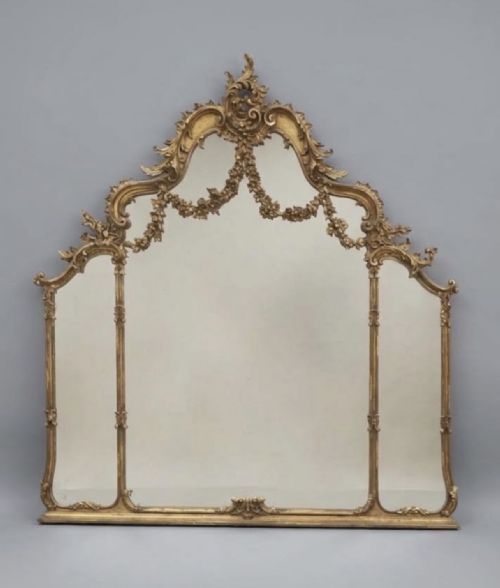
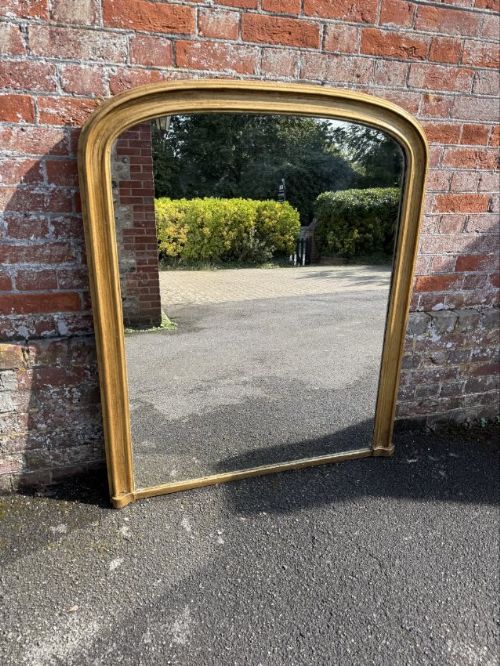
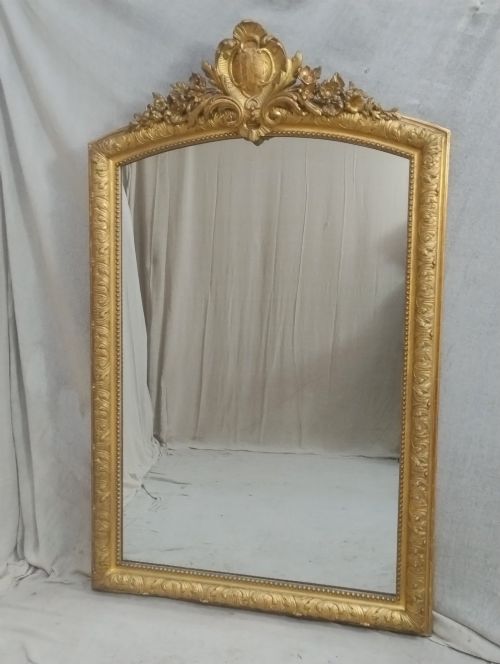
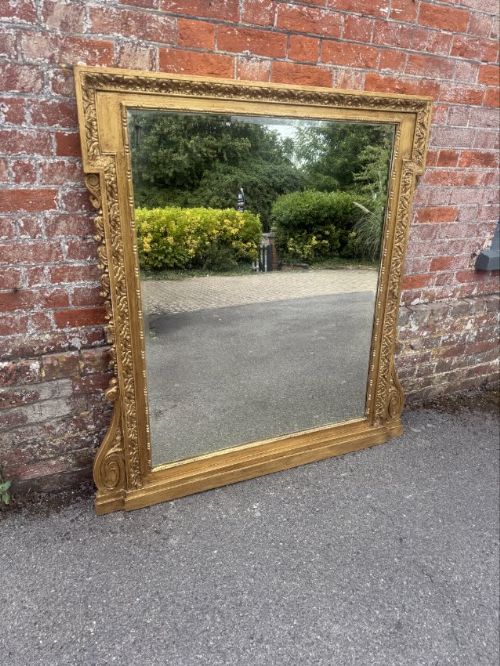
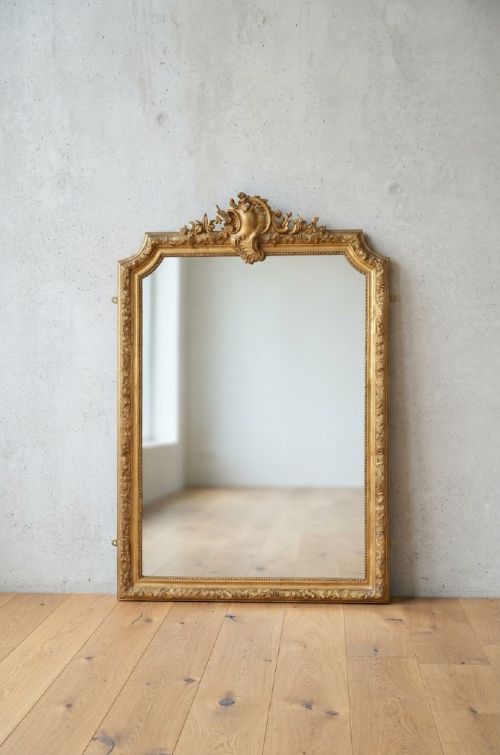
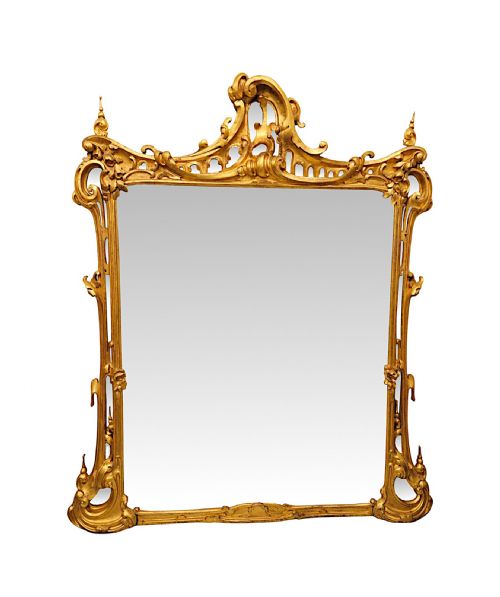
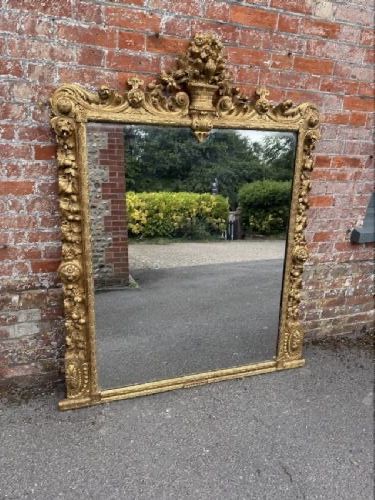
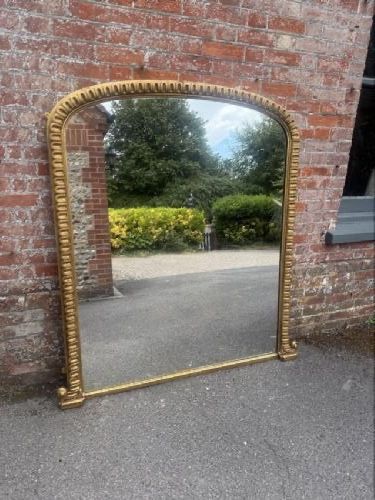
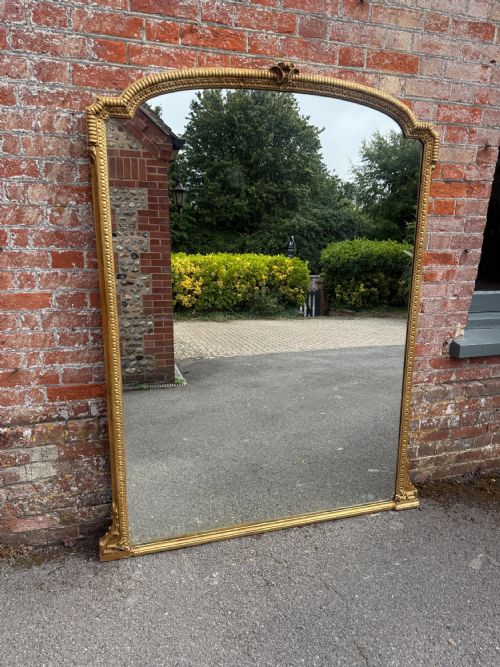
The version most commonly met on this page is the nineteenth-century English or French overmantel mirror featuring an arched or shaped top, substantial giltwood framing, and carved ornamentation. Formats range from rectangular wall mirrors to tall pier glasses and crest-topped statement pieces built for high-ceilinged reception rooms.
How they were made
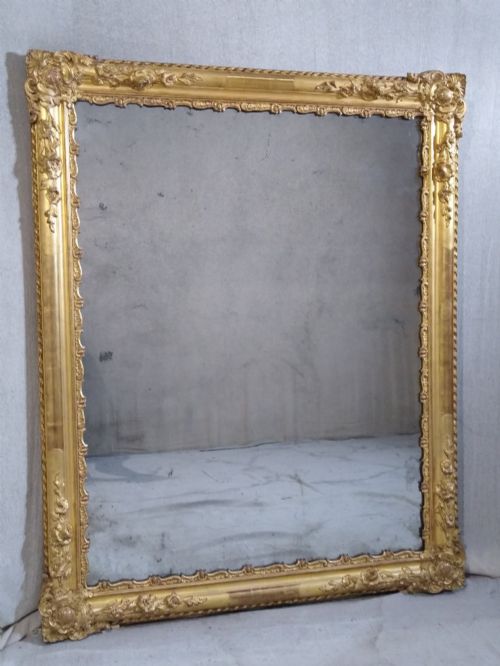
The construction of these frames relies upon carved wood or composition mouldings built over a wooden substrate, heavily layered with gesso to receive the finishing gold leaf or gilding. Artisans shaped floral crests, rope twists, and architectural scrolls by hand or by pressing gesso into carved wooden moulds.
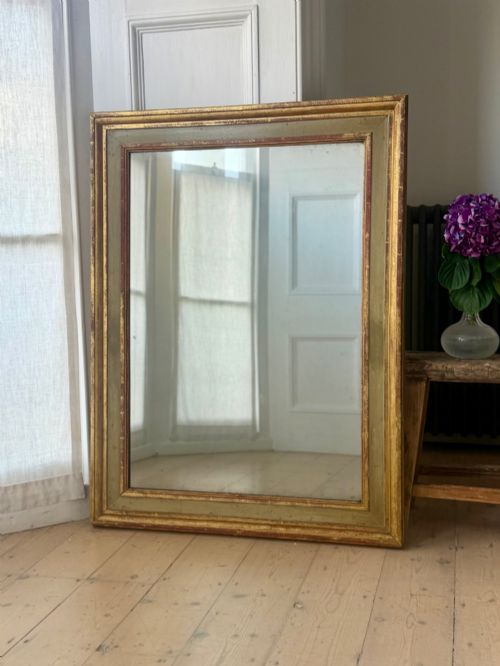
Reflecting plates in the period pieces consist of silvered glass, sometimes incorporating original mercury glass plates with characteristic foxing and depth. Frames frequently combine giltwood with parcel-gilt ebonised sections, painted details, or contrasting black and gold finishes.
Archival records include both black-and-gold French Napoleon III overmantels and ornate Victorian giltwood statement frames.
What varies in quality
The depth and crispness of the carving distinguish finer examples from standard production, particularly where gesso enrichment defines scrolling acanthus leaves, crested pediments, and rope-twist borders. Master carvers undercut wooden mouldings to create three-dimensional relief rather than relying entirely on flat gesso applied to simple timber blanks.
The integrity of the original plate and the weight of the underlying timber frame dictate the structural tier of the piece. Substantial joinery, intact original gilding without heavy modern overpainting, and surviving original mirror glass command greater consideration among collectors.
The Large Gold Mantel Mirror Glossary
- Gesso
- A plaster-like mixture applied to wood frames to provide a smooth surface for gilding. This compound allowed craftsmen to impress intricate decorative motifs before applying gold leaf.
- Giltwood
- Timber coated with gold leaf or metallic powder applied over a prepared ground. It differs from painted gold in its reflective depth and method of adherence.
- Overmantel mirror
- A wide mirror specifically proportioned to hang on the wall space immediately above a mantelpiece. These pieces often feature low-slung bases designed to sit flush against shelf mouldings.
- Pier mirror
- A tall, narrow mirror designed to fit the wall space between two windows or doors. They frequently incorporate candle sconces or console tables beneath the glass.
- Mercury glass
- A double-walled glass blown object or mirror plate silvered with a mercury amalgam between the glass layers. This historic technique produces a dark, mottled reflection with distinct antiqued charm.
Large Gold Mantel Mirror: Frequently Asked Questions
Where should I place an overmantel mirror?
Traditionally positioned centrally above a fireplace mantelpiece, an overmantel mirror anchors the vertical space of a chimney breast and reflects natural light across the room.
They also work effectively on expansive dining room or hallway walls where their horizontal or vertical proportions balance large pieces of antique furniture.
What is the difference between Victorian and Regency mirrors?
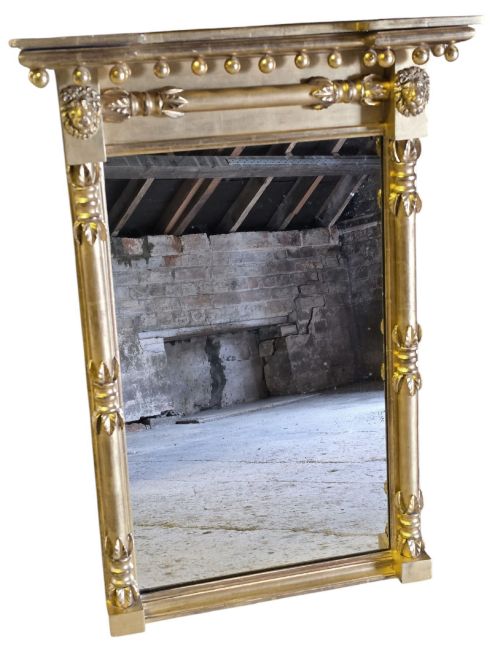
Regency mirrors from the early nineteenth century often lean towards classical architectural restraint, incorporating convex plates, ball-stud frames, or nautical rope motifs.
Victorian pieces tend to be larger and more exuberant, featuring heavy carved gesso crests, sweeping arched tops, and elaborate Rococo Revival or Aesthetic period styling.
How do I clean antique gilt frames?
Dust the carved gesso and giltwood surfaces gently with a soft, dry brush to remove particulate matter without disturbing fragile nineteenth-century leaf.
Avoid liquid cleaners, abrasives, or modern solvents entirely, as moisture and chemicals strip historic gilding and damage the underlying gesso composition.