

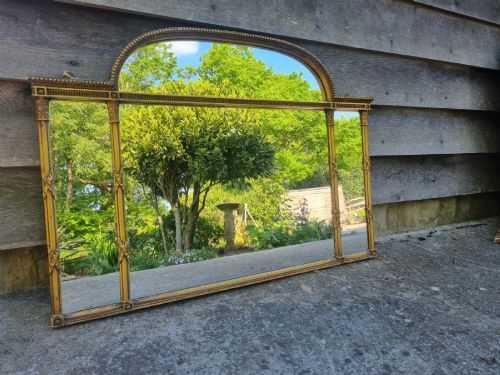
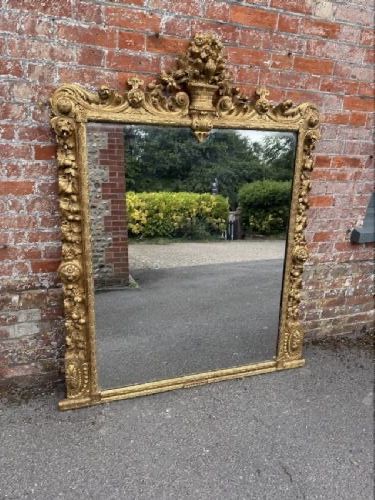
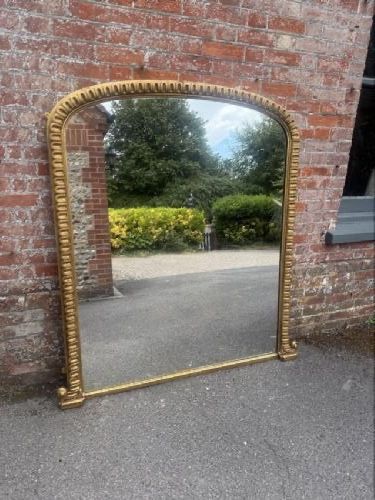
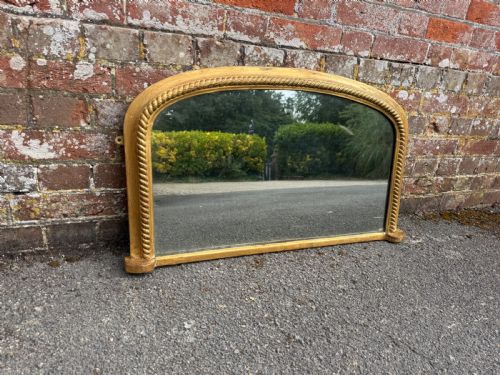
Gilded Fireplace Wall Mirror
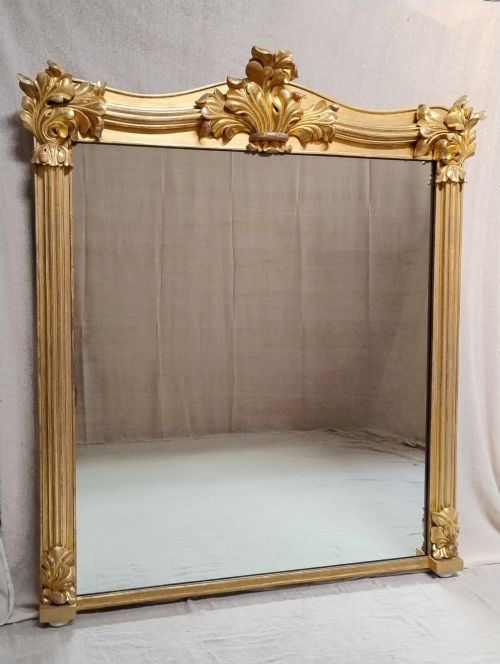
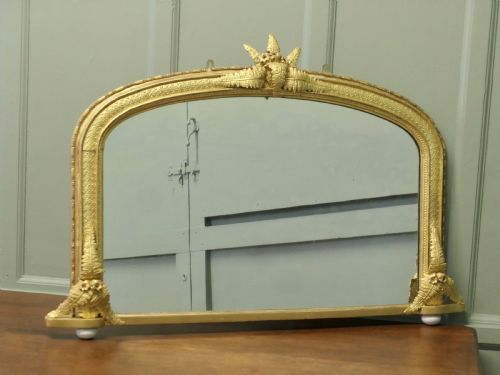
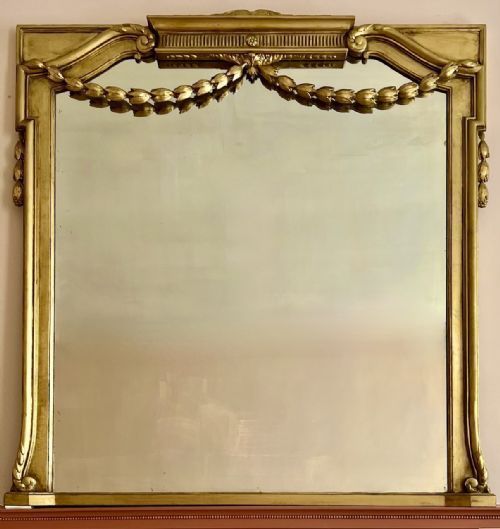
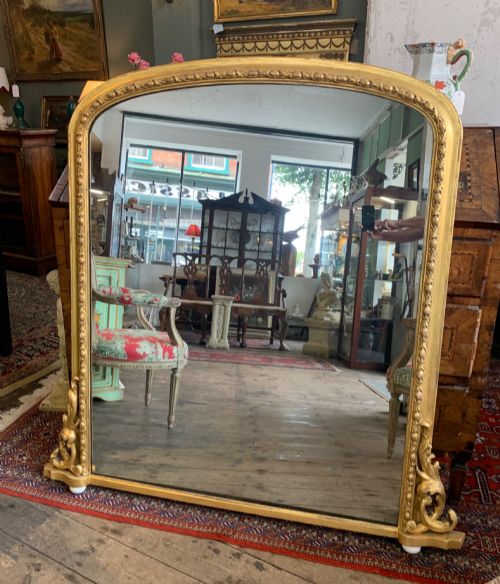
These large pieces are a gilded fireplace wall mirror, designed to sit above a mantelpiece to reflect light and fill a room.
Gilded Fireplace Wall Mirror
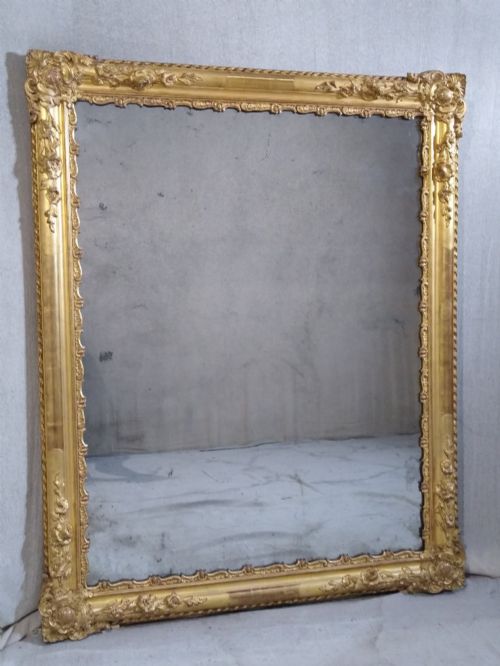
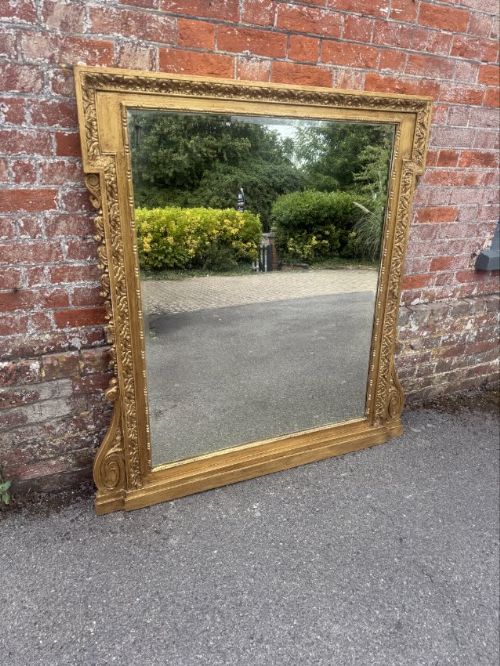
A gilded fireplace wall mirror typically takes the form of an overmantle mirror designed to occupy the space directly above a hearth. The versions met most often on this page date from the nineteenth century, including Victorian and Regency periods.
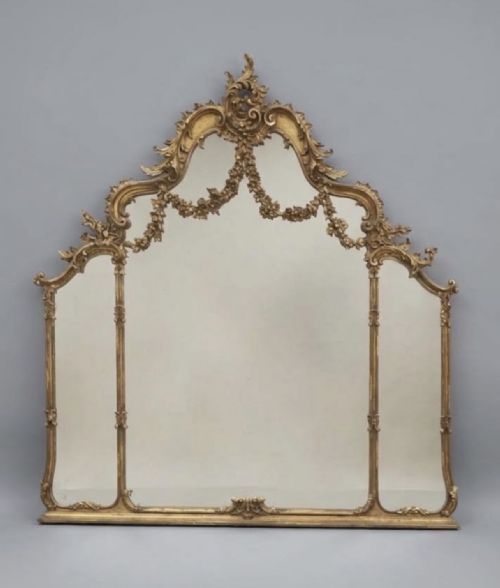
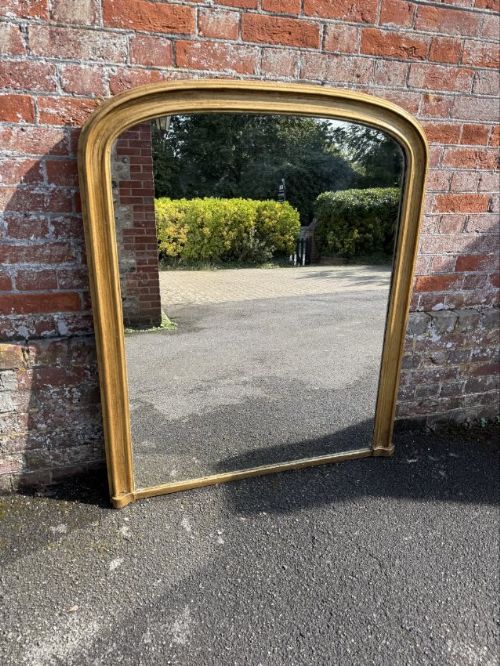
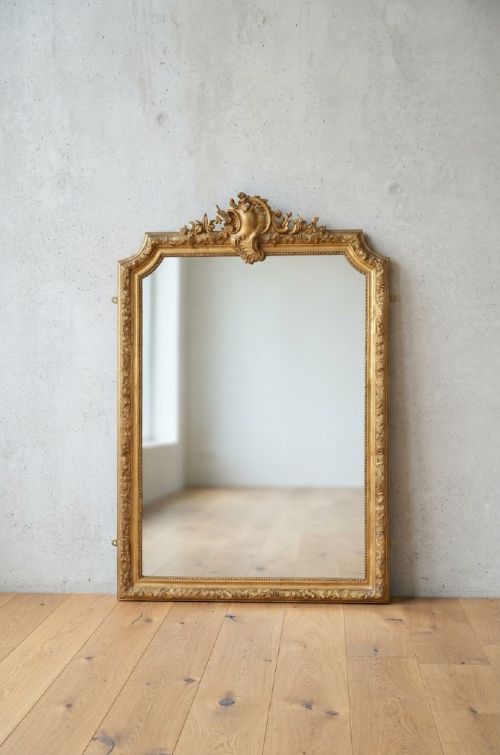
Makers shaped these frames in large dimensions to anchor a principal reception room. Common silhouettes include arched tops, rectangular plates, and triple plate layouts.
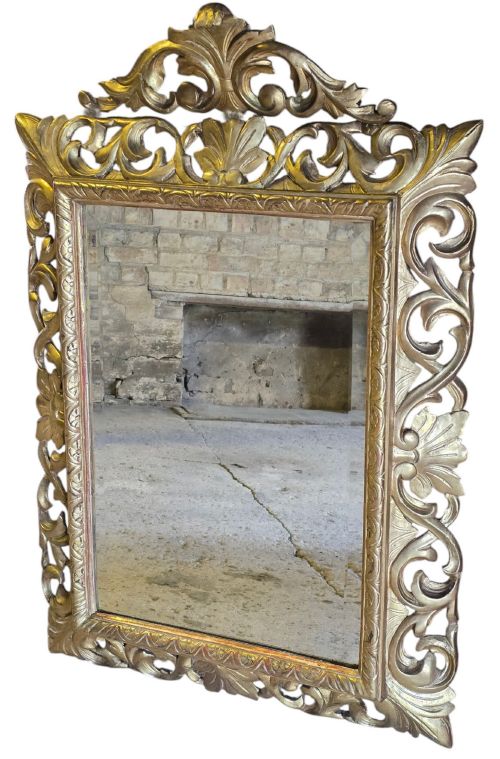
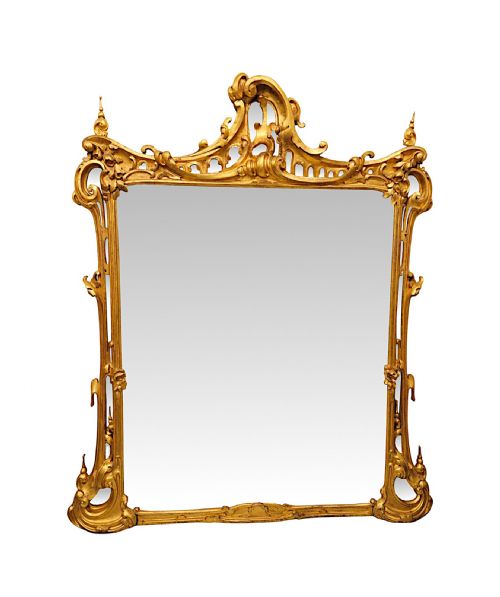
Stylistic influences span from French Chateau and Rococo Revival to Chinese Chippendale and Grand Regency. These forms reflect the decorative ambitions of nineteenth-century interiors.
How they were made
Craftsmen built the core frames primarily from wood, often layering gesso over carved timber to create crisp relief details before applying gold leaf or gilding. This combination provided a stable base for intricate ornamentation like columns, rope twists, and crests.
Mirrors incorporated flat glass plates, sometimes found with lightly foxed surfaces reflecting their age. The application of gold leaf or composition material gave these large frames their characteristic metallic sheen.
Listings feature 19th Century, Victorian, and Regency periods, utilising materials such as gesso, giltwood, and mirror glass.
What varies in quality
The standard of carving in the wood and gesso foundation sets apart different examples. Deep, precise hand-carving on frames creates sharper definition than simpler moulded compositions.
The treatment of the gilt surface and the preservation of the original mirror glass distinguish finer pieces. Stronger execution appears where gilding retains its depth and the glass shows honest signs of age without losing its reflective integrity.
The Gilded Fireplace Wall Mirror Glossary
- Overmantle
- A large mirror specifically proportioned to hang on the wall directly above a fireplace mantelpiece.
- Gesso
- A plaster-like material applied to wood frames and carved or moulded into decorative relief patterns before gilding.
- Giltwood
- Timber that has been coated with gold leaf or a gold-coloured finish.
- Foxed glass
- Mirror glass displaying small dark spots or discoloration caused by the degradation of the backing over time.
- Triple plate
- A mirror configuration featuring three distinct glass sections within a single overarching frame.
Gilded Fireplace Wall Mirror: Frequently Asked Questions
Where should a fireplace mirror go?
These mirrors traditionally hang on the chimney breast directly above the mantelpiece. Their proportions suit wide wall spaces, particularly in reception rooms.
They also function effectively on large blank walls away from hearths, provided the fixings support the considerable weight of the wooden frame.
How do I date a gilded mirror?
Dating relies on examining the framing style, the construction techniques of the wood backing, and the characteristics of the glass. Nineteenth-century pieces often feature distinct gesso ornamentation and heavy timber frames.
Specific design cues such as Regency classical lines or Rococo Revival curves help narrow down the period of manufacture.
Are these mirrors very heavy?
Most examples possess substantial weight due to their large wooden frames and thick glass plates. Proper wall anchoring into structural studs or masonry is essential for secure hanging.
Professional installation is often recommended to handle the dimensions safely.
What is foxed glass?
Foxed glass refers to mirror plates that have developed aged speckles, spots, or a softened reflection as the reflective backing slowly degrades over decades.
Many collectors value this characteristic because it confirms the genuine age of the piece.