

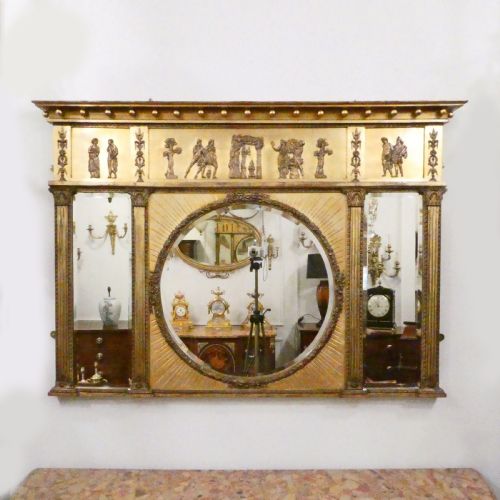


Classical Column Mirror
A classical column mirror brings architectural discipline to a room, framing reflections with fluted uprights and gilded dignity.
Classical Column Mirror
When you search for a classical column mirror, you encounter pieces designed to anchor a room through strong architectural framing. These works appear predominantly in nineteenth-century interpretations, spanning the Regency and Victorian periods.
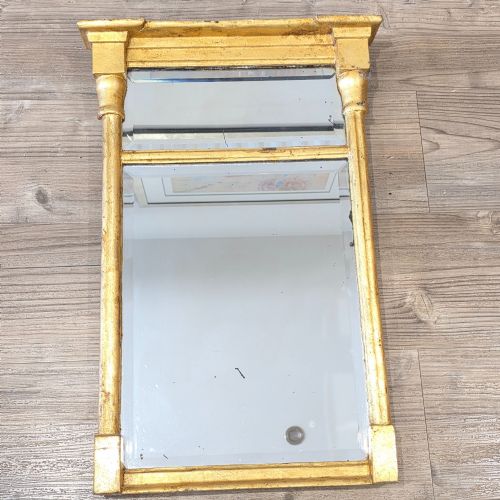
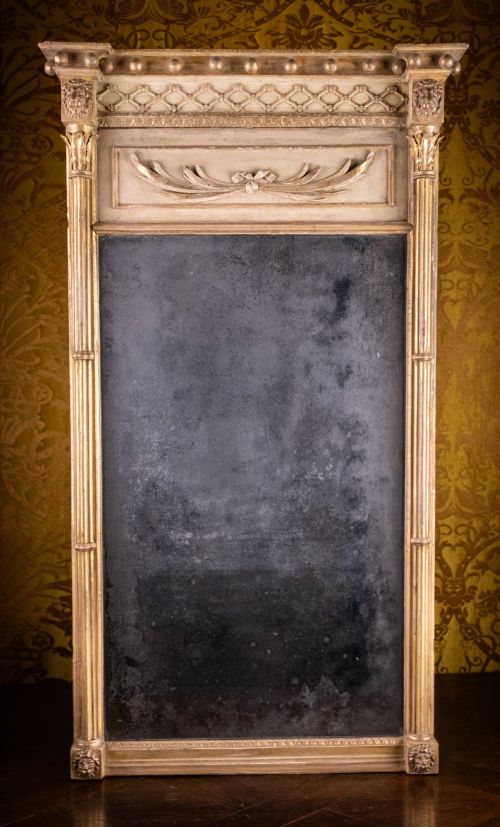
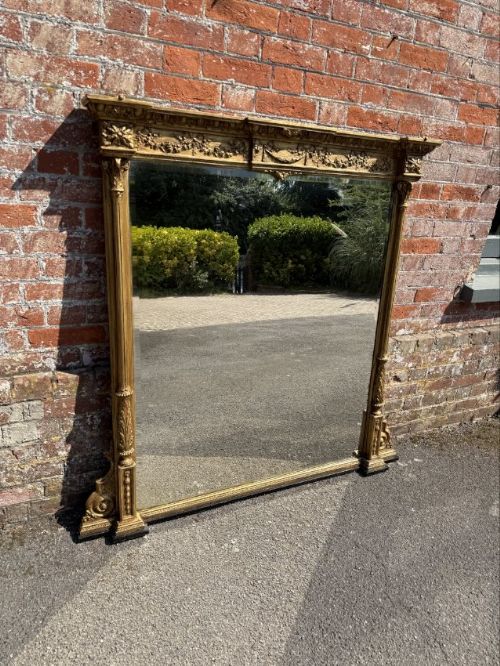
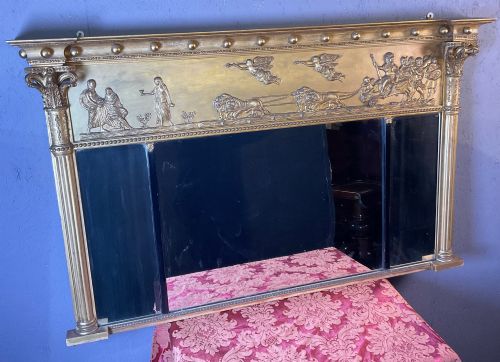
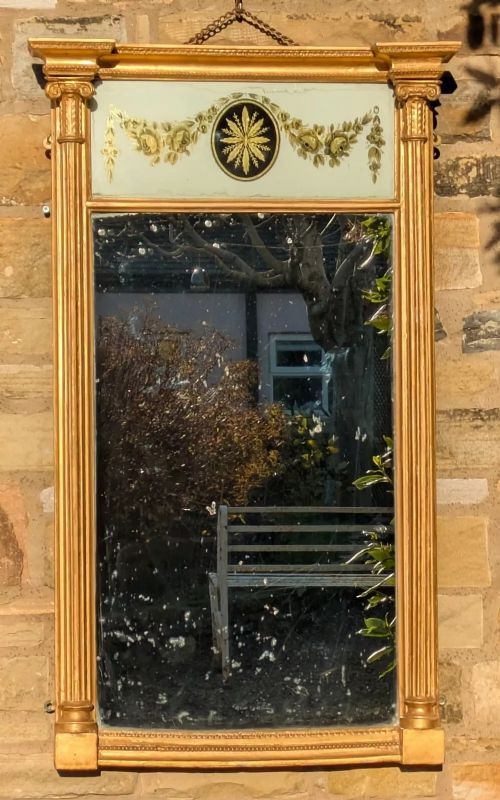
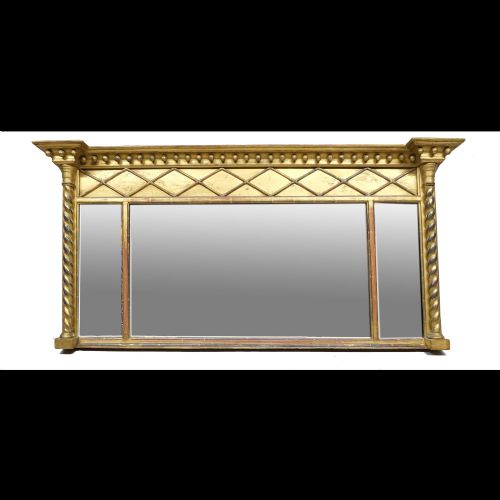
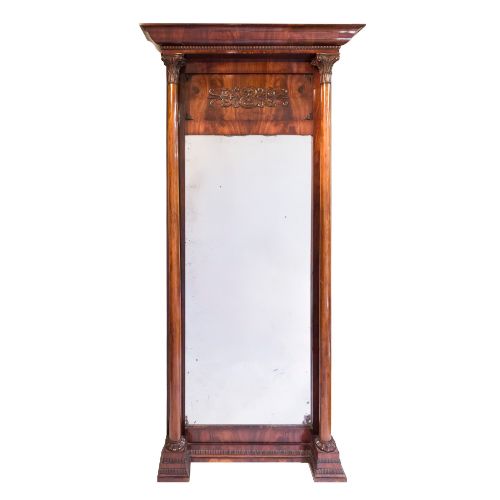
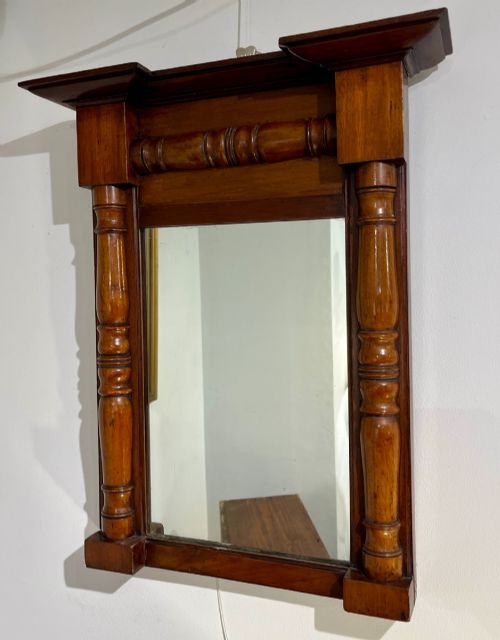
The forms on this page divide chiefly into wall mirrors, pier mirrors designed for the space between windows, and expansive overmantel mirrors. Many examples incorporate tripartite glass plates or decorative panels above the main mirror.
Makers drew on Regency, French Empire, Neoclassical, and American Empire vocabularies to shape these forms. Pier mirrors and overmantels dominate the selection, often featuring distinct column supports at either side of the glass.
How they were made
Carpenters shaped the structural carcass from timber such as mahogany, walnut, or softer woods prepared for gilding. Carved wood and gesso formed the relief decoration upon which gold leaf or paint was applied.
Giltwood and gesso surfaces received meticulous layers of gold leaf, sometimes contrasted with ebonised wood or parcel-gilt details. Glass plates were set into the frames, occasionally accompanied by verre eglomise panels.
Classical Column Mirror Retail Price Guide 2026
Typical asking prices for classical column mirror among the pieces listed under this phrase on Sellingantiques today, from the lower quarter to the upper quarter. They describe what is for sale here now, not the wider market.
Listings feature timber frames in mahogany and walnut alongside gesso and giltwood constructions.
What varies in quality
Quality rests upon the crispness of the carved details along the columns and capitals, such as acanthus leaves or lion masks. Finer examples retain their original gilding and integrated verre eglomise panels without heavy restoration.
The structural integrity of the timber frame and the depth of the moulding dictate the piece's long-term presence. Superior items display harmonious proportions between the column supports and the reflective glass plates.
The Classical Column Mirror Glossary
- Pier mirror
- A tall mirror specifically designed to hang on the wall space between two windows. These pieces often match console tables positioned directly beneath them.
- Gesso
- A plaster-like mixture applied to wood frames to create a smooth surface for gilding. Carvers cut intricate details directly into this hardened layer.
- Verre eglomise
- A cold decoration technique involving gilt and painted designs applied to the reverse of glass panels. It frequently appears in the upper frieze of Regency mirrors.
- Triptych
- A three-part mirror plate configuration separated by dividing bars or pilasters. This layout widens the reflected field of light within a room.
Classical Column Mirror: Frequently Asked Questions
Where should a pier mirror hang?
Pier mirrors traditionally occupy the narrow wall space between two windows to bounce natural light back into the interior. Placing one above a suitable console table completes the historical arrangement.
Ensure the wall fixings safely bear the weight of the timber and gesso frame. Lower heights allow the glass to reflect furniture and floorboards effectively.
What is a triptych overmantel mirror?
A triptych overmantel mirror contains three distinct glass plates set within a single wide frame. This division breaks up the reflection and suits the proportions of nineteenth-century fireplace mantels.
The flanking vertical elements often echo classical column designs found throughout the Regency period. Such mirrors expand the visual width of a chimney breast.
How do I identify Regency style?
Regency style draws heavily on classical Greek, Roman, and Egyptian motifs translated through early nineteenth-century British taste. Look for clean architectural lines, parcel-gilt details, and structural columns.
Painted surfaces combined with gold leaf frequently indicate this aesthetic. The overall composition prioritises restraint and symmetry over heavy ornamentation.
Are these mirrors heavy?
Carved wood, gesso, thick timber frames, and multiple glass plates add substantial weight to nineteenth-century examples. Wall mounting requires robust fixings secured directly into solid masonry or studs.
Professional installation is often necessary to support the sheer mass of larger overmantel and pier formats safely. Checking the integrity of the hanging loops on the rear remains essential.