
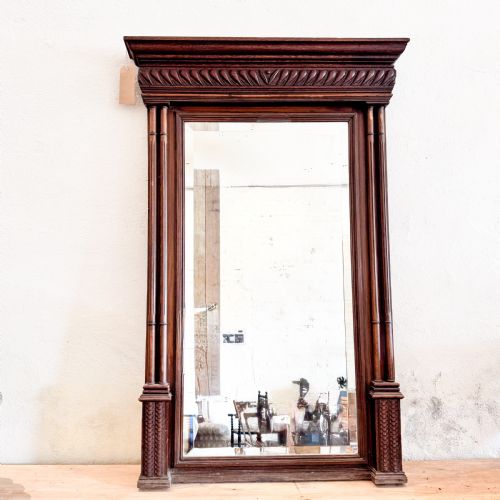

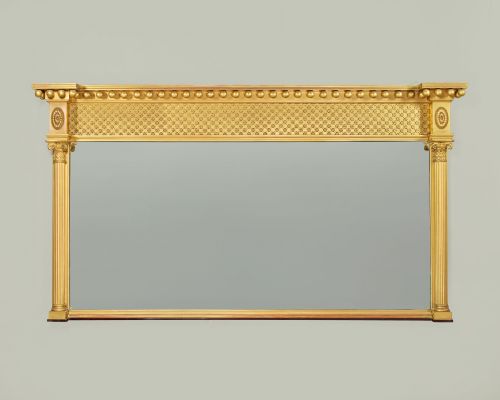


Column Framed Mirror
A column framed mirror uses architectural side supports to bring structural balance and classical presence to an interior wall.
Column Framed Mirror
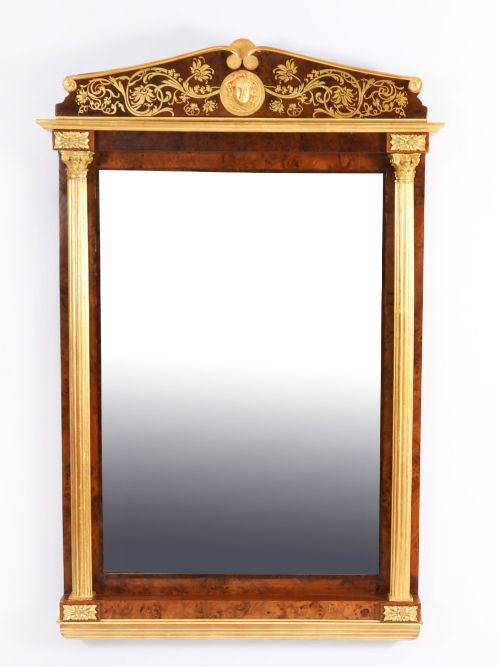
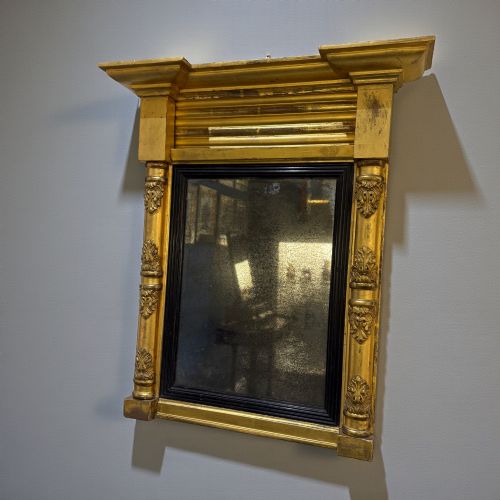
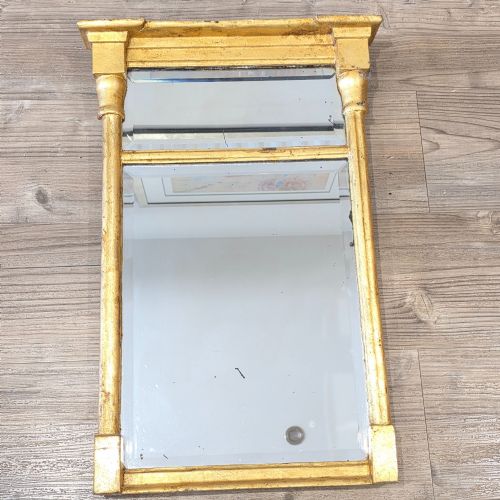
When searching for a column framed mirror, buyers encounter wall-hanging glasses and substantial overmantels designed to anchor a room. The most common versions on this page are nineteenth-century English and French overmantel and pier mirrors featuring distinctive upright side supports.
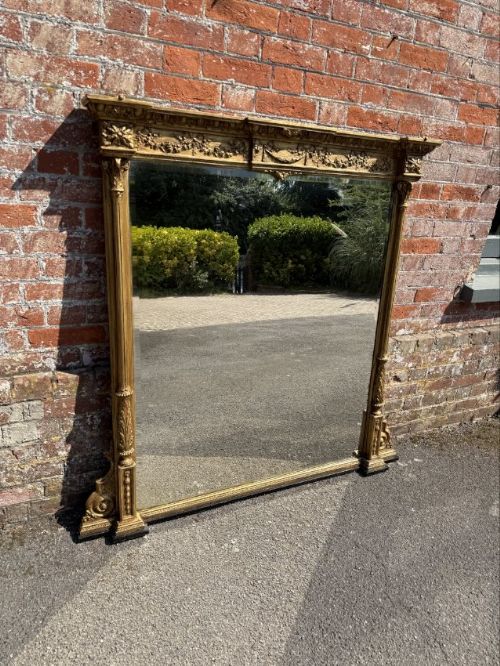
These pieces bridge decorative arts and architecture, taking inspiration from Regency, Victorian, and Neoclassical design principles. Formats range from neat pier glasses intended for narrow wall spaces to wide triptychs and arched architectural frames built to sit above a fireplace.
Originating largely from nineteenth-century workshops, these mirrors display variations in proportion and framing. Solid timber structures sit alongside carved wood and gesso frames, reflecting the diverse domestic interiors of the nineteenth century.
Materials and construction methods
Carved wood and gesso form the foundational structure for much of the gilded and painted work found in these records. Craftsmen applied plaster layers over wooden bases to create crisp architectural mouldings, fluting, and applied column details before gilding with gold leaf or applying paint finishes.
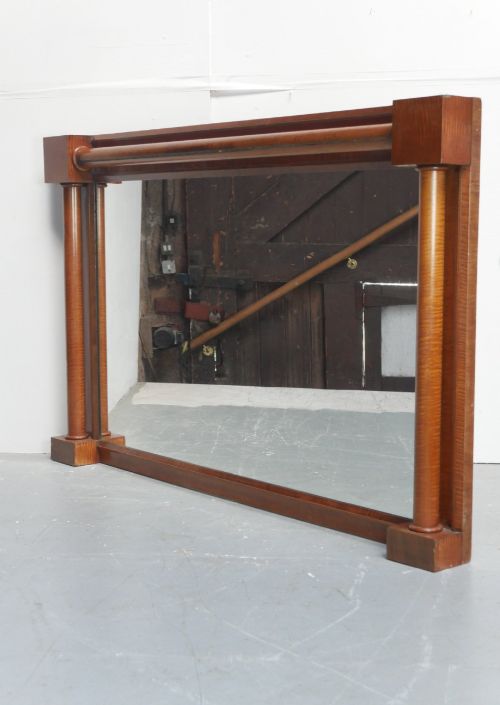
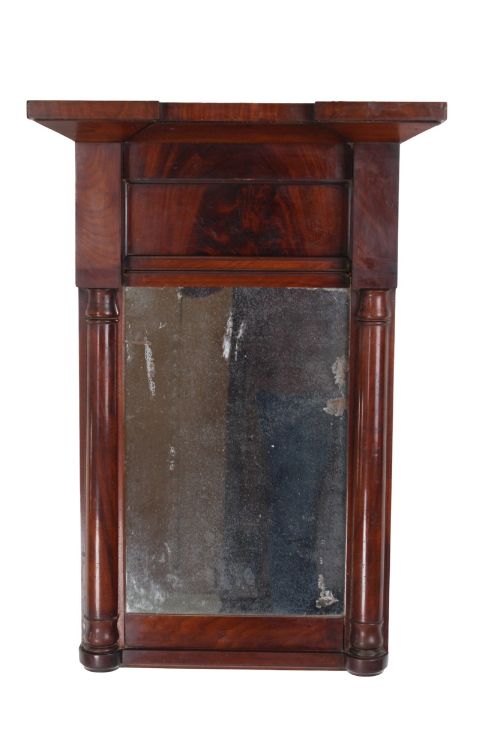
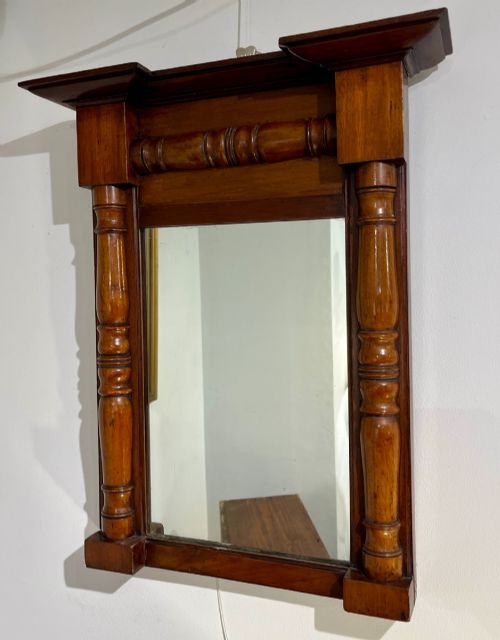
Solid and veneered timbers provide the carcass work for mahogany, oak, walnut, and birds eye maple examples. Joinery techniques secure the upright column elements to the main frame, often incorporating twist, rope, or ribbed column turns alongside brass or parcel-gilt caps and bases.
Twist columns bring a subtle sense of movement to otherwise stern nineteenth-century architectural frames.
Distinctions in craftsmanship
The standard of carving and the crispness of the gesso mouldings separate finer examples from standard production pieces. Sharp definition in the column capitals and bases indicates skilled handwork rather than mass moulding.
The preservation of original gilding, paint, and mercury or silvered mirror plates heavily influences the character of a piece. Depth in the wood grain of mahogany and burr walnut timbers also defines the upper tier of surviving examples.
The Column Framed Mirror Glossary
- Pier Mirror
- A tall, narrow mirror traditionally hung on the pier or wall space between windows. These pieces often feature side columns and compact dimensions suited to specific architectural gaps.
- Overmantel Mirror
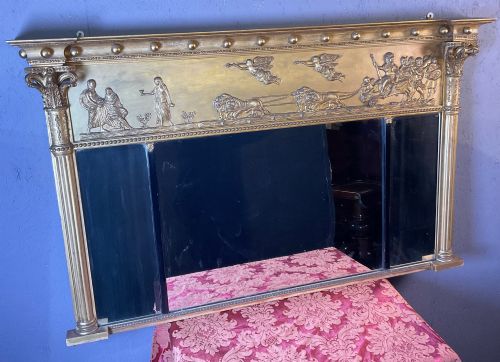
- A wide mirror designed to be positioned directly above a mantelpiece or fireplace. They frequently incorporate landscape proportions or triptych panel layouts.
- Gesso
- A plaster-like mixture applied to wood frames to provide a smooth surface for gilding or painting. It allows craftsmen to carve and impress intricate architectural details.
- Giltwood
- Timber that has been coated with thin sheets of gold leaf or gold paint. This finish creates a reflective, luminous surface popular in Regency and Victorian decorative schemes.
- Parcel Gilt
- A decorative treatment where only specific portions of a wooden or painted frame are gilded. This technique highlights carved column details and architectural mouldings against a contrasting background.
- Triptych
- A mirror plate divided into three distinct vertical sections within a single frame. This configuration widens the reflected field of light in reception rooms.
Column Framed Mirror: Frequently Asked Questions
Where should I hang a column framed mirror?
These mirrors suit principal reception rooms, hallways, and above mantelpieces where architectural framing complements existing interior proportions.
Pier versions function well on narrow wall spaces between windows, while larger overmantel formats anchor the wall above a fireplace.
How do I identify a Regency mirror?
Regency pieces often display classical Neoclassical motifs, clean architectural lines, and ebonised details combined with gold leaf. Column supports on these items frequently reference ancient Greek and Roman temple designs.
Proportions tend to remain balanced and restrained, distinguishing them from more ornate later Victorian productions.
Are these mirrors made from solid wood?
Construction methods vary between solid timber frames and carved wood assemblies coated in gesso. Mahogany, oak, and walnut examples utilise solid or veneered carcases for the main body.
Gilt and painted decorative elements typically rely on a carved wooden base covered in moulded gesso to achieve crisp architectural details.
What is the difference between an overmantel and a wall mirror?
Overmantel mirrors are specifically proportioned to sit horizontally above a fireplace mantel, often featuring wide frames or triptych glass divisions. Standard wall mirrors or pier mirrors are taller and narrower, designed for vertical hanging spaces.
Both types incorporate architectural column framing, but their original domestic functions dictated their overall scale.