
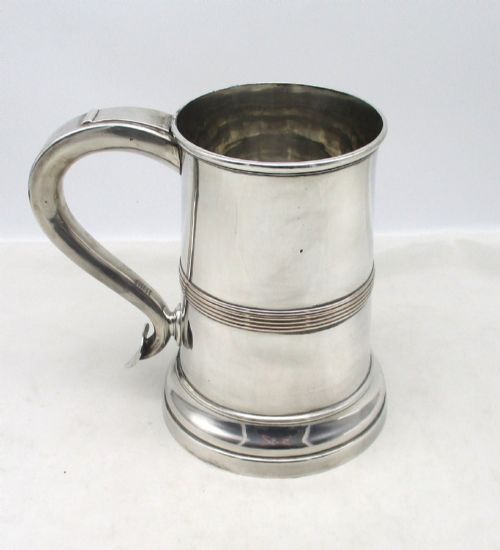


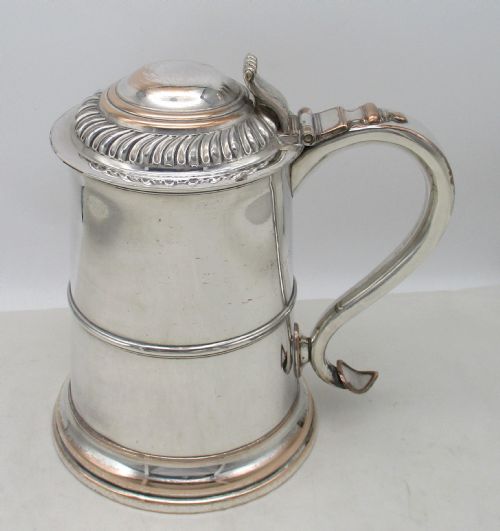


Large Georgian Tankard
A large georgian tankard brings substantial eighteenth and early nineteenth-century drinking vessels into domestic settings.
Large Georgian Tankard
A large georgian tankard encompasses robust drinking vessels and heavy flagons produced across the eighteenth and early nineteenth centuries. These drinking vessels serve formal table use and tavern service alike, standing out by their substantial capacity and capacious forms.
The versions most commonly met on this page include Old Sheffield plated lidded examples alongside substantial porcelain mugs and earthenware frog jugs. Makers from these periods utilised durable metals and glazed ceramics to create vessels intended for frequent handling.
Surviving examples range from silver-plated barware bearing classical proportions to polychrome painted porcelain and cobalt glazed earthenware. Each piece reflects the functional drinking customs of Georgian society through distinct regional British manufacturing traditions.
How they were made
Old Sheffield plate pieces utilise a fusion technique where a thin sheet of silver is fused to a thicker copper base under heat. This method produces durable plated metalware that mimics solid silver while offering practical strength for heavy daily use.
Ceramic examples rely on traditional earthenware, pearlware, and porcelain bodies shaped on the potter's wheel or formed in moulds. Potters then applied intricate cobalt glaze, polychrome enamels, and transfer printed scenes before high-temperature kiln firing.
Object forms represented across the selection include flagons, beer jugs, and specialised frog mugs alongside traditional lidded tankards.
What varies in quality
Quality in Old Sheffield plated items rests upon the crispness of applied decorative mounts and the preservation of the original silver surface over the copper core. Superior specimens maintain intact handle fixings and clear structural lines without excessive smoothing from past polishing.
Ceramic quality is determined by the clarity of the polychrome or cobalt glaze painting and the refinement of the pearlware or porcelain body. Master painters executed detailed chinoiserie motifs and topographical scenes with precision that elevates standard utilitarian vessels.
The Large Georgian Tankard Glossary
- Old Sheffield Plate
- A composite material made by fusing a thin layer of silver to a copper ingot. This technique was widely utilised before the invention of electroplating.
- Pearlware
- A refined earthenware developed in the late eighteenth century featuring a subtle bluish glaze that pools in crevices. It served as a popular canvas for bright painted decoration.
- Frog Mug
- A drinking vessel featuring a small ceramic frog modelled inside the base to surprise the drinker as the liquid level drops. These pieces were frequent tavern novelties.
- Chinoiserie
- A European artistic style reflecting Chinese motifs and decorative themes. Craftsmen applied these fanciful oriental scenes to porcelain and metalware throughout the Georgian period.
Large Georgian Tankard: Frequently Asked Questions
What were large georgian tankards used for?
These large vessels primarily held ale, beer, and cider for communal drinking in homes, inns, and taverns. Their substantial volume accommodated generous portions during meals and social gatherings.
Certain specialised forms, such as frog mugs, added interactive elements to drinking games, while lidded plated tankards kept contents protected during outdoor or tavern service.
How do I care for old sheffield plate?
Old Sheffield plate requires gentle cleaning with non-abrasive silver polishes to protect the thin silver layer over the underlying copper. Aggressive rubbing will expose the base metal underneath.
Store these metal vessels in stable humidity environments to prevent tarnishing and avoid exposing them to harsh chemical detergents.
How do I identify porcelain from earthenware?
Porcelain is typically vitreous, translucent when held to a strong light, and rings clearly when tapped gently. Earthenware and pearlware are opaque, more porous, and produce a duller sound.
Porcelain also tends to feature finer painted details, whereas earthenware often displays heavier lead or salt glazes suited to utilitarian service.
Can I use these tankards for drinking today?
While structurally sound, antique vessels made from Old Sheffield plate or early ceramics are generally appreciated as decorative display pieces rather than daily drinkware. Historic solders and lead content in older glazes mean modern usage requires careful consideration.
Displaying them on shelves or sideboards allows you to enjoy their historical craftsmanship safely.