


Large Decorative Metal Charger
These large decorative metal charger plates span Japanese Meiji and Edo periods, Islamic Cairo Ware, and nineteenth century European brass and pewter workshops.
Large Decorative Metal Charger
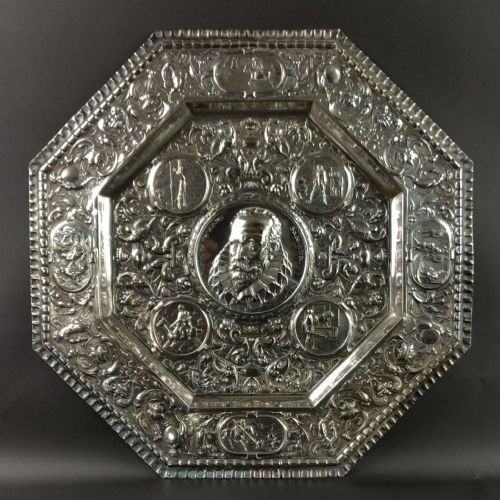
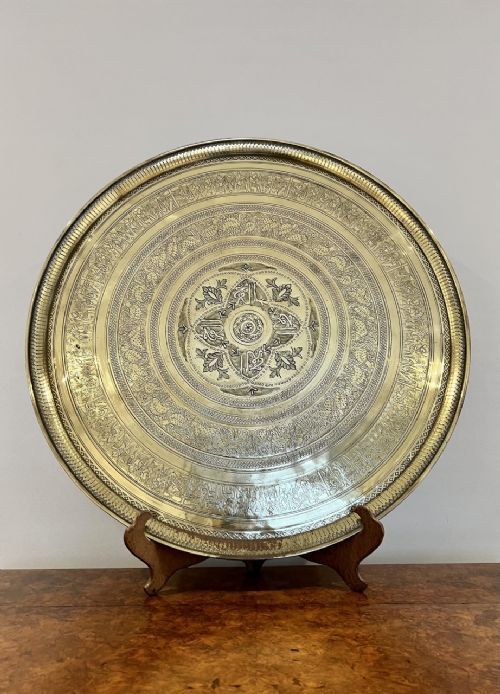
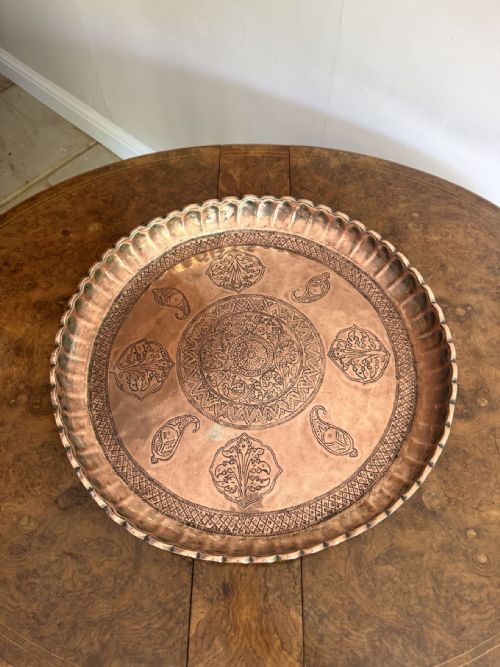
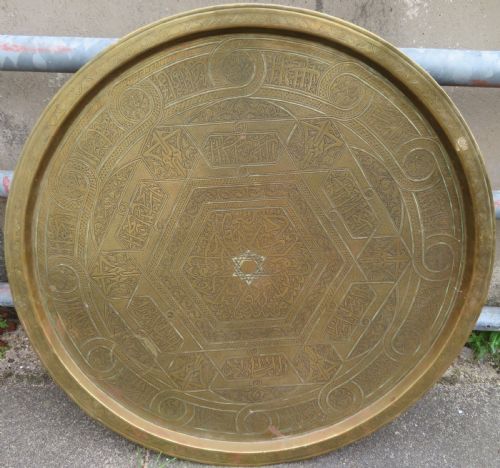
When you search for a large decorative metal charger, you are looking at substantial wall plates, presentation trays, and centrepieces designed primarily for display rather than dining. The examples seen here range from nineteenth century English and European brass and pewter to Japanese cloisonne enamel and Middle Eastern inlaid metalwork.
The most common forms on this page are Japanese cloisonne chargers featuring birds, dragons, and floral scenes alongside heavy brass and copper trays from Islamic, Anglo-Indian, and Victorian sources. These pieces offer deep visual presence and varied surface decoration across different historic traditions.
How they were made
The construction of these chargers relies on heavy base metals such as brass, bronze, copper, and pewter, shaped by casting, beating, or turning on a lathe. Artisans then applied intricate surface decoration through repoussé, engraving, or wire inlay.
Japanese pieces utilise cloisonne enamel and Totai Shippo techniques, where thin metal wires form compartments on a metal or tree bark base that are filled with coloured enamel and fired. Islamic Cairo Ware examples incorporate contrasting silver and copper wires inlaid into a dark bronze or brass surface.
Materials represented across these plates include brass, copper, bronze, pewter, enamel, and specialised wire inlays.
What varies in quality
The standard of a large decorative metal charger depends heavily on the precision and ambition of its surface work. Finely executed Japanese cloisonne displays crisp wire cells and deep, unblemished enamel fields, while engraved brass and copper pieces reveal sharp, deliberate chiselling rather than shallow machine stamping.
Material weight and compositional balance also divide ordinary production from exceptional work. Heavier bronze and mixed metal items, along with signed Japanese chargers depicting complex subjects like leaping koi or phoenixes, demonstrate superior artisan skill and enduring structural integrity.
The Large Decorative Metal Charger Glossary
- Charger
- A large broad plate or dish, typically used for ceremonial display or as a base plate in table service rather than everyday eating.
- Cloisonne
- An enamelwork technique in which thin metal wires are soldered to a metal base to create compartments that are filled with vitreous paste and fired.
- Repoussé
- A metalworking method in which a design is hammered into relief from the reverse side of the sheet metal.
- Cairo Ware
- Late nineteenth and early twentieth century metalwork produced in Egypt featuring intricate silver and copper wire inlay on brass or bronze.
- Totai Shippo
- A Japanese cloisonne variant where enamel is applied over a textured organic base such as tree bark rather than solid metal.
Large Decorative Metal Charger: Frequently Asked Questions
How were large decorative chargers displayed historically?
These large plates were typically mounted on walls or set upon buffets and sideboards to catch the light and showcase fine craftsmanship. They served as prominent decorative statements in Victorian drawing rooms and collector cabinets.
Today, they function well in similar interior settings, mounted securely on walls or displayed on sturdy plate stands to highlight their detailed metalwork and enamel colours.
What is Cairo Ware?
Cairo Ware refers to nineteenth century Middle Eastern metalwork, particularly from Egypt, featuring dark bronze or brass surfaces inlaid with intricate patterns of silver and copper wire.
These pieces were produced for both local markets and the European export trade during the height of Orientalist interest.
How do I care for antique metal chargers?
Maintenance depends entirely on the specific material and surface finish of the piece. Enamelled surfaces like Japanese cloisonne require only gentle dusting with a soft, dry cloth.
Plain or engraved brass, copper, and pewter may develop a natural patina over time, which many collectors prefer to leave undisturbed rather than polishing aggressively.
What distinguishes Japanese Meiji period chargers?
Meiji period chargers demonstrate exceptional technical mastery in cloisonne enamel and mixed metal work. They frequently depict natural subjects such as birds, dragons, and Mount Fuji.
Many of the finest examples from this era bear artist signatures on the reverse or within the enamel design.