


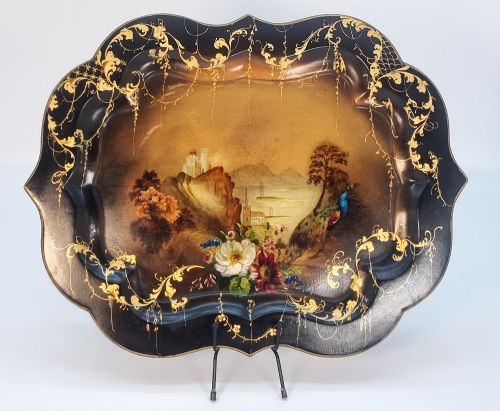


19th Century Wall Platter
These 19th century wall platter selections bring large-scale decorative presence and intricate historical narratives directly to a room.
19th Century Wall Platter
A 19th century wall platter encompasses large decorative chargers, display plaques, and deep trays designed primarily for visual impact rather than dining. The pieces span earthenware, porcelain, copper, brass, and papier-mâché, reflecting diverse global manufacturing centres from English potteries to Japanese workshops.
The version most commonly met on this page is the large Japanese Imari or cloisonné enamel charger from the later decades of the period. Alongside these sit European porcelain chargers painted with classical or historical scenes, alongside heavy repoussé metal plaques depicting literary and mythological figures.
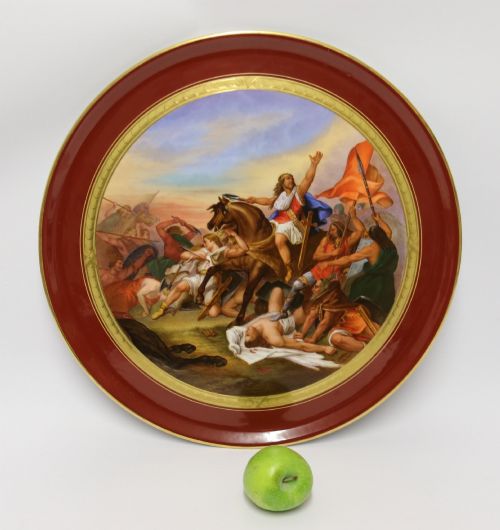
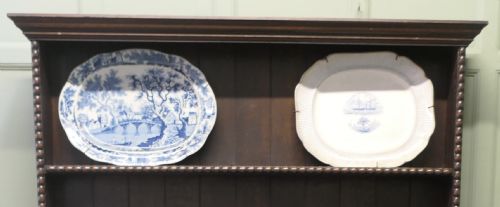
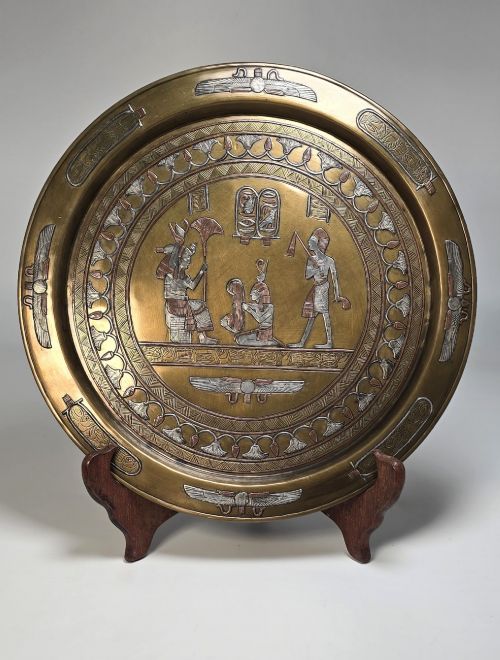
Makers utilised these broad surfaces to display elaborate pictorial narratives, ranging from hand-painted battle scenes to precise silver-inlaid Cairo ware and deep blue and white patterns. Their scale allows them to function effectively as focal points when hung on walls or displayed on sturdy stands.
How they were made
Enamel and cloisonné techniques involve soldering delicate wire partitions onto a copper or porcelain base before filling the resulting cells with coloured glass pastes and firing the piece. Japanese workshops mastered this method to create intricate dragons, birds, and floral motifs with raised metallic outlines.
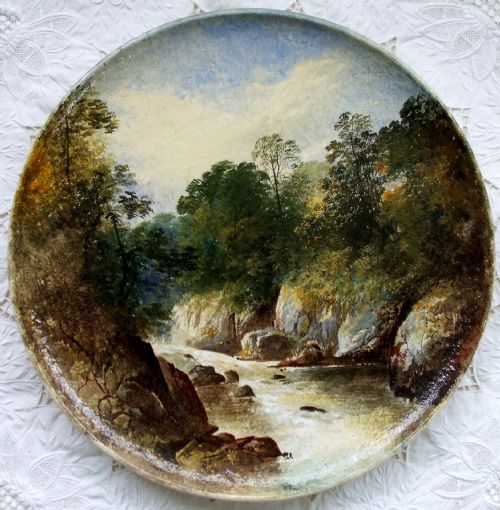
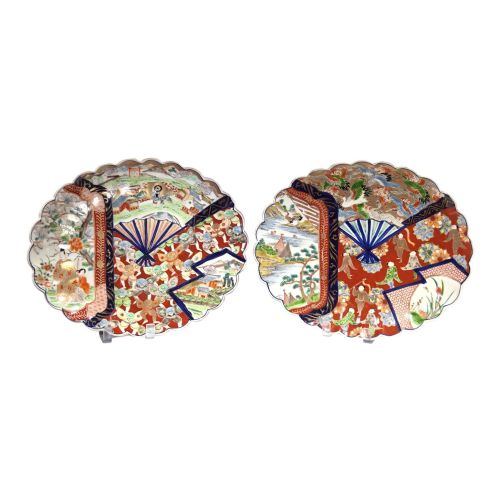
Porcelain and earthenware chargers rely on high-temperature kilns to set vibrant glazes, often enhanced by hand-painted overglaze enamels and gilding. European manufactories applied these pigments to depict complex historical narratives, whilst Japanese kilns produced rich underglaze blue and iron-red designs.
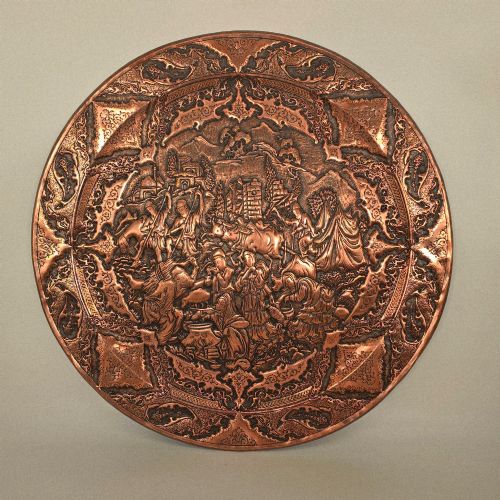
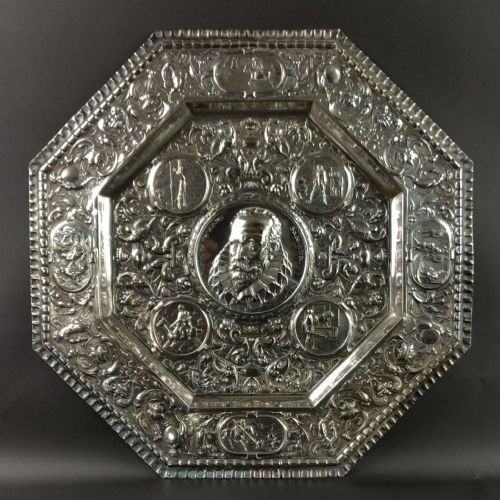
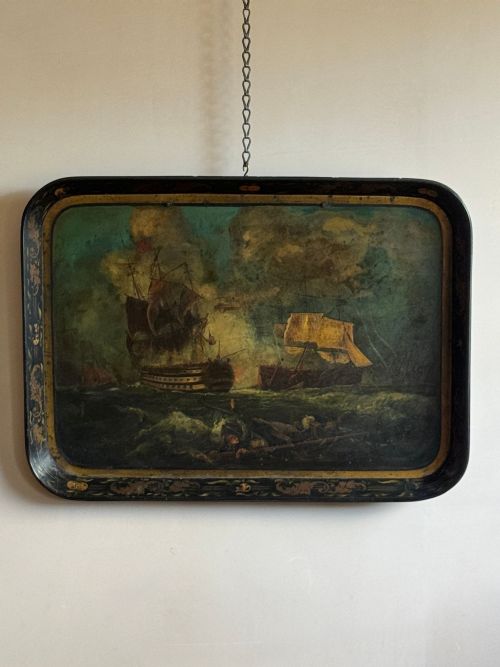
Metalworking techniques include repoussé and silver plating on bronze or copper, where artisans hammered the metal from the reverse side to form high-relief portraits and mythological scenes. Papier-mâché trays required layered paper pulp pressed in moulds, dried, and finished with deep japanned lacquers.
Ancient Greek deities rub shoulders with literary heroes on these walls, as Neptune and Miguel de Cervantes watch over the room.
What varies in quality
The ambition and execution of the pictorial subject matter dictate the standing of a piece, separating standard decorative wares from exceptional artistic achievements. Hand-painted porcelain depicting detailed historical scenes or finely wrought cloisonné enamel with complex dragon motifs represent the upper echelon of the craft.
The precision of the secondary materials and finishing touches marks the difference in grade. Superior items employ heavy bronze bases, intricate silver inlay, or thick gold leaf highlights, whereas simpler examples rely on standard brass or basic printed transfers.
The depth of relief in metalwork and the clarity of the firing in ceramics determine overall visual success. Crisp hammerwork in repoussé plaques and smooth, evenly vitrified enamel surfaces indicate superior workshop output.
Elkington and Co·John Ridgway·Copeland Pottery
The 19th Century Wall Platter Glossary
- Charger
- A large decorative plate intended for display on a wall or sideboard rather than practical table service. These substantial vessels provide a wide canvas for intricate painting or metal relief.
- Repoussé
- A metalworking technique where an artisan hammers a sheet of copper, brass, or bronze from the reverse side to create a raised design on the front. This method gives portrait plaques and shields their three-dimensional depth.
- Cloisonne
- An enamelwork method involving soldered metal wires that form compartments, known as cloisons, which are filled with coloured paste. The entire piece is then fired and polished to a smooth finish.
- Imari
- A style of Japanese porcelain featuring distinctive underglaze blue and contrasting iron-red and gold overglaze decorations. These vibrant patterns were widely exported to Europe during the period.
- Japanned
- A European imitation of East Asian lacquerwork achieved through the application of layered varnishes and dark finishes on materials like papier-mâché. This technique produced glossy, durable surfaces for trays and decorative objects.
19th Century Wall Platter: Frequently Asked Questions
How were these large wall platters originally displayed?
Many of these large pieces were designed with integrated foot rings or mounting holes intended for secure hanging on principal room walls. Others rested on heavy wooden stands placed upon sideboards and buffets to showcase intricate enamel or painted surfaces.
In domestic interiors, collectors utilised these expansive chargers to introduce colour, texture, and narrative art into dining rooms and grand hallways. Their considerable diameter ensured they commanded visual attention from across the room.
What is the difference between an Imari charger and a cloisonne charger?
An Imari charger is made from ceramic or porcelain, decorated with rich cobalt blue, iron-red, and gold pigments fired within a kiln. A cloisonné charger utilises metal wires applied to a solid base to create cells filled with vitreous enamel paste.
While both styles frequently emerged from Japanese workshops during the late period, their physical composition and tactile qualities differ entirely. Imari offers a smooth glazed ceramic finish, whereas cloisonné presents a textured metallic grid of coloured glass.
Can these heavy metal plaques safely hang on modern walls?
Supporting a heavy bronze, copper, or silver-plated plaque requires proper wall anchors and robust picture wire rated for substantial weight. Ensuring the mounting hardware fastens directly into wall studs prevents accidental slips.
Because materials like cast bronze and thick earthenware possess significant heft, professional hanging assessment remains advisable for larger items. Secure placement protects both the wall and the structural integrity of the piece.
How do I identify a Grand Tour Cairo ware charger?
Cairo ware pieces typically feature distinctive silver and copper inlay patterns set against dark brass or bronze surfaces, depicting intricate geometric and calligraphic motifs. These items were acquired by European travellers visiting Egypt during the Victorian era.
The combination of contrasting metal inlays and dense Islamic-revival ornamentation separates these regional souvenir pieces from standard European or Japanese productions. Their construction reflects the cross-cultural exchange of the late nineteenth century.