


Large Church Candlesticks
Large church candlesticks command space with architectural presence, bringing solemn beauty and scale from centuries of ecclesiastical ritual into domestic interiors.
Large Church Candlesticks
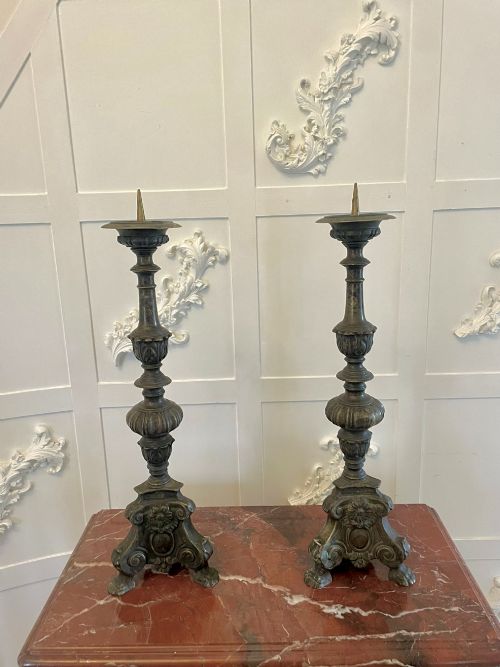
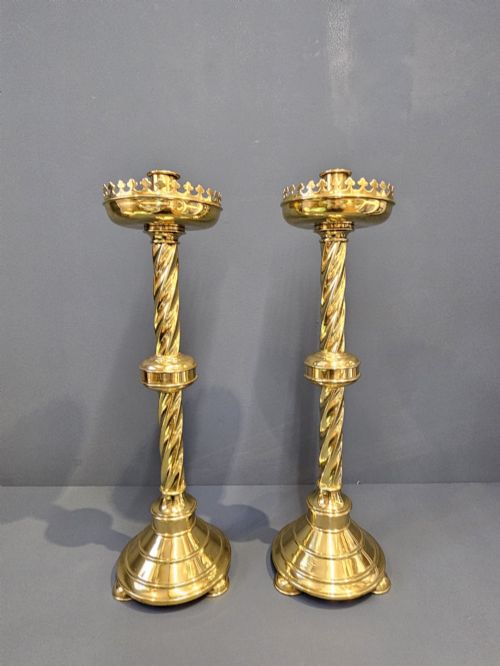
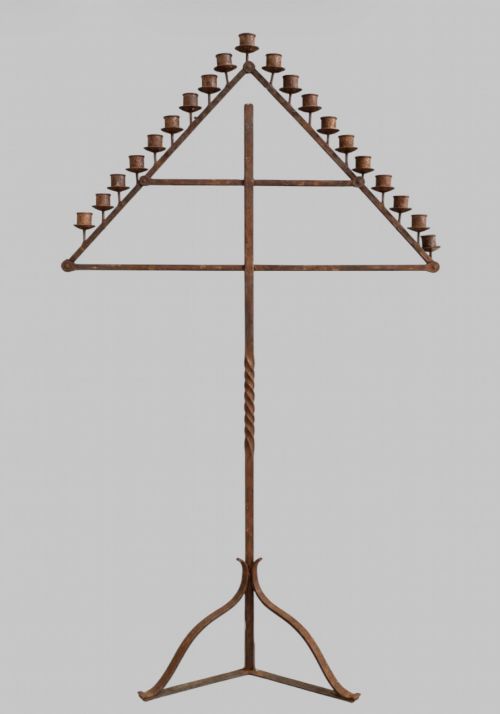
Large church candlesticks encompass tall altar-style candle holders, floor-standing candelabra, and pricket sticks designed for ceremonial lighting in ecclesiastical settings. These substantial objects date across periods from the eighteenth century through the Victorian era and into the early twentieth century.
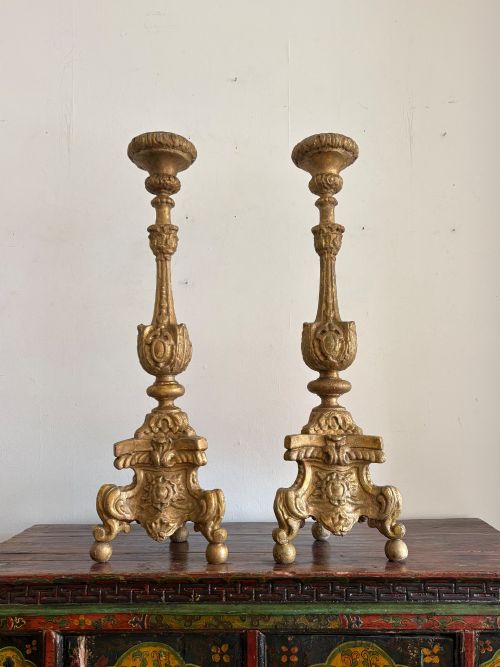
Brass is the predominant metal encountered within these listings, frequently accompanied by wrought iron, bronze, and copper. Wooden forms emerge in carved wood, giltwood, and silvered finishes reflecting styles such as Gothic Revival, Italian Baroque, and the Amsterdam School.
Materials and construction
Metal pieces utilise heavy brass castings, forged wrought iron, and bronze, often incorporating pricket spikes designed to secure large altar candles directly onto the drip pan. Workers built wooden examples from carved timber finished with gesso, applied gold leaf, silver leaf, or polychrome paint.
Construction relies on structural mass to support considerable height without toppling, utilising graduated columns, heavy weighted bases, and robust architectural joints suited to holding candles in large public spaces.
Several heavy metal candlesticks doubled as Masonic lodge furniture, proving that Freemasons took their lighting very seriously indeed.
Quality and proportion
Quality rests in the crispness of the casting detail, the depth of the hand-carving on wooden altar pieces, and the integrity of the original surface patination. Superior examples maintain balanced proportions across tall columns without modern replacement parts compromising the structure.
The distinction between standard ecclesiastical utility items and exceptional decorative pieces lies in ornamental elaboration, such as Corinthian column capitals, heavy gauge metalwork, and intact period gilding or silvering.
The Large Church Candlesticks Glossary
- Pricket
- A sharp metal spike on top of a candlestick designed to impale and hold a candle secure. This spike distinguishes altar sticks from standard domestic socket holders.
- Giltwood
- Timber that has been coated with a thin layer of gold leaf. This finish appears frequently on baroque and altar-style candlesticks.
- Altar Candlestick
- A tall candle holder placed upon or near an altar during religious services. These pieces often feature elevated proportions and heavy bases.
- Torchere
- A tall stand or candlestick originally intended to carry a torch or large candle. They function as architectural statement pieces in larger rooms.
- Amsterdam School
- An early twentieth-century architectural and design movement known for expressive forms and rich texturing in metalwork. Pieces from this school display distinct modernist influences.
Large Church Candlesticks: Frequently Asked Questions
How were large church candlesticks originally used?
These tall objects stood upon altars or directly on stone floors to illuminate large ecclesiastical spaces during services and ceremonies. Their significant height ensured light reached across wide chancels and congregations.
Over time, many of these ecclesiastical items transitioned into domestic interiors where they served as dramatic focal points or architectural floor stands.
What is the difference between a pricket and a socket candlestick?
A pricket candlestick uses a sharp metal spike protruding upward to hold candles in place, requiring candles with a hollow base or pierced bottom. Socket candlesticks instead feature a cup or tube that surrounds the base of the candle.
Most traditional church candlesticks utilise the pricket design because it safely accommodated heavy, wide altar candles used in religious rituals.
How do I date an antique church candlestick?
Dating relies on examining the material composition, manufacturing techniques, and stylistic markers such as Gothic Revival tracery or Baroque curves. Brass components often show casting seams and wear patterns characteristic of nineteenth-century production methods.
Wooden examples reveal their age through the composition of the underlying gesso layers, tool marks from carving, and the natural oxidation of applied leaf finishes.
Where should I place a large church candlestick at home?
These tall pieces suit empty corners, beside large fireplaces, or flanking heavy pieces of furniture where their height provides vertical balance. Floor-standing models require stable placement away from heavy household traffic.
Table-sized altar sticks work well on robust sideboards or console tables where their elevated proportions can be viewed without obstruction.