
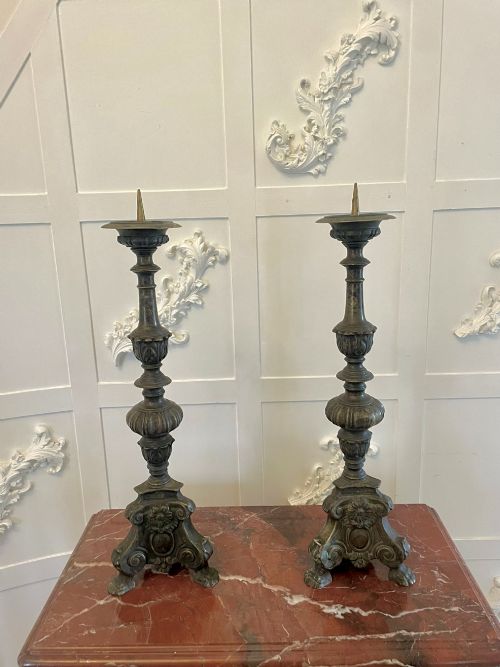
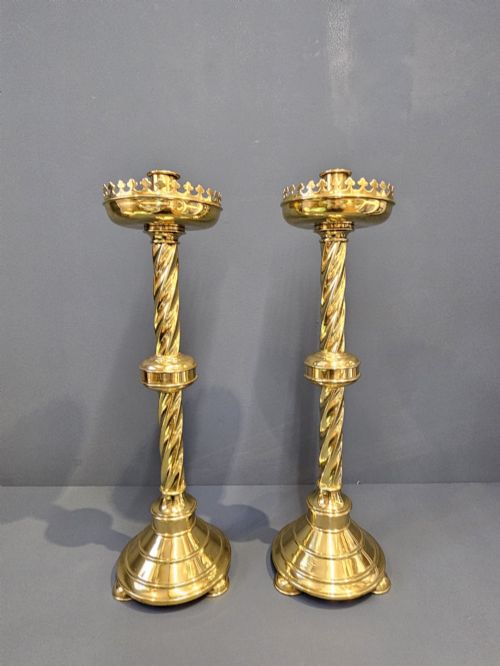
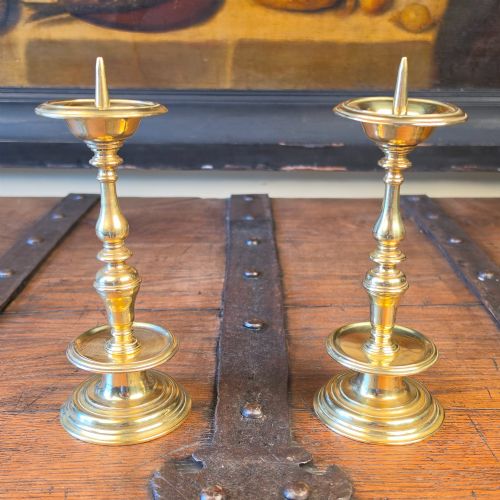
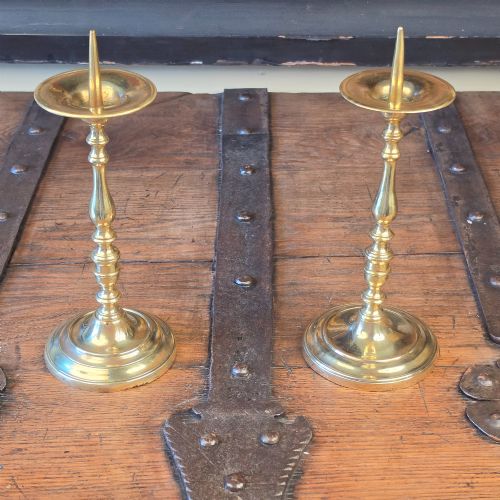



Church Pricket Candlestick Pair
A church pricket candlestick pair provides the altar or hallway with vertical presence, holding candles on sharp iron spikes.
Church Pricket Candlestick Pair
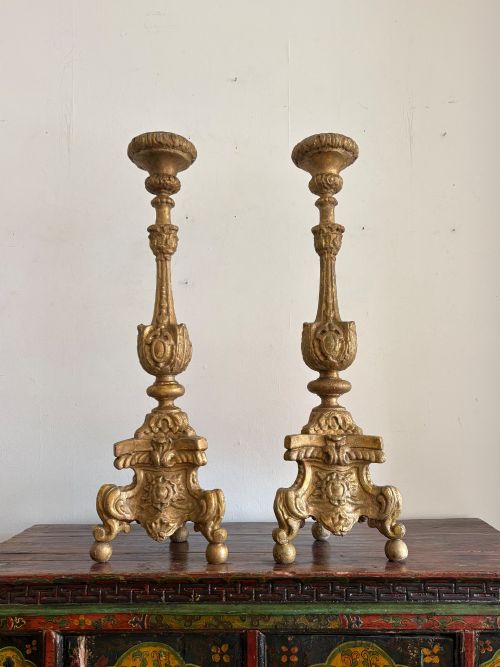
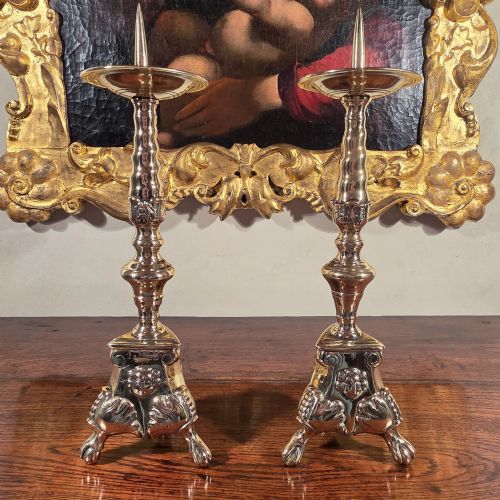
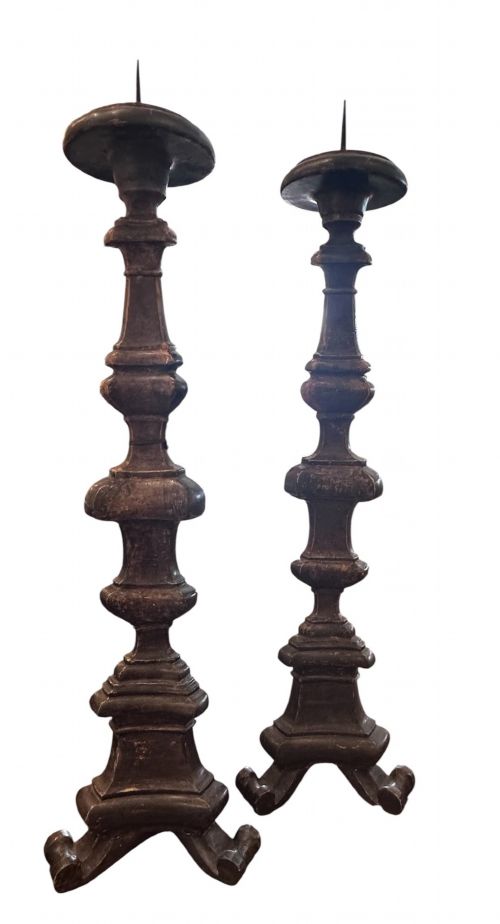
A church pricket candlestick pair consists of matched liturgical lights designed to hold taper candles directly onto a central metal spike rather than inside a socket. These items appear primarily as floor candlesticks and smaller altar variants originating from European workshops across the seventeenth, eighteenth, and nineteenth centuries.
The selections encountered here span styles from Baroque and Gothic Revival to Amsterdam School and French Chateau aesthetics. Buyers will frequently discover brass and carved wood versions reflecting ecclesiastical traditions from Italy, France, Flanders, and Britain.
Materials and construction
Foundry workers cast brass and bronze components into heavy, multi-tiered bases and stems, sometimes combining wrought iron for structural support. These metal forms rely on turned and chased detailing to achieve their decorative profiles.
Woodcarvers shaped timber bases using gesso, paint, giltwood, and silver leaf finishes to simulate solid precious metals. Such surfaces often show the layering of historical decorative treatments applied over carved wooden cores.
Listings feature materials including brass, carved wood, bronze, gesso, wrought iron, giltwood, silver leaf, and paint.
Distinctions in craftsmanship
Superior examples demonstrate crisp chasing on metal casts and deep, articulate hand-carving on wooden bases rather than shallow moulding. The weight and balance of the piece indicate the robustness of the original foundry work.
The integrity of surface finishes, from preserved gilding to original silver leaf and mecca, separates well-maintained survivals from heavily altered or stripped items. Proportion and scale govern the visual impact of taller altar pairs.
The Church Pricket Candlestick Pair Glossary
- Pricket
- The metal spike on top of a candlestick that impels the base of a candle to hold it upright. This method predates the common socket candlestick.
- Altar candlestick
- A tall candlestick designed specifically for placement on or near a church altar. These pieces often feature substantial bases to support impressive heights.
- Giltwood
- Timber that has been coated with a thin layer of gold leaf. This technique creates the appearance of solid gold while utilising a lighter wooden substrate.
- Mecca
- A transparent yellow-gold varnish applied over silver leaf to imitate gold. It provides a warm, aged tone to carved wooden ecclesiastical objects.
- Gothic Revival
- An architectural and decorative style drawing on medieval forms. The aesthetic utilises pointed arches, heavy tracery, and solemn proportions.
Church Pricket Candlestick Pair: Frequently Asked Questions
How do I clean a brass pricket pair?
Dust the metal gently with a dry cloth to preserve the historical surface oxidation. Avoid chemical polishes that strip away age and character.
For wooden or gilt surfaces, use only a soft brush to remove debris without disturbing the delicate leaf or paint layers.
What is the pricket spike for?
The spike firmly impales the bottom of a large candle to keep it steady during liturgical services. This design allows the candle to burn down completely without needing a socket.
Candles prepared for prickets typically have a small pre-drilled indentation at the base to fit over the metal point.
How do I date an antique pair?
Examine the casting seams on brass or the tool marks left on carved wood by historical artisans. Joinery methods and wear patterns around the base offer clues to the period.
Stylistic markers such as Baroque curves or Gothic Revival arches also align the pieces with specific centuries of production.
Where should I place large candlesticks?
Floor candlesticks suit corners of reception rooms or flanking architectural fireplaces. Altar candlesticks sit well on sideboards, mantelpieces, or dedicated display surfaces.
Ensure the surface supports the considerable weight of heavy brass or solid wood constructions.