



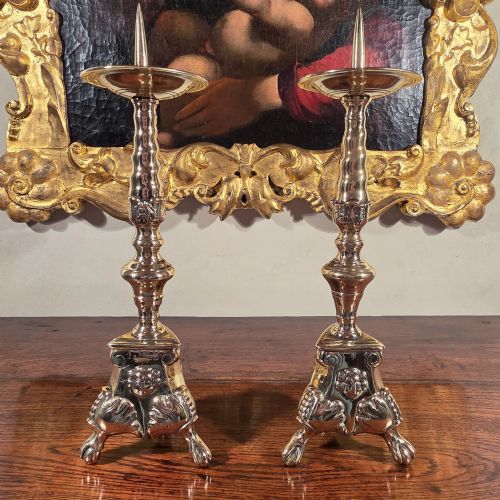


Church Brass Candle Holders
Church brass candle holders bring centuries of ecclesiastical solemnity into domestic interiors through robust metalwork and architectural forms.
Church Brass Candle Holders
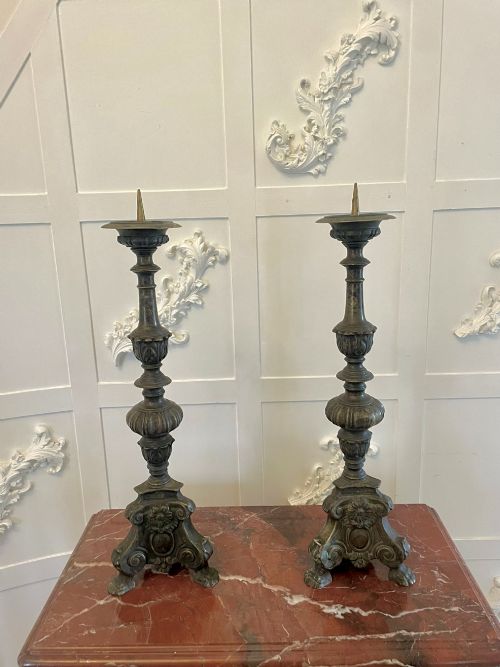
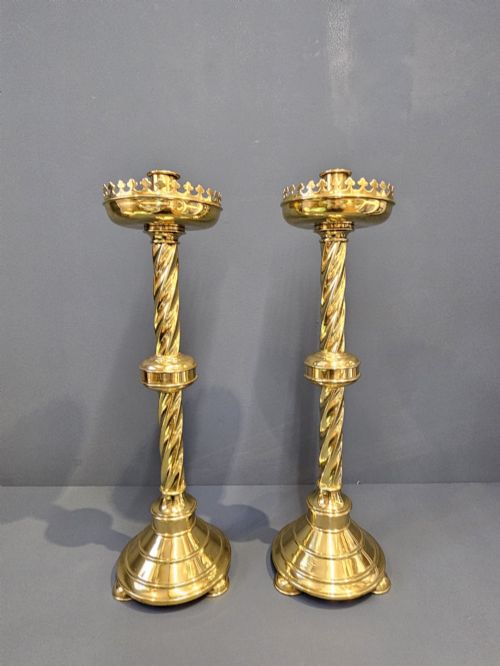
Church brass candle holders encompass candlesticks, pricket stands and multi-branch candelabra designed for altars and chancels. These pieces arrive principally from the nineteenth century, carrying the heavy ornamental vocabulary of the Victorian era.
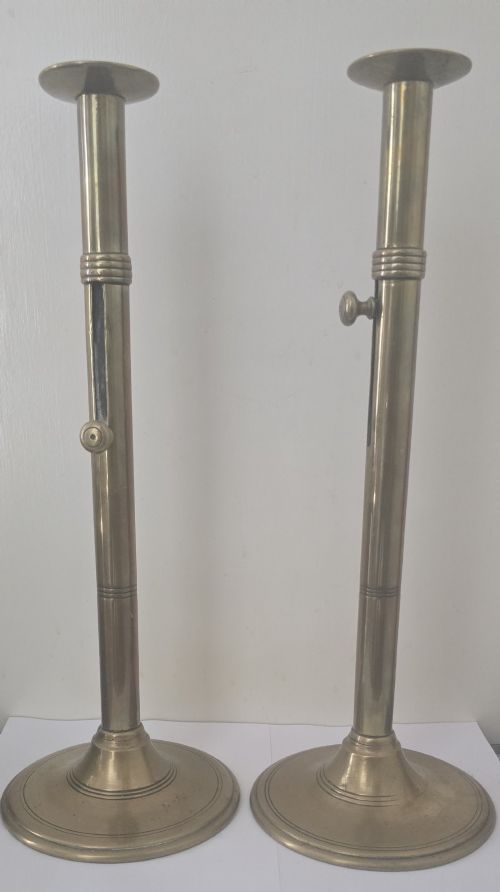
The dominant aesthetic draws heavily upon Gothic Revival designs, featuring pointed arches, tracery and column formations adapted from medieval stone architecture. Buyers frequently encounter tall pairs intended for church altars, alongside occasional floor-standing models and smaller domestic adaptations.
Originating largely from British and continental ecclesiastical workshops, these items utilise durable alloys designed to withstand decades of use in religious services. Their conversion into domestic table lamps or their continued service as candle-burning centerpieces reflects their enduring structural integrity.
Materials and Construction
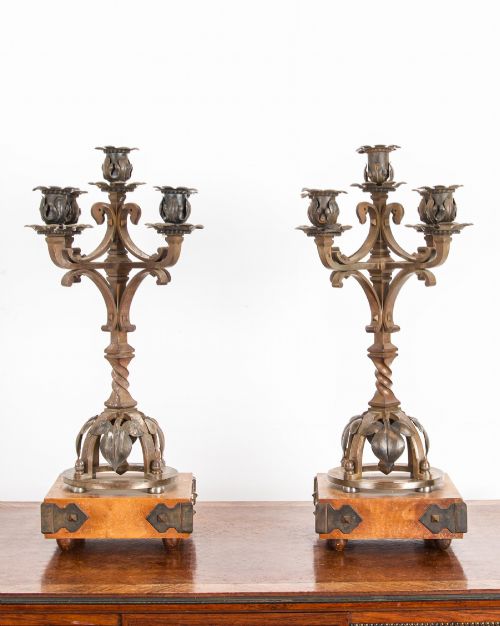
Foundry workers utilised cast brass, bronze and occasionally gilt brass or ormolu to achieve substantial weight and complex ornamentation. Components were frequently cast in separate sections - bases, stems and drip pans - then threaded or bolted together to form towering structures.
Wrought iron and wood appear as secondary materials in specific regional styles, providing stability for oversized floor standards and Amsterdam School variations. Surface treatments range from polished metallic finishes to applied gilding and painted highlights on decorative columns.
Masonic lodge candlesticks occasionally slip into the church collection, proving that Freemasons and bishops shared a distinct fondness for towering brass columns.
Distinctions in Execution
Quality rests in the crispness of the casting and the architectural precision of decorative details such as Corinthian capitals or applied ecclesiastical motifs. Superior examples display deep, deliberate chasing and heavy gauge metal that resists bending under the weight of large candles.
Proportion and scale dictate the visual success of the piece, with finer items maintaining strict symmetry and balanced weighting across multi-branch arms or wide drip pans. Lesser pieces rely on thin-walled casting and superficial surface decoration that lacks structural depth.
T Thomason & Co
The Church Brass Candle Holders Glossary
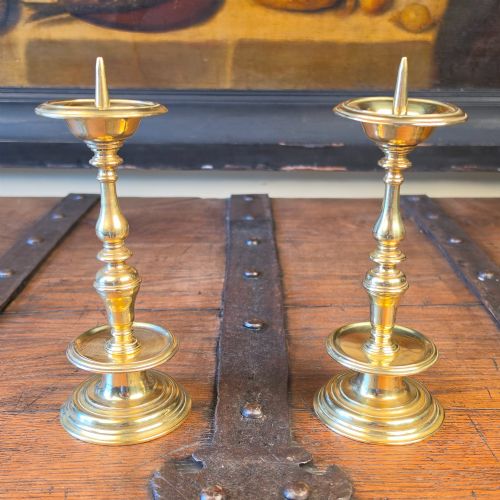
- Pricket
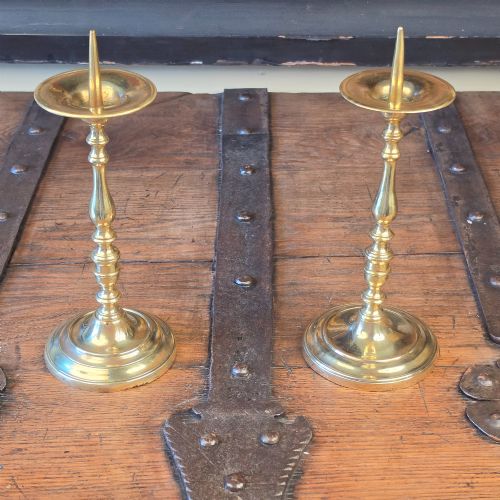
- A sharp metal spike upon which a large candle is impaled, commonly found on altar candlesticks rather than socket fittings.
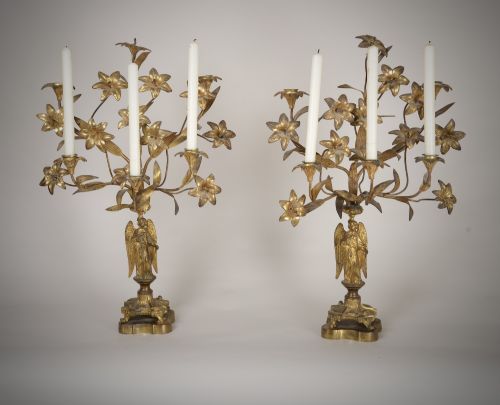
- Candelabra
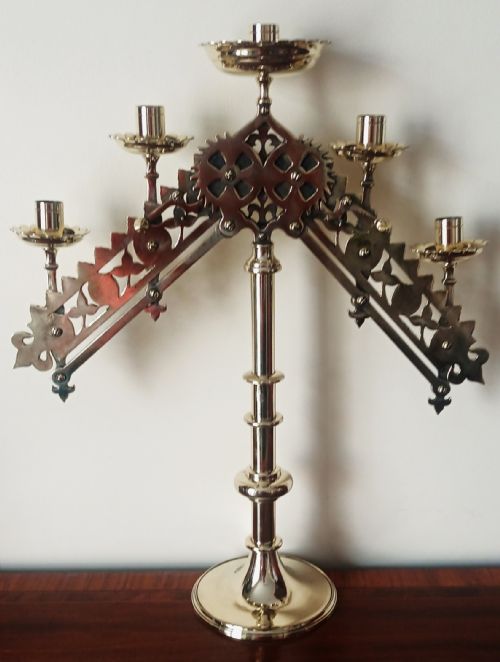
- A branched candlestick holding multiple candles on separate arms, often articulated in antique ecclesiastical examples.
- Gothic Revival
- An architectural and decorative style drawing inspiration from medieval forms, prevalent across nineteenth-century church metalwork.
- Ormolu
- Finely ground high-carat gold applied to a bronze base metal, creating a rich gilded surface finish on select altar pieces.
Church Brass Candle Holders: Frequently Asked Questions
What is a pricket candlestick?
A pricket candlestick uses an upright metal spike to secure the candle directly onto the top plate, differing from standard socket holders.
This design accommodated large wax candles traditionally burned in religious ceremonies, allowing melted wax to pool on the surrounding drip pan.
How do I clean church brass?
Maintenance requires gentle dusting with a soft cloth to preserve the natural aged patina developed over decades of use.
Aggressive metal polishes strip away historical character and should be avoided in favour of mild soapy water for stubborn residue.
Are these suitable for modern homes?
Their substantial height and architectural presence make them effective statement pieces for mantelpieces, sideboards and dining tables.
Certain examples feature professional electrical conversions into table lamps, blending historical metalwork with contemporary lighting utility.
How do I identify Gothic Revival style?
Gothic Revival metalwork incorporates medieval architectural motifs such as pointed arches, quatrefoils and heavily decorated column shafts.
These ecclesiastical pieces reflect nineteenth-century revivals of medieval design principles applied to altar furniture.