



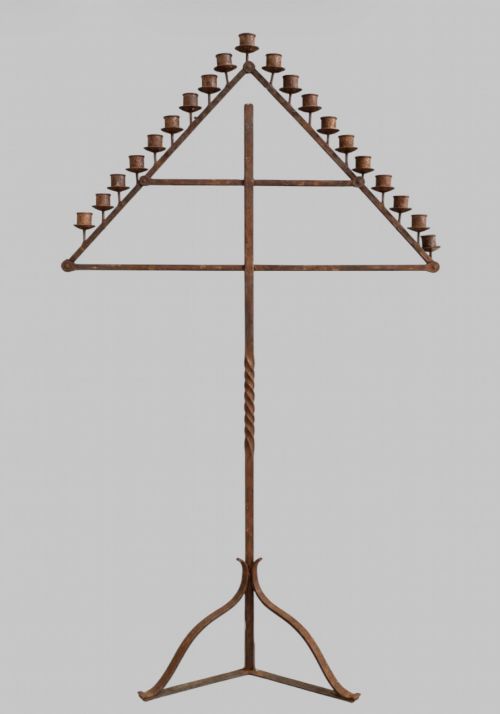


Gothic Church Candle Stands
Gothic church candle stands are heavy, architectural pieces of ecclesiastical metalwork that anchor a room with serious presence.
Gothic Church Candle Stands
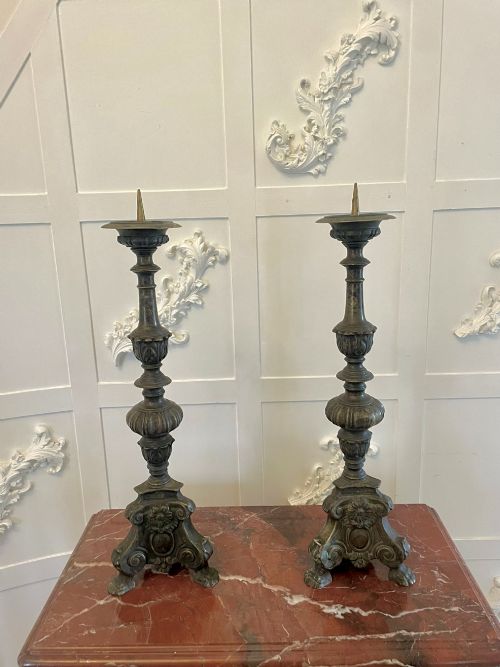
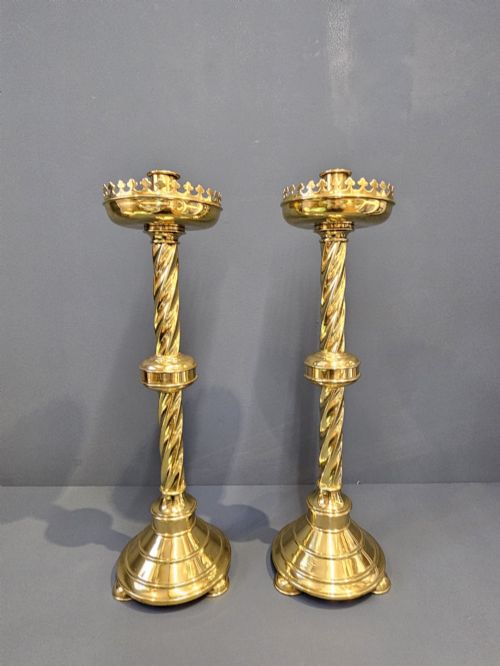
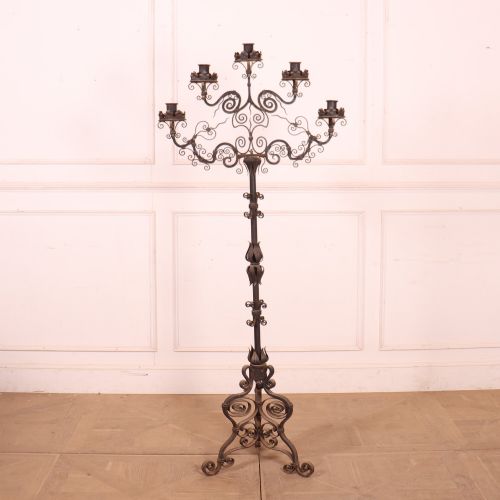
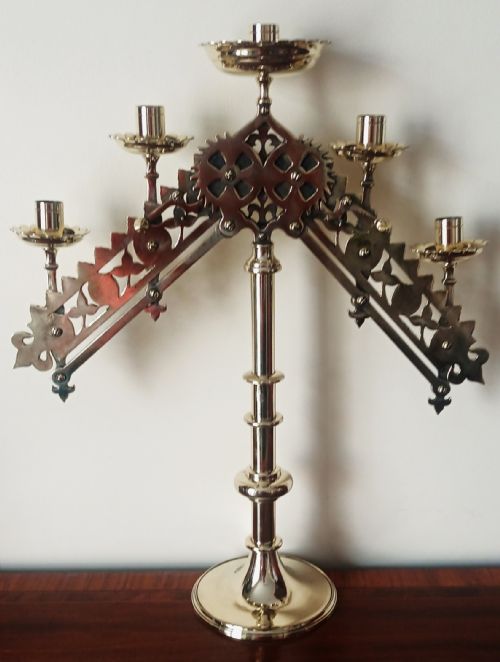
When you search for gothic church candle stands, you encounter heavy altar furniture and liturgical fittings designed for ecclesiastical spaces. These objects include towering floor-standing floor candelabras, tall pricket candlesticks, and articulated branch candelabras intended for ceremonial illumination.
The versions most frequently met on this page date from the nineteenth century, particularly the Victorian period and the Gothic Revival movement, alongside pieces stretching back to the eighteenth century or forward into nineteen thirty. You will find matched pairs and single monumental holders rather than delicate domestic items.
Materials span heavy cast brass, wrought iron, bronze, copper, and mixed metals, often incorporating fabric elements or multi-tier prickets. Their forms range from simple shaft candlesticks to architectural floor candelabras and torchères reflecting ecclesiastical design.
How they were made
Metalworking dominates these pieces, utilising heavy casting, forging, and fabrication techniques suited to structural longevity. Brass and bronze components are frequently cast and turned, while iron elements are hand-wrought or cast to achieve architectural stability.
Makers employed multi-part construction to build height and weight into floor stands and altar sticks, joining weighted bases with substantial shafts and pricket spikes. Articulated branches on candelabras required precise pivoting joints and robust mounting brackets to support multiple candles safely.
Listings span the eighteenth to the twentieth centuries, with a strong concentration of nineteenth-century Victorian Gothic Revival brass and ironwork.
What varies in quality
Substantial weight and material density separate solid architectural castings from lighter domestic adaptations. Pieces featuring integrated prickets, heavy gauge brass, or hand-forged wrought iron structural members occupy the upper tier of execution.
Proportion and decorative restraint dictate the aesthetic success of the design. Examples displaying crisp gothic tracery, balanced articulation, and untouched original metal surfaces outrank plainer or overly restored utilitarian alternatives.
T Thomason & Co
The Gothic Church Candle Stands Glossary
- Pricket
- A sharp metal spike on a candlestick designed to impale the base of a candle. This form is standard on altar candlesticks and floor candelabras.
- Candelabra
- A branched candlestick holding multiple candles simultaneously. These can be table-sized or arranged on articulated arms.
- Torchere
- A tall stand or candlestick designed to carry a torch or large candle. They often feature elevated platforms or heavy bases for floor placement.
- Gothic Revival
- An architectural and decorative style popular in the nineteenth century that revived medieval forms, pointed arches, and ecclesiastical motifs.
- Amsterdam School
- An early twentieth-century architectural and design movement known for expressive forms and rich texturing in metals.
Gothic Church Candle Stands: Frequently Asked Questions
How do I use a pricket candlestick?
A pricket candlestick requires candles with a small hollow base or a pierced disc to sit securely upon the upward-facing metal spike.
Most church candles are manufactured specifically for this mounting method, holding the wax steady above the drip pan.
Where should I place a floor-standing candle holder?
Floor-standing candle holders and candelabras demand open space where their height and architectural silhouette can anchor a corner or flank a fireplace.
Because they originate from large ecclesiastical interiors, they suit high-ceilinged rooms and substantial hallways.
How can I tell nineteenth-century brass from later copies?
Nineteenth-century brass displays significant heft, natural patination, and evidence of sand-casting in its components rather than modern machine tooling.
Inspect the joints and casting seams to confirm period construction methods.
What is the difference between a candlestick and an altar stand?
Altar stands generally possess greater height, heavier weighted bases, and pricket tops designed for ceremonial church use.
Domestic candlesticks are usually smaller and more portable.