
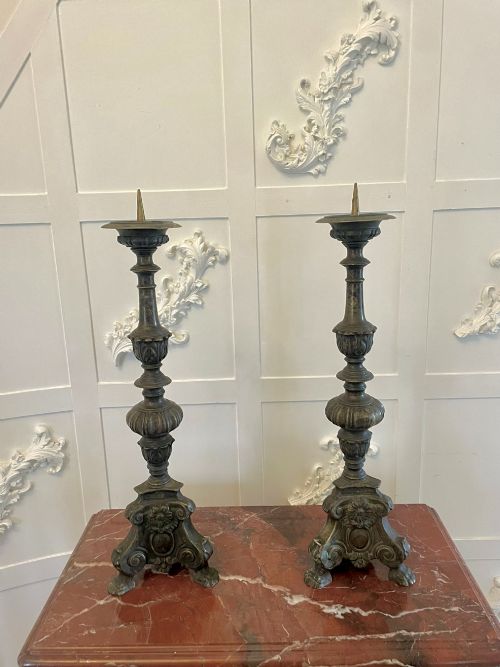
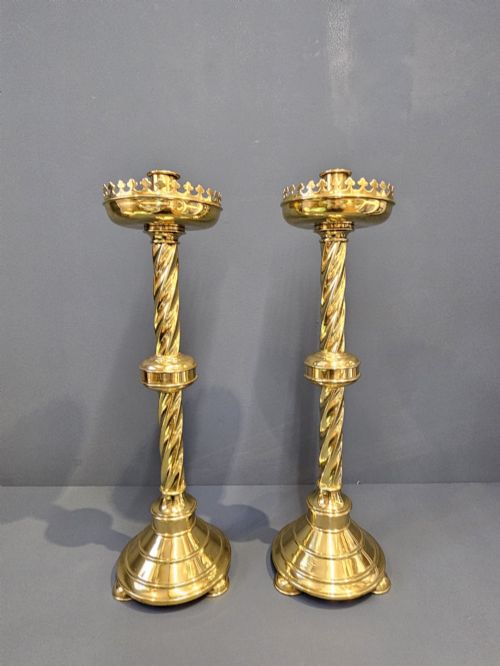
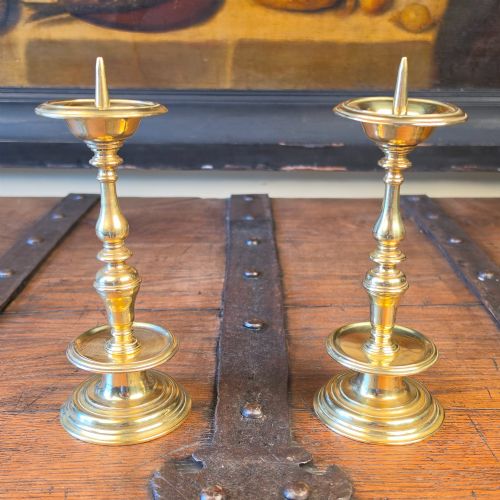
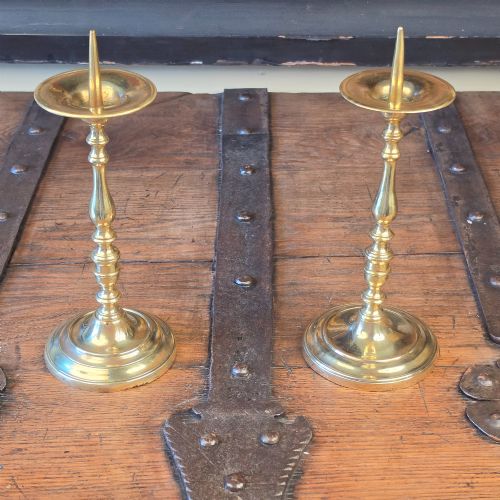
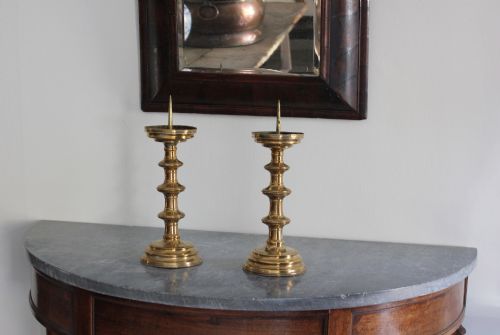

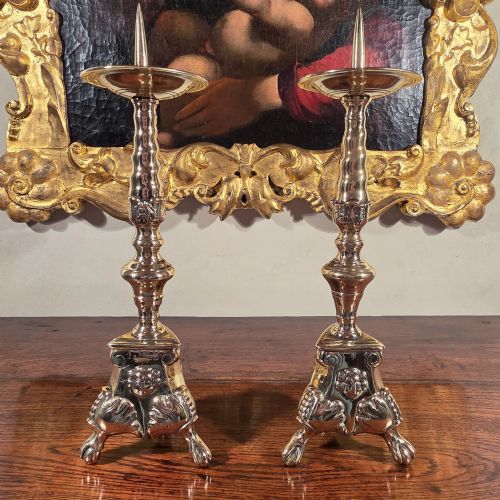


Pair of Brass Prickets
These pair of brass prickets bring altar lighting and heavy metalwork into domestic rooms, offering spike-top support for large candles.
Pair of Brass Prickets
When you search for pair of brass prickets, you look at altar and church candlesticks fitted with a central spike rather than a socket to hold the candle. The examples you meet on this page span from the sixteenth century up through the Victorian era and into twentieth-century Dutch designs.
Most entries here belong to the nineteenth century, often reflecting Gothic Revival tastes or church furnishings. Alongside these, seventeenth-century styles and Amsterdam School pieces appear in brass, bronze, and wrought iron.
How they were made
The pieces rely primarily on cast and wrought brass, occasionally combined with bronze, copper, or iron elements. Foundry casting forms the heavy bases and stems, while hand-wrought details shape components like iron supports or patinated metal surfaces.
Gilt finishes and patinated treatments alter the raw metal appearance, matching the ecclesiastical or secular demands of their period of origin.
Listings range from sixteenth-century artefacts to twentieth-century Amsterdam School designs, utilising brass, bronze, copper, and wrought iron.
What varies in quality
The distinction between ordinary and superior examples lies in the weight of the casting and the crispness of the decorative enrichment. Heavier metalwork and distinct period detailing elevate certain items above standard production.
Design ambition also separates standard church metalwork from artistic departures like Amsterdam School or signed Dutch school pieces. The integrity of the original pricket spike and the balance of the base determine the overall standard.
The Pair of Brass Prickets Glossary
- Pricket
- A sharp metal spike on a candlestick designed to impale the base of a candle and hold it upright. This form predominates in church and altar lighting.
- Gothic Revival
- An architectural and decorative style drawing on medieval forms, frequently seen in Victorian church metalwork. It brings pointed arches and ecclesiastical ornamentation to domestic items.
- Amsterdam School
- A twentieth-century architectural and design movement known for expressive brickwork and metal forms. In these listings, it yields distinctive brass and iron combinations.
- Patinated Metal
- Metal surface altered by age, chemical treatment, or wear to produce a subdued finish. This process softens the bright glare of raw brass.
Pair of Brass Prickets: Frequently Asked Questions
What is a pricket candlestick?
A pricket candlestick uses a vertical spike at the top to secure the candle instead of a hollow socket. This design originates from early church altars where large wax candles sat directly on the point.
Today, these pieces serve as decorative objects or functional candleholders that accommodate pillar candles with drilled bases.
How do I date an antique brass pricket?
Dating relies on stylistic clues such as Gothic Revival motifs, seventeenth-century revival forms, or twentieth-century Amsterdam School construction. Material choices like wrought iron combined with brass also point toward specific decades.
Comparing the casting weight, patination, and manufacturing techniques helps place the object within its historical period.
Where were these candlesticks used?
Most of these heavy metal pieces originated in churches, chapels, and ecclesiastical settings for altar illumination. Their robust construction and large scale suited ceremonial spaces.
Later periods saw these forms adapted for domestic interiors seeking a dramatic or historic aesthetic.
How do I clean antique brass?
Antique brass benefits from gentle dusting and minimal interference to preserve its historic surface and dark patination. Aggressive polishing removes the aged character that collectors value.
Consult a specialist before attempting any chemical cleaning or restoration on patinated or gilt surfaces.