


Baroque Style Candlesticks
Baroque style candlesticks bring theatrical volume and dynamic movement to a room, trading quiet symmetry for carved drama.
Baroque Style Candlesticks
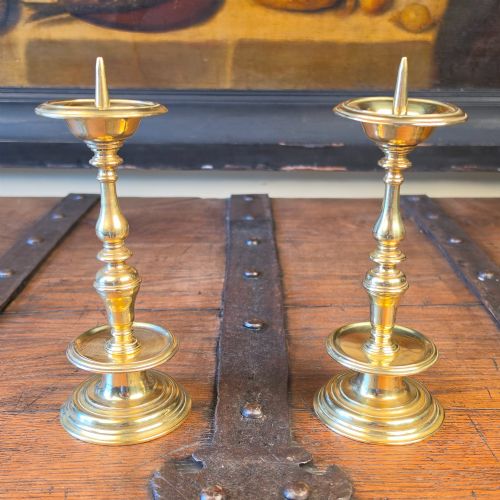
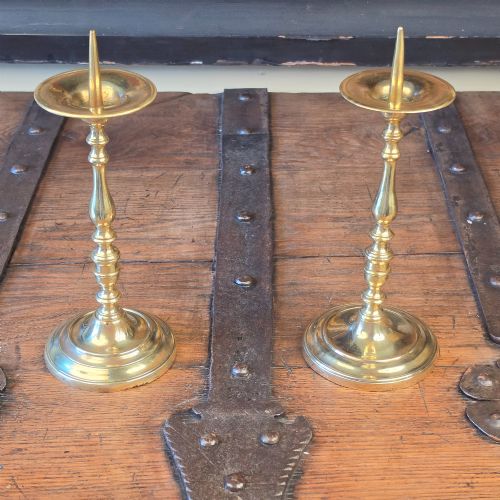
When you search for baroque style candlesticks, you encounter objects built for visual weight, swirling movement and grand presence. The examples here range from small brass pieces to tall floor-standing torcheres and altar-type candle-holders.
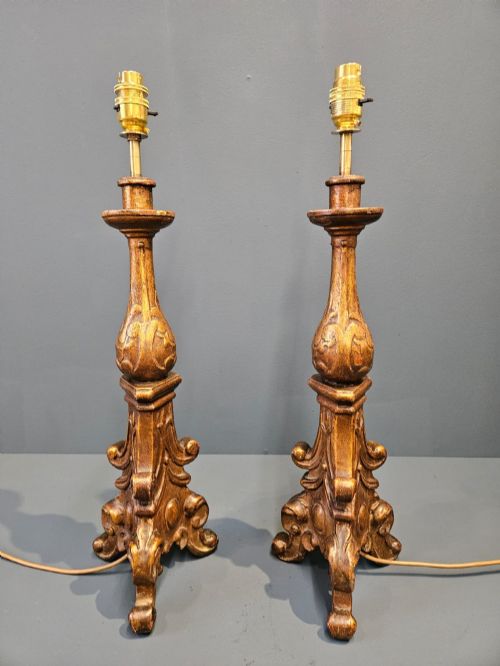
You are most likely to meet carved giltwood and timber pieces originating from Italian workshops, alongside 19th century brass pairs and converted lamp bases. Many items span the 18th and 19th centuries, leaning heavily into revival periods and Italianate forms.
How they were made
Makers shaped these pieces from solid woods such as pine and timber, applying heavy layers of gesso to build up sculptural relief before gilding them with gold or silver leaf. Others utilised polychrome paint finishes or cast heavy brass into elaborate, scrolling shapes.
Carving required deep undercut channels and volutes to catch candlelight, producing strong shadows across the surface. Metal components relied on traditional casting and turning methods to achieve symmetrical socket cups and tiered bases.
Materials span carved wood, gesso, giltwood, polychrome paint, and brass across pieces dating from the 18th century to the 1950s.
What varies in quality
Depth and crispness of the hand carving dictate the visual impact of wooden pieces, where shallow incisions lack the dramatic play of light proper to the design. The integrity of the underlying gesso determines whether the gilded surface retains its sharp edges or softens over time.
Proportion plays a decisive role, separating grand altar-type holders and tall torcheres from domestic table versions. Heavy brass casting thickness and the stability of large timber bases further distinguish ambitious workshop output from standard production.
The Baroque Style Candlesticks Glossary
- Giltwood
- Wood coated with gold leaf or a gold-coloured metallic finish. This surface treatment reflects ambient light and gives the carved details a luminous quality.
- Pricket
- A sharp metal spike on a candlestick designed to skewer and hold a large candle in place. This form often appears on church and altar pieces.
- Torchere
- A tall ornamental stand or candlestick designed to hold a light source high above the floor. These items frequently feature elaborate carved stems and tripod bases.
- Gesso
- A plaster-like mixture applied to wood surfaces as a smooth base for painting or gilding. It allows artisans to carve intricate decorative motifs directly onto the ground.
- Volute
- A spiral, scroll-like ornament characteristic of classical and baroque architecture and decorative arts. It provides dynamic movement to the corners and bases of candlesticks.
Baroque Style Candlesticks: Frequently Asked Questions
How do I use a torchere?
A torchere stands independently on the floor to elevate a light source or display object in a corner or alongside furniture. Many historic examples now serve as converted standard lamps with wired fittings.
Position these tall wooden pieces where their height and carved silhouette can command attention without blocking walkways or competing with wall art.
What is an altar-type candlestick?
Altar-type candlesticks originate from church settings where massive proportions and heavy giltwood decoration were required to be visible from a distance. They feature wide, stable bases to support thick candles safely during long services.
These substantial pieces function well today as focal points on sideboards or large tables due to their impressive scale and dramatic presence.
How do I distinguish 18th century work?
Eighteenth-century pieces typically exhibit deeper, more organic hand carving in pine or timber beneath authentic layered gesso and gilt surfaces. The wear patterns on the wood and gold leaf show genuine age and handling.
Later revival pieces from the Victorian era or the early 20th century often display crisper mechanical uniformity or different underlying material preparation.
Are brass and giltwood cleaned differently?
Brass candlesticks tolerate gentle polishing to maintain their metallic sheen, provided the historical patina is respected. Avoid harsh abrasive cleaners that strip surface character.
Giltwood requires dry dusting only, as moisture and vigorous rubbing will damage the delicate gold leaf and underlying gesso layers.