


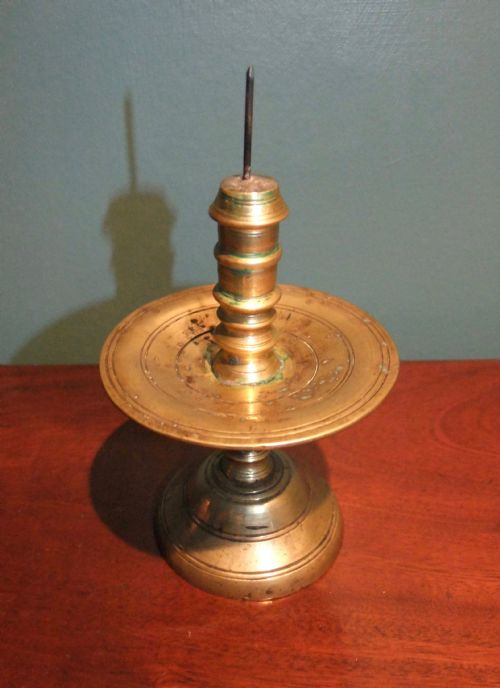

Metal Pricket Candle Holders
Metal pricket candle holders combine architectural verticality with the functional spike required to secure large altar and household tapers.
Metal Pricket Candle Holders
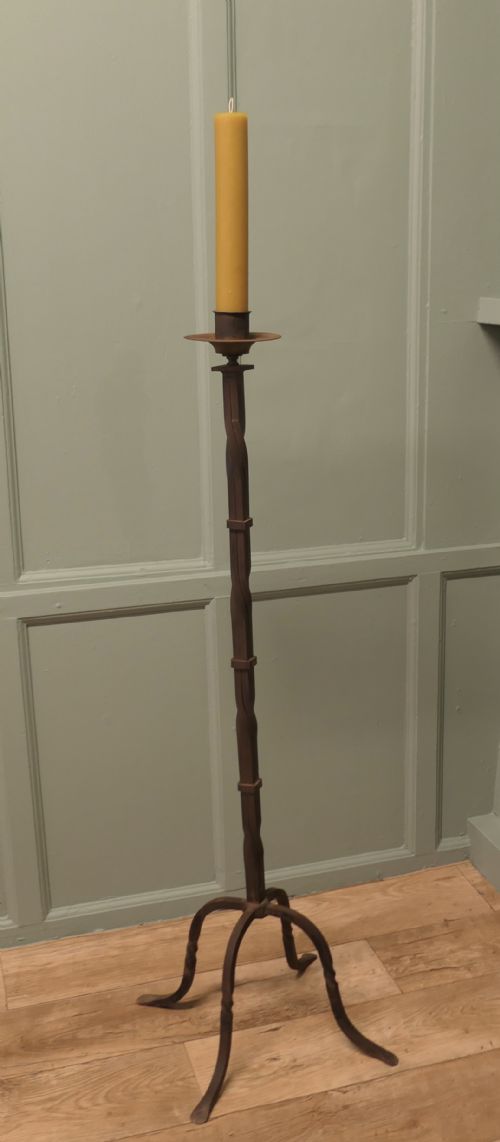
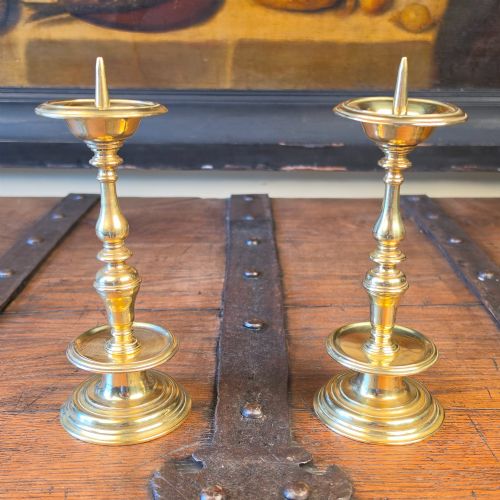
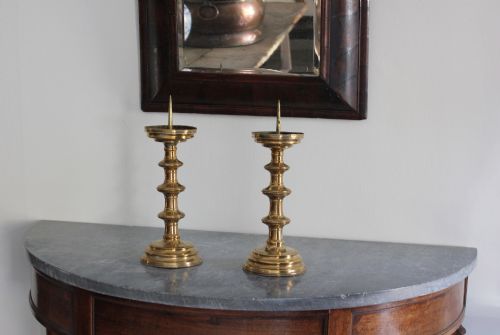
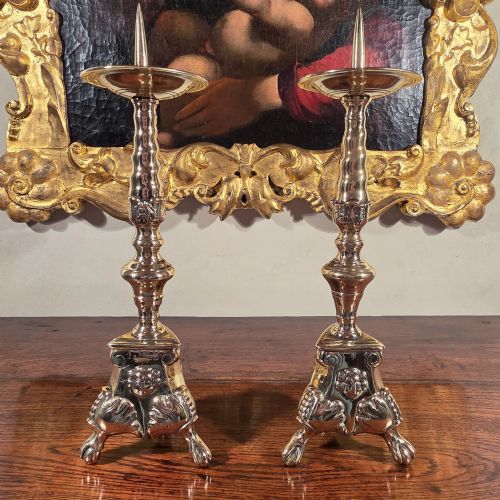
Metal pricket candle holders span domestic and ecclesiastical lighting forms, ranging from modest tabletop sticks to grand floor-standing torcheres. When you search for metal pricket candle holders, you encounter substantial designs featuring a central spiked spike rather than a socket to hold the candle wax in place. The selection here brings together examples spanning centuries of metalworking, from early brass survivals to robust wrought iron standing pieces.
The periods represented stretch from the sixteenth century through to mid-twentieth-century modernist interpretations. Forms include sturdy single sticks, matched pairs, and larger sets originating from British, Dutch, and broader continental workshops. Styles vary from austere Gothic and Baroque revivals to geometric Art Deco creations.
How they were made
Makers shaped these objects primarily from brass and wrought iron, utilising both casting and forging techniques suited to the metal properties. Brass components were typically cast and then turned on a lathe or hand-finished, while iron elements show the hand of the smith through hammered surfaces and visible joins.
Some ambitious compositions incorporate contrasting materials such as hardwood bases alongside turned metal shafts. Surface decoration relies on patination from age, hand-chased details, and structural joinery rather than applied finishes.
Some antique prackets arrive bearing centuries of accumulated candle drippings, providing a tangible geological record of past illuminations.
What varies in quality
Quality in these items rests upon the weight of the metal, the integrity of the original construction, and the preservation of the pricket itself. Substantial thickness in brass castings and clean, purposeful forge work on iron examples separate utilitarian survivals from finer decorative works.
Proportion and balance define the superior pieces, where the diameter of the drip pan or base supports the height of the shaft. Wear patterns should appear honest and consistent with age rather than the result of heavy restoration.
The Metal Pricket Candle Holders Glossary
- Pricket
- The sharp metal spike projecting upwards from the centre of the drip pan to impale and secure a candle. This form predates the common socket candlestick.
- Torchere
- A tall standing candlestick or pedestal designed to support a light source at a high level. These substantial pieces often function as architectural elements within a room.
- Gilt metal
- Base metal treated with a thin layer of gold or gold-coloured wash to simulate solid precious metal. This technique provided decorative opulence at a lower production cost.
- Wrought iron
- Iron beaten and shaped by hand while hot using a blacksmith's anvil and tools. The resulting material displays subtle irregularities unique to manual manufacture.
Metal Pricket Candle Holders: Frequently Asked Questions
How do I secure a candle to a pricket?
You gently press the base of a thick taper or pillar candle directly onto the vertical metal spike until it holds firm. The spike pierces the wax to prevent the candle from wobbling.
Traditional prackets require candles with a flat base wide enough to rest stably inside the surrounding drip pan. Some modern users gently warm the base of the candle before mounting it for a secure fit.
Can I use standard modern candles on these?
Standard slender dinner candles generally do not suit pricket holders because their bases are too narrow and light to balance on the spike. You need wider pillar candles or handmade dipped tapers designed for spike mountings.
Using the correct diameter ensures the candle remains upright and the dripping wax is properly caught by the lower pan.
How do I clean old brass prackets?
You should generally preserve the dark patination and surface character accumulated over centuries rather than attempting to polish the metal to a bright shine. Gentle dusting with a dry cloth is usually sufficient for regular maintenance.
Harsh chemical cleaners strip away historical surfaces and reduce the visual depth that collectors value in antique metalwork.