





Gold Altar Candlesticks
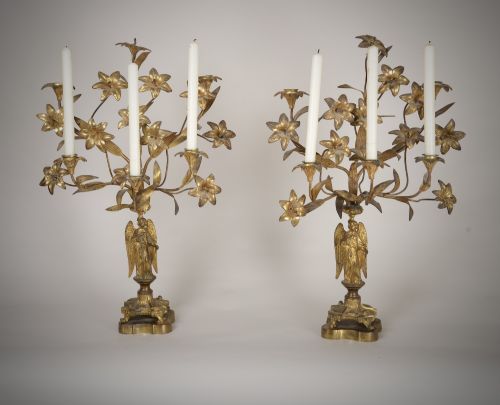
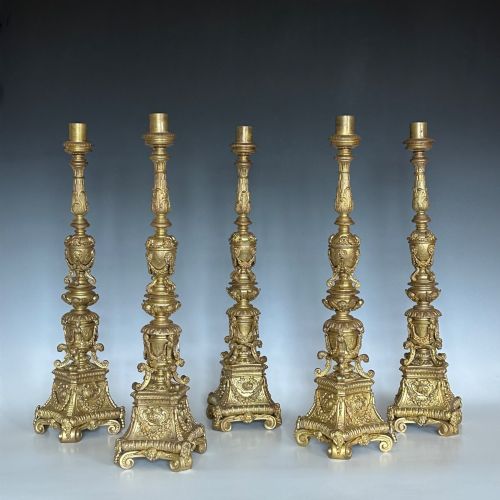
Gold altar candlesticks bring heavy church presence and rich gilding into a room, spanning Baroque to Gothic Revival forms.
Gold Altar Candlesticks
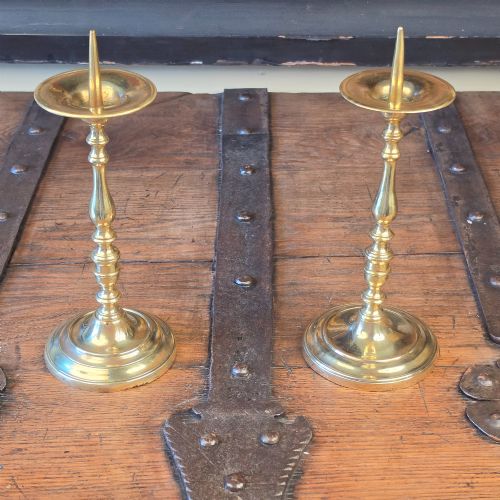
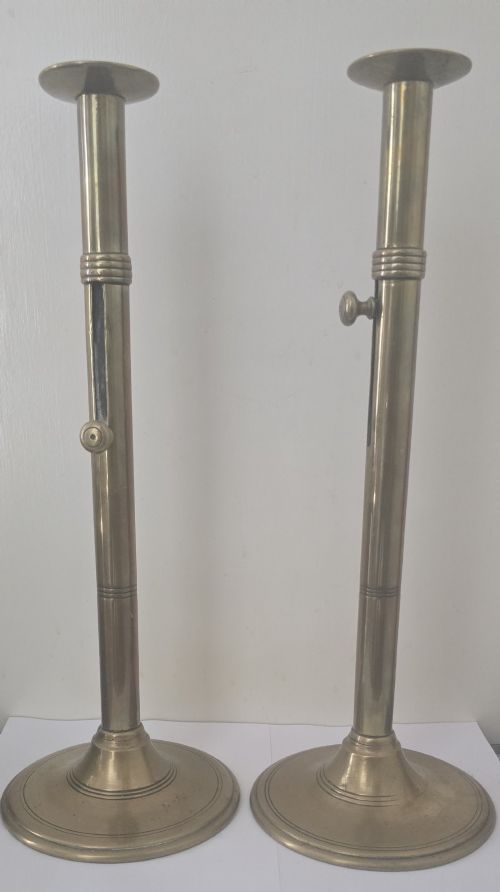
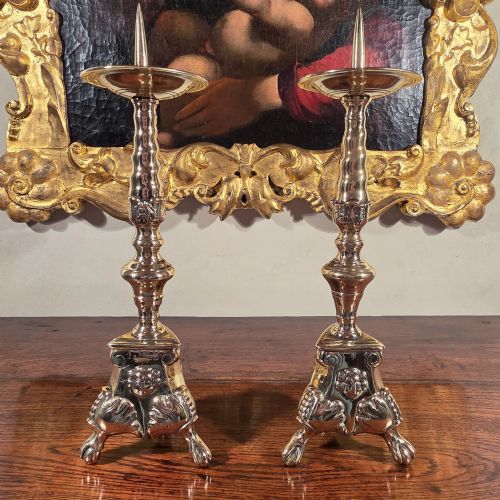
When you search for gold altar candlesticks, you encounter monumental church lighting designed for ritual spaces, including pricket candlesticks with spikes for large candles and standard holders for socket use. These pieces emerge primarily from the eighteenth and nineteenth centuries, reflecting periods of intense revivalism and continental church commissioning.
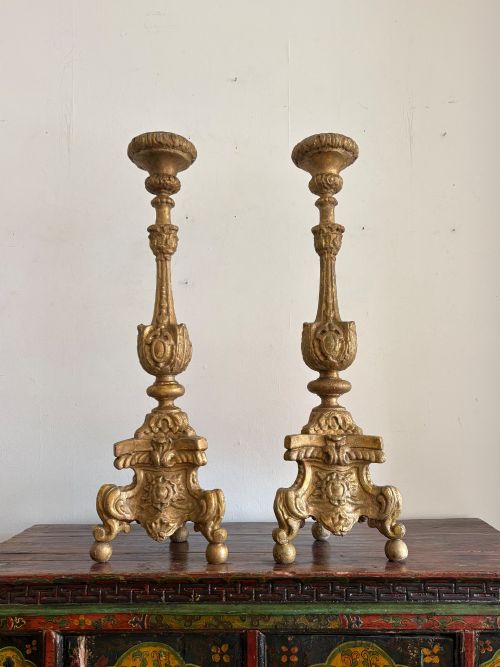
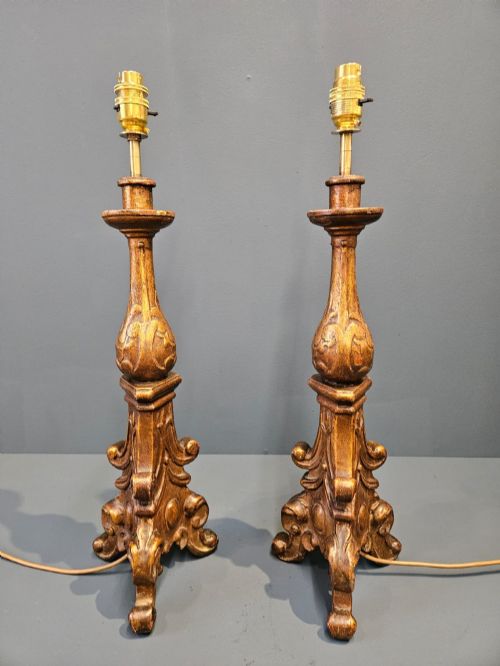
You will frequently meet pairs constructed as tall altar candlesticks, alongside items subsequently converted to table lamps. The physical presence is substantial, with heights often stretching past seventy centimetres to command liturgical spaces or grand domestic interiors.
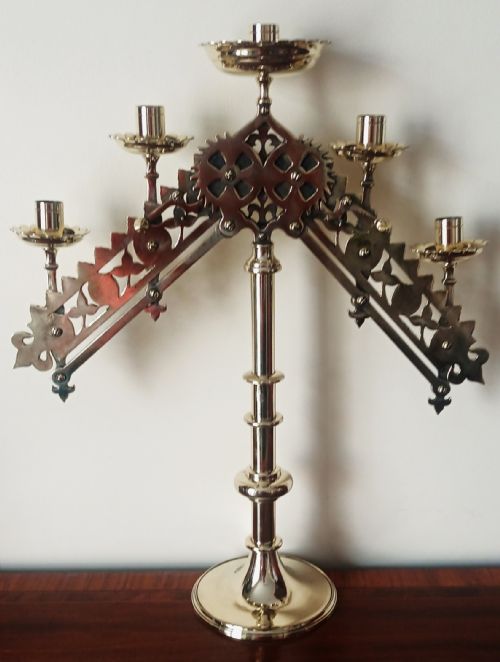
Stylistic origins cluster around Italian, Spanish and French baroque designs, alongside distinct Victorian Gothic Revival interpretations. The forms range from strict architectural columns to heavily carved scrolling foliage.
How they were made
The construction relies heavily on cast brass, gilt bronze, and ormolu for metal components, providing the structural weight necessary for supporting tall church candles. Artisans built wooden cores from timber, applying gesso and gold leaf to achieve the radiant, gilded surfaces characteristic of baroque altar pieces.
Carved giltwood examples demonstrate intricate hand-carving on wood substrates, sealed with gesso before the application of gold leaf or polychrome highlights. Metal pieces utilise traditional casting and turning methods, resulting in heavy, robust forms capable of sustaining articulated arms and side ejectors.
Listings span the eighteenth and nineteenth centuries, featuring materials such as brass, giltwood, gesso, and ormolu in various ecclesiastical forms.
What varies in quality
The distinction between ordinary and superior pieces rests upon the depth of the hand-carving in wood examples and the crispness of the casting in brass and gilt bronze. Heavier metal castings and deeply sculpted wooden acanthus leaves demonstrate superior craftsmanship from their respective periods.
Surface finish preservation defines the upper tier of the range, where original gold leaf, gesso adhesion, and untouched patination remain intact despite centuries of ecclesiastical use.
The Gold Altar Candlesticks Glossary
- Pricket candlestick
- A candlestick featuring a sharp metal spike at the top designed to secure a large candle. This form is common in traditional church settings.
- Giltwood
- Timber that has been coated with a thin layer of gold leaf over a prepared gesso ground. This technique creates a luminous, reflective surface on carved furniture and church ornaments.
- Ormolu
- Finely chased and gilt bronze used for decorative mounts and objects. The technique involves applying a mercury-gold amalgam to bronze and heating it to drive off the mercury.
- Gesso
- A plaster mixture used as a smooth base for paint or gold leaf on wood. It allows artisans to carve intricate details before gilding.
- Gothic Revival
- An architectural and decorative style popular in the nineteenth century drawing inspiration from medieval forms. It manifests in ecclesiastical metalwork through pointed arches and quatrefoil motifs.
Gold Altar Candlesticks: Frequently Asked Questions
What is a pricket candlestick?
A pricket candlestick uses a sharp metal spike rather than a socket to hold the candle in place. This design suited large wax candles used in historical churches.
Such pieces date frequently to earlier centuries or revival periods and require specific candle types to sit securely on the spike.
Were these used in homes?
While originally commissioned for ecclesiastical and church altar use, many examples found their way into grand domestic interiors over the centuries. Their impressive height and ornate gilding made them suitable for formal reception rooms.
Some pieces have been converted to table lamps to accommodate modern living while retaining their antique architectural presence.
How do I date giltwood pieces?
Dating relies on examining the timber substrate, the preparation layers of gesso, and the style of the hand-carving. Baroque forms often show vigorous scrolling and naturalistic foliage.
Later nineteenth-century revivals imitate these earlier continental aesthetics closely, requiring careful inspection of the wood age and tool marks.
What is the difference between brass and ormolu?
Brass is an alloy of copper and zinc used widely for sturdy, functional ecclesiastical candlesticks and ejector mechanisms. Ormolu involves gilded bronze, offering a more refined, golden finish suited to decorative mounts and luxury items.
Ormolu pieces generally exhibit sharper detail from fine chasing work after the casting process.