


Baroque Church Candlesticks
Baroque church candlesticks are monumental candle holders designed for altars and sanctuaries, bringing dramatic presence and historic texture to a room.
Baroque Church Candlesticks
When you search for baroque church candlesticks, you are looking at ecclesiastical pieces originating mainly from the seventeenth and eighteenth centuries, alongside later nineteenth century revivals. These objects encompass altar candlesticks, torchere stands, and acolyte figures designed to hold tall tapers for liturgical use.
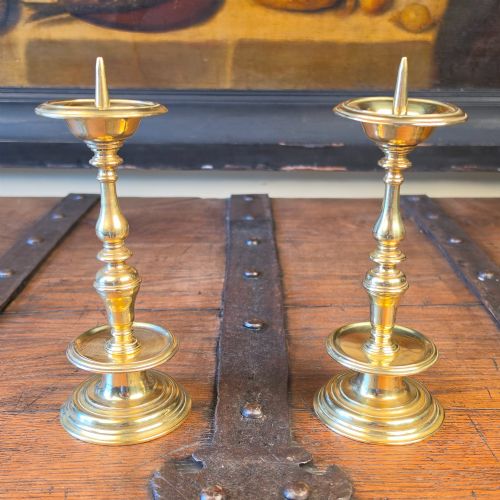
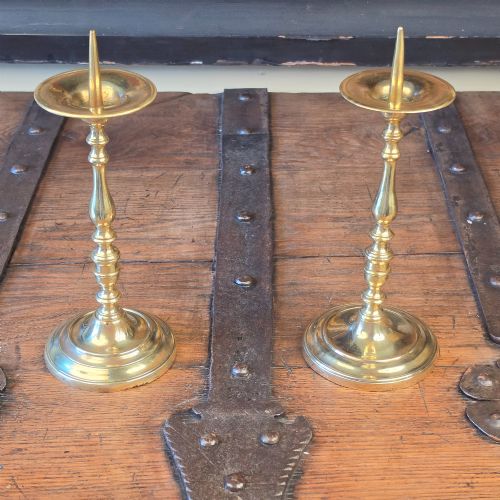
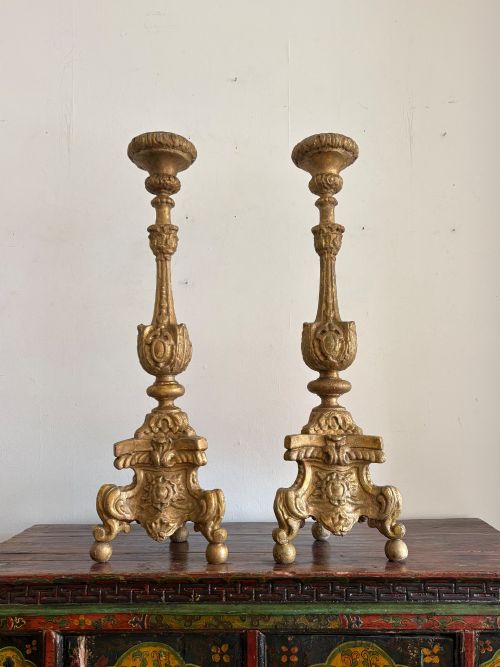
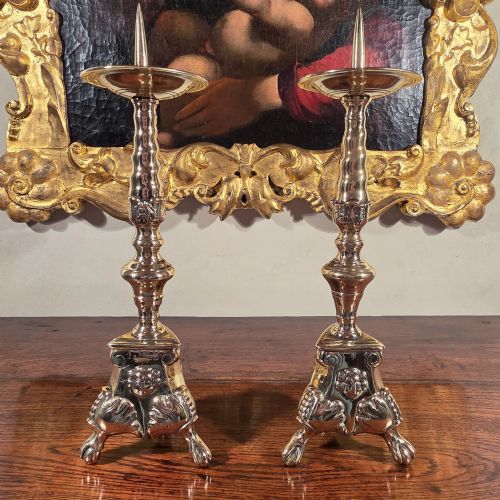
The versions you are most likely to meet on this page are carved giltwood and gesso examples from Italy and Spain, frequently showing the rich ornamentation characteristic of the period. Alongside these, occasional brass pricket sticks from Flanders and carved pinewood pieces appear in various heights and proportions.
Many of these church pieces have been converted into table lamps over time while retaining their original sculptural shafts and bases. Others survive as pure candlesticks, either as matched pairs or individual items suited to monumental interior displays.
Materials and construction
The construction of these pieces relies heavily on solid timber foundations, predominantly pinewood and carved wood, shaped into vigorous scrollwork, fluted columns, and faceted stems. Artisans applied layers of gesso over the carved wood to create a smooth, responsive surface for subsequent gilding.
Gold leaf and polychrome finishes were then applied by hand to the gessoed surfaces, catching the flickering light of candles during services. In metalwork examples, heavy cast brass formed durable pricket sticks designed to support thick altar candles securely.
Several heavy altar pieces retain traces of old candle wax deep within their carved acanthus leaves, left behind by centuries of evening devotions.
Assessing quality and depth
The distinction between ordinary and exceptional examples rests upon the depth and vigour of the wood carving. Master carvers produced spirited acanthus leaves and dynamic movement, whereas lesser pieces rely on mechanical repetition and flatter relief work.
The preservation of the original gold leaf and gesso surface largely determines the visual impact of a piece. Original patination with honest wear shows age far better than unsympathetic modern regilding that obscures the underlying hand-carved detail.
The Baroque Church Candlesticks Glossary
- Pricket
- A sharp metal spike on top of a candlestick designed to impale the base of a candle. This form predates socket candlesticks and remains common on traditional altar pieces.
- Giltwood
- Timber that has been coated with thin sheets of gold leaf over a prepared base. It creates a warm, reflective metallic sheen that resists tarnishing.
- Gesso
- A plaster mixture applied to carved wood to provide a smooth ground for gilding or painting. It allows intricate details to remain sharp and defined.
- Torchere
- A tall ornamental stand or candlestick designed to carry a single light. These pieces often feature exaggerated proportions and substantial weighted bases.
- Acolyte
- An altar attendant assisting clergy, represented here in carved wood figures holding candle sockets. These sculptural forms combine figurative art with functional lighting.
Baroque Church Candlesticks: Frequently Asked Questions
Can I use real candles on them?
Pricket sticks require candles with a hollow base or pierced bottom to sit securely upon the metal spike. Dripping wax can harm antique wood and gilding, so drip protectors are advisable.
Many buyers choose high quality LED candles to eliminate the risk of wax damage while maintaining the authentic appearance of the piece.
Are these converted lamps safe?
Candlesticks converted to table lamps generally feature wired fittings running through the centre or alongside the shaft. It is wise to have a qualified electrician inspect older wiring before daily use.
The conversion process often preserves the original wooden base and height without altering the historic structure permanently.
How do I date a church candlestick?
Examine the tool marks on the timber and the composition of the gesso layers beneath the gold leaf. Seventeenth and eighteenth century pieces display hand-cut joinery and heavy patination.
Revival pieces from the nineteenth century often use machine-sawn timber and brighter, more uniform gilding that lacks deep historical wear.