




Church Altar Prickets
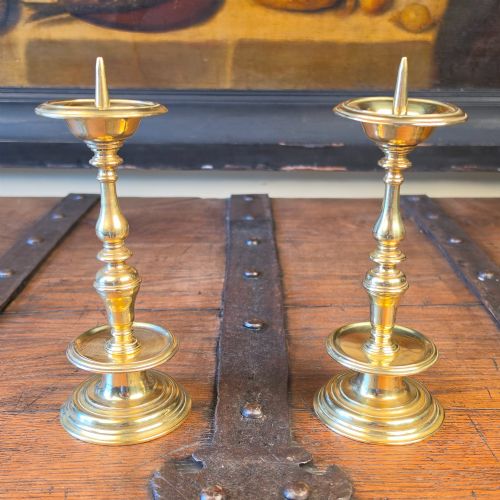
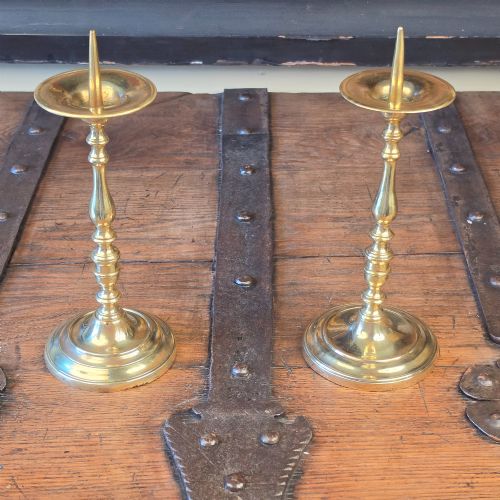
Church altar prickets are ceremonial candle holders featuring a central spiked spike to secure large wax tapers, bringing solemnity and height to sacred interiors.
Church Altar Prickets
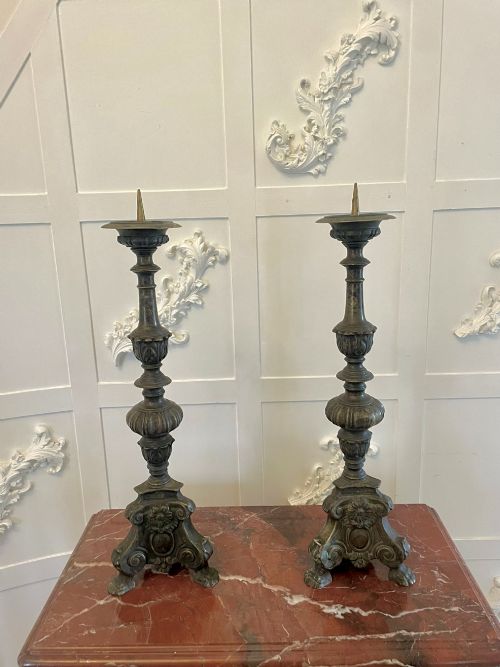
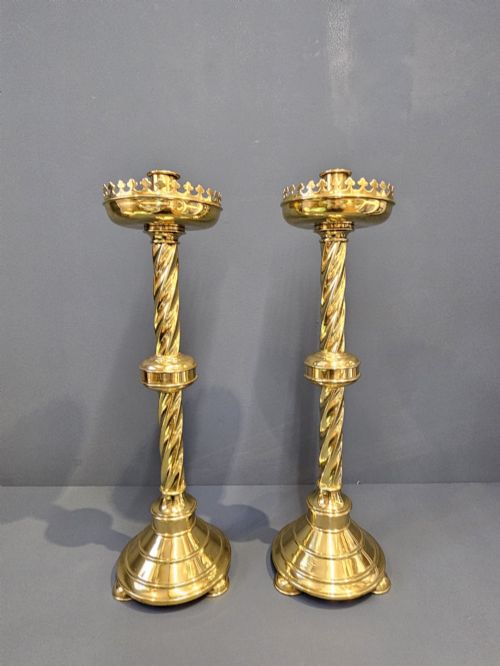
Church altar prickets serve as ceremonial candle supports designed with a sharp central metal spike, known as a pricket, which holds large candles securely in place. When seeking church altar prickets, buyers encounter pieces originating primarily from the eighteenth and nineteenth centuries, spanning distinct periods such as the Victorian era and the Edwardian years.
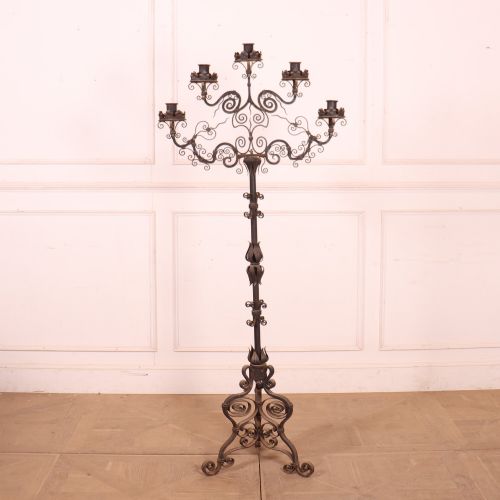
The surviving examples range from modest domestic adaptations to monumental floor-standing torcheres and substantial pairs intended for ecclesiastical use. Forms vary from simple turned wooden shafts to elaborate metal castings, reflecting the devotional requirements of different European traditions.
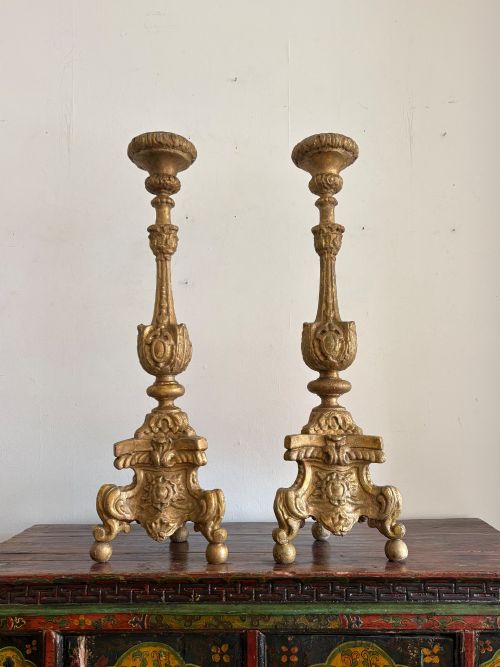
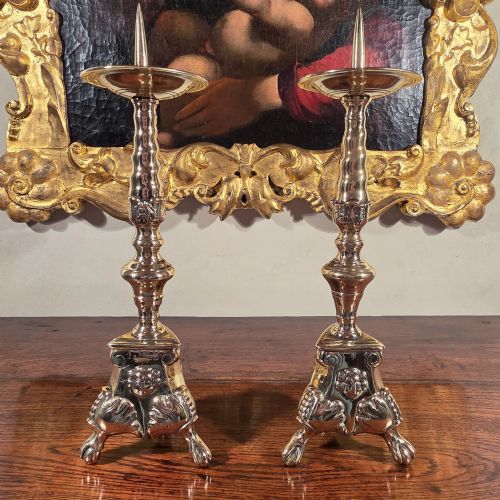
Italian and French workshops contribute heavily to the available selection, often demonstrating baroque or gothic revival styles. Brass and carved giltwood dominate the physical evidence, providing the characteristic presence expected from these liturgical furnishings.
How church altar prickets were made
Makers utilised cast metals such as brass, bronze, and copper for durable ecclesiastical hardware, often combining iron components for structural stability in heavier floor-standing models. These metal elements were cast, turned on lathes, and occasionally finished with gilding or silver leaf.
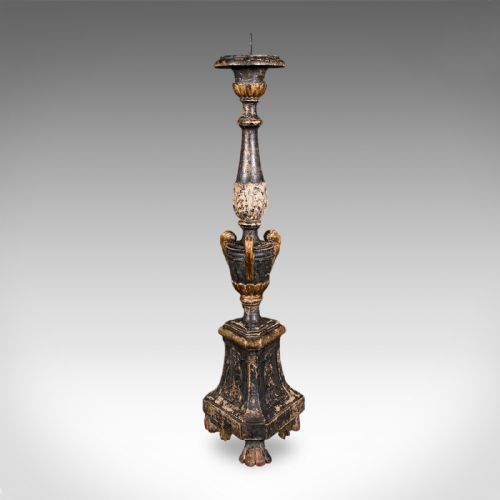
Wooden examples relied on seasoned timber, including carved pine, which received layers of gesso before being gilded, silvered, or painted with polychrome details. Artisans shaped these materials using traditional hand-carving and joinery techniques suited to substantial architectural forms.
Several heavy metal pairs owe their sturdy domestic stance to centuries of holding candles that outlasted the prayers.
What varies in quality
The distinction between standard production and superior craftsmanship rests in the depth of hand-carving and the precision of metal casting. Finer pieces display crisp botanical or architectural detailing in the wood and substantial wall thickness in the cast metal components.
Surface treatments dictate much of the visual success, where original fire-gilding, genuine gold leaf, or layered mecca finishes retain their rich patination over centuries. Inferior examples often show flat, uninspired ornamentation and coarse assembly that lacks the architectural authority of well-proportioned altar furnishings.
The Church Altar Prickets Glossary
- Pricket
- A sharp metal spike projecting upwards from the centre of a drip pan or socket to hold a candle in place. This method predates the widespread use of hollow candle sockets.
- Torchere
- A tall ornamental stand or candlestick designed to support a light source at an elevated position. These pieces often feature substantial carved wooden shafts and decorative bases.
- Giltwood
- Timber that has been coated with a thin layer of gold leaf over a prepared gesso ground. This technique provides a luminous surface that catches candlelight effectively.
- Mecca
- A transparent golden or yellowish varnish applied over silver leaf or tin to imitate the rich appearance of genuine gold. It is frequently encountered on Italian devotional woodwork.
- Baroque
- An ornate artistic style characterised by dynamic movement, exuberant scrolling foliage, and dramatic architectural proportions. Pieces in this style emphasise grand theatricality.
Church Altar Prickets: Frequently Asked Questions
How do I secure candles on a pricket?
The spike at the top of the candlestick pierces the base of a wide candle, holding the wax securely upright.
Modern candles may require a small pilot hole drilled into their base to fit onto the historic iron or brass point safely.
Where were these candlesticks originally used?
These items stood upon church altars, side chapels, and cathedrals to illuminate sacred spaces during religious services.
Their imposing height ensured that the flickering light remained visible to congregations gathered in large ecclesiastical interiors.
Can I use these with modern electrical lamps?
Some period examples have been adapted as lamp bases over time, converting the vertical shaft for electrical wiring.
Original altar pieces retain their metal spikes, allowing them to function with traditional wax candles rather than bulbs.
How do I distinguish between eighteenth and nineteenth-century pieces?
Eighteenth-century examples often display hand-turned timber construction and baroque carving with deep, organic patination.
Nineteenth-century pieces frequently embrace gothic revival aesthetics with machine-assisted brass casting and crisper, more uniform decorative motifs.