


18th Century Pricket Candlesticks
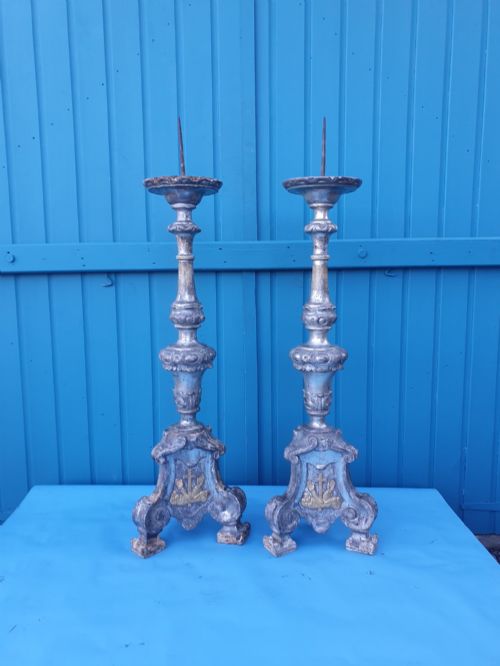
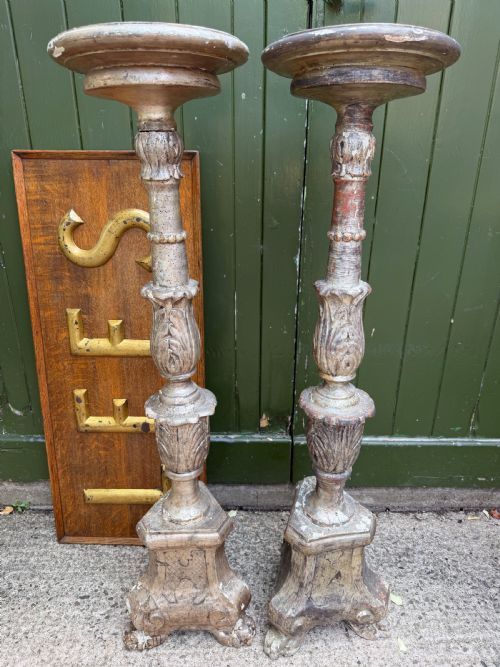
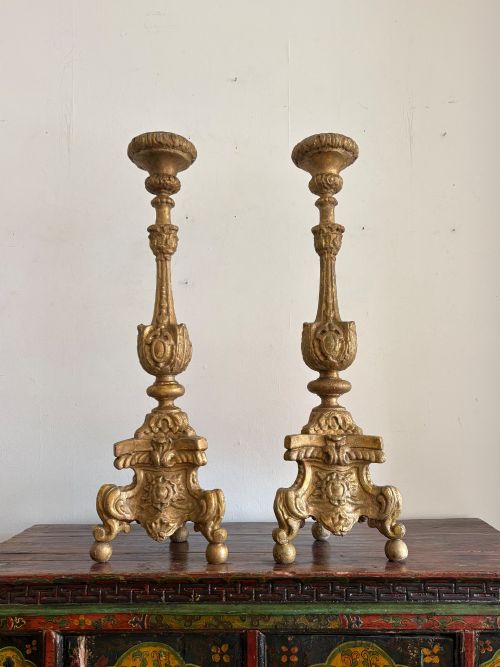
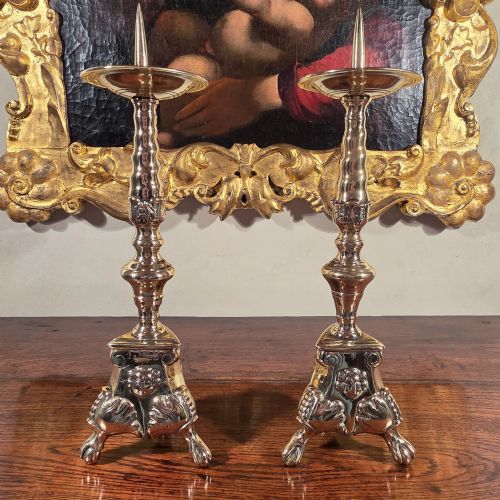
These 18th century pricket candlesticks bring striking altar forms and candle stands into a room.
18th Century Pricket Candlesticks
These 18th century pricket candlesticks comprise tall altar-type candle stands, torcheres, and figural acolyte candle holders originating largely from Italian workshops. The pieces span the Baroque, Rococo, and Neoclassical styles, reflecting the ornate ecclesiastical aesthetic of the period. Buyers most frequently meet carved wooden examples finished with giltwood, silver leaf, or gesso.
Many survivors of this type began their lives upon church altars before transitioning into domestic settings as decorative lamp conversions or statement floor stands. Their impressive proportions and upward-pointing spikes, designed to hold large wax tapers, give them a distinct presence distinct from standard domestic socket candlesticks.
Materials and construction
Artisans carved the primary body from solid wood, shaping complex scrolls, acanthus leaves, and figural elements by hand. They then applied layers of gesso to create a smooth, responsive base for subsequent surface gilding.
Makers finished these surfaces using gold leaf, silver leaf, or mecca varnish, alongside cast gilt bronze and ormolu components on select examples. This layered finishing technique gave the wood the rich metallic lustre characteristic of continental Baroque and Rococo design.
Many of these towering altar pieces spent centuries staring at Latin texts before retiring to hold electric lightbulbs in modern sitting rooms.
What varies in quality
The sculptural depth of the hand-carved wood sets finer pieces apart from simpler, flatter alternatives. Crisp execution in the acanthus carving and scrollwork indicates skilled craftsmanship in the original workshop.
The preservation of the original giltwood, silver leaf, or mecca surface determines the visual integrity of a piece. Retaining the authentic patination through centuries of handling distinguishes superior examples from heavily restored or later re-finished surfaces.
The 18th Century Pricket Candlesticks Glossary
- Pricket
- A metal spike projecting upward from the centre of a drip pan to secure a large candle. This traditional form predates the socket candlestick.
- Torchere
- A tall, freestanding wooden stand or candlestick designed to elevate a light source. These pieces often feature substantial proportions and decorative carved shafts.
- Giltwood
- Timber decorated with a thin layer of gold leaf applied over a prepared gesso ground. This finish provides a bright metallic appearance while keeping the weight manageable.
- Mecca
- A transparent yellow-gold varnish applied over silver leaf to simulate the appearance of gold leaf at a lower cost. It yields a warm, distinctively aged metallic tone.
- Acolyte
- An altar assistant whose form occasionally inspired carved wooden figures holding candle sockets or prickets. These figurative pieces carry strong sculptural presence.
18th Century Pricket Candlesticks: Frequently Asked Questions
What is a pricket candlestick?
A pricket candlestick uses an upright metal spike rather than a socket to hold a candle in place. The wax taper rests directly upon this sharp point.
This design appears frequently on large altar candlesticks from the eighteenth century, where substantial wax blocks required secure mounting during ecclesiastical services.
How do I light an 18th century pricket candlestick?
You push the base of a pillar candle down onto the metal spike until the taper stands firm. Modern candles may require a small pilot hole drilled into the base to sit straight.
Most buyers today use these pieces for visual display or convert them to wired table lamps rather than burning candles upon antique wood and gesso.
Where were these candlesticks originally used?
These tall candlesticks and torcheres stood upon church altars and within chapels across Italy and continental Europe. They formed part of grand ecclesiastical furnishings designed to illuminate sacred spaces.
Later collectors removed them from churches into private homes, where their scale suited grand reception rooms and hallways.
How do I distinguish Baroque from Rococo styles?
Baroque designs tend to display heavy symmetry, bold architectural proportions, and robust, powerful carved motifs. They project a solemn and grand visual weight.
Rococo pieces introduce asymmetrical C-scrolls, lighter shell forms, and fluid, dynamic movement across the carved wooden surfaces.