






Large Canvas Landscape Artwork
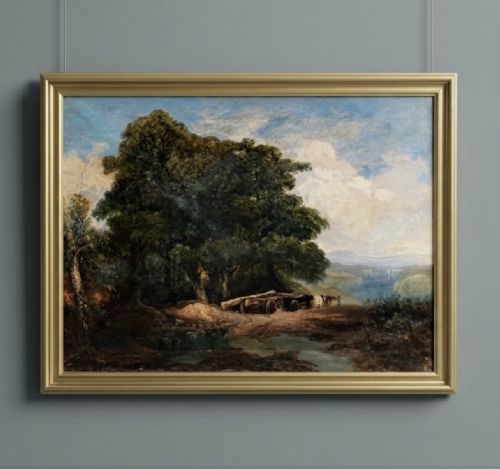
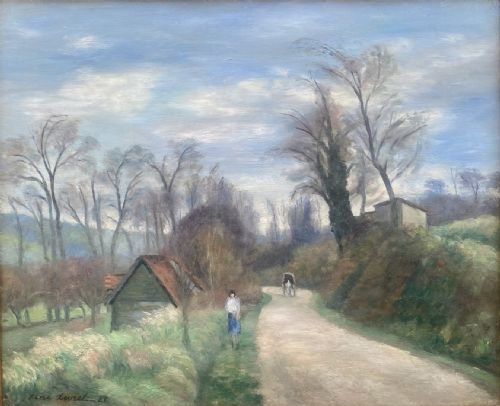
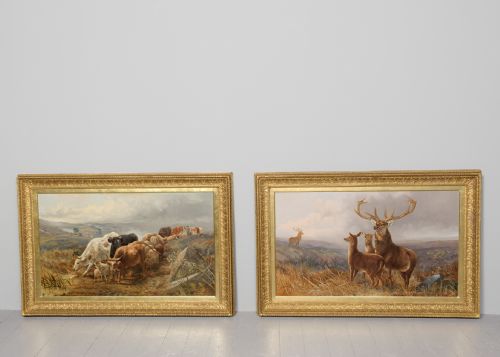
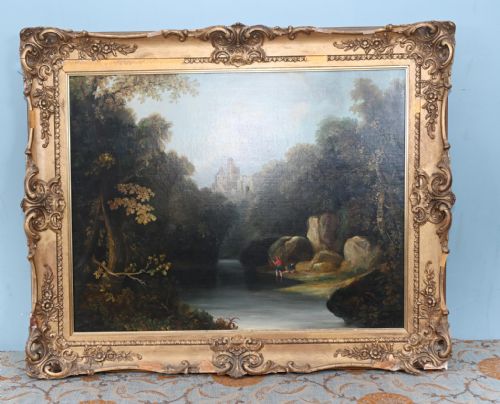
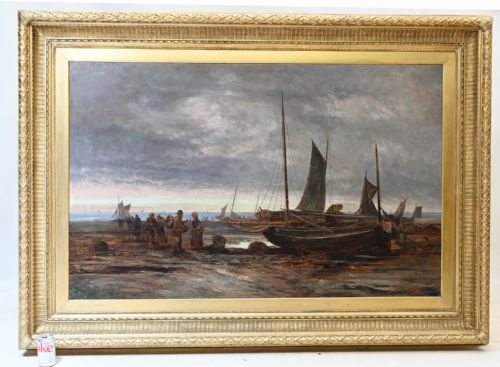
These large canvas landscape artwork selections bring sweeping pastoral views, rugged mountains and historic riverscapes directly into domestic interiors.
Large Canvas Landscape Artwork
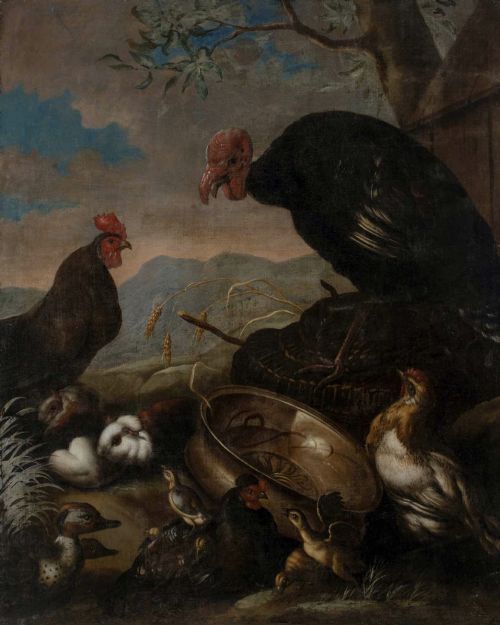
Large canvas landscape artwork encompasses expansive oil paintings on canvas that capture rural scenery, maritime views, and urban vistas. These commanding pieces originate from periods spanning the seventeenth century through to the mid-twentieth century, including Victorian and Mid-Century Modern movements.
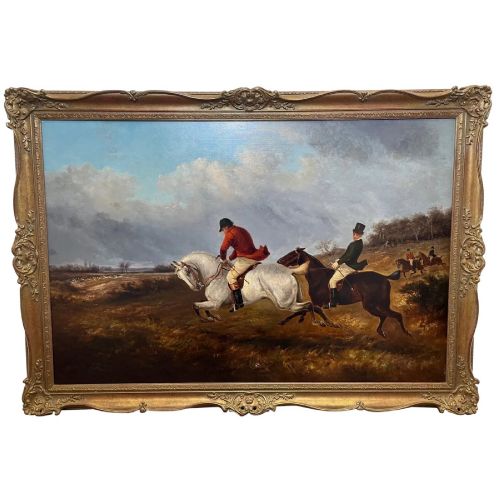
The most common examples encountered in this selection are nineteenth-century British and continental oils depicting pastoral valleys, coastal stretches, and hunting scenes. Such works frequently arrive housed in their original ornate giltwood or gesso frames, maintaining a substantial presence on a wall.
How They Were Made
These works rely on oil paint applied to stretched woven canvas, often supported by a wooden stretcher frame and secured within carved gesso or giltwood mouldings. Artists built depth through layered pigment, utilising brushwork that ranges from precise nineteenth-century realism to textured mid-century impasto.
Support structures typically involve robust timber frames that protect the perimeter of the canvas while providing the decorative weight expected of large format fine art. Many antique iterations show traditional preparation layers beneath the paint surface, ensuring long-term stability for extensive landscape compositions.
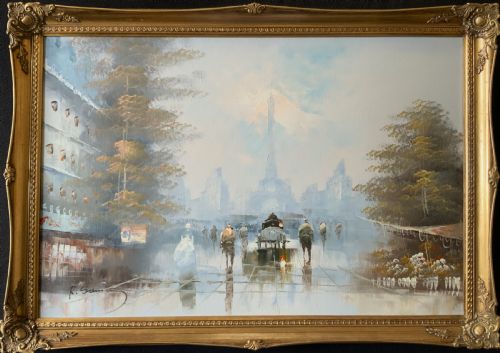
Mid-century abstract cityscapes and impressionist Paris street views complement the traditional rural landscape oils in this collection.
What Varies in Quality
Visual strength in a landscape canvas rests on the confidence of the composition and the subtlety of the atmospheric perspective, where master painters manage light and shadow across miles of distance. Handling of fine details such as foliage, water reflections, and livestock separates exceptional academic execution from routine workshop production.
The integrity of the original frame and the preservation of the painted surface dictate the overall stature of the piece. Works retaining their untouched period giltwood surrounds and stable, unlined canvases command greater visual harmony than those altered by heavy later restoration.
Richard Sebastian Bond·Angelo Maria Crivelli·Thomas Smythe·Rene Levrel·Erich Mercker·Robert Cleminson·Alexandre Le Bihan·William Henry Mander·Thomas Sidney Cooper·Gabriel Dauchot·Thomas Bromley Blacklock·Herbert Royle·William Sydney Cooper·George Armfield·William Mellor·George Morland·Hendricus Joseph Dillens·Pieter Bout and Adriaen Frans Boudewyns·Hubert Haider
The Large Canvas Landscape Artwork Glossary
- Impasto
- Paint applied thickly to a canvas, standing out in relief from the surface and giving a visible texture that catches the light. This technique became prominent in mid-century impressionist and abstract works.
- Giltwood
- Timber carved and coated with gold leaf or a gold-coloured finish to create an ornamental frame. It provides the traditional reflective border for nineteenth-century landscape oil paintings.
- Gesso
- A plaster-like mixture applied to wood or canvas as a base for painting or applied to frames to receive gilding. It allows intricate mouldings to be formed around large artworks.
- Provenance
- The documented history of ownership of an artwork, tracing its path from the artist's studio or original exhibition through to the present. This record supports attribution and historical context.
Large Canvas Landscape Artwork: Frequently Asked Questions
How do I hang a heavy large canvas landscape?
Large canvas landscape artwork requires secure wall fixings directly into structural studs or masonry rather than standard plasterboard hooks. Given the combined weight of the canvas, wooden stretcher, and heavy gilt frame, professional mirror hangers often recommend using a French cleat system to distribute the load evenly across the wall.
Position the centre of the artwork at eye level, typically around eye height from the floor, to ensure comfortable viewing from across a room. Allow adequate wall space around the perimeter so the scale of the composition can be appreciated without feeling cramped by adjacent furniture.
What lighting suits these landscape oil paintings?
Warm, focused picture lights mounted above the frame highlight the varied brushwork and rich oil pigments without generating damaging heat. Traditional incandescent bulbs or modern LED alternatives with a high colour rendering index bring out the deep greens, earthy browns, and golden skies characteristic of these landscapes.
Position the artwork away from direct, harsh sunlight to prevent the oil paint and gilt frames from fading or drying out over time. Ambient room lighting combined with a dedicated picture lamp provides the balanced illumination needed to view fine details in distant horizons.
How can I tell a Victorian landscape from a mid-century work?
Victorian landscape paintings typically feature naturalistic detail, subdued earth tones, and traditional brushwork that prioritises narrative depth and academic precision. They are frequently housed in heavy, ornate giltwood frames that reflect nineteenth-century decorative tastes.
Mid-century landscape works often embrace looser brush techniques, impressionist colour palettes, or abstract forms where the paint application becomes the primary focus. Their frames tend to be simpler, cleaner-lined wood mouldings that reflect post-war modernist design preferences.