


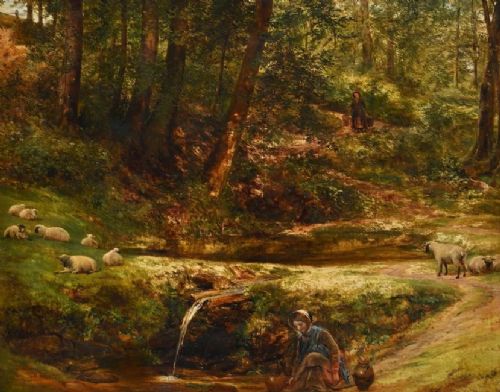
British Pastoral Oil Painting
British pastoral oil painting captures the quiet rhythm of rural life through textured pigment and canvas.
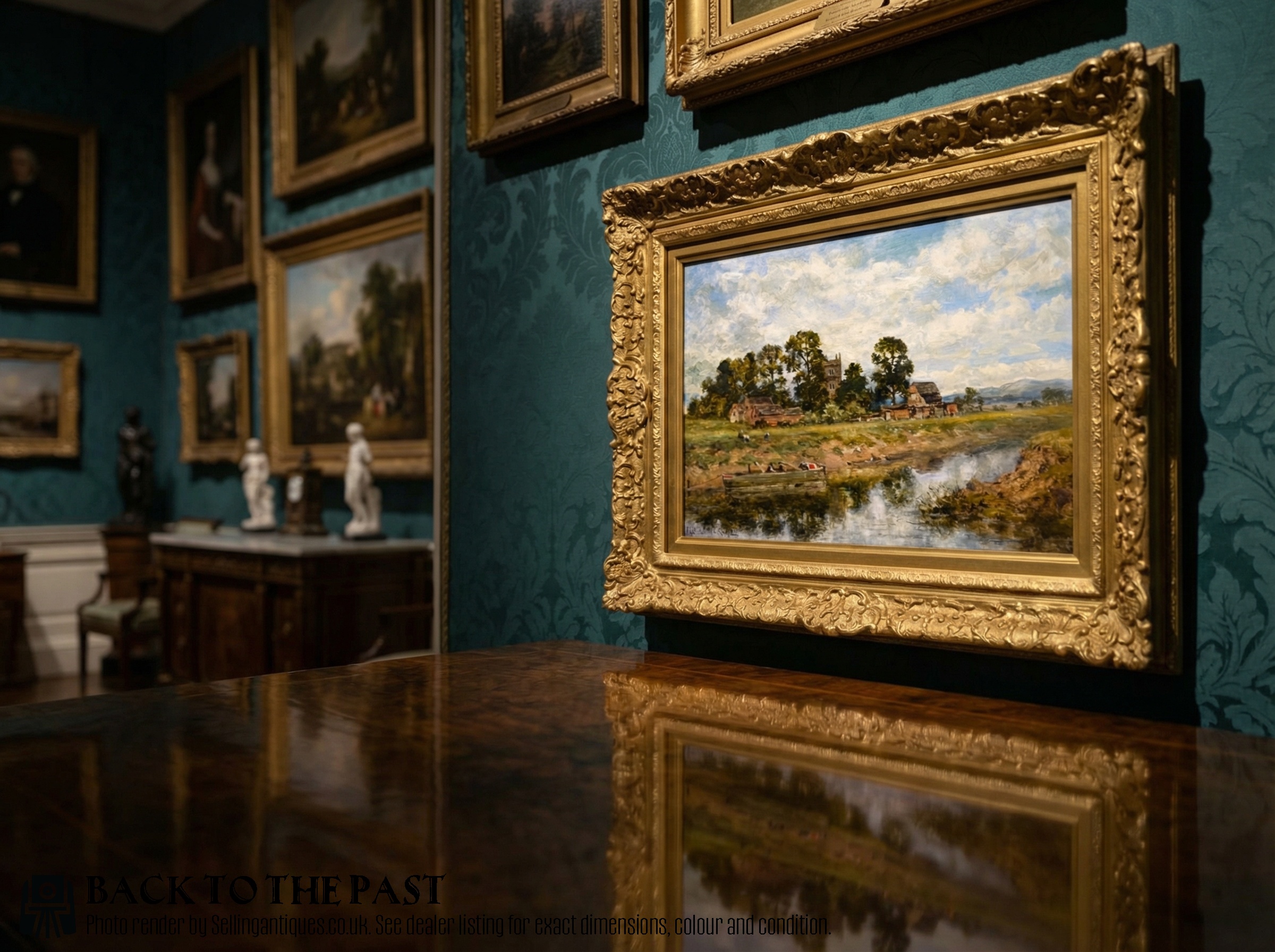
British Pastoral Oil Painting
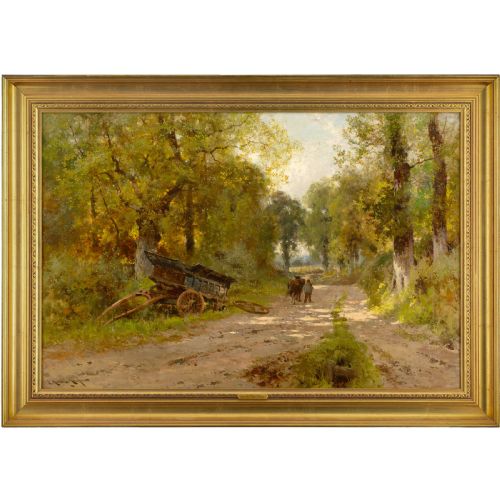
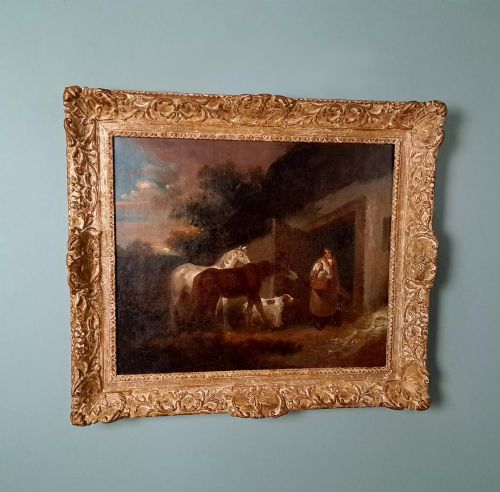
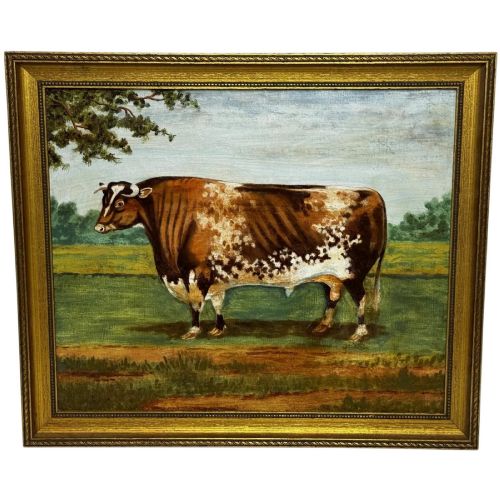
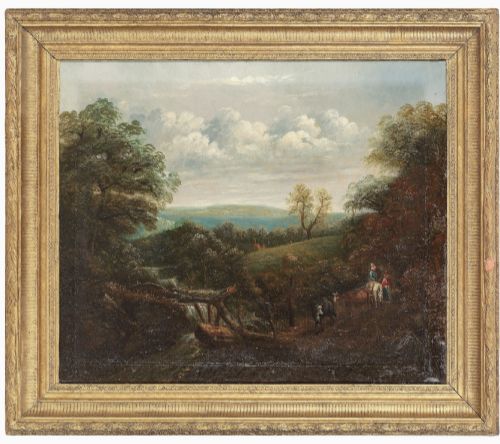
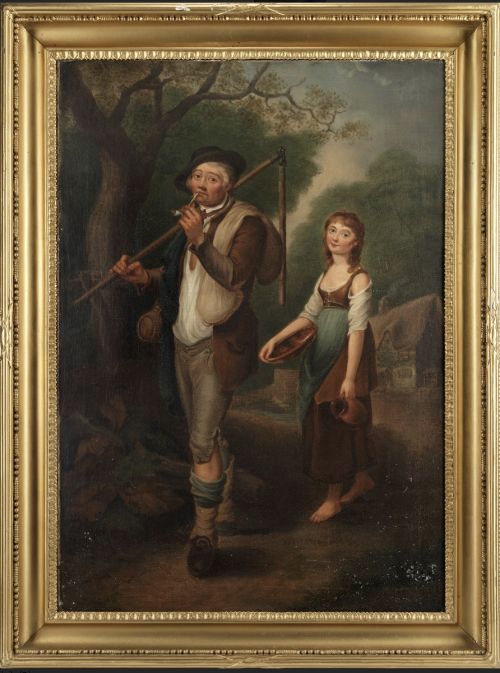
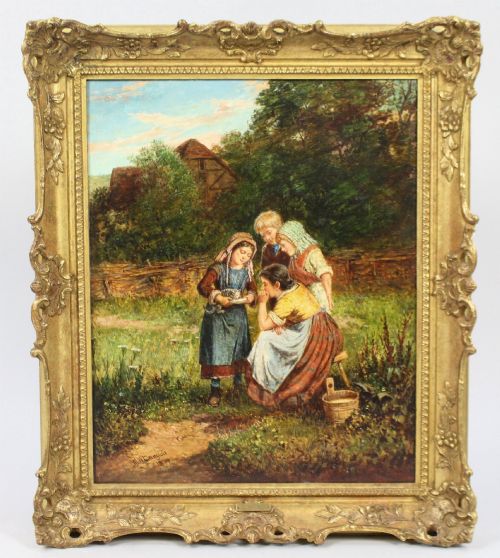
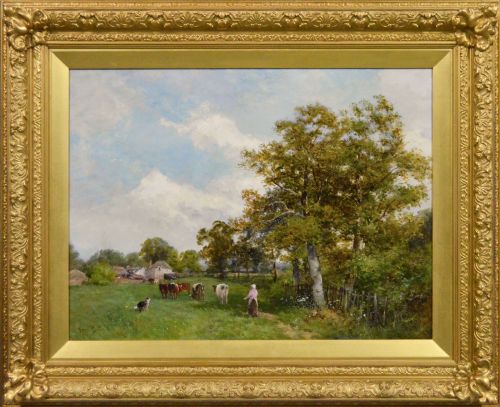
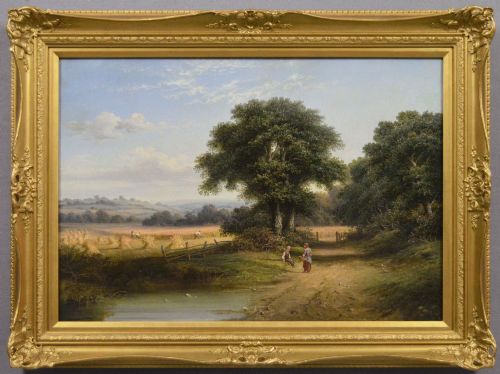
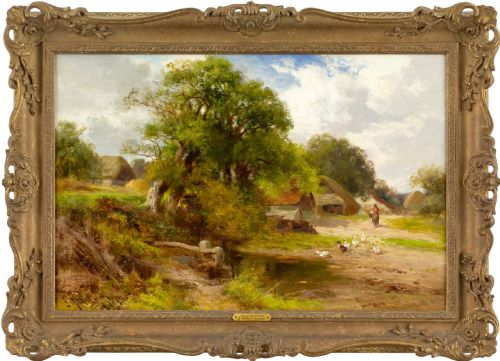
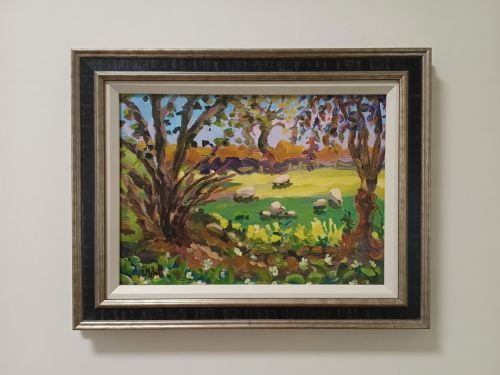
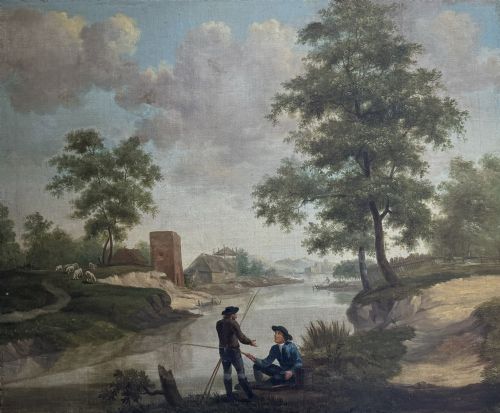
A british pastoral oil painting presents scenes of rural life, featuring cattle, sheep, rivers, and country cottages across the English and Scottish countryside. These works span from the eighteenth century through the Victorian period and into the early twentieth century, reflecting shifting tastes in landscape representation.
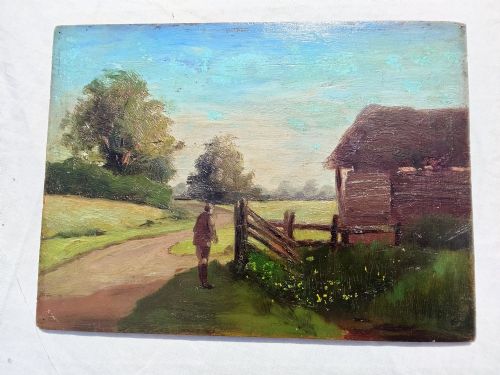
The versions most commonly found here are nineteenth-century and early twentieth-century canvases, often framed in giltwood. They range from intimate wood panels by regional artists to larger compositions by recognised members of the British and Scottish schools.
Materials and construction
Makers laid oil paint onto stretched canvas or wooden boards, utilising the medium's slow drying time to blend light and shadow across skies and fields. Pigments were worked with brushes of varying stiffness to build texture in foliage, water, and animal coats.
Surviving works are frequently housed in their original or period giltwood frames, which provide structural support and complement the warm tones of the rural compositions.
British Pastoral Oil Painting Retail Price Guide 2026
Typical asking prices for british pastoral oil painting among the pieces listed under this phrase on Sellingantiques today, from the lower quarter to the upper quarter. They describe what is for sale here now, not the wider market.
Several canvases record stubborn livestock refusing to leave the path.
Assessing quality and execution
Quality rests in the handling of light, atmospheric perspective, and anatomical proportion within figures and livestock. Stronger examples demonstrate confident brushwork that defines texture in a fleece or a canopy without relying on rigid outlines.
The depth of composition and the subtlety of colour transitions separate routine topographical records from canvases that capture a convincing sense of place and atmosphere.
Tom Campbell·John Horace Hooper·William Joseph Shayer Senior·Mark William Langlois·David Bates·Walter Heath Williams·John Emms·Owen Bowen·William Sydney Cooper·George Vicat Cole
The British Pastoral Oil Painting Glossary
- Oil on canvas
- Pigment suspended in a drying oil, applied to a woven fabric support stretched across a wooden frame. This combination allows for rich layering and varied surface textures.
- Wood panel
- A rigid support made from timber board, frequently utilised for smaller nineteenth-century landscapes. It provides a smooth, stable surface for fine brushwork.
- Giltwood
- Timber carved and coated with a thin layer of gold leaf or metallic powder. It was standard for framing nineteenth-century fine art.
- British School
- A designation for artists working within Britain whose styles share regional or historical characteristics rather than a single formal academy.
British Pastoral Oil Painting: Frequently Asked Questions
How do I date a British pastoral oil painting?
Dating relies on stylistic markers, costume details in figures, stretcher construction, and the type of canvas or wood panel used. Period frames also offer clues, though many pictures were reframed later.
Signatures, exhibition labels, and inscriptions on the reverse provide further historical context, linking the work to specific decades within the nineteenth and twentieth centuries.
Where should I hang an oil painting?
These works require walls away from direct sunlight and steady moisture levels to protect the oil paint and canvas from degradation. Stable indoor conditions prevent the wood panels and gilt frames from warping.
Positioning the painting at eye level in a room with controlled ambient light ensures the brushwork and atmospheric details remain visible.
How do I tell regional schools apart?
Regional schools, such as the Norwich School or Scottish School, are distinguished by their specific handling of local light, topography, and palette. Painters working in these traditions often shared influences and sketching grounds.
Examining the subject matter, whether a Highland landscape or a Norfolk river path, helps identify the geographic focus of the artist.
What is the difference between canvas and board?
Canvas yields a flexible woven texture that responds to atmospheric changes, while wood panels offer a rigid, unyielding surface for the paint layer. Panel paintings are typically smaller in scale and common in earlier periods.
Both supports were widely used by British landscape painters, with the choice often depending on the artist's preference for portability and resistance to wear.